Blog

  • How Many Watts for a Hair Dryer?

    You’ll want a hair dryer wattage that matches your hair type and styling needs. Lower wattage (1000–1400 watts) suits fine or damaged hair, helping avoid excessive heat damage.

    Medium wattage (1600–1800 watts) fits normal hair, balancing power and control. While higher wattage (1800–2200 watts) works best for thick or coarse hair, speeding drying time.

    Choosing the right wattage helps protect your hair and manage energy use effectively. Keep exploring to find the ideal balance for you.

  • How Many Watts Are in a Hair Dryer?

    Hair dryers usually range from 800 to 2,000 watts, which determines their power and heat output. If you have fine hair, a lower wattage around 1,000–1,400 watts works well to avoid damage.

    Thicker hair benefits from higher wattage for faster drying. Higher wattage means more heat and stronger airflow, but it can also use more energy per minute.

    To find the best dryer for your needs and save energy, keep exploring these details. It’s all about balancing power and care for your hair!

  • How Many Amps Does a Hair Dryer Use?

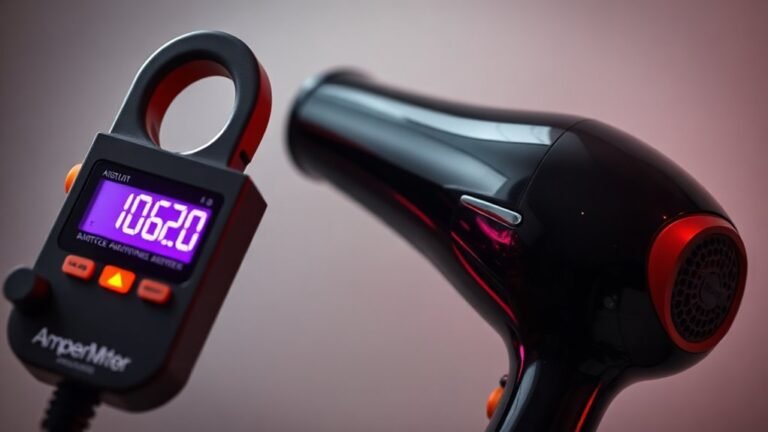
    A typical hair dryer uses between 7 and 15 amps, depending on its wattage and settings. Lower-wattage models around 1000 watts draw closer to 7 amps, while powerful ones near 1800 watts can pull up to 15 amps.

    Higher amps mean faster drying but may require a dedicated outlet to avoid tripping breakers. Knowing your hair dryer’s amp draw helps you prevent overloads and keep your circuit safe.

    Keep exploring to find out how to calculate amperage and use your dryer efficiently. It’s pretty handy info to have!

  • How Many Amps Does a Hair Dryer Draw?

    Your hair dryer usually draws between 5 and 15 amps, depending on its model and power. Standard home dryers pull around 7–12 amps, while travel models use less, about 5–7 amps.

    Professional salon dryers often need 12–15+ amps and may require dedicated circuits. Knowing your dryer’s amps helps prevent tripped breakers and keeps your electrical system safe.

    If you want to keep your dryer running smoothly without problems, there’s more useful info you’ll want to explore.

  • How Many Amps Does a Hair Dryer Draw?

    You can expect a typical hair dryer to draw between 7 and 15.6 amps, depending on its wattage and settings. Standard models usually run around 10 amps, while higher-powered dryers, like 1500- to 1875-watt ones, pull more current.

    Factors like heating element design and motor speed also influence amperage. Knowing this helps you avoid overloading circuits and save energy.

    Keep exploring to discover how these details impact your dryer’s efficiency and performance.

  • Can You Carry a Hair Dryer?

    Yes, you can carry a hair dryer on a plane in both your carry-on and checked luggage, as long as it’s unplugged and follows airline size and weight rules.

    Avoid models with built-in lithium batteries, as they may face restrictions. Packing it safely with padding and protecting cords helps prevent damage.

    For bulky dryers or those with batteries, checked luggage might be better. Keep in mind, some airlines have specific rules, and there are great travel-friendly alternatives to explore.

  • Can a Hair Dryer Kill Head Lice?

    You can’t rely on a hair dryer alone to kill head lice because it rarely reaches the high temperatures needed to kill them or their eggs. Lice survive by moving to cooler areas and using protective layers, so brief hot air won’t do the job.

    Plus, heat from dryers often misses lice hiding close to the scalp. Using proper treatments and techniques is safer and more effective.

    Keep exploring to find out the best ways to tackle lice safely and thoroughly.

  • Can a Hair Dryer Kill Lice and Nits?

    You can use a hair dryer to weaken lice and nits, but it won’t kill them completely. Lice need sustained heat above 130°F for several minutes to die, and most dryers can’t deliver this safely or evenly near your scalp.

    Plus, nits have protective shells that resist quick heat bursts. While drying makes lice easier to remove, you’ll still need proven treatments and combing for a full solution.

    There’s more to know about combining heat safely and preventing reinfestation. So, using a hair dryer alone won’t do the trick, but it can help as part of your overall approach.

  • Will a Hair Dryer Kill Bed Bugs?

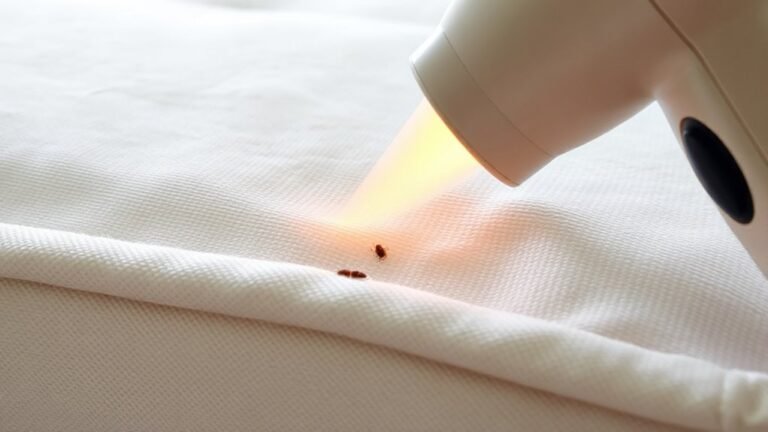
    You can use a hair dryer to kill some exposed bed bugs on surfaces, but it won’t reliably reach or maintain the 120°F+ needed to kill all bugs and eggs. Hair dryers heat unevenly, don’t penetrate hiding spots well, and usually can’t sustain lethal temperatures for the required 20 minutes.

    This means many bed bugs can survive, especially those hidden away. If you want more effective methods and safety tips, keep exploring what works best.

  • How to Dry Your Hair Without a Blow Dryer Fast: 7 Steps

    To dry your hair quickly without a blow dryer, start by gently squeezing out excess water using a pressing motion to avoid frizz. Wrap your hair in a microfiber towel or soft cotton T-shirt for 10–15 minutes to absorb moisture.

    Next, divide your hair into sections and air dry near a fan or open window for better airflow. You can use a wide-tooth comb and apply lightweight leave-in products to speed up drying.

    If you have curly hair, try the plopping method to enhance curl definition and reduce drying time. Give these tips a shot to perfect your routine!