How to Dry Your Hair Without a Blow Dryer Fast: 7 Steps
To dry your hair quickly without a blow dryer, start by gently squeezing out excess water using a pressing motion to avoid frizz. This simple step helps remove a lot of moisture without roughing up your strands. Then, wrap your hair in a microfiber towel or a soft cotton T-shirt for about 10–15 minutes to absorb even more water.
Next, divide your hair into sections and let it air dry near a fan or an open window for better airflow. This speeds up the drying process naturally and keeps your hair healthy. Using a wide-tooth comb can help detangle your hair gently, and applying lightweight leave-in products can also speed up drying time.
If you have curly hair, you might want to try the plopping method. It’s great for enhancing curl definition while reducing how long it takes for your hair to dry.
Give these easy tips a try to perfect your hair-drying routine without relying on heat!
Key Takeaways
- Gently press and squeeze excess water from your hair using a microfiber towel or a soft cotton T-shirt. This helps reduce drying time and prevents frizz.
- Divide your hair into sections and let it air-dry in a well-ventilated area or near an open window. This speeds up evaporation and gets your hair drying faster.
- Try the plopping technique by wrapping your hair in a microfiber towel or cotton T-shirt for about 20–30 minutes. It absorbs moisture and really helps enhance your curls.
- Avoid rubbing your hair roughly. Instead, use pressing and scrunching motions with soft fabric to minimize friction and prevent breakage.
- Apply lightweight leave-in products to damp hair. These help wick away moisture and keep your curls defined while speeding up the drying process.
Gently Squeeze Out Excess Water
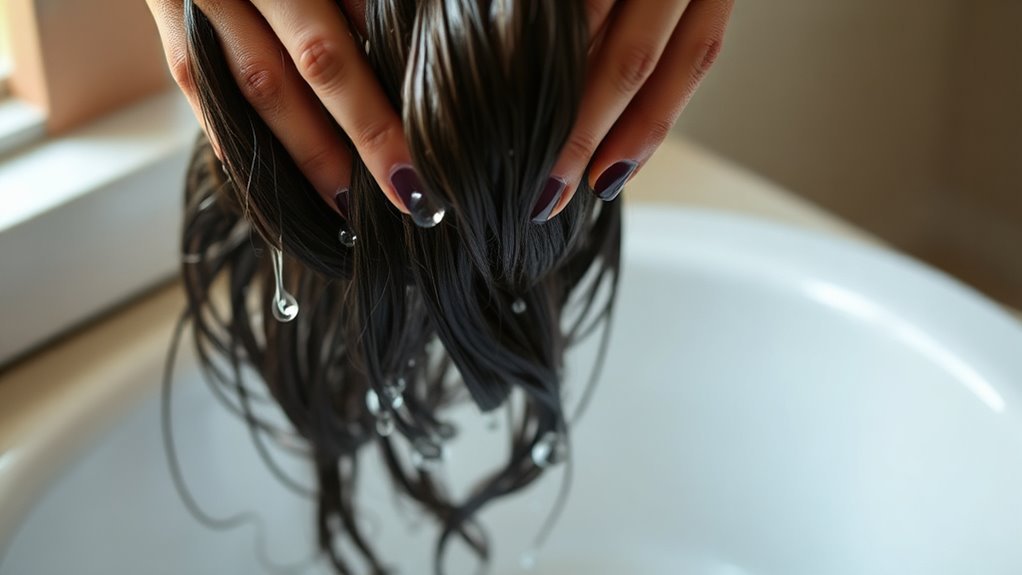
When you finish washing your hair, always gently squeeze out excess water before moving on. Press your hair with your hands, working from roots to ends, to remove as much moisture as possible.
Avoid rough rubbing, which can cause frizz and damage. Instead, use a gentle squeezing motion to keep your hair smooth and healthy.
Focus on sections, taking your time to make sure you’re not leaving water trapped near the scalp or tips. This step reduces drying time greatly and prepares your hair for the next phase of air drying.
Use a Microfiber Towel or Cotton T-Shirt

You can speed up drying by wrapping your hair in a microfiber towel or a soft cotton T-shirt. Both materials reduce frizz and absorb water gently without causing damage like regular towels.
Here’s how to use them properly to keep your hair healthy and smooth. It’s easier than you think! Just wrap your hair up and let the towel or T-shirt do the work.
Benefits of Microfiber Towels
Many people find microfiber towels or cotton T-shirts gentler alternatives for drying hair than traditional bath towels. Microfiber towels especially excel because their fine fibers absorb water quickly without roughing up your hair cuticles.
This reduces frizz and breakage, keeping your hair healthier over time. When you use a microfiber towel, you can gently squeeze out excess water rather than rubbing. This helps maintain your hair’s natural shine and smoothness.
Plus, microfiber towels dry faster than regular towels, so they stay fresh and ready for your next use. If you want to speed up drying while protecting your hair, microfiber towels offer an effective and gentle solution you’ll appreciate in your hair care routine.
Why Cotton T-Shirts Work
Cotton T-shirts offer a surprisingly effective way to dry hair gently without causing damage. Unlike rough bath towels, cotton fabric absorbs water without roughening your hair cuticles, which helps reduce frizz and breakage.
When you use a cotton T-shirt, you’re treating your hair with extra care while speeding up drying time.
Here’s why you’ll want to reach for a cotton T-shirt:
- It’s soft and gentle, minimizing friction and preventing split ends.
- The material absorbs moisture efficiently without over-drying or roughening your strands.
- Cotton fits snugly around your head, allowing you to scrunch and blot water easily, which speeds up drying.
Using a cotton T-shirt is a simple, affordable alternative that protects your hair’s health while helping it dry faster. It’s pretty much a win-win!
How to Use Properly
Choosing the right fabric to dry your hair is just the first step; knowing how to use it properly makes all the difference. After washing, gently squeeze excess water from your hair.
Then, wrap your microfiber towel or cotton T-shirt around your head. Avoid rubbing or twisting aggressively—this can cause frizz and damage.
Instead, press and scrunch the fabric against your hair to absorb moisture. Leave the towel or T-shirt wrapped for 10-15 minutes to let it soak up water effectively.
Once removed, you’ll notice your hair is damp but not dripping. This method reduces drying time and keeps your hair healthier by minimizing friction.
Using these gentle steps, you’ll dry your hair quickly without the heat damage from a blow dryer.
Air Dry Hair in Sections

Often, drying your hair in sections can speed up the air-drying process and guarantee even moisture distribution. Start by dividing your hair into manageable parts, like top, middle, and bottom layers.
Drying hair in sections speeds air-drying and ensures even moisture by dividing into top, middle, and bottom layers.
This approach helps you focus on each section without missing spots.
Here’s how to do it effectively:
- Clip the upper sections away to expose the lower layers first.
- Gently squeeze out excess water from each section with a microfiber towel or cotton T-shirt.
- Rotate through the sections, allowing each to dry partially before moving on to the next.
Comb Hair Gently to Prevent Tangles
Handle your hair with care by combing it gently to prevent tangles and breakage. Start with a wide-tooth comb or a detangling brush designed for wet hair.
Begin at the ends, slowly working your way up to the roots to ease out knots without pulling. Avoid rushing this step, as rough handling can cause damage and slow drying by creating tight tangles.
If you encounter stubborn knots, hold the hair above the tangle to reduce tension and gently work through it. Combing your hair gently also helps distribute natural oils, promoting healthier strands.
Taking these careful steps will keep your hair smooth, manageable, and better prepared for the next drying phase, speeding the process without causing harm.
Apply Lightweight Leave-In Products to Speed Up Drying
You’ll want to reach for lightweight leave-in products to help your hair dry faster without weighing it down. These formulas speed up drying by evenly distributing moisture and reducing water retention on your strands.
Applying them right after washing can make your air-drying routine more efficient and manageable. It’s a simple step that really makes a difference!
Benefits of Lightweight Formulas
Lightweight leave-in products work wonders when you want to speed up drying without a blow dryer. They absorb quickly, won’t weigh your hair down, and help water evaporate faster.
When you choose lightweight formulas, you’ll notice these benefits:
- Quick absorption: They penetrate hair without leaving residue, so your strands dry faster.
- No heaviness: Unlike thick creams, they keep your hair bouncy and light, preventing limpness.
- Enhanced airflow: Lightweight formulas don’t clog hair cuticles, allowing air to circulate freely for faster drying.
Using these products means you can skip the heavy, sticky feeling and still get your hair dry in less time. So, if you’re aiming for a speedy air-dry, lightweight leave-ins are your best friend.
How Leave-In Products Work
To speed up drying with leave-in products, start by applying them evenly to damp hair. These lightweight formulas work by creating a thin barrier that helps wick moisture away from your strands without weighing them down.
They often contain ingredients like proteins or oils that smooth the hair cuticle, allowing water to evaporate faster. When you use a leave-in product, you protect your hair from frizz and damage while speeding up drying time naturally.
Just be sure to use a small amount—too much can slow drying by trapping moisture. Focus on the mid-lengths to ends, where hair tends to be drier.
Incorporating leave-ins into your routine makes air-drying quicker and keeps your hair healthy and manageable. It’s a simple step that really makes a difference!
Use a Well-Ventilated Spot or Fan
When drying your hair without a blow dryer, choosing a well-ventilated spot can speed up the process naturally. Fresh air helps moisture evaporate faster, so picking the right place really matters.
If you can’t find a breezy outdoor area, a fan works wonders indoors. Just position yourself so the airflow reaches your hair directly without tangling it.
To make the most of ventilation, try these tips:
- Stand near an open window or door for natural airflow.
- Use a fan on a low or medium setting to avoid frizz.
- Avoid cramped spaces where moisture lingers and slows drying.
Try the Plopping Method to Dry Curly or Wavy Hair Faster
Plopping helps you dry curly or wavy hair faster while enhancing your natural texture. To try this method, start with freshly washed, damp hair. Apply your favorite curl-enhancing product to maintain definition.
Lay a microfiber towel or a soft cotton T-shirt flat on a surface. Flip your head forward, then gently lower your curls onto the fabric, arranging them so they stack neatly. Wrap the towel or T-shirt around your head and secure it by tying or tucking the ends.
Leave your hair plopped for 20 to 30 minutes to absorb excess moisture without disrupting your curls. When you remove the fabric, your hair will be drier and more defined. This cuts down on drying time and reduces frizz for beautifully shaped waves or curls.
Frequently Asked Questions
Can Drying Hair Without Heat Reduce Frizz?
Yes, drying your hair without heat can reduce frizz because it prevents moisture loss and damage.
You’ll keep your hair’s natural oils intact, making it smoother and less prone to that frizzy, flyaway look.
How Long Does Air Drying Usually Take?
Air drying usually takes anywhere from 30 minutes to a few hours, depending on your hair’s thickness and length.
You’ll notice thinner hair dries faster, while thick or long hair can take much longer to fully dry.
Is It Better to Dry Hair Wet or Damp?
Damp hair delivers the best balance—drying faster and feeling fresher. When your hair’s too wet, it takes longer and risks damage.
Can Drying Hair Naturally Prevent Damage?
Yes, drying your hair naturally can prevent damage since you avoid heat exposure. You’ll reduce breakage and dryness, keeping your hair healthier.
Just be patient and gently squeeze out excess water to speed up drying. It really helps to handle your hair with care during this process.
What Products Help Protect Hair During Air Drying?
You can use leave-in conditioners, heat protectant sprays, and lightweight serums to protect your hair during air drying. These products help reduce frizz, lock in moisture, and shield your strands from environmental damage while drying naturally.
It’s pretty simple to add them to your routine, and your hair will thank you. Plus, they keep your locks looking smooth and healthy without any extra heat. Give them a try and see the difference for yourself!
Conclusion
Drying your hair without a blow dryer might seem slow, but with these quick tips, it’s surprisingly efficient. While a blow dryer blasts heat and risk, your gentle squeeze and plopping method offer care and speed.
You’ll skip the frizz and damage, yet still get that fresh, dry feeling faster than you’d expect. So, trade the noise for calm and embrace a gentler, quicker way to dry your hair.
By drying your hair without a blow dryer, you protect it from heat damage and reduce frizz. Using simple techniques like gently squeezing out excess water and plopping your hair helps speed up the drying process naturally. This method is not only faster than you think but also healthier for your hair in the long run. So, next time you wash your hair, try drying it without a blow dryer for a calm, effective, and quick result that leaves your hair feeling fresh and cared for.