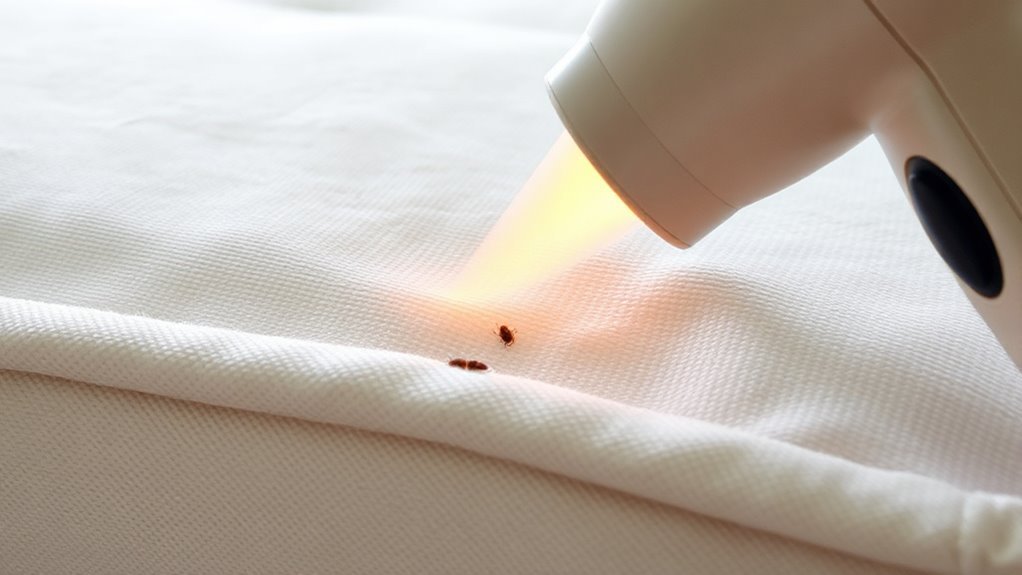
Will a Hair Dryer Kill Bed Bugs?
You can use a hair dryer to kill some exposed bed bugs on surfaces, but it won’t reliably reach or maintain the 120°F+ needed to kill all bugs and eggs. Hair dryers heat unevenly and don’t penetrate hiding spots well. Plus, they usually can’t sustain lethal temperatures for the required 20 minutes.
This means many bed bugs can survive, especially those hidden away. So, while a hair dryer might help a little, it’s not the best way to get rid of bed bugs for good. If you want more effective methods and safety tips, keep exploring what works best.
Key Takeaways
- Hair dryers produce heat around 140°F to 160°F but often cannot sustain lethal temperatures long enough to kill all bed bugs and eggs.
- Plus, short application times and uneven heat distribution limit how well hair dryers reach hidden bed bugs in crevices or bedding.
- Usually, hair dryer heat only kills exposed bugs on surfaces, so eggs and bugs that are protected often survive.
- Also, using a hair dryer can damage fabrics or electronics, making it a poor choice for widespread or severe infestations.
- Sure, hair dryers might work for minor spot treatments, but for full eradication, professional heat devices or integrated pest control methods are the way to go.
How Hot Do Bed Bugs Need to Be to Die (Can a Hair Dryer Get That Hot)?
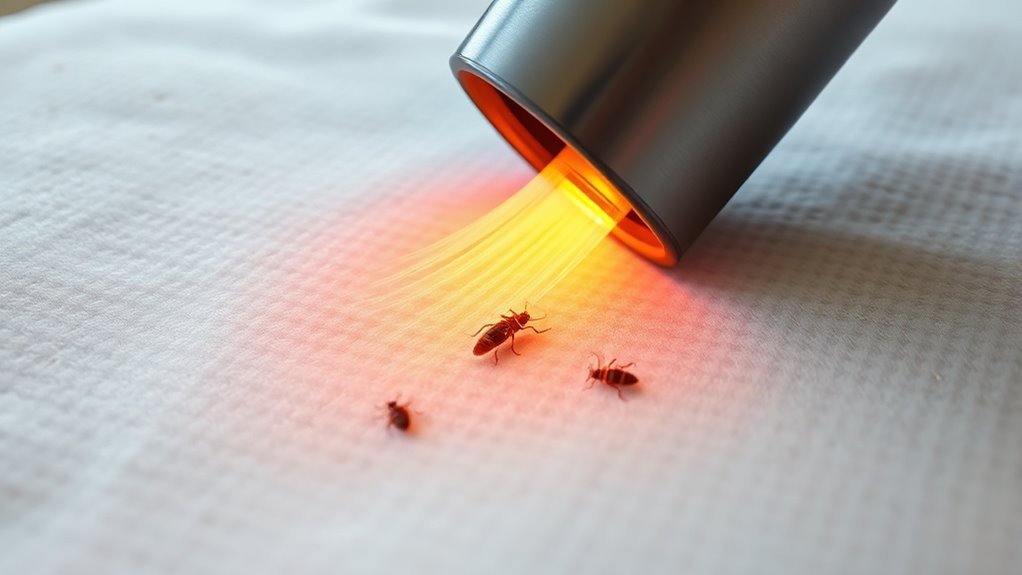
How hot do bed bugs actually need to be to die? You’ll want to expose them to temperatures above 120°F (49°C) for at least 20 minutes to guarantee they’re eliminated. At this heat, bed bugs and their eggs can’t survive.
It’s important to note that the heat must penetrate their hiding spots thoroughly to be effective. While some household tools can generate heat, not all reach or maintain these critical temperatures consistently.
You might wonder if a hair dryer can get that hot, but keep in mind their typical heat output and how long they sustain it plays a big role. Understanding these temperature requirements helps you figure out if common methods, like using a hair dryer, can actually work against bed bugs.
Can a Hair Dryer Get Hot Enough to Kill Bed Bugs?

You might wonder if your hair dryer gets hot enough to kill bed bugs. While hair dryers do reach high temperatures, bed bugs can tolerate a surprising amount of heat.
To truly eliminate them, you’ll need to understand both the heat limits of your dryer and the best way to apply it effectively. It’s not just about the temperature but also how long you expose the bugs to the heat.
Hair Dryer Temperature Limits
When you turn on a hair dryer, it quickly heats up, but the question remains whether it can reach temperatures high enough to kill bed bugs effectively. Most hair dryers heat air to about 140°F to 160°F (60°C to 71°C), depending on the model and setting.
However, this temperature might not be consistently maintained on all surfaces or through fabrics where bed bugs hide. So, it’s not always a sure thing.
Here are some key points about hair dryer temperature limits:
- Hair dryers usually max out around 160°F, which may be too low for lethal bed bug control.
- Prolonged exposure at this temperature is unlikely due to the risk of damaging materials or burning skin.
- Inconsistent heat distribution means some bugs might survive in cooler spots.
Bed Bug Heat Tolerance
Although hair dryers can produce warm air, bed bugs tolerate surprisingly high temperatures. Often, heat above 120°F (49°C) sustained for at least 20 minutes is needed to guarantee lethal effects.
You might think a hair dryer’s heat is enough, but it usually doesn’t reach or maintain these critical temperatures consistently. Bed bugs can survive brief bursts of heat below this threshold, especially if the warmth doesn’t penetrate their hiding spots.
Their eggs and nymphs are even more heat-resistant, meaning you need sustained, evenly distributed heat to make certain complete eradication. So, while a hair dryer can raise the temperature locally, it rarely keeps it high enough long enough to kill all bed bugs effectively.
Understanding their heat tolerance helps you grasp why simple heat sources often fall short.
Effective Heat Application Methods
Hair dryers generate heat, but their effectiveness against bed bugs depends on reaching and maintaining lethal temperatures throughout the infested area. While hair dryers can blow hot air, they rarely sustain the 120°F (49°C) or higher needed to kill bed bugs and their eggs reliably.
To effectively apply heat, consider these methods:
- Use specialized heat devices designed for pest control that maintain consistent, high temperatures.
- Target small, localized areas with a hair dryer, moving slowly to avoid missing spots. Just keep in mind, this won’t take care of widespread infestations.
- Combine heat with other treatments, like vacuuming and chemical options, for a more thorough approach. It’s often best to tackle bed bugs from multiple angles.
How to Use a Hair Dryer Safely to Kill Bed Bugs
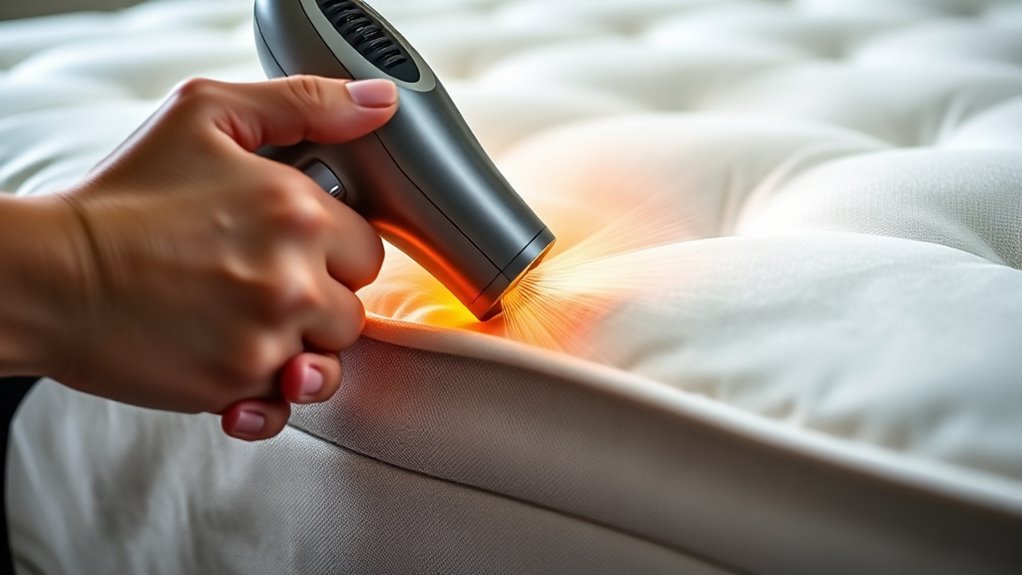
Using a hair dryer to kill bed bugs requires careful attention to safety and technique. You’ll want to focus the heat directly on infested areas without overheating surfaces or risking burns.
Keep the dryer moving steadily to avoid damage, and maintain a safe distance of about 2-3 inches. Avoid prolonged heat exposure on delicate fabrics or electronics.
Here’s a quick guide to help you stay safe and effective:
| Action | Emotion | Result |
|---|---|---|
| Direct heat gently | Confidence | Bed bugs weaken |
| Keep distance | Caution | Prevent burns/damage |
| Move steadily | Control | Even heat distribution |
| Avoid delicate items | Awareness | Protect belongings |
| Monitor time | Patience | Safe, thorough treatment |
Why a Hair Dryer Might Not Be Enough to Kill Bed Bugs
You might find that a hair dryer doesn’t produce enough heat to reach all the bed bugs hiding deep in cracks or mattresses. The short time you can safely apply heat also limits its effectiveness.
Plus, bed bugs are experts at staying out of direct heat, making it hard to eliminate them completely with just a hair dryer. So, relying on one alone might not do the trick.
Insufficient Heat Penetration
Although a hair dryer can generate heat, it often fails to deliver enough consistent warmth deep into mattresses, cracks, and crevices where bed bugs hide. Bed bugs retreat to places that are tough for surface heat to reach.
This means you might only kill bugs on the surface, leaving others safe inside.
Here’s why heat penetration is insufficient with a hair dryer:
- Hair dryers blow hot air that cools quickly, losing intensity before reaching deep spots.
- Mattresses and furniture materials act as insulators, preventing heat from spreading evenly.
- Bed bugs hide in tiny, protected spaces where the heat from a hair dryer can’t reach effectively.
Because of this, relying on a hair dryer alone won’t fully eliminate bed bugs.
Limited Exposure Duration
Since a hair dryer struggles to reach bed bugs hidden deep within mattresses and cracks, its effectiveness also suffers from how long it can maintain lethal heat on those pests. You can only hold a hair dryer in one spot for a limited time before the device overheats or becomes uncomfortable to use.
This short exposure often isn’t enough to kill all the bed bugs, especially since they need consistent temperatures above 120°F for at least 20 minutes to die. Plus, you risk damaging fabrics or surfaces if you keep the heat on too long.
Bed Bug Hiding Spots
Bed bugs love to hide in tiny, hard-to-reach places, making it tough for a hair dryer to deliver lethal heat where it counts. You might think blasting heat could solve the problem, but these pests tuck themselves away in spots a hair dryer can barely reach.
Here are three common bed bug hiding spots:
- Mattress seams and under tags
- Cracks in bed frames and headboards
- Behind baseboards and inside electrical outlets
Because these areas are narrow and insulated, the heat from a hair dryer often won’t penetrate deeply enough to kill all the bugs and their eggs. So, just using a hair dryer might not do the trick.
To really get rid of bed bugs, you’ll need methods that reach these hidden spots thoroughly, not just surface heating. Otherwise, those pesky bugs and their eggs could stick around.
Heat-Based Alternatives to Hair Dryers for Bed Bug Control
Exploring heat-based alternatives to hair dryers can offer you more effective ways to eliminate bed bugs. Hair dryers often don’t reach the consistent, high temperatures needed to kill these pests.
Instead, consider options designed for pest control, which guarantee thorough heat treatment.
| Method | Temperature Range | Application Time |
|---|---|---|
| Portable Heat Chambers | 120°F to 140°F (49°C-60°C) | 30-90 minutes |
| Steam Cleaners | 200°F+ (93°C+) | Immediate contact |
| Electric Heating Devices | 135°F to 150°F (57°C-66°C) | 60 minutes or more |
Using these alternatives can provide targeted heat, penetrating bed bug hiding spots more effectively than a hair dryer.
When to Call a Professional for Bed Bug Removal
While heat-based methods can be effective for tackling bed bugs, they might not always be enough for severe or widespread infestations.
You should consider calling a professional if you notice any of the following:
- Persistent Infestation: If bed bugs keep coming back despite your efforts, professionals can find hidden nests and treat them more effectively.
- Large-Scale Spread: When bed bugs have infested multiple rooms or pieces of furniture, DIY methods might not cut it. That’s when expert help is really needed.
- Health Concerns: If you or your family members start having allergic reactions or get bitten excessively, professionals can offer safer, targeted treatments.
Frequently Asked Questions
Can Bed Bugs Develop Resistance to Heat Treatments?
Yes, bed bugs can develop some resistance to heat treatments over time.
You’ll need to use higher temperatures or combine methods to effectively control them. Relying solely on moderate heat might not eliminate all of them.
How Long Do Bed Bugs Live Without Feeding?
Bed bugs can survive like tiny zombies for months without feeding—usually up to six months, but some tough ones last even longer.
You’ll need patience and persistence to outlast these stubborn hitchhikers.
Are Bed Bug Bites Contagious or Harmful to Humans?
No, bed bug bites aren’t contagious, and they don’t spread diseases. However, you might experience itching or allergic reactions.
Try not to scratch the bites, as that can lead to infections. It’s a good idea to treat the bites promptly to ease discomfort and prevent any complications.
What Are Common Signs of a Bed Bug Infestation?
Oh, you’ll love finding tiny rust-colored spots on your sheets, itchy red bites in neat rows, and mysterious musty odors.
You’ll also spot shed skins and live bugs hiding in mattress seams—welcome to your uninvited guests’ party!
Can Bed Bugs Hide in Electronic Devices?
Yes, bed bugs can hide in electronic devices because they seek dark, warm places.
You should carefully inspect and clean your gadgets regularly to prevent infestations. These spots offer perfect hiding places for them to thrive unnoticed.
Conclusion
If you’re battling bed bugs, know they need to reach about 120°F to die. Most hair dryers only hit around 140°F briefly and unevenly, which might sound like it’s enough.
While a hair dryer might help in some cases, it often won’t reach the deep hiding spots or maintain the heat long enough to be truly effective. Bed bugs love to hide in cracks and crevices, making it tough for a quick blast of hot air to do the job.
Remember, studies show heat treatments that consistently hit 120°F for 90 minutes can eliminate infestations. So, if you’re dealing with stubborn bugs, it’s best to consider professional heat treatments.
Using a hair dryer alone is usually not enough to kill bed bugs completely. For a safer and more reliable solution, professional heat treatments are the way to go to truly win the fight against bed bugs.