Our Top 7 Best Oils for Scalp Psoriasis
You can soothe and moisturize your scalp psoriasis with these top seven oils.
These natural oils are fantastic for calming irritation, reducing flakes, and promoting overall scalp health. If you’re dealing with scalp psoriasis, incorporating oils like coconut, tea tree, jojoba, olive, castor, argan, and lavender can make a real difference.
Coconut oil eases dryness and promotes healing, while tea tree oil fights inflammation and infection when diluted.
Jojoba oil mimics your natural scalp oils, soothing flakes without clogging pores.
Olive oil nourishes and repairs damaged skin, and castor oil hydrates and calms irritation.
Argan and lavender oils also bring soothing and restorative benefits.
Explore how each can best support your scalp’s health.
Key Takeaways
– Coconut oil soothes irritation, moisturizes flaky patches, and prevents infections on the scalp.
It’s pretty great for calming down those itchy spots and keeping things healthy.
– Tea tree oil reduces inflammation and itchiness while fighting infections when diluted properly.
Just make sure to dilute it right, so it’s gentle on your skin.
– Jojoba oil mimics natural scalp oils, moisturizing and calming inflammation without clogging pores.
This means it’s super effective without making your scalp feel greasy.
– Olive oil nourishes and repairs damaged skin, softening flakes and restoring scalp balance.
It’s like a little spa treatment for your scalp, really helping to bring it back to life.
– Castor oil hydrates deeply, reduces redness, and supports healing and stronger hair growth.
Plus, it can give your hair a healthy boost while calming the skin underneath.
Coconut Oil

Anyone dealing with scalp psoriasis will find coconut oil a powerful ally. You can apply it directly to your scalp to soothe irritation and reduce dryness. Its natural moisturizing properties help soften flaky patches, making them easier to remove without causing pain.
Coconut oil also has antimicrobial benefits, which can prevent infections on cracked skin. When you massage it gently into your scalp, it improves blood circulation, promoting healing.
For best results, leave the oil on for at least 30 minutes or overnight before washing it out with a gentle shampoo. Just make sure to use pure, cold-pressed coconut oil to avoid additives that might irritate your skin.
Incorporating coconut oil into your routine can make managing scalp psoriasis more comfortable and effective. Give it a try—you might be surprised at how much it helps!
Tea Tree Oil
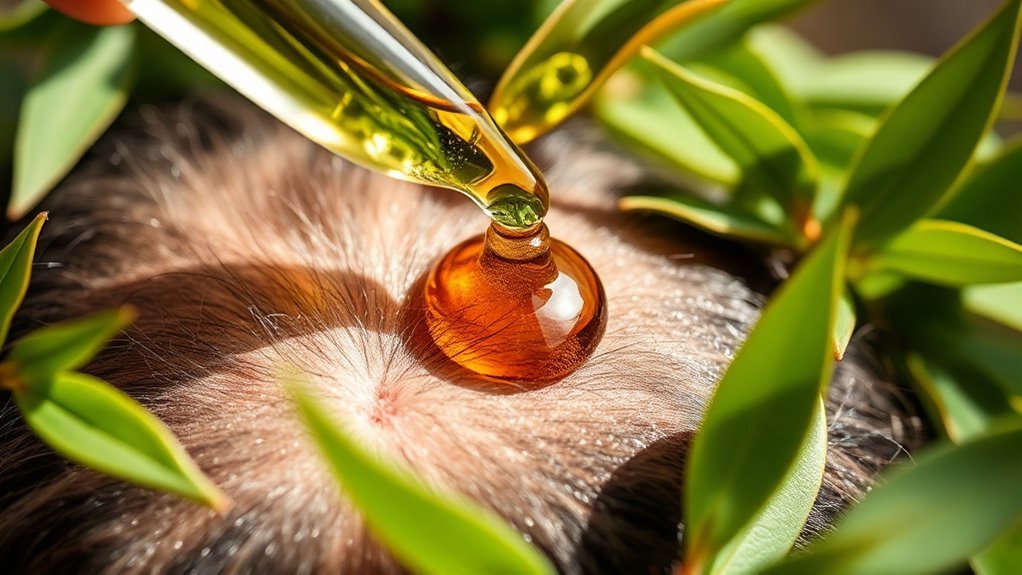
Although scalp psoriasis can be stubborn, tea tree oil offers a natural way to reduce inflammation and itchiness. You’ll find its antimicrobial properties help fight irritation and prevent infections, making your scalp feel calmer and cleaner.
When using tea tree oil, always dilute it with a carrier oil to avoid skin sensitivity. Applying it consistently can soothe redness and reduce flaking, giving you relief from discomfort.
Here’s why you might love tea tree oil for scalp psoriasis:
Discover how tea tree oil can naturally soothe, refresh, and protect your scalp from psoriasis discomfort.
- Eases persistent itchiness quickly
- Reduces redness and swelling naturally
- Helps prevent scalp infections
- Leaves your scalp feeling refreshed
- Supports healing without harsh chemicals
Give it a try and see how incorporating tea tree oil into your routine can give your scalp a soothing boost. It’s a simple step that can make a big difference!
Jojoba Oil

Beyond tea tree oil’s antimicrobial benefits, jojoba oil offers a unique way to nourish and protect your scalp. It closely mimics your scalp’s natural oils, making it excellent for moisturizing without clogging pores.
Jojoba oil helps reduce dryness and flakiness associated with scalp psoriasis. Plus, it soothes inflammation and promotes healing, making your scalp feel calmer and healthier.
| Benefit | How It Helps |
|---|---|
| Moisturizing | Restores scalp hydration |
| Anti-inflammatory | Reduces redness and irritation |
| Non-comedogenic | Doesn’t block hair follicles |
| Healing Support | Encourages skin repair |
Using jojoba oil regularly can keep your scalp balanced and comfortable. It’s a great way to help manage psoriasis symptoms naturally.
Olive Oil
Olive oil delivers rich, nourishing moisture that can soothe the dryness and scaling caused by scalp psoriasis. When you apply it, you’ll feel your scalp soften, reducing that uncomfortable itch.
It’s packed with antioxidants and vitamins that help repair damaged skin and calm inflammation. Using olive oil regularly can restore your scalp’s natural balance and leave your hair feeling silky.
Here’s why olive oil might become your go-to:
- Soothes irritation and reduces redness
- Softens flaky, stubborn patches
- Penetrates deeply to hydrate dry skin
- Promotes a healthier scalp environment
- Provides a natural, chemical-free option
Give olive oil a try—you might just find the relief you’ve been searching for.
Argan Oil
If you’ve found relief with olive oil, argan oil might be the next natural step to nourish your scalp psoriasis. Packed with antioxidants and vitamin E, argan oil helps soothe inflammation and hydrate dry, flaky skin.
Its lightweight texture absorbs quickly, so it won’t leave your scalp greasy or heavy. You can apply it directly to affected areas or mix a few drops with your shampoo for daily care.
| Benefit | Description |
|---|---|
| Anti-inflammatory | Reduces redness and irritation |
| Hydrating | Moisturizes dry, flaky scalp |
| Lightweight | Absorbs fast without greasiness |
| Antioxidant-rich | Protects skin from damage |
| Promotes Healing | Supports skin repair and renewal |
Using argan oil regularly can ease discomfort and improve your scalp’s health naturally. Give it a try and see how your skin responds!
Castor Oil
Castor oil can soothe your scalp and reduce inflammation caused by psoriasis. You’ll want to warm it slightly before applying to help it absorb better.
Try massaging it gently into your scalp and leaving it on for at least 30 minutes for the best results. It really helps to give your scalp some TLC!
Benefits for Scalp
One powerful remedy you can use for scalp psoriasis is castor oil, known for its anti-inflammatory and moisturizing properties. This oil soothes irritation, reduces redness, and deeply hydrates your scalp, helping to calm flare-ups.
When you use castor oil, you’ll notice it eases itching, giving you much-needed relief. It also softens dry, flaky patches for a healthier scalp.
Plus, it supports skin healing, promoting quicker recovery. On top of that, it creates a protective barrier against environmental irritants.
And don’t forget, it nourishes hair follicles, encouraging stronger hair growth. It’s like giving your scalp the TLC it deserves!
Application Tips
To get the most from castor oil’s soothing and healing effects, proper application is key. Start by warming a small amount between your palms to improve absorption.
Then, apply it directly to the affected areas of your scalp, gently massaging in circular motions to stimulate blood flow. Don’t use too much oil; a thin layer is enough.
Leave it on for at least 30 minutes or overnight for deeper penetration. Cover your hair with a shower cap to prevent stains.
When you’re ready, rinse thoroughly with a mild shampoo to avoid buildup. Use castor oil consistently, about two to three times a week, to help reduce psoriasis flare-ups and promote scalp health.
Oh, and always do a patch test first to make sure you don’t have any allergic reactions.
Lavender Oil
Lavender oil soothes irritated skin and reduces inflammation, making it a great choice if you’re dealing with scalp psoriasis. Its calming properties not only ease itching but also promote healing, helping your scalp feel refreshed and comfortable.
When you use lavender oil, you tap into a natural remedy that supports your skin’s recovery without harsh chemicals. It’s pretty amazing how something so simple can make a big difference.
Here’s why you’ll appreciate lavender oil for scalp psoriasis:
- Calms intense itching quickly
- Reduces redness and swelling
- Encourages skin cell regeneration
- Leaves a pleasant, relaxing scent
- Supports overall scalp health
Try incorporating lavender oil into your routine to experience relief and restore comfort to your scalp. You might find it becomes your new go-to for soothing care.
Frequently Asked Questions
Can Scalp Psoriasis Oils Be Used Alongside Prescription Treatments?
Yes, you can usually use scalp psoriasis oils alongside prescription treatments, but you should check with your doctor first.
Mixing treatments without guidance might cause irritation or reduce effectiveness. So, always get professional advice before combining them.
How Often Should I Apply These Oils for Best Results?
You should apply these oils two to three times a week to see the best results.
Coincidentally, this frequency balances moisture without overwhelming your scalp. It helps soothe psoriasis while fitting easily into your routine.
Are These Oils Safe for Children With Scalp Psoriasis?
Yes, many oils are safe for children with scalp psoriasis, but you should always do a patch test first.
It’s a simple step that helps make sure the oil won’t irritate your child’s skin.
Also, consult your pediatrician before starting any new treatment.
They can confirm that it’s appropriate and safe for your child’s skin type and condition.
Can These Oils Cause Allergic Reactions or Side Effects?
Could you be allergic to these oils? Yes, you can experience reactions or side effects like itching or redness.
Always patch test first, and consult a healthcare provider if you notice any irritation or discomfort. Better safe than sorry, right?
Do These Oils Help Prevent Scalp Psoriasis Flare-Ups?
Yes, these oils can help prevent scalp psoriasis flare-ups by moisturizing your scalp, reducing inflammation, and soothing irritation.
Just make sure you test them first to avoid any allergic reactions or side effects. It’s always better to be safe than sorry!
Conclusion
Think of these oils as your scalp’s gentle rain, washing away discomfort and nourishing new growth. Each drop symbolizes hope—a natural remedy that soothes and restores balance to your skin.
By embracing coconut, tea tree, jojoba, and the others, you’re not just treating psoriasis; you’re planting seeds of relief and confidence. These oils work together to calm inflammation, reduce itching, and promote healthier skin.
Let these oils be the calm after your storm, guiding you toward healthier, happier scalp days ahead. Incorporating the best oils for scalp psoriasis into your routine can make a real difference, helping you manage symptoms naturally and effectively.
So go ahead, nurture your scalp with these gentle oils and enjoy the soothing comfort they bring. Your journey to relief and renewed confidence starts with just a few drops.