7 Steps to Dry Hair Fast Without a Hair Dryer
To dry your hair fast without a dryer, start by gently patting it with a soft towel or cotton T-shirt to soak up moisture without causing frizz.
Wrapping your hair in a microfiber towel is another great way to absorb water quickly. These simple steps help reduce drying time and protect your hair from damage.
Next, detangle your hair with a wide-tooth comb to improve airflow. This makes your hair dry faster and prevents knots.
Applying lightweight, fast-absorbing products can also speed up the drying process.
Finally, let your hair air dry in a breezy spot for natural ventilation. Using a cool fan helps, too, by circulating air around your hair.
Keep going to discover even more effective tips!
Key Takeaways
- Gently pat hair with a microfiber towel or soft cotton T-shirt to absorb moisture without causing frizz or breakage.
- Detangle hair softly with a wide-tooth comb from ends to roots to improve airflow and reduce drying time.
- Apply lightweight, fast-absorbing leave-in conditioner or serum to speed evaporation and control frizz.
- Air dry hair in a well-ventilated, breezy space or near an open window to enhance moisture evaporation.
- Style hair in loose braids, buns, or twists to shape and speed drying while reducing tangles and damage.
Give these a try, and you’ll notice your hair drying faster without any heat damage!
Gently Pat Your Hair To Dry Hair Faster
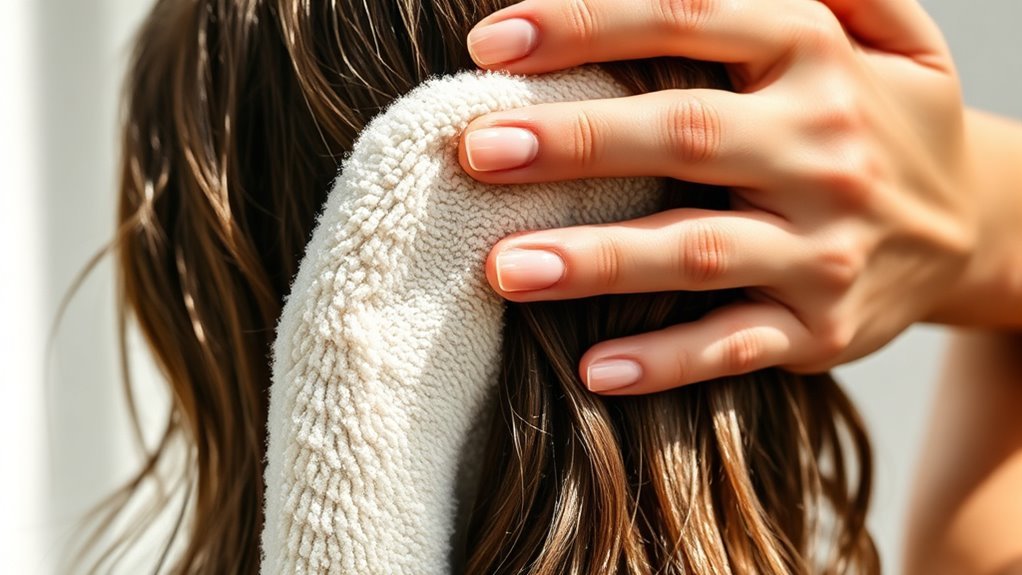
When you step out of the shower, don’t just rub your hair with a towel—gently pat it instead. Rubbing causes friction that can lead to frizz, breakage, and damage, especially if your hair is fragile or curly.
By gently patting, you absorb excess water without disturbing your hair’s natural structure. Use a soft, absorbent towel and press it against your hair in sections, repeating until most moisture is gone.
Avoid wringing or twisting your hair, as this can stretch and weaken the strands. Patting helps speed up drying by removing water efficiently while keeping your hair healthy.
This simple change in technique can make a big difference if you want to dry your hair fast without risking damage. It’s an easy switch that your hair will thank you for!
Wrap Hair In A Microfiber Towel Or Cotton T-Shirt To Absorb Moisture

You’ll find microfiber towels great for soaking up moisture quickly without causing frizz or damage.
If you don’t have one, wrapping your hair in a soft cotton t-shirt works just as well and is gentle on your strands.
I’ll share some simple tips to help you wrap your hair securely and speed up drying.
Benefits of Microfiber Towels
Microfiber towels consistently offer a gentle and effective way to dry your hair without causing damage. Unlike regular towels, they absorb moisture quickly, cutting down your drying time markedly.
The soft fibers reduce friction, which helps prevent frizz and breakage, keeping your hair healthier. You’ll also find microfiber towels lightweight and easy to wrap, so they stay secure while you go about other tasks.
Because they’re designed to wick water away efficiently, you don’t need to rub or rough-dry your hair, which can weaken strands. Using a microfiber towel means you can skip heat styling tools more often, preserving your hair’s natural texture and shine.
Cotton T-Shirt Wrapping Tips
Although a microfiber towel works wonders, wrapping your hair in a soft cotton T-shirt can be just as effective at absorbing moisture without roughing up your strands. Choose a clean, breathable T-shirt—avoid rough fabrics that might cause frizz.
After washing, gently squeeze out excess water, then wrap your hair by placing the shirt over your head and twisting it at the ends, securing it at the back. The cotton fibers soak up water gently, reducing drying time while protecting your hair’s integrity.
| Tip | Benefit |
|---|---|
| Use a soft cotton T-shirt | Minimizes hair breakage |
| Twist and secure loosely | Prevents tight pulling |
| Replace when damp | Keeps hair fresh and dry |
Use Lightweight Products That Speed Hair Drying

You can speed up drying by using lightweight leave-in conditioners that won’t weigh your hair down. Quick-dry hair serums also help by cutting drying time and adding shine.
Choose products that absorb quickly to keep your hair light and fast-drying. It’s all about picking the right stuff that works with your hair, not against it.
Lightweight Leave-In Conditioners
When you’re aiming to dry your hair quickly without a hair dryer, lightweight leave-in conditioners can speed up the process while keeping your strands nourished. These products add just enough moisture to prevent frizz without weighing your hair down or slowing drying time.
Choose formulas labeled “lightweight” or “fast-absorbing” to get the best results. You’ll love how these conditioners boost your hair’s natural texture for a soft, touchable feel.
They also reduce drying time by allowing water to evaporate more easily. Plus, they keep your hair smooth and manageable without heaviness.
Quick-Dry Hair Serums
Boost your drying routine by incorporating quick-dry hair serums designed to speed up moisture evaporation while keeping hair smooth. These lightweight products reduce drying time markedly without weighing your hair down or leaving residue.
Just apply a small amount to damp hair, focusing on mid-lengths and ends to enhance airflow and prevent frizz. It’s super easy and makes a noticeable difference.
Here’s a quick guide:
| Feature | Benefit | Application Tip |
|---|---|---|
| Lightweight | Prevents heaviness | Use sparingly |
| Moisture-evaporate | Speeds drying | Apply to damp hair |
| Frizz control | Smooths strands | Focus on mid-lengths & ends |
Using serums like these helps you cut down wait time, so you can style faster without a hair dryer. Pretty neat, right?
Comb Hair To Detangle And Help It Dry Faster
Running a wide-tooth comb through your hair right after washing can speed up drying by breaking up clumps and allowing air to circulate more freely. When your hair is tangled, water gets trapped, slowing the drying process.
Using a wide-tooth comb after washing breaks up clumps and helps hair dry faster by improving airflow.
By gently detangling, you help moisture evaporate faster and prevent breakage.
Here’s why combing helps:
- It feels satisfying to smooth out knots and see your hair flow freely.
- You reduce frustration by avoiding painful pulls and snags.
- You boost confidence knowing your hair dries evenly and looks better sooner.
Remember to comb carefully from the ends up to avoid damage. This simple step makes your drying routine quicker and more enjoyable, giving you more time to get on with your day.
Plop Curly Or Wavy Hair To Speed Drying
You’ll often find that plopping your curly or wavy hair with a soft towel or cotton T-shirt helps it dry faster while enhancing its natural texture. To do this, lay the fabric flat, flip your hair forward, and gently lower your curls onto it.
Then, wrap the towel or T-shirt around your head, securing it at the nape of your neck. This method absorbs excess moisture without roughing up your strands, reducing frizz and speeding up drying.
Avoid using rough terry cloth towels, as they can cause damage and disrupt curl patterns. Keep your hair plopped for 15 to 30 minutes, depending on how wet it is.
Once done, unwrap carefully and let your hair continue drying naturally or move on to your next drying step. It’s super easy and your curls will thank you!
Let Hair Air Dry In A Breezy, Well-Ventilated Space
After plopping your hair to remove excess moisture, giving it space to breathe can speed up drying even more. Find a breezy, well-ventilated spot where fresh air flows freely. This natural airflow helps evaporate water faster without heat damage.
Choose a place that feels reinvigorating, like a gentle outdoor breeze or near an open window. It should be calm, so you can relax while your hair dries naturally. And comfortable, allowing you to move freely and avoid trapping humidity.
Avoid crowded or humid rooms, as stagnant air slows drying and can cause frizz. Let your hair hang loose or gently scrunch it to encourage airflow between strands.
Speed Dry Hair Using Cool Fan Air
Often, using a cool fan can noticeably speed up drying your hair without exposing it to heat. Position yourself in front of a fan and gently comb through your hair to encourage airflow between strands.
The cool air helps evaporate moisture faster and reduces frizz compared to warm air. For best results, combine towel-drying with fan use to remove excess water first.
| Fan Speed | Distance from Hair | Ideal Hair Type |
|---|---|---|
| Medium | 1-2 feet | All hair types |
| Low | 6-12 inches | Fine or thin hair |
| High | 2-3 feet | Thick or long hair |
Just adjust the fan speed and distance based on your hair’s thickness and length. That way, you’ll dry efficiently without tangling.
Frequently Asked Questions
Can Drying Hair Fast Damage Its Health?
Yes, drying hair fast can damage its health if you’re too rough or use high heat.
You should handle your hair gently to prevent breakage, dryness, and split ends.
This way, you keep it healthy and shiny.
What Are the Best Natural Ingredients to Speed Drying?
Imagine cool aloe vera soothing your scalp while coconut oil seals moisture. You’ll love lemon juice’s invigorating zing and witch hazel’s quick-drying magic.
These natural ingredients help you speed up drying without harsh heat or damage. Give them a try and see the difference for yourself!
How Does Humidity Affect Hair Drying Time?
Humidity slows your hair drying time because the air is already saturated with moisture, making evaporation harder.
You’ll notice your hair stays damp longer in humid conditions, so drying naturally takes much more patience and effort.
It’s kind of annoying, right? But that’s just how humidity works against the drying process.
Should I Avoid Heat Protectants When Drying Hair Quickly?
You shouldn’t avoid heat protectants just because you want to dry hair quickly; they shield your strands from damage.
Even if you’re rushing, protecting your hair beats risking dryness or breakage later on. It’s a quick step that really pays off in the long run.
Can Brushing Wet Hair Cause Breakage?
Yes, brushing wet hair can cause breakage because it’s more fragile when wet. You should use a wide-tooth comb or gently finger-detangle to avoid damage.
Be patient and avoid harsh pulling to protect your hair. Taking it slow really helps keep your strands healthy!
Conclusion
Drying your hair fast without a dryer is easier than you think when you follow these simple steps. By patting gently, using microfiber towels, and letting your hair breathe, you’ll save time and avoid damage.
Remember, slow and steady wins the race—rushing with heat isn’t the only way to get dry hair quickly.
With a bit of patience and the right techniques, you’ll have your hair dry and ready to go in no time! Dry hair fast without a hair dryer might sound tricky, but it’s totally doable. Just stick to these easy methods, and you’ll see how drying your hair quickly without heat can actually be better for your hair’s health. So next time you want to dry your hair fast, skip the dryer and try these steps for a gentler, quicker way to get dry hair without damage.