10 Easy Ways to Dry My Hair Without a Hair Dryer
You can dry your hair without a hair dryer by using a microfiber towel or a soft cotton T-shirt. Gently squeeze out the water instead of rubbing, which helps prevent damage and frizz. This simple trick is great for keeping your hair healthy and smooth.
Next, detangle your hair with a wide-tooth comb. Then, apply a lightweight leave-in conditioner to speed up drying and add natural shine. Let your hair air dry, either loosely tied or down, whichever feels best for you.
If you want to dry your hair a little faster without heat, try using a fan on low. It’s an easy way to speed things up without risking heat damage. Keep following for more easy tips to protect and style your hair as it dries!
Key Takeaways
- Gently squeeze excess water from your hair and wrap it in a microfiber or soft cotton T-shirt towel for 10-20 minutes. This helps absorb moisture quickly.
- Detangle damp hair with a wide-tooth comb, starting from the ends. This minimizes breakage and helps your hair dry more evenly.
- Let your hair air dry naturally. You can keep it down or loosely tied up to maximize airflow and avoid damp spots.
- Try using a fan with gentle airflow directed at your roots and ends. It speeds up drying without causing frizz or tangles.
- After towel drying, apply a lightweight leave-in conditioner. It locks in moisture, smooths your cuticles, and helps your hair dry faster.
Why Choosing Heat-Free Hair Drying Benefits Your Hair
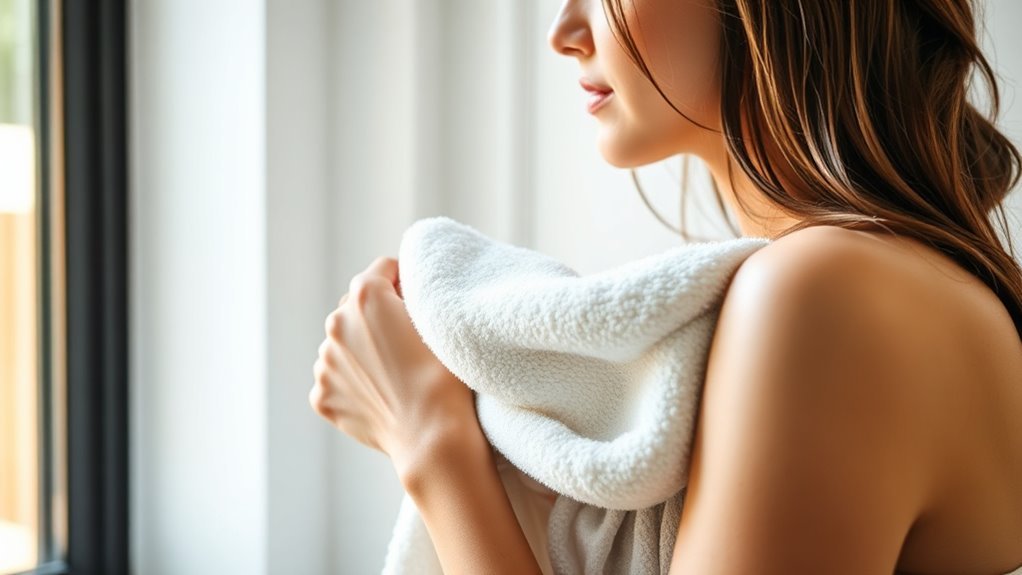
While it might be tempting to reach for your hair dryer, choosing heat-free drying methods can markedly improve your hair’s health. When you skip heat, you reduce the risk of damaging your hair’s cuticle, which helps maintain moisture and prevents breakage.
Your strands stay stronger and less prone to split ends, making your hair look shinier and healthier. Avoiding heat also means you’ll preserve your hair’s natural texture and color, so you won’t have to worry about fading or frizz caused by excessive heat exposure.
Plus, your scalp benefits too—less heat means less dryness and irritation. By drying your hair without heat, you’re giving it a chance to stay resilient and vibrant over time, which pays off in the long run.
Use a Microfiber Towel to Absorb Water Quickly
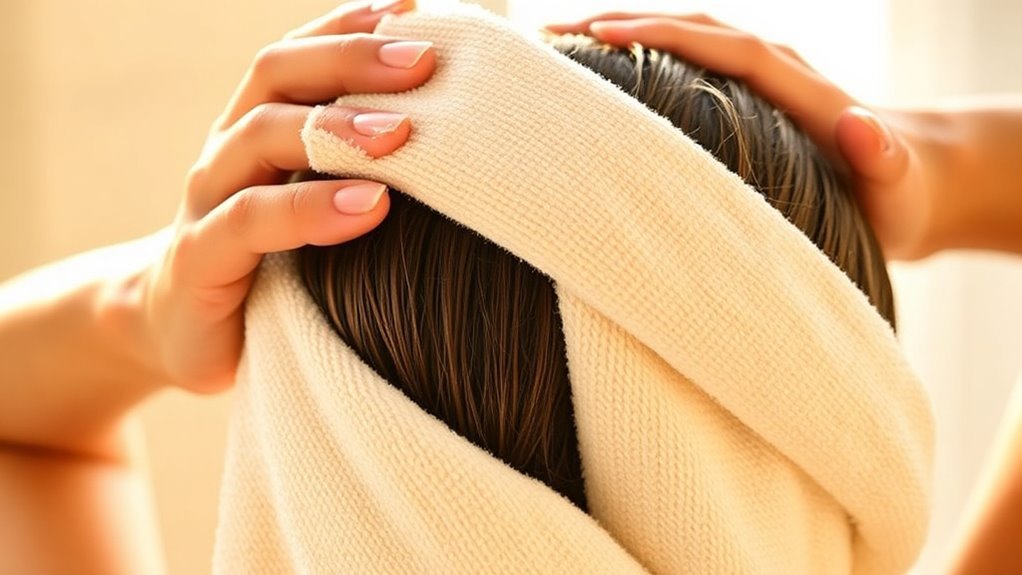
You’ll love how a microfiber towel soaks up water faster than a regular towel, cutting down your drying time without roughening your hair.
To get the best results, gently wrap your hair and press the towel instead of rubbing. This helps prevent frizz and breakage.
Using this simple tool correctly can keep your hair healthier and save you time. Give it a try!
Benefits of Microfiber Towels
Many people find that microfiber towels absorb water far more quickly than regular towels, making them an excellent choice for drying hair without a hair dryer. When you use a microfiber towel, you reduce drying time and minimize hair damage caused by rough towel rubbing.
These towels are soft, lightweight, and gentle on your hair cuticles, helping to prevent frizz and breakage. They really make a difference if you want to keep your hair healthy and shiny.
Here’s a quick look at the benefits:
| Benefit | Why It Matters |
|---|---|
| Fast Absorption | Speeds up drying time |
| Gentle Texture | Prevents hair damage |
| Lightweight | Easy to handle and carry |
| Reduces Frizz | Keeps hair smooth and shiny |
| Durable | Lasts through many washes |
Using microfiber towels is a smart, simple way to care for your hair without heat. Give them a try—you might just love how easy and effective they are!
How to Use Properly
Since microfiber towels absorb water so efficiently, using them correctly can make a big difference in how quickly your hair dries. First, gently squeeze excess water from your hair with your hands before wrapping the towel around your head.
Avoid rubbing or rough towel-drying, as this can cause frizz and breakage. Instead, wrap the microfiber towel snugly around your hair and leave it on for about 10 to 20 minutes.
The towel will draw out moisture without damaging your strands. If you want, you can gently scrunch your hair with the towel to boost water absorption.
Once you remove the towel, your hair should feel damp but not dripping, speeding up air-drying time. Using your microfiber towel this way helps keep your hair healthy and cuts drying time.
Try the T-Shirt Method for Gentle Hair Drying

Give your hair a break from rough towels by switching to the T-shirt method for drying. Grab a clean, soft cotton T-shirt, ideally one you don’t mind using for this purpose.
After washing your hair, gently place the shirt over your head, covering your hair. Instead of rubbing, use the fabric to gently squeeze and scrunch your hair, absorbing moisture without causing friction or frizz.
The smooth texture of the T-shirt reduces hair breakage and keeps your strands intact. This method works especially well for curly or delicate hair types, maintaining your natural texture while speeding up drying time.
Plus, it’s eco-friendly and easy to do anywhere. Give it a try—you’ll notice softer, less damaged hair after drying.
Pat and Squeeze Your Hair Instead of Rubbing
When you pat and squeeze your hair gently, you help absorb moisture without causing damage.
Rubbing your hair can roughen up the cuticles, which leads to frizz and breakage.
Gentle Moisture Absorption
Patting and gently squeezing your hair helps absorb moisture without causing damage or frizz. Instead of rubbing your hair with a towel, which can roughen the cuticle and lead to tangles, press the towel softly against your strands.
Work in sections by squeezing small bunches of hair, encouraging water to leave the shaft naturally. This method controls excess wetness while maintaining your hair’s smoothness.
You can also use a microfiber towel or a soft cotton T-shirt for even gentler absorption. These materials reduce friction, making it easier to manage your hair and prevent breakage.
Minimize Hair Damage
To protect your hair’s health while drying, focus on gently pressing and squeezing moisture out instead of rubbing. Rubbing your hair with a towel can cause friction, leading to breakage, frizz, and split ends.
Instead, use a soft microfiber towel or an old cotton t-shirt to pat your hair gently. After patting, wrap sections of your hair and lightly squeeze to encourage water absorption.
This method helps remove excess water without disturbing your hair’s cuticle or causing tangles. By treating your hair with care during drying, you maintain its strength and shine.
Avoid aggressive drying techniques to minimize damage and keep your hair looking healthy and smooth, even without using a hair dryer. It really makes a difference!
Let Your Hair Air Dry Naturally Without Damage
Allowing your hair to air dry naturally can protect it from the heat damage caused by blow dryers. To make the most of this method, gently squeeze out excess water with a microfiber towel or a soft cotton T-shirt to reduce friction and frizz.
Avoid rubbing your hair vigorously, as this can cause breakage. Comb your hair with a wide-tooth comb to detangle while it’s still damp, minimizing stress on strands.
Try to keep your hair down or loosely tied to allow airflow, preventing damp spots that can lead to scalp issues. Finally, be patient—air drying takes time, but your hair will thank you with improved texture and strength, free from heat-related damage.
Use a Fan to Speed Up Air Drying
You can speed up air drying by using a fan, but positioning your hair correctly is key to getting the best airflow.
Make sure to choose a fan speed that feels comfortable—too high can cause tangles, while too low might not dry your hair efficiently.
Adjusting these simple factors helps you dry your hair faster without heat damage.
Positioning Your Hair Correctly
Arrange your hair so it catches the airflow from a fan directly, speeding up the drying process. To do this, part your hair in sections and spread them out rather than keeping it all bunched together.
You can flip your hair forward or tilt your head to one side to expose more strands to the breeze. If you have long hair, letting it hang freely allows the air to circulate better around each layer.
For shorter hair, gently tousle it with your fingers so the air reaches your scalp and roots evenly. Adjust your position relative to the fan so the airflow hits your hair at different angles.
This way, you ensure thorough drying without needing to touch it constantly. This simple positioning helps your hair dry faster and more evenly.
Choosing the Right Fan Speed
Although any fan can help speed up air drying, choosing the right fan speed makes a big difference in how quickly and evenly your hair dries. Start with a medium speed to avoid blowing your hair wildly, which can cause tangling or frizz.
If your hair is thick or long, a higher speed might be necessary to move enough air for effective drying. For finer or shorter hair, a gentle breeze works best to prevent damage and keep things smooth.
Also, adjust the fan’s angle to target your roots and ends evenly. Keep an eye on how your hair feels and looks as it dries, and tweak the speed as needed.
With the right fan speed, you’ll cut down drying time while keeping your hair healthy and manageable. Easy, right?
Comb Through Damp Hair to Reduce Drying Time
Brushing through your damp hair helps break up clumps and spreads moisture evenly, speeding up the drying process. Start by using a wide-tooth comb to gently detangle your hair without causing breakage.
Brushing damp hair with a wide-tooth comb gently detangles and evenly spreads moisture for faster drying.
Work from the ends upward, loosening knots carefully. This not only promotes faster drying but also prevents uneven moisture pockets that take longer to evaporate.
Avoid harsh brushing, as wet hair is more fragile. After combing, let your hair air dry in sections, allowing airflow to reach the roots and strands more effectively.
Repeating this combing process a few times during drying can help maintain separation and reduce drying time further. Incorporating this simple step into your routine makes drying your hair without a dryer quicker and more manageable.
Use Leave-In Conditioner to Speed Up Drying
If you want to speed up drying without a hair dryer, applying a leave-in conditioner can make a big difference. Leave-in conditioners help lock in moisture while smoothing your hair cuticles, which reduces frizz and encourages your hair to dry more evenly and quickly.
After gently towel-drying your hair, spray or apply a small amount of leave-in conditioner evenly from roots to ends. This lightweight product adds slip and detangles your hair, so air can circulate better, speeding up evaporation.
Plus, it prevents your strands from becoming dry or brittle as they dry naturally. Using a leave-in conditioner is a simple step that not only shortens drying time but also improves your hair’s texture and manageability without any heat damage.
Style Your Hair While It Dries Without Heat
Applying leave-in conditioner not only speeds up drying but also preps your hair for styling without heat. Once you’ve applied it, gently detangle your hair with a wide-tooth comb to define your natural texture.
Next, try braiding or twisting sections to create waves or curls as your hair dries. You can also use soft hair clips or scrunch your hair upward to enhance volume without damage.
For straighter styles, wrap your damp hair around your head and secure it with pins to encourage smoothness. Avoid tight hairstyles that pull on your strands while drying.
Avoid Hair Drying Mistakes That Slow You Down
While drying your hair without heat can be gentle, certain habits can actually slow the process and cause frustration. Avoid rubbing your hair vigorously with a towel, as it creates friction and tangles.
Instead, gently squeeze out excess water. Also, don’t skip detangling before drying—knots trap moisture and delay drying.
Avoid applying heavy products that weigh hair down and retain moisture longer.
Here’s a quick guide to common mistakes and better alternatives:
| Mistake | Why It Slows Drying | What To Do Instead |
|---|---|---|
| Rubbing hair with towel | Causes friction, tangles | Pat dry or squeeze gently |
| Skipping detangling | Traps moisture in knots | Use a wide-tooth comb gently |
| Using heavy products | Weighs hair down, holds water | Apply lightweight products |
| Leaving hair in tight bun | Reduces air circulation | Let hair down or braid loosely |
Frequently Asked Questions
Can I Dry My Hair Quickly Without a Hair Dryer on Humid Days?
Yes, you can dry your hair quickly on humid days by blotting with a microfiber towel. Using a wide-tooth comb to detangle helps, too.
Then, try sitting near a fan or open window to boost airflow. This can speed up the drying process quite a bit.
What Are the Best Natural Oils to Apply Before Air Drying?
Like a secret potion, argan, jojoba, and coconut oils work wonders before air drying. They nourish, reduce frizz, and add shine, so you’ll slip into silky, smooth hair without the heat damage you’d usually dread.
Seriously, these oils are game changers. Just a little goes a long way to keep your hair looking fresh and fabulous.
How Does Hair Type Affect Drying Time Without Heat?
Your hair type affects drying time because thicker, coarser hair holds more moisture and takes longer to dry. While fine or thin hair dries faster.
Curly hair also retains water longer than straight hair. So, if you’ve got curls, expect to wait a bit more before your hair dries naturally.
Can Sleeping With Wet Hair Cause Damage or Scalp Issues?
Sleeping with wet hair can be a ticking time bomb for your scalp, causing irritation and breakage. You’ll want to avoid it to keep your hair healthy.
Plus, it can lead to issues like fungal infections or unpleasant odors. So, it’s really best to dry your hair before hitting the pillow.
Are There Specific Hairstyles That Help Hair Dry Faster Naturally?
Yes, you can try loose braids or a high bun to help your hair dry faster naturally. These styles expose more strands to air, reducing drying time.
They also keep your hair manageable and prevent tangles. It’s a simple trick that works well without any extra effort.
Conclusion
Choosing to dry your hair without heat is like giving your strands a gust of new life—free, gentle, and full of life. By embracing these simple methods, you’re wrapping your hair in kindness, letting it dance in its natural rhythm.
So, skip the harsh gust of the dryer and let your locks tell their own story, soft and vibrant, glowing with health from root to tip. Your hair will thank you in every strand.
Using easy ways to dry your hair without a hair dryer not only protects your strands from heat damage but also keeps your hair looking naturally beautiful. These simple tips help maintain moisture, reduce frizz, and promote healthier hair over time. Give your hair the care it deserves by trying these gentle drying methods—they’re perfect for keeping your locks soft, shiny, and full of life without the need for heat styling tools.