Can a Hair Dryer Kill Lice and Nits?
You can use a hair dryer to weaken lice and nits, but it won’t kill them completely. Lice need sustained heat above 130°F for several minutes to die, and most dryers can’t deliver this safely or evenly near your scalp. Plus, nits have protective shells that resist quick heat bursts.
While drying makes lice easier to remove, you’ll still need proven treatments and combing for a full solution. There’s more to know about combining heat safely and preventing reinfestation. So, a hair dryer can help, but it’s not enough on its own to get rid of lice and nits for good.
Key Takeaways
- Hair dryers produce heat but typically cannot reach temperatures or exposure times needed to reliably kill all lice and nits.
- Lice and nits tolerate short, uneven heat exposure because of their protective shells and by hiding close to the scalp.
- To effectively kill lice, you need sustained heat above 130°F (54°C) for several minutes. But, that kind of heat can risk damaging your scalp or hair.
- Using a hair dryer alone often misses some lice and doesn’t stop reinfestation from happening.
- Hair drying can weaken lice and nits a bit, but it’s best to combine it with medicated shampoos and thorough combing for a proper treatment.
Does Using a Hair Dryer Kill Lice?
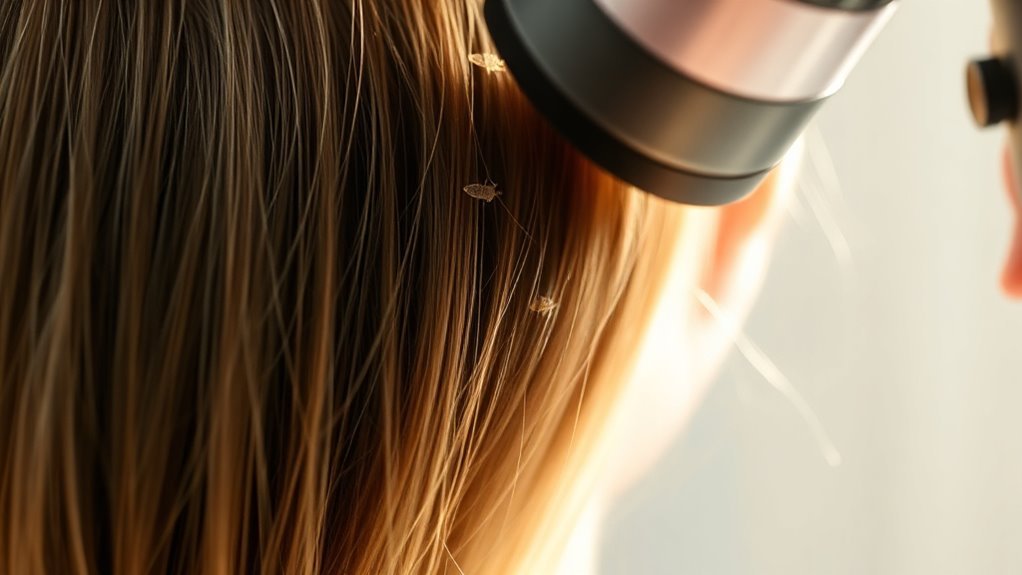
Although a hair dryer generates heat, it doesn’t effectively kill lice. You might think blasting your hair with hot air would do the trick, but lice are surprisingly resilient.
Their bodies can withstand the temperatures produced by most home hair dryers without dying. Plus, the heat from a dryer isn’t consistent or intense enough to reach all the lice hiding close to your scalp.
If you rely on a hair dryer alone, you’ll likely miss some lice, allowing them to survive and multiply. Instead, you should consider proven treatments like medicated shampoos or combing methods designed to remove lice mechanically.
Using a hair dryer as your only defense won’t eliminate the infestation, so don’t count on it to solve the problem.
How Heat From Hair Dryers Affects Lice and Nits
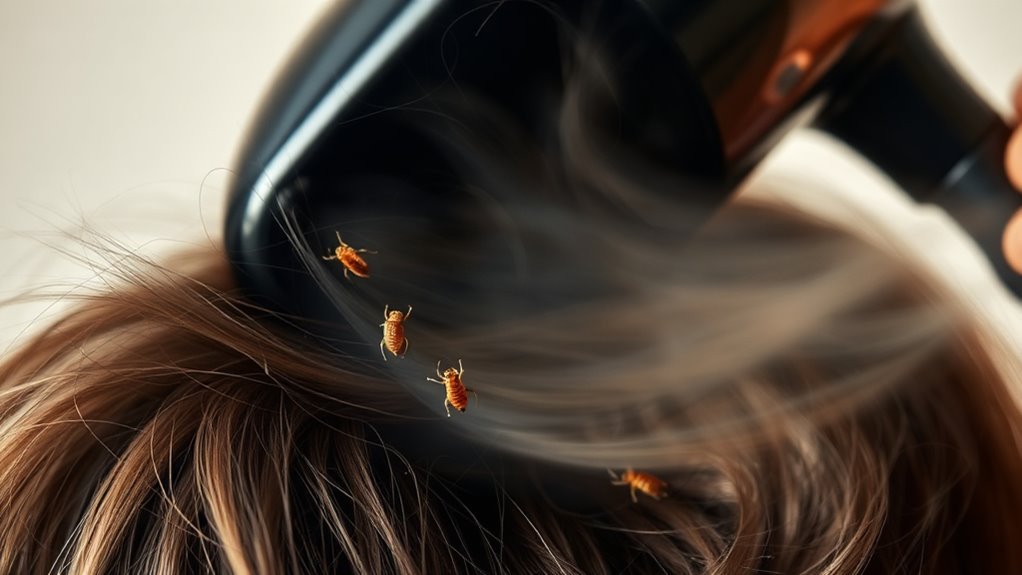
You need to understand how sensitive lice are to heat and how it affects their survival. The heat from your hair dryer can impact the viability of nits, but only above certain temperature thresholds.
Knowing these limits helps you use the dryer effectively against both lice and their eggs. So, it’s not just about blasting heat—it’s about hitting the right temperature to make a difference.
Lice Sensitivity To Heat
When you apply heat from a hair dryer to lice and their nits, you might expect it to be an effective way to kill them. Lice are somewhat sensitive to heat, but the temperature must be high enough and applied long enough to impact them.
Hair dryers generate warm air that can cause dehydration in lice, disrupting their bodily functions. However, lice tend to avoid extreme heat by moving deeper into hair strands or closer to the scalp, where heat exposure is less intense.
Nits, which are lice eggs, are more heat-resistant due to their protective shells. While heat can stress lice and potentially reduce their activity, it rarely kills all of them unless the temperature is dangerously high.
And that’s the catch — the temperature needed to truly kill lice with heat might harm your scalp or hair. So, using a hair dryer alone probably won’t do the trick.
Impact On Nit Viability
Since nits have protective shells, heat from a hair dryer often struggles to penetrate and kill them effectively. You might think blasting your hair with hot air will eliminate all lice and nits, but nits are designed to withstand harsh conditions.
Here’s what happens when you use a hair dryer on them:
- Outer shells reflect some heat, reducing damage to the developing embryo inside.
- Short exposure times don’t raise temperatures enough to disrupt nit viability.
- Uneven heat distribution means some nits remain unharmed, continuing to hatch later.
Optimal Temperature Thresholds
Although hair dryers generate heat, they rarely reach the ideal temperature needed to kill lice and nits effectively. Lice and their eggs require sustained exposure to temperatures above 130°F (54°C) to die.
Most hair dryers blow air between 100°F to 140°F, but this heat disperses quickly and unevenly. That makes it hard to maintain lethal conditions long enough. You risk just drying the hair without eliminating lice or nits.
Here’s a quick comparison:
| Temperature (°F) | Effect on Lice/Nits | Exposure Time Needed |
|---|---|---|
| Below 120 | No lethal effect | N/A |
| 120 – 130 | Partial damage | Over 30 minutes |
| Above 130 | Lice and nits killed | 5 to 10 minutes |
Why Hair Dryers Don’t Fully Kill Lice

Even if you use a hair dryer on high heat, it won’t completely kill lice because these pests are highly resilient and can survive brief exposure to hot air. When you rely on a hair dryer, you miss critical factors that make lice hard to eliminate.
First, lice hide close to the scalp, where heat dissipates quickly and doesn’t reach lethal levels. Then, nits (lice eggs) have protective shells that shield them from short bursts of hot air. Plus, hair dryers blow air unevenly, leaving some lice unaffected in cooler spots.
Because of these reasons, a hair dryer alone won’t fully eradicate lice or prevent reinfestation. You need more targeted methods to make certain all lice and nits are destroyed.
Effective Ways to Get Rid of Lice and Nits
When you’re dealing with lice and nits, relying on a hair dryer won’t cut it—you need proven treatments that target both the bugs and their eggs effectively. Start with over-the-counter lice shampoos containing permethrin or pyrethrin, which kill live lice.
Hair dryers won’t eliminate lice—you need effective treatments like permethrin or pyrethrin shampoos to kill live lice and eggs.
Make sure to follow the instructions carefully to guarantee maximum effectiveness. Next, use a fine-toothed nit comb on damp hair to remove nits and dead lice. Comb thoroughly every few days for at least two weeks to prevent re-infestation.
Washing bedding, hats, and clothes in hot water helps eliminate lice hiding in fabrics. Also, avoid sharing personal items like combs and hats during treatment.
If these methods don’t work, a healthcare provider can recommend prescription treatments. Just remember, consistency and patience are key to fully eradicating lice and nits.
Using Hair Dryer Heat Safely in Lice Treatment
You’ll want to use a hair dryer at an effective temperature that kills lice without harming your scalp. Be careful to protect your skin from excessive heat by keeping the dryer moving and at a safe distance.
Combining controlled heat with other treatments can improve your chances of eliminating lice completely. It’s all about finding that balance to keep things safe and effective.
Effective Temperature Range
Understanding the effective temperature range is essential if you want to use a hair dryer safely to kill lice and nits. Too low won’t do the job, and too high can harm your scalp or hair.
Here’s what you need to know:
- Optimal Heat: Aim for a temperature between 130°F and 140°F (54°C to 60°C). This range is hot enough to kill lice without causing burns.
- Hair Protection: Avoid continuous exposure. Use short bursts of heat, allowing your hair to cool between sessions.
- Distance Matters: Keep the dryer about 6-8 inches away from your scalp to maintain a safe temperature and prevent damage.
Protecting Scalp Skin
Maintaining the right temperature is important, but protecting your scalp skin from heat damage is just as essential during lice treatment. When using a hair dryer, keep it at a moderate heat setting to avoid burns or irritation.
Hold the dryer at least six inches away from your scalp and move it continuously to prevent concentrating heat in one spot. Pay attention to how your skin feels—if it becomes uncomfortably hot or red, stop immediately.
Avoid prolonged exposure by limiting each drying session to a few minutes. Also, never use the highest heat setting, especially on sensitive or damaged skin.
Taking these precautions helps you use heat safely and effectively without harming your scalp while tackling lice. So, keep it gentle and give your scalp the care it needs!
Combining Heat With Treatments
Although heat alone won’t completely eliminate lice and nits, combining a hair dryer’s warmth with other treatments can boost their effectiveness. You can use heat safely by integrating it with proven methods to maximize results.
Here are three steps to combine heat with lice treatments effectively:
- Apply a lice treatment shampoo or lotion according to the instructions. Make sure you follow the directions closely for the best results.
- After treatment, gently use a hair dryer on a low to medium setting to dry the scalp and hair. This helps to weaken lice and nits, making them easier to remove.
- Follow up by meticulously combing through hair with a fine-toothed lice comb. This removes dead lice and nits, giving you a thorough clean.
This combined approach helps you tackle lice more efficiently while protecting your scalp from heat damage. It’s a smart way to get the job done without causing extra irritation.
Tips to Prevent Lice From Coming Back After Treatment
To keep lice from coming back after treatment, you’ll want to stay vigilant and follow a few key steps. First, wash all bedding, clothing, and hats in hot water and dry them on high heat to kill any lingering lice or nits.
Stay vigilant by washing bedding and clothes in hot water and drying on high heat to kill lice and nits.
Vacuum floors, furniture, and car seats to remove stray hairs that might have nits attached. Avoid sharing combs, brushes, hats, or headphones with others.
Regularly check your child’s hair for signs of lice, especially after school or group activities. If you have multiple family members, treat everyone simultaneously to prevent re-infestation.
Finally, keep hair tied back or styled to reduce contact with others. These proactive steps will help you prevent lice from making an unwanted return.
Frequently Asked Questions
Can Lice Survive on Bedding and Clothing?
Lice can’t survive long on bedding and clothing since they need your scalp to live. However, they can cling briefly.
Are Lice Treatments Safe for Pregnant Women?
Of course, you’d want to try anything but safe treatments while pregnant, right? Actually, most lice treatments are safe if you follow instructions carefully.
Still, you should consult your doctor before starting any medication to protect your baby. It’s always better to be safe and get professional advice.
How Long Can Lice Live Without a Human Host?
Lice can’t survive more than 1-2 days without a human host because they need blood to live.
So, you’ll want to act quickly to prevent them from spreading to others or reinfesting your home.
The faster you respond, the better your chances of getting rid of them for good.
Can Pets Get Lice From Humans?
No, your pets can’t get lice from you because human lice are species-specific. You won’t see lice jumping from your head to your dog or cat, so you don’t need to worry about cross-infestation.
What Are the Symptoms of a Lice Infestation?
You’ll notice intense itching, red bumps, and tiny white nits stuck to your hair shafts. Sometimes, you might see live lice crawling.
These symptoms usually show up around the scalp, especially behind your ears and neck. It can be pretty uncomfortable, but catching it early helps a lot.
Conclusion
You might think blasting lice with your hair dryer could zap them away like a superhero’s heat vision, but sadly, those tiny pests are tougher than a summer heatwave. While the warm air might make you feel like you’re winning the battle, lice and nits aren’t packing their bags just yet.
Instead, rely on proven treatments to truly evict these unwelcome guests—because your hair dryer’s heat is more of a gentle breeze than a lice executioner. Using a hair dryer alone won’t kill lice and nits effectively.
For real results, it’s best to use specialized lice treatments combined with thorough combing and cleaning. That way, you can say goodbye to lice for good without relying on a hair dryer’s limited power.