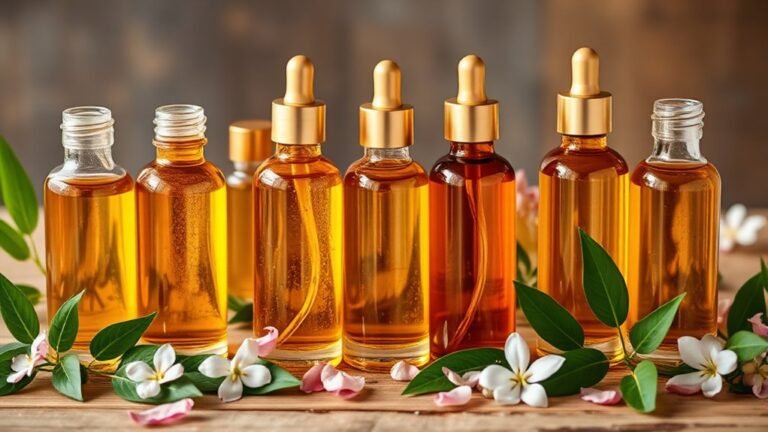
Best Oils for Promoting Beard Hair Growth
You can boost your beard growth by using oils like castor, which nourishes follicles and improves circulation, and jojoba, which keeps skin moisturized and regulates oils to prevent clogged follicles.
These oils work wonders for promoting healthy beard hair growth by supporting the skin beneath and strengthening hair roots.
Coconut oil strengthens your beard and adds a natural shine, making your facial hair look fuller and healthier.
Meanwhile, argan oil delivers essential nutrients that soften your beard and reduce breakage, keeping your hair looking smooth and manageable.
Rosemary oil is great for stimulating growth because it improves blood flow to the hair follicles.
And don’t forget about vitamin E—it nourishes and protects your beard, helping it stay thick and healthy over time.
Keep exploring to discover how each oil works in detail and find the perfect blend for your beard care routine.
Key Takeaways
- Castor oil stimulates blood flow to hair roots, promoting stronger and thicker beard growth while preventing dryness and irritation. It’s a great natural option if you want to see fuller results.
- Jojoba oil moisturizes the skin under the beard and regulates sebum production to keep things balanced. Plus, it strengthens hair follicles which helps reduce breakage over time.
- Coconut oil nourishes beard hair with essential fatty acids and prevents protein loss. It also adds shine and softness, making your beard look healthier and more vibrant.
- Argan oil is packed with Vitamin E and antioxidants, which work to strengthen hair strands and reduce breakage. It keeps your beard soft and manageable, so styling is a breeze.
- Rosemary oil improves blood circulation to the follicles and reduces inflammation. When massaged regularly with a carrier oil, it can really boost beard growth and overall health.
Benefits of Castor Oil for Beard Growth

Although you might not have tried it yet, castor oil can greatly boost your beard growth by nourishing hair follicles and improving blood circulation. When you apply castor oil, its rich content of ricinoleic acid works to stimulate blood flow to the skin, delivering essential nutrients to your hair roots.
This encourages stronger, thicker beard growth. Plus, castor oil’s antimicrobial properties help keep your skin healthy, reducing the risk of beard dandruff and irritation that can hinder growth.
You’ll also benefit from its moisturizing effect, preventing dryness and brittleness, which means fewer breakages. Applying it regularly creates an ideal environment for your beard to flourish, making castor oil a simple yet powerful addition to your grooming routine.
How Jojoba Oil Supports Hair Follicles

Jojoba oil helps you keep the skin under your beard moisturized, preventing dryness and irritation. It also regulates sebum production, balancing oil levels to avoid clogged follicles.
Moisturizing Beard Skin
When you moisturize the skin beneath your beard, you create an environment that encourages healthy hair growth. Jojoba oil is perfect for this because it closely mimics your skin’s natural oils, allowing it to absorb quickly without leaving a greasy residue.
By applying jojoba oil regularly, you keep your skin hydrated and prevent dryness and flakiness, which can hinder hair growth and cause itchiness. This moisture also strengthens hair follicles, reducing breakage and promoting thicker, fuller beard growth.
Plus, jojoba oil soothes irritation and supports overall skin health, making it easier for your beard to thrive. Incorporate jojoba oil into your grooming routine to maintain a well-moisturized foundation that supports consistent and healthy beard development.
Regulating Sebum Production
Keeping the skin beneath your beard moisturized not only prevents dryness but also helps balance sebum production. Jojoba oil closely mimics your skin’s natural sebum, allowing it to regulate oil levels effectively.
When you apply jojoba oil, it signals your skin to reduce excess oil production. This prevents clogged pores and reduces the risk of irritation or acne beneath your beard.
This balance creates a healthier environment for your hair follicles, promoting consistent growth. Unlike heavier oils that can weigh down your beard or cause buildup, jojoba oil absorbs quickly without leaving a greasy residue.
Strengthening Hair Follicles
Although many oils claim to boost beard growth, few strengthen hair follicles as effectively as jojoba oil. When you apply jojoba oil, it penetrates deep into your hair follicles, providing essential vitamins and minerals that nourish and fortify them.
This nourishment helps prevent follicle damage caused by dryness or environmental stress, reducing hair breakage and promoting healthier growth. Jojoba oil also mimics your skin’s natural oils, balancing moisture without clogging pores, which keeps follicles clear and functional.
Using Coconut Oil to Enhance Beard Thickness
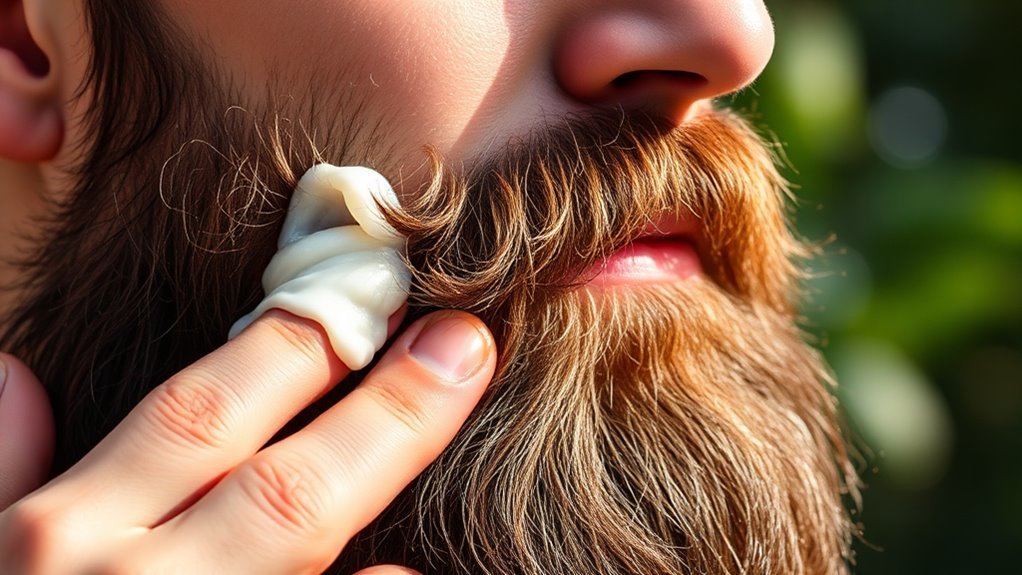
Because coconut oil contains essential fatty acids and vitamins, it can greatly boost your beard’s thickness and overall health. When you apply it regularly, coconut oil penetrates deeply into the hair shaft, preventing protein loss and strengthening your beard from within.
It also moisturizes the skin beneath, reducing dryness and flakiness that can hinder growth. Using coconut oil is simple and effective—just massage a small amount into your beard daily.
Here’s why you should incorporate it into your routine:
- Deeply nourishes hair follicles
- Prevents breakage and split ends
- Hydrates and soothes the skin
- Adds natural shine and softness
- Protects against environmental damage
The Role of Argan Oil in Beard Health
You’ll love how argan oil’s rich nutrients help nourish your beard from root to tip. It locks in moisture, keeping your hair soft and manageable.
Plus, it strengthens each strand to reduce breakage and promote healthier growth. Trust me, your beard will thank you for it!
Nutrient Profile Benefits
Argan oil delivers a powerful blend of nutrients essential for beard health. When you apply it, these nutrients work together to support hair growth and overall well-being.
Here’s what makes argan oil stand out:
- Vitamin E: Acts as a potent antioxidant, protecting hair follicles from damage.
- Essential Fatty Acids: Nourish hair strands and promote healthy growth.
- Sterols: Help reduce inflammation, creating an ideal environment for hair follicles.
- Phenolic Compounds: Provide antimicrobial benefits, keeping skin under the beard healthy.
- Squalene: Supports skin hydration and maintains the beard’s natural shine.
Pretty amazing how one oil can do so much, right?
Moisturizing and Strengthening Effects
Beyond providing essential nutrients, argan oil also excels at moisturizing and strengthening your beard. When you apply it, the oil deeply penetrates each hair strand, locking in moisture and preventing dryness that can lead to brittleness and breakage.
This hydration keeps your beard soft and manageable, reducing itchiness and flakiness on your skin underneath. Argan oil’s rich content of antioxidants and vitamin E helps reinforce the hair shaft, making your beard more resilient against environmental damage and daily wear.
Applying Rosemary Oil to Stimulate Growth
Applying rosemary oil to your beard can considerably boost hair growth by improving blood circulation to the hair follicles. When you massage a few drops into your beard daily, you stimulate these follicles, encouraging thicker, healthier hair.
Boost beard growth naturally by massaging rosemary oil daily to stimulate hair follicles and enhance circulation.
Its natural antioxidants also help reduce inflammation and prevent hair thinning. To get the most out of rosemary oil, follow these simple steps:
- Mix a few drops with a carrier oil, like jojoba or coconut oil
- Gently massage the blend into your beard and skin for 3-5 minutes
- Leave it on for at least 30 minutes, or overnight for deeper absorption
- Use consistently, 3-4 times a week for visible results
- Perform a patch test first to avoid any allergic reactions
Give it a try, and with a little patience, you should start seeing the benefits soon!
Vitamin E Oil for Nourishing Beard Hair
Just like rosemary oil boosts circulation and reduces inflammation, vitamin E oil works to nourish and protect your beard hair from damage. It’s packed with antioxidants that help repair dry, brittle strands and prevent split ends.
By applying vitamin E oil regularly, you create a healthier environment for new hair to grow stronger and shinier. Plus, it moisturizes your skin underneath, reducing itchiness and flakiness.
| Benefit | Description |
|---|---|
| Antioxidant-rich | Protects hair from damage |
| Moisturizing | Prevents dryness and itchiness |
| Promotes repair | Heals split ends and breakage |
| Skin nourishment | Keeps skin healthy and flake-free |
| Enhances shine | Adds a natural glossy finish |
Use vitamin E oil consistently to keep your beard well-nourished and thriving. Give it some time, and you’ll notice the difference!
Frequently Asked Questions
Can Beard Oils Cause Allergic Reactions?
Yes, beard oils can cause allergic reactions, especially if you have sensitive skin or allergies to certain ingredients.
How Often Should I Apply Beard Oil for Best Results?
For fabulous facial fuzz, you should apply beard oil daily, ideally after showering when your skin’s still slightly damp. This helps hydrate hair and skin, ensuring your beard stays soft, shiny, and strong with consistent care.
Trust me, keeping up with this routine makes a big difference. Your beard will thank you!
Are There Any Oils to Avoid for Beard Care?
You should avoid oils like mineral oil and coconut oil if your skin’s sensitive, as they can clog pores or cause irritation.
Stick to natural, lightweight oils that nourish without causing breakouts or dryness for healthier beard care.
That way, your beard stays soft and your skin stays happy!
Can Beard Oil Help With Patchy Beard Growth?
Think of beard oil as rain nourishing a dry garden—it can improve patchy beard growth by moisturizing skin and hair follicles, boosting health and appearance.
But it won’t create new follicles where none exist. So, while it helps what you have, it can’t grow new hair from scratch.
Is It Safe to Mix Different Beard Oils Together?
Yes, you can mix different beard oils safely, but make sure to check the ingredients for any potential allergens or irritants.
Start with small amounts to see how your skin reacts before applying broadly. Better safe than sorry, right?
Conclusion
Just like a gardener tends to his prized roses, you can nurture your beard with these powerful oils. Castor, jojoba, and coconut oils each play a crucial role in cultivating strength and growth.
Add argan, rosemary, and vitamin E into the mix, and you’ve got a natural formula that supports healthy beard hair growth and nourishment. These oils work together to moisturize your skin, reduce itchiness, and stimulate hair follicles.
By embracing these natural wonders, you’re not just enhancing your beard—you’re crafting a legacy of confidence and care. So go ahead, give your beard the nourishment it deserves. Watch it flourish like never before with the best oils for promoting beard hair growth. Your beard will thank you for it!