How Many Amps Does a Hair Dryer Use?
A typical hair dryer uses between 7 and 15 amps, depending on its wattage and settings. Generally, lower-wattage models around 1000 watts draw closer to 7 amps, while powerful ones near 1800 watts can pull up to 15 amps. Knowing how many amps a hair dryer uses is important if you want to avoid electrical overloads and keep your circuits safe.
Higher amps usually mean faster drying times, but they might also require a dedicated outlet to prevent tripping your breakers. It’s a good idea to understand your hair dryer’s amp draw so you can use it efficiently without any electrical issues. Keep reading to find out how to calculate amperage and make the most out of your hair dryer’s power.
Key Takeaways
- Most hair dryers use between 7 and 15 amps depending on their wattage and power settings.
- Lower-wattage hair dryers (~1000 watts) typically draw about 7 amps. Higher-wattage models (around 1800 watts or more) can pull up to 15 amps.
- You can figure out the amps by dividing the hair dryer’s wattage by the voltage (Amps = Watts ÷ Volts).
- Knowing the amp rating is super helpful. It helps you avoid overloading circuits and stops breaker trips when you’re using your hair dryer.
How Many Amps Does a Typical Hair Dryer Use?
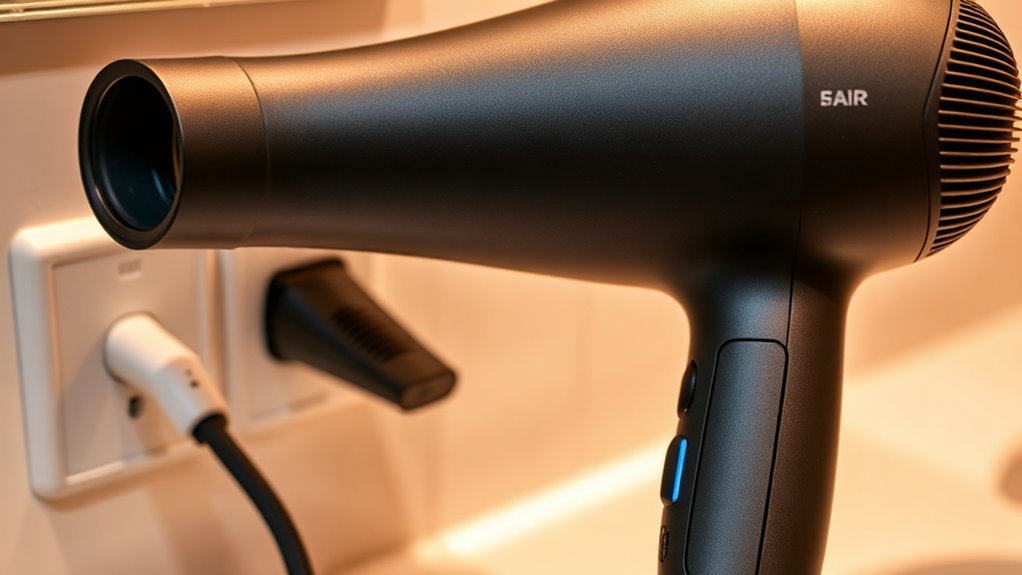
Most hair dryers use between 7 and 15 amps, depending on their power and settings. When you pick up a typical hair dryer, it’s designed to pull enough current to generate heat and airflow efficiently without overloading your circuit.
Lower-wattage models, often around 1000 watts, usually draw closer to 7 amps, while more powerful ones, reaching 1800 watts or more, can pull up to 15 amps. You’ll notice that higher amp ratings correspond to faster drying times but might require a dedicated outlet or circuit.
If you’re using a standard 15-amp household circuit, it’s wise to avoid running multiple high-amp devices simultaneously to prevent tripping breakers. Understanding these amps helps you use your hair dryer safely and effectively.
What Affects a Hair Dryer’s Amperage?

Several factors influence how many amps a hair dryer pulls during use. You’ll notice that wattage plays a big role: higher wattage means higher amperage.
The voltage of your power source also affects the current since amps equal watts divided by volts. Additionally, the heat setting impacts amperage — higher heat uses more power, increasing amps.
The motor speed influences the airflow and power consumption too.
| Factor | Effect on Amperage |
|---|---|
| Wattage | Higher wattage = higher amps |
| Voltage | Lower voltage increases amps |
| Heat Setting | Higher heat = more amps |
| Motor Speed | Faster motor = higher amps |
Understanding these helps you manage your hair dryer’s power needs effectively.
Why Knowing Your Hair Dryer’s Amps Prevents Breaker Trips?

You need to know your hair dryer’s amps so you don’t overload your circuit and trip the breaker. Understanding the electrical demand helps you stay within your home’s capacity and avoid interruptions.
It’s all about keeping things safe and hassle-free. When you know the amps, you can use your hair dryer without worrying about sudden power cuts.
Circuit Capacity Awareness
Understanding your hair dryer’s amperage helps you avoid overloading your home’s electrical circuit. Each circuit in your home has a maximum capacity, measured in amps, that it can safely handle.
When your hair dryer draws close to or exceeds this limit, it can trip the breaker to protect the wiring. By knowing the amps your hair dryer uses, you can make sure it fits comfortably within your circuit’s capacity alongside other devices.
This awareness lets you plan your usage more effectively, preventing unnecessary interruptions and potential hazards. Being mindful of circuit capacity also helps you decide if you need a dedicated outlet or should avoid running multiple high-amperage appliances at the same time.
Ultimately, understanding this keeps your electrical system safe and functional. It’s a simple step but makes a big difference.
Preventing Electrical Overload
Knowing your hair dryer’s amperage isn’t just about making sure it fits within your circuit’s capacity—it actually helps prevent electrical overloads that cause breaker trips.
When you understand how many amps your hair dryer draws, you can avoid plugging it into circuits that are already close to their limit. This stops the total current from going over what your wiring and breaker can safely handle.
If you use multiple high-amp devices on the same circuit, the combined load might trip the breaker and cut power unexpectedly.
Safe Hair Dryer Usage
Frequently, hair dryers draw more amps than people realize, which can easily overload a circuit if multiple devices run simultaneously. Knowing your hair dryer’s amperage helps you avoid tripping breakers and potential electrical hazards.
When you plug in a high-amp hair dryer alongside other appliances, the combined current might exceed your circuit’s limit. To stay safe, check your hair dryer’s amp rating—usually found on the label—and keep track of other devices you use on the same outlet.
If your breaker trips often, it’s a sign you’re drawing too much current. You can prevent this by using your hair dryer on a dedicated circuit or limiting other appliance use while drying.
Understanding amps lets you manage your electrical load efficiently and keeps your home safe. It’s a simple step that makes a big difference!
How to Calculate Your Hair Dryer’s Amperage and Power Use
To figure out your hair dryer’s amperage and power use, start by understanding the relationship between voltage and current. You can calculate watts by multiplying amps by volts, which helps you see how much power it draws.
Check your hair dryer’s label for these numbers to make the math easy and accurate. It’s a simple way to know exactly what you’re working with.
Understanding Voltage And Current
How do you figure out the amps your hair dryer uses? It all starts with understanding voltage and current. Voltage is the force pushing electric charge through the dryer, measured in volts (V).
Current, measured in amps (A), is the flow of that charge. Here’s how to visualize it:
- Think of voltage as water pressure in a hose.
- Current is the amount of water flowing through.
- Your hair dryer’s electrical parts use this current to generate heat.
- The higher the current, the more power it draws.
Knowing voltage and current helps you grasp how much electricity your hair dryer needs. This understanding is key before you calculate the actual amperage your device pulls during use.
Calculating Watts From Amps
Now that you understand voltage and current, you can calculate how much power your hair dryer uses by figuring out its amperage. Power, measured in watts (W), equals voltage (V) multiplied by current (amps, A). The formula is simple: Watts = Volts × Amps.
For example, if your hair dryer runs on 120 volts and pulls 10 amps, it uses 1,200 watts of power (120 V × 10 A = 1,200 W). This calculation helps you estimate energy consumption and compare different models.
If you know the wattage and voltage, you can also find the amperage by rearranging the formula: Amps = Watts ÷ Volts. Understanding this lets you gauge your hair dryer’s electrical demand accurately.
Using Hair Dryer Labels
Wondering how to quickly figure out your hair dryer’s electrical needs? The label on your hair dryer holds all the info you need.
Here’s how to use it to find your dryer’s amperage and power use:
- Locate the label—usually on the handle or near the cord.
- Find the wattage (W) or voltage (V) and amperage (A) ratings listed.
If only watts and voltage are given, you can calculate amps by dividing watts by volts (Amps = Watts ÷ Volts).
And if amps are listed directly, great! You can just use that number to understand your dryer’s power draw.
Using the label saves time and makes sure you know exactly how much current your hair dryer uses.
That way, you can avoid electrical overloads without any guesswork.
How to Pick an Energy-Efficient Hair Dryer
Choosing an energy-efficient hair dryer can markedly reduce your electricity bill without sacrificing performance. Start by checking the wattage—lower wattage dryers use less power but still dry hair effectively if they have advanced technology like ionic or ceramic components.
Look for models labeled with energy-saving features or an ENERGY STAR rating to guarantee efficiency. Consider dryers with adjustable heat and speed settings; they let you use only the power you need, preventing waste.
Lightweight designs often run cooler and consume less energy. Finally, read user reviews focusing on energy use and drying time, so you pick a model that balances efficiency with quick results.
Tips for Using Your Hair Dryer Without Overloading Outlets
Frequently, people plug multiple high-wattage devices into one outlet, risking overload and tripped breakers. To use your hair dryer safely without overloading outlets, follow these practical tips.
Plugging multiple high-wattage devices into one outlet risks overload and tripped breakers—use your hair dryer safely.
- Limit Devices: Avoid plugging your hair dryer into the same outlet as other high-power appliances. It’s better to spread out your devices.
- Check Amps: Know your hair dryer’s amp rating and make sure the outlet can handle the total load. Don’t guess—double-check!
- Use Dedicated Circuits: Whenever possible, use outlets on circuits designed for high-power devices. This helps keep things running smoothly.
- Unplug When Done: Always unplug your hair dryer immediately after use to free up the circuit. It’s an easy step that makes a big difference.
Frequently Asked Questions
Can Using a Hair Dryer Damage My Hair?
Yes, using a hair dryer can damage your hair if you use high heat or hold it too close.
To protect your hair, use lower heat settings and keep the dryer moving. Also, make sure to apply heat protectant sprays before drying.
These small steps can really help keep your hair healthy while drying.
Are Ionic Hair Dryers Better for Hair Health?
Like a gentle breeze in a storm, ionic hair dryers help reduce frizz and static by breaking down water molecules faster.
You’ll notice smoother, shinier hair, making them a healthier choice compared to traditional dryers.
They work kind of like magic, giving your hair that sleek look without the usual damage.
How Often Should I Clean My Hair Dryer?
You should clean your hair dryer’s filter and vents every one to three months to prevent dust buildup.
Regular cleaning helps it work efficiently and lasts longer, so don’t skip this simple maintenance step. It’s a quick task that makes a big difference!
Can Hair Dryers Cause Electrical Fires?
Oh, sure, your hair dryer’s just waiting to start a fire—if you ignore lint buildup or damaged cords.
You’ll want to clean it regularly and check for frays to keep things safe and avoid a fiery disaster.
What’s the Difference Between Ceramic and Tourmaline Dryers?
Ceramic dryers heat evenly, protecting your hair from damage. This means your hair gets a gentle, consistent warmth without those harsh hot spots.
Tourmaline dryers, on the other hand, emit negative ions that reduce frizz and static. You’ll notice smoother, shinier hair with tourmaline, especially if your hair tends to be dry or curly. It’s like giving your hair a little extra love and care.
Conclusion
Knowing your hair dryer typically uses between 12 to 15 amps helps you avoid tripping breakers and keeps your bathroom safe. Since most household circuits handle 15 to 20 amps, using a high-amp dryer alongside other devices can overload the system.
By understanding your dryer’s amperage, you can make smarter choices and protect your home’s electrical setup. Remember, a hair dryer using around 1800 watts is quite powerful, so use it wisely to save energy and prevent issues.
In conclusion, being aware of how many amps a hair dryer uses is key to maintaining a safe home environment. It helps you avoid overloading circuits and tripping breakers, which can be a real hassle. Plus, knowing your dryer’s power consumption means you can use it efficiently, saving energy and extending its life. So, always check your dryer’s amperage and be mindful of other devices on the same circuit to keep things running smoothly.