Top 10 Best Hair Oils for Natural Black Hair
You’ll want oils that deeply nourish, strengthen, and protect your natural black hair. Jamaican Black Castor Oil boosts growth and locks in moisture, making it a must-have for thick, healthy strands.
Argan Oil adds shine without heaviness, giving your hair that natural glow.
Coconut and Olive oils provide intense hydration and reduce breakage, which is perfect if your hair tends to get dry or brittle.
Avocado and Sweet Almond oils work to strengthen and soften each strand, keeping your hair manageable and smooth.
Jojoba oil balances moisture levels, so your scalp doesn’t get too oily or too dry.
Tea Tree oil keeps your scalp healthy by fighting dandruff and irritation.
And Moringa oil smooths frizz, leaving your hair sleek and polished.
Keep exploring to uncover how each one can transform your hair care routine.
Key Takeaways
- Jamaican Black Castor Oil deeply nourishes, strengthens, and promotes growth for natural black hair while locking in moisture and reducing breakage. It’s really great if you want to keep your hair healthy and strong.
- Coconut Oil penetrates hair shafts for intense moisture, reduces protein loss, and restores softness. It’s ideal for pre-wash or sealing treatments, making your hair feel super smooth.
- Argan Oil hydrates and adds shine without weighing hair down. Plus, it protects strands with essential fatty acids and vitamin E, which is awesome for keeping hair looking vibrant.
- Sweet Almond Oil strengthens hair with vitamins and fatty acids, enhancing elasticity and preventing split ends. It helps keep your hair soft and manageable, which is always a win.
- Tea Tree Oil improves scalp health by reducing dandruff and soothing irritation. It also maintains a balanced, clean scalp environment, so your hair feels fresh and comfortable.
Jamaican Black Castor Oil
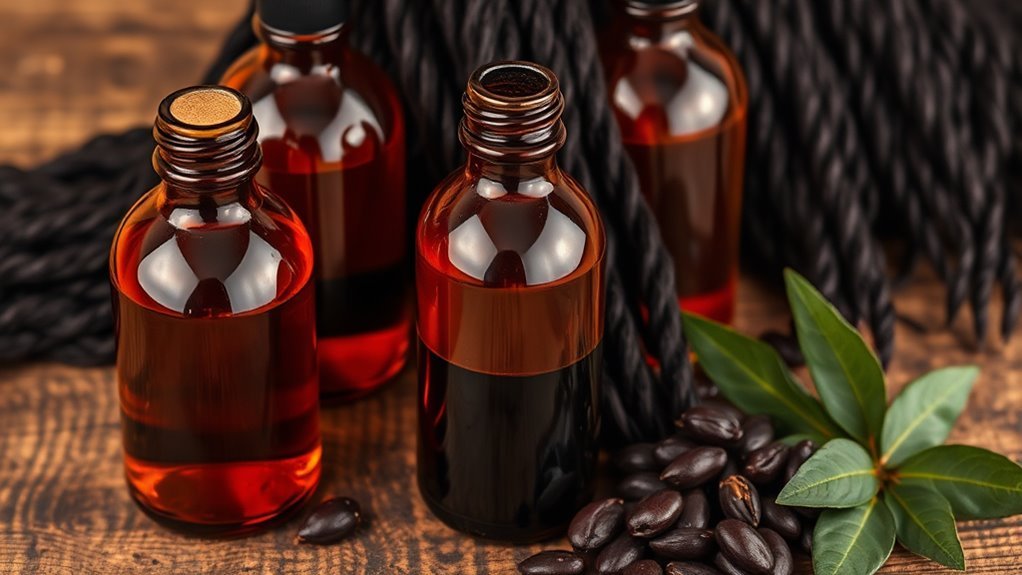
Although you might have tried various products, Jamaican Black Castor Oil stands out for its ability to deeply nourish and strengthen natural black hair. When you apply it, you’ll notice how it penetrates the scalp, promoting healthy hair growth and reducing breakage.
Jamaican Black Castor Oil deeply nourishes and strengthens natural black hair, promoting growth and reducing breakage.
Its thick consistency locks in moisture, which is essential for preventing dryness and maintaining softness. You can use it as a pre-shampoo treatment or a daily moisturizer, depending on your hair’s needs.
Plus, its natural antifungal and antibacterial properties help keep your scalp healthy, reducing dandruff and irritation. By incorporating Jamaican Black Castor Oil into your routine, you’re giving your hair the nutrients it craves to thrive.
This makes it stronger, shinier, and more resilient over time.
Argan Oil

You’ll love how argan oil locks in moisture and adds shine to your natural hair without weighing it down.
To get the best results, apply a few drops to damp hair and focus on the ends where dryness usually hits hardest.
Keep it light—you don’t need much to keep your curls soft and manageable.
Moisturizing Benefits
When you apply argan oil to your natural black hair, it locks in moisture without leaving a greasy residue. This oil is rich in essential fatty acids and vitamin E, which deeply hydrate your strands and scalp.
It helps combat dryness, reducing breakage and encouraging softness. You’ll notice your hair feels smoother and more manageable after regular use.
Argan oil also forms a protective barrier, sealing in moisture and defending your hair from environmental damage.
| Benefit | Description |
|---|---|
| Deep Hydration | Penetrates hair shaft for lasting moisture |
| Non-Greasy Finish | Leaves hair soft without heaviness |
| Scalp Nourishment | Soothes and moisturizes dry scalp |
| Damage Protection | Shields hair from dryness and brittleness |
Application Tips
Since argan oil is lightweight yet deeply nourishing, applying it correctly can maximize its benefits for your natural black hair. Start with a small amount—just a few drops—because a little goes a long way.
Warm the oil between your palms to activate its properties and distribute it evenly. Focus on the ends first, where hair tends to be driest, then work your way up to the mid-lengths.
Avoid applying directly to your scalp if you have oily roots. You can use argan oil on damp hair to lock in moisture or on dry hair to tame frizz and add shine.
Incorporate it into your routine two to three times a week for best results. This way, your hair stays soft, manageable, and healthy without feeling greasy.
Coconut Oil

Coconut oil stands out as one of the most popular choices for natural black hair care. You’ll love how it penetrates deep into your hair shaft, providing intense moisture and reducing protein loss.
This helps strengthen your strands, preventing breakage and split ends. If your hair tends to get dry or brittle, applying coconut oil regularly can restore softness and shine.
Use it as a pre-wash treatment by massaging it into your scalp and hair, then leave it on for at least 30 minutes before rinsing. It also works well for sealing in moisture after washing.
Just remember to use it sparingly if your hair is fine or prone to buildup, as it’s quite heavy. Overall, coconut oil nourishes your hair naturally and effectively.
Olive Oil
Olive oil offers a lightweight yet deeply moisturizing option for natural black hair, making it ideal if you want to boost softness without weighing your strands down. It’s rich in antioxidants and vitamins A and E, which nourish your scalp and strengthen your hair from root to tip.
Applying olive oil helps reduce breakage and split ends by sealing in moisture, leaving your hair more manageable and shiny. You can use it as a pre-shampoo treatment or a daily moisturizer to tame frizz and improve elasticity.
Just warm a small amount before massaging it into your scalp and strands for better absorption. And remember, a little goes a long way—overusing olive oil might make your hair feel greasy rather than nourished.
Avocado Oil
You’ll love avocado oil for its rich nutrients that nourish your scalp and strengthen your strands. Applying it regularly can boost moisture retention and promote healthy hair growth.
Let’s explore how to use it effectively for your natural hair care routine. It’s easier than you might think!
Nutrient Benefits
Although avocado oil might not be the first hair oil that comes to mind, its nutrient-rich profile makes it a powerful choice for natural black hair. It’s packed with vitamins A, D, E, and B6, which help strengthen your hair follicles and promote healthy growth.
The oil’s high levels of oleic acid deeply penetrate your hair shaft, providing intense moisture to combat dryness and brittleness. Plus, antioxidants like lutein protect your hair from environmental damage, keeping it vibrant and resilient.
You’ll also benefit from its ability to stimulate scalp circulation, encouraging healthier hair roots. By incorporating avocado oil into your hair care routine, you give your natural black hair the essential nutrients it needs to stay soft, strong, and well-nourished.
Application Tips
Applying avocado oil properly can make a big difference in how well it nourishes your natural black hair. Start by warming a small amount between your palms to release its moisturizing power.
Then, gently massage it into your scalp to boost circulation and promote absorption. Work the oil through your hair strands, focusing on the ends to prevent dryness and breakage.
Just be careful not to apply too much to avoid greasiness. A little goes a long way!
| Step | Tip |
|---|---|
| Warm the Oil | Enhances absorption and spread |
| Scalp Massage | Stimulates circulation |
| Apply to Ends | Protects against split ends |
Hair Growth Support
Since avocado oil is rich in vitamins A, D, and E, it actively supports hair growth by nourishing your scalp and strengthening hair follicles. When you apply this oil, you provide essential nutrients that promote healthy, thicker strands while preventing breakage.
You’ll notice your hair feels softer and looks shinier with consistent use. To maximize its benefits, try these simple techniques:
- Massage avocado oil gently into your scalp to boost circulation
- Use it as a deep conditioning treatment for 30 minutes
- Mix with other oils like castor or coconut for enhanced growth
- Apply regularly after washing to seal moisture and protect hair
Incorporating avocado oil into your routine helps you grow stronger, healthier natural black hair. Give it a try—you might just love the results!
Grapeseed Oil
Grapeseed oil offers a lightweight and non-greasy option for moisturizing natural black hair. If you struggle with heavy oils that weigh your hair down, this oil absorbs quickly without leaving residue.
Grapeseed oil hydrates natural black hair without heaviness, absorbing fast and leaving no greasy residue.
Its high linoleic acid content helps strengthen your strands while sealing in moisture, making your hair more manageable and less prone to breakage. You can use it as a daily leave-in treatment or mix it with your favorite conditioner for extra hydration.
Grapeseed oil also aids in softening your hair and improving elasticity, which is essential for preventing split ends. Plus, it’s great for sensitive scalps, so you won’t have to worry about irritation or buildup.
Adding grapeseed oil to your routine can enhance your hair’s overall health and shine. It’s definitely worth giving it a try!
Sweet Almond Oil
While sweet almond oil is often praised for its moisturizing properties, it also strengthens your natural black hair without weighing it down. You’ll love how it seeps deep into your strands, nourishing and protecting them from breakage.
This lightweight oil is packed with vitamins A, E, and fatty acids that promote healthy growth and shine. When you use sweet almond oil, you’ll notice:
- Soft, silky hair that’s easy to manage
- Reduced scalp irritation and dryness
- Enhanced hair elasticity, preventing split ends
- A natural, subtle sheen that boosts your hair’s vibrancy
Incorporate sweet almond oil into your routine for softer, stronger hair that feels healthy and looks radiant every day. Give it a try—you might just find your new favorite hair care secret!
Jojoba Oil
If you want a versatile oil that mimics your scalp’s natural sebum, jojoba oil is a perfect choice. It absorbs easily without leaving your hair greasy, making it excellent for moisturizing and strengthening natural black hair.
You can apply it directly to your scalp to soothe dryness or use it as a leave-in treatment to add shine and reduce frizz. Jojoba oil also helps balance oil production, which means it can prevent both dryness and excess oiliness.
Because it’s lightweight, it won’t weigh down your curls or coils, allowing your natural texture to shine. Incorporate jojoba oil into your hair care routine to promote healthy, manageable hair that feels soft and looks vibrant without buildup or irritation.
Tea Tree Oil
You’ll appreciate tea tree oil for its powerful antimicrobial benefits that keep your scalp healthy and free from buildup. It soothes irritation and helps reduce dandruff, making your hair care routine more comfortable.
Incorporating tea tree oil can support a clean, balanced scalp for natural black hair. It’s a great way to keep things fresh and comfortable without much effort.
Antimicrobial Benefits
Because tea tree oil contains powerful antimicrobial properties, it helps keep your scalp clean and healthy by fighting bacteria and fungi that cause irritation and dandruff. When you use tea tree oil, you’re actively preventing common scalp issues that can disrupt hair growth and comfort.
This natural oil works to eliminate pesky dandruff flakes for a cleaner look and reduce itchiness caused by fungal infections. It also combats bacteria that lead to scalp inflammation and maintains a balanced scalp environment to support healthy hair.
Scalp Soothing Effects
While tea tree oil fights microbes, it also soothes your scalp by reducing irritation and calming inflammation. If you deal with dryness, itchiness, or redness, applying tea tree oil can bring immediate relief.
It works by balancing your scalp’s natural oils, preventing flakiness and dryness that lead to discomfort. You don’t have to use it full strength; diluting tea tree oil with a carrier oil like coconut or jojoba guarantees it’s gentle yet effective.
Regular use helps maintain a healthy scalp environment, which is essential for natural black hair growth. By calming irritated skin, you reduce the risk of scratching that can cause breakage.
Incorporating tea tree oil into your routine is a smart way to nurture both your scalp and your hair.
Moringa Oil
Moringa oil, extracted from the seeds of the moringa tree, offers powerful nourishment for natural black hair. When you use moringa oil, you’ll notice how it deeply moisturizes and strengthens your strands without weighing them down.
It’s packed with antioxidants and vitamins that protect your hair from environmental damage and promote healthy growth. You can easily incorporate moringa oil into your routine to:
- Smooth frizz and add a natural shine
- Soften coarse, textured hair for better manageability
- Reduce scalp irritation and dryness
- Boost elasticity to prevent breakage
Give it a try and see the difference it makes!
Frequently Asked Questions
How Often Should I Wash My Hair When Using These Oils?
You should wash your hair every 1-2 weeks when using oils to keep it moisturized without stripping natural oils.
But, you can always adjust this based on your scalp’s needs. If it feels oily or itchy, go ahead and wash more frequently to stay comfortable.
Can These Oils Help With Scalp Conditions Like Dandruff?
Oh sure, because your scalp just loves a spa day—yes, these oils can soothe dandruff and dryness by moisturizing and calming irritation.
Just don’t expect magic; consistent care and proper washing are still key.
Are These Oils Safe to Use on Color-Treated Natural Black Hair?
Yes, you can safely use these oils on color-treated natural black hair. They nourish and protect without stripping color.
But always do a patch test first to make sure your scalp and hair respond well to the product. It’s better to be safe than sorry!
Can I Mix Different Hair Oils for Better Results?
You can mix different hair oils for better results, but don’t put all your eggs in one basket—test combinations on a small section first to avoid irritation.
Mixing can boost benefits if done carefully and thoughtfully. Just make sure to pay attention to how your scalp reacts before going all in.
What Is the Best Way to Apply Oil for Maximum Absorption?
You should apply oil to damp hair, starting at the scalp and massaging gently with your fingertips. Then, work it through the lengths and ends for better absorption and hydration.
Don’t forget to use a warm towel afterward! It really helps the oil penetrate deeper and locks in the moisture. Give it a try and see the difference!
Conclusion
Now that you’ve discovered these top hair oils, imagine your natural black hair drinking in every drop like a thirsty garden after rain. Each oil is a secret potion, ready to nourish, strengthen, and shine your curls with vibrant life.
Don’t just care for your hair—celebrate it. Embrace these oils and let your crown bloom beautifully, turning heads wherever you go.
Your hair’s best days are just a few drops away! With the best hair oils for natural black hair, you’re giving your curls the moisture, strength, and shine they deserve. So go ahead, treat your hair to these nourishing oils and watch your natural black hair thrive like never before.