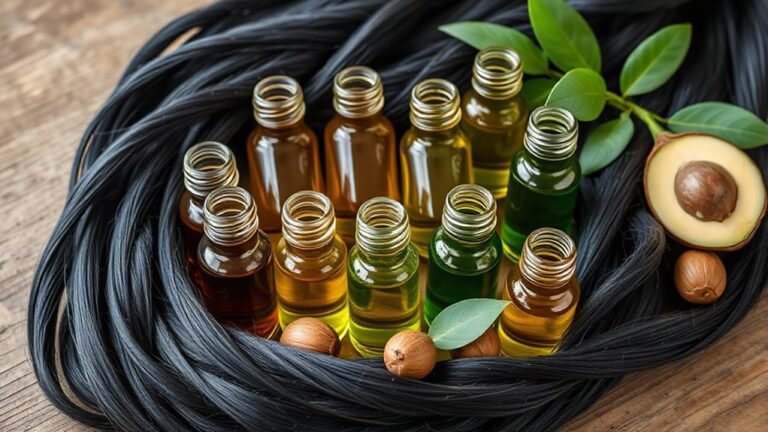
Best Home Remedies for Dry Scalp Relief
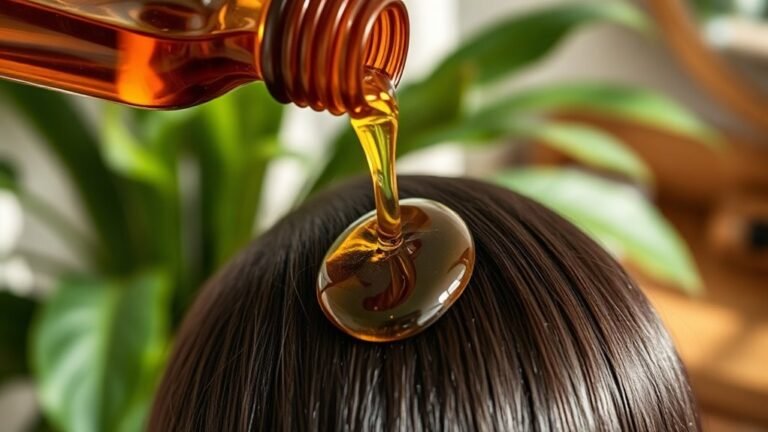
You can soothe your dry scalp by massaging warm coconut oil onto it, leaving it for at least 30 minutes to hydrate deeply. This natural remedy helps lock in moisture and can reduce itchiness effectively.
Aloe vera gel calms irritation and redness, making it perfect for sensitive scalps. Plus, an apple cider vinegar rinse balances pH and removes buildup, which keeps your scalp healthy and refreshed.
Adding tea tree oil to your shampoo helps reduce flakes and itching, thanks to its antifungal properties.
And don’t forget a honey-olive oil mask—it restores softness and gives your scalp extra nourishment.
Try these natural remedies regularly, and you’ll discover even more ways to relieve scalp dryness effectively. Your scalp will thank you!
Key Takeaways
- Massage warm coconut oil into the scalp and leave it overnight. This helps with deep hydration and soothes those dry patches.
- Apply aloe vera gel to calm irritation and reduce redness. It’s great because of its anti-inflammatory properties.
- Use an apple cider vinegar rinse diluted with water. This balances your scalp’s pH and removes buildup.
- Add tea tree oil to your shampoo. It has antifungal benefits that help reduce flakes and itching.
- Try a honey and olive oil mask once a week. It deeply moisturizes and restores softness to your scalp.
Coconut Oil Treatments for Moisture and Healing

Although dry scalp can be stubborn, coconut oil treatments can quickly restore moisture and promote healing. You’ll want to warm a small amount of coconut oil until it’s liquid but not hot.
Then, gently massage it into your scalp, focusing on dry or flaky areas. Leave the oil on for at least 30 minutes, or overnight if possible, to let it penetrate deeply.
When you rinse it out, use a mild shampoo to avoid stripping away the oil’s benefits. Coconut oil’s natural fatty acids help lock in moisture and reduce dryness, while its antibacterial properties can prevent scalp infections.
Regular treatments, about two to three times a week, can make a noticeable difference in soothing and hydrating your scalp effectively. Give it a try and see how your scalp feels!
Aloe Vera Gel for Soothing Irritation
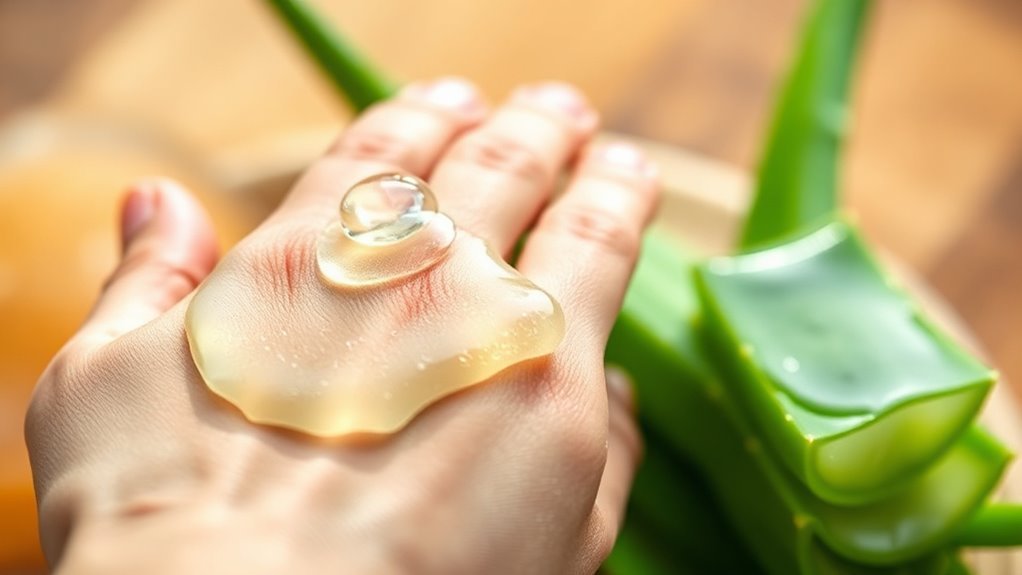
You’ll find aloe vera gel is great for calming dry, itchy scalp thanks to its natural soothing properties. Apply a thin layer directly to your scalp and let it sit for about 20 minutes before rinsing.
This simple step can help reduce irritation and add gentle moisture. It’s easy to do and feels really refreshing too!
Soothing Properties of Aloe
Aloe vera gel offers powerful soothing relief when your scalp feels dry and irritated. Its natural compounds quickly calm inflammation and reduce itching, making it an ideal remedy for discomfort.
Here’s how aloe works to soothe your scalp:
- Hydrates deeply, restoring moisture balance without clogging pores.
- Contains anti-inflammatory agents that ease redness and swelling.
- Delivers antioxidants that promote skin healing and protect against damage.
- Provides a cooling sensation that immediately relieves irritation.
Application Tips for Scalp
When your scalp feels irritated, applying aloe vera gel correctly can maximize its soothing benefits. Start by parting your hair into small sections to expose the scalp.
Use your fingertips to gently massage a thin layer of pure aloe vera gel directly onto the irritated areas. Avoid using your nails, which can worsen irritation.
Let the gel sit for at least 20 minutes to allow it to penetrate and calm inflammation. You can leave it on longer if you want, even overnight.
Just cover your hair with a shower cap to prevent any mess. When you’re ready, rinse with lukewarm water and avoid harsh shampoos afterward.
Regularly applying aloe vera this way helps reduce dryness and itching. It gives your scalp the relief it truly needs.
Apple Cider Vinegar Rinse to Balance Scalp Ph

You can use an apple cider vinegar rinse to help balance your scalp’s pH and reduce dryness. Mix it with water before applying, and be careful not to overuse it to avoid irritation.
Knowing how often to rinse and following precautions will keep your scalp healthy and comfortable. Give it a try, but listen to your scalp’s needs as you go!
Ph Balancing Benefits
Anyone struggling with dry scalp will find that balancing your scalp’s pH plays an essential role in relieving irritation and flakiness. Using an apple cider vinegar rinse helps restore your scalp’s natural acidity, which can be disrupted by harsh shampoos and environmental factors.
When your scalp’s pH is balanced, it creates an environment where natural oils are preserved, preventing excessive dryness. Plus, harmful bacteria and fungi are kept in check, which reduces itchiness.
Also, hair cuticles lay flat, promoting shine and smoothness. Overall scalp health improves too, supporting stronger, healthier hair growth.
Application Tips
Although it might seem tricky at first, applying an apple cider vinegar rinse correctly can maximize its benefits for your scalp. Start by diluting one part apple cider vinegar with two parts water to prevent irritation.
Pour the mixture slowly over your scalp, ensuring even coverage. Use your fingertips to gently massage the rinse into your scalp, helping to remove buildup and stimulate circulation.
Avoid applying the rinse directly to your hair ends to prevent dryness. After massaging, let the solution sit for about 5 minutes to balance your scalp’s pH effectively.
Finally, rinse thoroughly with lukewarm water to remove any residue. Following these steps will help you get the most out of your apple cider vinegar rinse and soothe your dry scalp efficiently.
Frequency and Precautions
When using an apple cider vinegar rinse, balancing frequency with caution guarantees the best results without irritating your scalp. Overuse can cause dryness or redness, so stick to a safe routine.
Here’s how to do it right:
- Limit rinses to 1-2 times per week to maintain scalp balance.
- Always dilute the vinegar with water in a 1:3 ratio to prevent burns.
- Avoid applying directly on open sores or irritated skin.
- Test a small patch first to check for allergic reactions.
Simple steps like these help keep your scalp healthy and happy!
Tea Tree Oil for Reducing Flakes and Itching
Tea tree oil offers a powerful natural solution to reduce flakes and itching caused by a dry scalp. You can add a few drops to your regular shampoo or dilute it with a carrier oil like coconut or jojoba before applying it directly to your scalp.
Its antifungal and antibacterial properties help combat dandruff and soothe irritation effectively. Just a heads up, when using tea tree oil, be sure not to apply it undiluted, as it can cause redness or a burning sensation.
Start with a small amount to test your skin’s reaction. Regular use, about two to three times a week, can help restore scalp health, reduce dryness, and minimize flaking.
This way, your scalp can feel refreshed and comfortable without the need for harsh chemicals. Give it a try and see how your scalp responds!
Honey and Olive Oil Mask for Deep Hydration
If you’ve tried tea tree oil but still feel your scalp needs extra moisture, a honey and olive oil mask can provide deep hydration. Honey acts as a natural humectant, locking in moisture, while olive oil nourishes and soothes dry, irritated skin.
For extra scalp moisture, try a honey and olive oil mask to deeply hydrate and soothe irritation.
Here’s how to prepare and apply it:
- Mix 2 tablespoons of honey with 2 tablespoons of warm olive oil.
- Massage the mixture gently into your scalp, focusing on dry areas.
Cover your hair with a shower cap to trap heat. Leave the mask on for 30 minutes, then rinse thoroughly with lukewarm water.
Try using this mask once a week to restore softness and reduce flakiness. Trust me, your scalp will thank you for the hydration it craves!
Oatmeal Paste to Calm and Nourish the Scalp
Although dry scalp can feel itchy and uncomfortable, applying an oatmeal paste can quickly soothe irritation and provide gentle nourishment.
To make the paste, grind plain oats into a fine powder, then mix with warm water until you get a smooth, spreadable consistency.
Apply it directly to your scalp, focusing on dry or flaky areas. Let it sit for 15-20 minutes to allow the oats’ anti-inflammatory properties to calm redness and reduce itching.
Rinse thoroughly with lukewarm water, avoiding harsh shampoos afterward.
You can use this remedy twice a week to maintain scalp health. Oatmeal’s natural moisturizing agents help restore balance, leaving your scalp feeling refreshed and less irritated without any harsh chemicals.
Frequently Asked Questions
Can Diet Affect the Condition of a Dry Scalp?
Yes, your diet can affect dry scalp. You should eat foods rich in omega-3s, vitamins A, D, and E to boost scalp health.
Staying hydrated also helps keep your skin and scalp moisturized naturally. So, drinking plenty of water really makes a difference!
How Often Should I Wash My Hair to Prevent Dryness?
When it comes to washing your hair, don’t throw the baby out with the bathwater; aim for every 2–3 days.
Overwashing strips natural oils, causing dryness, while less frequent washing helps maintain your scalp’s moisture balance.
Are There Any Shampoos to Avoid With a Dry Scalp?
You should avoid shampoos with sulfates, alcohol, and harsh chemicals since they strip natural oils and worsen dryness.
Instead, choose gentle, moisturizing shampoos formulated for sensitive or dry scalps to keep your scalp hydrated and comfortable.
These kinds of shampoos help soothe irritation and prevent further dryness.
Can Stress Contribute to Dry Scalp Issues?
Stress whispers secrets your scalp hates. Yes, it can worsen dryness by disrupting oil production and causing inflammation.
You’ll find managing stress helps soothe your scalp. It restores balance and comfort with a calmer mind and body.
Is Dry Scalp Linked to Any Underlying Health Conditions?
Yes, dry scalp can be linked to conditions like eczema, psoriasis, or fungal infections.
If you’re noticing persistent dryness, itching, or flaking, you should see a healthcare professional to rule out underlying health issues.
It’s always better to get checked out if things don’t improve, just to be safe.
Conclusion
Just like a garden needs gentle rain to bloom, your scalp thrives with tender care. By nurturing it with these home remedies—coconut oil’s healing touch, aloe vera’s soothing hug, and tea tree’s invigorating breeze—you’ll restore its natural balance.
Think of your scalp as fertile soil; with honey’s deep hydration and oatmeal’s calming embrace, you’re planting seeds of comfort and health. These natural ingredients work together to relieve dryness and soothe irritation, making your scalp feel refreshed and nurtured.
Embrace these rituals regularly, and watch your scalp flourish, radiant and renewed. Using these best home remedies for dry scalp relief not only restores moisture but also promotes overall scalp health. So, give your scalp the gentle care it deserves with these simple, effective remedies and enjoy the benefits of a healthy, comfortable scalp every day.