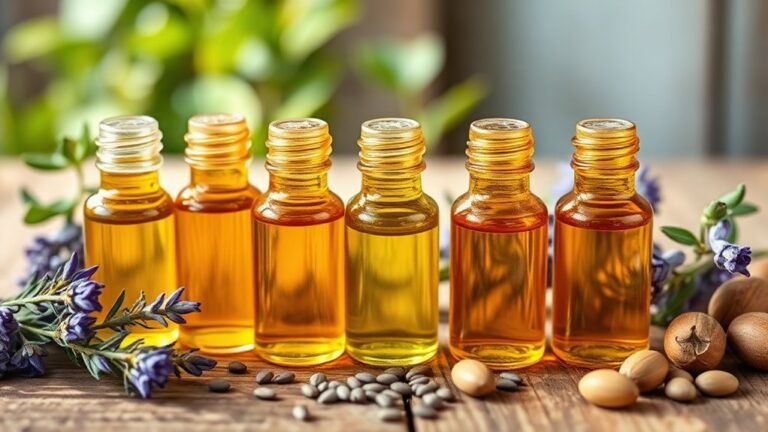
10 Best Oils for Low Porosity Hair in 2027
For low porosity hair, you want oils that deeply hydrate without causing buildup. Jojoba and grapeseed oils absorb quickly and lock in moisture, making them perfect for keeping your hair hydrated.
Argan and marula oils boost softness and protect against damage, giving your strands a healthy shine.
Lightweight options like sweet almond, kukui nut, and safflower oils nourish without feeling heavy or greasy.
Coconut oil penetrates deeply, providing intense moisture, while castor oil strengthens strands and supports scalp health.
If you want to explore how these oils can transform your hair care routine, keep going for more tips and benefits.
Trust me, finding the right oils can make a huge difference in managing and enhancing your low porosity hair.
Key Takeaways
- Coconut, jojoba, and grapeseed oils are top choices for deeply moisturizing and lightweight hydration in low porosity hair. They soak in nicely without leaving a heavy feel.
- Sweet almond and avocado oils effectively lock in moisture and nourish the scalp without causing buildup. These oils help keep your hair healthy and hydrated.
- Kukui nut and marula oils provide shine, reduce frizz, and maintain moisture balance for manageable hair. They’re great for keeping your hair smooth and shiny.
- Argan and castor oils strengthen hair, protect from damage, and promote healthy growth in low porosity textures. Using these oils regularly can really boost your hair’s health.
- Choose oils that absorb quickly, avoid heaviness, and support both scalp health and frizz control for optimal results. It’s all about finding what works best for your unique hair!
Jojoba Oil

Jojoba oil works wonders for low porosity hair because it closely resembles your scalp’s natural oils. When you apply it, your hair absorbs it easily without feeling greasy or weighed down.
This oil penetrates the hair shaft, helping to lock in moisture and prevent dryness, which low porosity hair often struggles with. You’ll notice your strands becoming softer and more manageable over time.
Plus, jojoba oil stimulates your scalp, promoting healthier hair growth. Since it’s lightweight and non-comedogenic, you can use it frequently as a pre-shampoo treatment or a finishing touch to tame frizz.
Just a few drops warmed between your palms and gently massaged in can make a big difference in your hair’s health and appearance.
Argan Oil

Argan oil offers a rich blend of nutrients that can deeply nourish low porosity hair without causing buildup. You’ll find it lightweight, so it won’t weigh your hair down or leave it greasy.
Argan oil deeply nourishes low porosity hair while remaining lightweight and non-greasy.
It’s packed with antioxidants, vitamin E, and essential fatty acids that help improve moisture retention and shine.
Here’s why argan oil works well for your hair:
- Penetrates the hair shaft easily, enhancing hydration.
- Seals in moisture without clogging pores.
- Protects hair from heat and environmental damage.
- Adds smoothness and reduces frizz for manageable hair.
Sweet Almond Oil

You’ll love how sweet almond oil locks in moisture without weighing your low porosity hair down. It’s packed with vitamins A, E, and fatty acids that nourish each strand deeply.
To get the most out of it, apply a small amount to damp hair and seal in hydration effectively. Trust me, your hair will thank you!
Moisture Retention Benefits
Although low porosity hair can struggle to absorb moisture, sweet almond oil helps lock it in effectively. This lightweight oil penetrates your hair shaft without weighing it down, making it ideal for keeping moisture sealed.
When you use sweet almond oil, you’ll notice your hair stays hydrated longer, reducing dryness and brittleness. Here are four moisture retention benefits of sweet almond oil for your hair:
- Forms a protective barrier that prevents moisture loss.
- Softens hair cuticles, making it easier to retain hydration.
- Enhances hair elasticity, reducing breakage from dryness.
- Nourishes your scalp, promoting a healthy moisture balance.
Incorporating sweet almond oil into your routine guarantees your low porosity hair remains moisturized and resilient throughout the day. Give it a try—you might just love how your hair feels!
Application Tips
To get the most from sweet almond oil’s moisture-locking benefits, proper application matters. Start by warming a small amount between your palms to enhance absorption.
Apply it to damp hair, focusing on ends and dry spots. Avoid using too much oil—light layers work best for low porosity hair.
Seal in moisture by following up with a water-based leave-in conditioner. Use it 2-3 times weekly to prevent build-up.
| Step | How to Apply | Why It Works |
|---|---|---|
| Warm oil | Rub between palms | Enhances penetration |
| Apply to damp | Focus on ends and dry areas | Seals moisture where needed |
| Use sparingly | Light layers only | Prevents greasy build-up |
| Seal | Use water-based leave-in | Locks in hydration |
| Frequency | 2-3 times weekly | Maintains moisture balance |
Nutrient Composition
Since sweet almond oil is rich in essential nutrients, it delivers powerful benefits for low porosity hair. You’ll find it packed with components that nourish and protect your strands deeply without weighing them down.
Here’s what makes sweet almond oil a top choice:
- Vitamin E – Acts as a potent antioxidant, shielding your hair from damage and promoting healthy growth.
- Fatty Acids – Especially oleic and linoleic acids, these help moisturize and soften hair, improving manageability.
- Magnesium – Strengthens hair and reduces breakage by supporting scalp health.
- Proteins – Aid in repairing and fortifying hair strands, enhancing resilience.
With this nutrient profile, sweet almond oil penetrates low porosity hair effectively. So, you end up with shiny, smooth, and well-nourished locks.
Grapeseed Oil
You’ll love grapeseed oil for your low porosity hair because it’s lightweight and absorbs quickly without leaving buildup. Packed with antioxidants and vitamin E, it helps strengthen and protect your strands.
To get the best results, try warming the oil slightly before applying it to help it penetrate better. It’s a simple trick that really makes a difference!
Benefits for Low Porosity
Although low porosity hair often resists moisture, grapeseed oil easily penetrates its tightly bound cuticles, delivering essential nutrients without leaving a heavy residue. This makes it an ideal choice to nourish and protect your hair without weighing it down.
When you use grapeseed oil, you’ll notice lightweight hydration that boosts moisture retention and reduced buildup due to its non-greasy texture. Plus, it enhances shine and softness for a healthy look.
It also strengthens hair strands, minimizing breakage. Because grapeseed oil absorbs quickly, it supports your hair’s natural barrier, helping maintain balance and flexibility.
You’ll find it perfect for daily use, especially if you want to avoid heavy oils that can clog your scalp or hair cuticles. This oil truly complements the unique needs of low porosity hair.
Application Tips and Tricks
When applying grapeseed oil to low porosity hair, warming the oil slightly can help it absorb more effectively into your hair strands. Use a few drops warmed between your palms, then gently massage it into your scalp and hair, focusing on the ends where moisture tends to escape.
Apply on damp hair after washing to lock in hydration without weighing your hair down. Avoid using excessive amounts, as too much oil can cause buildup on low porosity hair.
For best results, pair grapeseed oil with a steam treatment or a warm towel wrap—this opens your cuticles and enhances absorption. Regular, light applications will keep your hair nourished without clogging pores or leaving a greasy residue.
Nutrient Profile Overview
To get the most out of grapeseed oil for your low porosity hair, it’s helpful to understand what makes it so beneficial. This lightweight oil is packed with nutrients that penetrate your hair without weighing it down.
Here’s a quick nutrient profile overview:
- Linoleic Acid – Helps strengthen hair strands and improves moisture retention.
- Vitamin E – Acts as an antioxidant, protecting hair from damage and promoting scalp health.
- Oleic Acid – Provides a light conditioning effect without clogging pores.
- Phytosterols – Support hair growth and reduce inflammation on the scalp.
Knowing these key components helps you appreciate why grapeseed oil is perfect for nourishing low porosity hair. It enhances softness and shine without causing buildup.
Coconut Oil
Coconut oil ranks among the top choices for low porosity hair because it penetrates the hair shaft effectively, delivering much-needed moisture. When you use it, you’ll notice your hair feels softer without heaviness.
It also helps reduce protein loss, which keeps your strands strong and prevents breakage. Plus, coconut oil’s lightweight nature means it won’t sit on your hair’s surface, avoiding buildup common with other oils.
| Benefit | How It Feels to You |
|---|---|
| Deep Moisturizing | Hair feels hydrated inside |
| Strengthening | Less breakage, more resilience |
| Lightweight | No greasy residue, just softness |
Using coconut oil regularly can transform your hair care routine with lasting shine and health. Give it a try—you might just fall in love with how your hair feels!
Avocado Oil
Avocado oil offers a rich boost of nutrients that your low porosity hair will appreciate. It’s lightweight enough to penetrate your hair shaft without weighing it down, making it ideal for moisture retention and nourishment.
Avocado oil nourishes low porosity hair deeply without heaviness, perfect for retaining moisture and boosting softness.
You’ll notice improved softness and shine when you incorporate it into your routine. Here’s why avocado oil stands out:
- Rich in vitamins A, D, and E – Helps repair and strengthen hair.
- High in oleic acid – Enhances moisture absorption in low porosity hair.
- Improves scalp health – Soothes dryness and promotes hair growth.
- Protects against damage – Shields hair from environmental stressors and heat styling.
Castor Oil
While avocado oil nourishes and softens low porosity hair, castor oil offers a different set of benefits that can boost your hair’s health. Rich in ricinoleic acid, castor oil improves blood circulation to your scalp, promoting stronger hair growth.
Its thick consistency helps lock in moisture, which is particularly useful for low porosity hair that resists hydration. You can apply it as a sealant after moisturizing to prevent water loss throughout the day. However, because castor oil is heavy, use it sparingly to avoid buildup that can weigh your hair down.
Regular scalp massages with castor oil can also reduce dandruff and soothe irritation. Incorporating castor oil into your routine can strengthen your strands and maintain your hair’s moisture balance effectively. It’s definitely worth giving it a try!
Marula Oil
If you want a lightweight oil that absorbs quickly without leaving your low porosity hair feeling greasy, marula oil is an excellent choice. It’s packed with antioxidants and essential fatty acids that nourish your hair without weighing it down.
You’ll notice softer strands and a natural shine after just a few uses.
Here’s why marula oil works well for your hair:
- It penetrates hair cuticles easily due to its small molecular size.
- It boosts moisture retention without buildup.
- It protects against environmental damage with antioxidants.
- It adds smoothness and reduces frizz for manageable hair.
Using marula oil regularly helps you maintain healthy, hydrated hair without the heaviness some oils cause.
Give it a try and see how your hair loves it!
Safflower Oil
Safflower oil offers a lightweight, non-greasy option that’s perfect for low porosity hair. Since your hair resists moisture, you need an oil that won’t weigh it down or create buildup.
Safflower oil penetrates easily, sealing in hydration without leaving a heavy residue. It’s rich in linoleic acid, which supports your scalp’s health and helps smooth your hair cuticles, making strands shinier and more manageable.
You can apply it after washing or mix a few drops into your conditioner for added moisture. Because it’s gentle and non-comedogenic, it’s suitable even if you have a sensitive scalp.
Incorporate safflower oil into your routine, and you’ll notice softer, more flexible hair that stays hydrated longer without feeling greasy or weighed down.
Kukui Nut Oil
You’ll love kukui nut oil for its lightweight feel and quick absorption, perfect for low porosity hair.
It helps lock in moisture without weighing your strands down. Try applying it to damp hair and use a warm towel to boost penetration for best results.
Benefits for Low Porosity
Although low porosity hair can be challenging to moisturize, kukui nut oil penetrates the hair shaft easily, delivering essential nutrients without weighing your hair down.
This lightweight oil is perfect for enhancing your hair’s health and manageability.
Here are four benefits kukui nut oil offers for low porosity hair:
- Deep Hydration – It locks in moisture, preventing dryness and brittleness.
- Improved Shine – Adds a natural, healthy sheen without greasiness.
- Reduced Frizz – Smooths the hair cuticle, making your hair easier to style.
- Nutrient-Rich – Packed with vitamins A, C, and E, it supports scalp health and hair strength.
Using kukui nut oil means your hair gets effective nourishment that works with your hair’s unique structure.
Pretty great, right? It’s like giving your hair exactly what it needs without any fuss.
Application Tips and Tricks
When applying kukui nut oil to low porosity hair, start with a small amount to avoid buildup, as this hair type easily repels heavy products. Warm the oil slightly by rubbing it between your palms; this helps it penetrate better.
Apply it to damp hair to lock in moisture without weighing your strands down. Focus on the mid-lengths and ends where dryness often occurs, avoiding the roots to prevent greasiness.
You can also use kukui nut oil as a pre-shampoo treatment—massage it in, leave it on for 20-30 minutes, then wash as usual. Remember, less is more with low porosity hair.
Regular, light applications will keep your hair nourished without causing product buildup or dullness. It’s all about finding that perfect balance for your hair’s needs.
Frequently Asked Questions
How Often Should I Oil Low Porosity Hair?
You should oil your low porosity hair once or twice a week. Over-oiling can weigh it down since your hair resists moisture absorption.
Focus on light oils and apply sparingly to keep hair healthy and manageable. This way, you avoid buildup and keep your hair feeling fresh.
Can Oils Help With Scalp Dandruff?
Oils can absolutely help with scalp dandruff—they’re like tiny warriors battling dryness and flakes on your scalp. Applying tea tree or jojoba oil soothes irritation and moisturizes, making your scalp healthier and dandruff much less noticeable.
You know, these oils really work by calming the scalp and locking in moisture. So, if you’re dealing with those pesky flakes, giving oils a try might just do the trick.
Are These Oils Safe for Color-Treated Hair?
Yes, these oils are safe for color-treated hair.
You’ll want to choose lightweight, non-greasy oils like argan or jojoba.
They help avoid stripping color while moisturizing and protecting your hair’s health effectively.
How Do I Choose the Best Oil for My Hair Type?
Start selecting scents suited specifically for your strands by spotting shine, strength, and softness needs.
Test textures, trust your tresses’ reactions, and tailor treatments to truly transform your hair health and happiness.
Can I Mix These Oils With Other Hair Products?
Yes, you can mix oils with other hair products, but test a small amount first to avoid buildup or irritation.
Combining oils with leave-in conditioners or moisturizers can boost hydration and shine without weighing your hair down. Just make sure to start small and see how your hair reacts before using more.
Conclusion
Now that you know the best oils for low porosity hair, remember this: not all oils work the same for everyone. It’s a bit like a science experiment—your hair’s unique makeup determines what truly nourishes it.
Don’t just follow trends; listen to your hair’s response. The real secret isn’t in the oil itself but in understanding how your hair absorbs and retains moisture.
Embrace patience, and you’ll discover what makes your hair thrive. When choosing oils for low porosity hair, focus on lightweight options that seal in moisture without weighing your hair down.
By paying attention to how your hair reacts, you can customize your routine and keep your locks healthy and hydrated. After all, the best oils for low porosity hair are the ones that work specifically for you.