Best Sunscreens for Hair and Scalp Protection
To protect your hair and scalp from UV damage, it’s important to use sunscreens designed specifically for hair care.
Look for products with broad-spectrum UV filters like zinc oxide or titanium dioxide. These ingredients help shield your hair and scalp from harmful rays while keeping your locks healthy.
Combining these with moisturizing and antioxidant ingredients boosts protection and nourishes your hair.
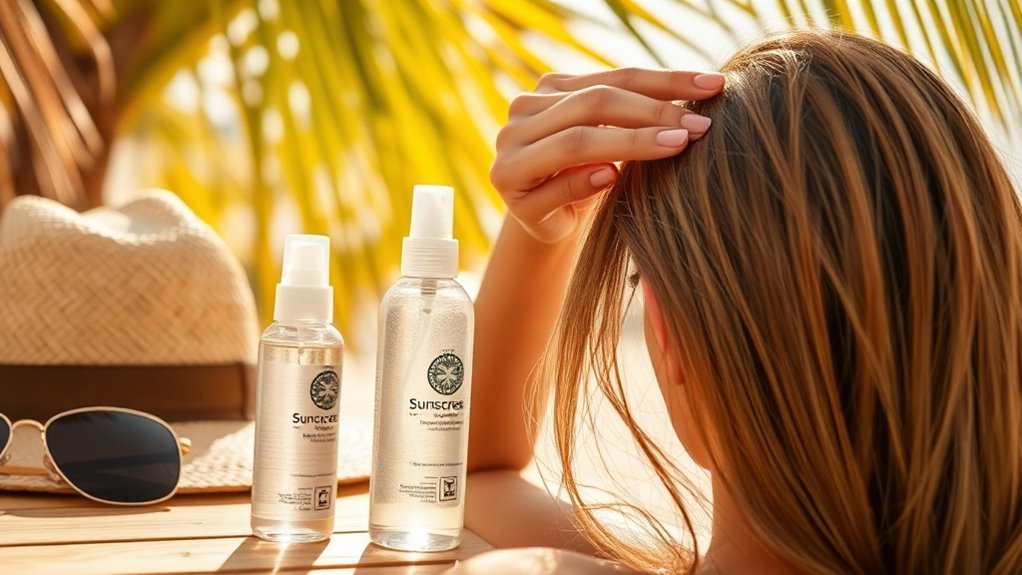
Spray sunscreens and leave-in conditioners are great options because they provide even coverage without feeling greasy or heavy.
Make sure to apply the sunscreen directly to your scalp, especially in thinning areas where sun exposure can be more damaging.
And don’t forget to reapply after swimming or sweating to maintain protection.
You can also pair these products with hats or natural oils for extra defense.
Keep exploring to find the best tips and products that suit your unique hair needs.
Key Takeaways
- Choose broad-spectrum sprays with physical and chemical UV filters for effective hair and scalp sun protection. These sprays work well to block out harmful rays.
- Use leave-in conditioners with moisturizing and antioxidant ingredients to hydrate and shield dry or damaged hair. They help keep your hair healthy under the sun.
- Apply cream sunscreens with high SPF directly on exposed scalp areas, especially where hair is thin or sparse. This gives extra protection where you need it most.
- Reapply sunscreen after swimming or sweating and part hair in sections to ensure even scalp coverage. This way, you won’t miss any spots.
- Combine commercial sunscreens with natural oils like argan or aloe vera for enhanced UV defense and nourishment. It’s a great way to boost protection and keep your hair soft.
Why Protecting Hair and Scalp From UV Rays Matters

Although you might focus on protecting your skin, your hair and scalp also need defense from UV rays. When your hair is exposed to sunlight, the UV rays can weaken its protein structure, leading to dryness, brittleness, and color fading.
Your scalp, often overlooked, is sensitive too; UV exposure can cause sunburn, irritation, and increase the risk of skin cancer. If you have thinning hair or a bald spot, your scalp is even more vulnerable to damage.
By protecting your hair and scalp, you maintain healthier strands and prevent uncomfortable sunburns. Incorporating proper sun protection into your routine helps preserve your hair’s natural shine and your scalp’s overall health.
That way, you can enjoy the sun safely without sacrificing your hair’s condition.
Key Ingredients to Look for in Hair Sunscreens
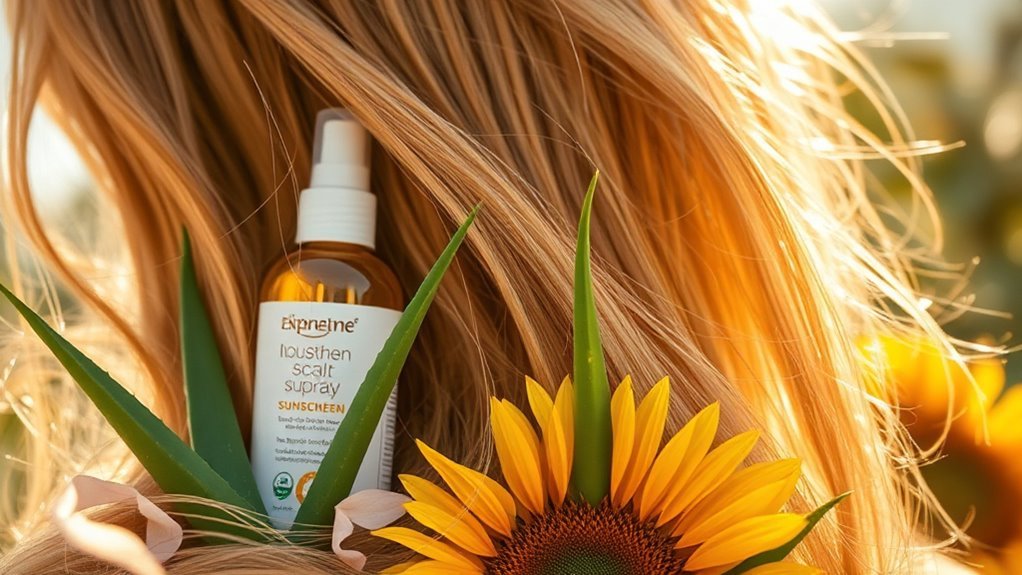
You’ll want to choose hair sunscreens with effective UV filters to block harmful rays. Look for moisturizing ingredients that keep your scalp and strands hydrated.
Antioxidants are also key because they help protect your hair from environmental damage. These little heroes work to keep your locks healthy and strong.
UV Filters Importance
Because your hair and scalp face constant exposure to sunlight, choosing a sunscreen with effective UV filters is crucial. These filters work by absorbing, reflecting, or scattering harmful UV rays, preventing damage like dryness, color fading, and scalp burns.
Look for broad-spectrum protection that shields against both UVA and UVB rays. Ingredients such as zinc oxide and titanium dioxide offer physical protection by reflecting UV rays, making them gentle and effective for sensitive scalps.
Chemical filters like avobenzone and octocrylene absorb UV radiation, providing lightweight coverage without leaving residue. Using a product combining both physical and chemical filters can boost your defense.
Moisturizing Components
Moisture plays an essential role in keeping your hair and scalp healthy under the sun. When choosing a sunscreen for your hair, look for ingredients that hydrate and protect simultaneously.
Components like aloe vera, glycerin, and hyaluronic acid attract and lock in moisture, preventing dryness caused by UV exposure. Natural oils such as jojoba, argan, and coconut oil nourish your hair while forming a light barrier against sun damage.
These moisturizing agents help maintain your hair’s elasticity and prevent brittle strands. By picking a sunscreen with effective moisturizing components, you’ll keep your scalp comfortable and your hair looking vibrant, even after prolonged sun exposure.
Don’t overlook hydration—it’s just as vital as UV protection for your hair’s overall health.
Antioxidant Benefits
Protection isn’t just about blocking UV rays; antioxidants play an essential role in defending your hair and scalp from environmental damage. When you choose a hair sunscreen, look for ingredients like vitamin E, green tea extract, and niacinamide.
These antioxidants neutralize free radicals that cause dryness, brittleness, and premature aging of your hair. Incorporating antioxidants helps maintain your hair’s natural shine and strength, even under harsh sun exposure.
Plus, they reduce inflammation on your scalp, preventing irritation and flakiness. By selecting sunscreens rich in these ingredients, you give your hair an extra layer of defense beyond UV protection.
Top Sunscreens Formulated Specifically for Hair

Sunscreens designed specifically for hair offer a practical way to shield your strands and scalp from harmful UV rays. Products like sprays and leave-in conditioners with UV filters are lightweight and won’t weigh your hair down.
Brands such as Aveda Sun Care Protective Hair Veil and Coola Scalp & Hair Mist combine UV protection with nourishing ingredients to keep your hair hydrated and vibrant. If you prefer natural options, look for formulations containing zinc oxide or titanium dioxide, which provide broad-spectrum protection without harsh chemicals.
These specialized sunscreens not only defend against sun damage but also help prevent color fading and dryness. Incorporating one into your routine guarantees your hair stays healthy, resilient, and protected whenever you’re outdoors.
How to Apply Sunscreen to Hair and Scalp Effectively
To protect your hair and scalp, start by choosing a sunscreen designed for those areas, like sprays or lightweight lotions. Focus on applying it directly to your scalp and hair roots, where sun damage hits hardest.
Don’t forget to reapply after sweating or swimming. That way, you keep your protection strong throughout the day.
Choose Suitable Sunscreen Types
Since your hair and scalp need different care than your skin, you’ll want to pick sunscreen products designed specifically for them.
Look for lightweight sprays or leave-in conditioners with UV filters that won’t weigh your hair down or leave residue. Avoid thick creams, which can be greasy and hard to apply evenly on hair.
Consider formulas with added moisture to prevent dryness caused by sun exposure.
Here’s a quick guide to help you choose the right sunscreen type:
| Sunscreen Type | Best For | Key Benefit |
|---|---|---|
| Spray | All hair types | Easy, even coverage |
| Leave-in Conditioner | Dry or damaged hair | Hydrates and protects |
| Cream | Scalp (spot application) | High SPF protection |
| Powder | Oily scalp | Absorbs oil, protects |
Target Scalp and Roots
After choosing the right type of sunscreen for your hair and scalp, the next step is learning how to apply it effectively. Start by parting your hair into sections to expose your scalp and roots.
Use a spray or lotion sunscreen designed for the scalp, applying it directly along the parted lines. Massage gently to guarantee even coverage without leaving residue.
Don’t forget to cover your hairline, ears, and the back of your neck. If your hair is thick, focus on areas where the scalp is most exposed.
Avoid applying too much product to prevent buildup or greasiness. By targeting your scalp and roots carefully, you’ll protect the most vulnerable areas from UV damage while keeping your hair looking fresh and healthy.
Reapply After Sweating
Even if you apply sunscreen thoroughly in the morning, you’ll need to reapply it after sweating to maintain effective protection for your hair and scalp.
Sweat can wash away or dilute sunscreen, reducing its effectiveness. After exercising or spending time outdoors, gently pat your scalp dry and reapply a spray or lightweight sunscreen to avoid buildup.
| When to Reapply | Recommended Action |
|---|---|
| After heavy sweating | Pat dry, then reapply sunscreen |
| After swimming | Use water-resistant formula first, then reapply |
| Every 2 hours | Regular reapplication to maintain protection |
Following these steps guarantees your scalp and hair stay shielded from UV damage even during active days.
It’s easy to keep your protection strong, just remember to check in and refresh your sunscreen as needed!
Additional Tips for Maintaining Hair Health in the Sun
While protecting your hair with sunscreen is essential, you should also adopt other habits to keep your locks healthy under the sun. UV rays can weaken hair strands, so combining sunscreen with smart practices really boosts your hair’s resilience.
- Wear a Hat: A wide-brimmed hat shields your scalp and hair from direct sunlight. This helps reduce UV exposure quite a bit.
- Stay Hydrated: Drinking plenty of water keeps your hair’s moisture intact. It also prevents dryness caused by sun damage.
- Use Leave-in Conditioners: Go for leave-in conditioners that have UV protection. They create a barrier that locks in moisture and shields your hair against sun damage.
Adding these tips along with sunscreen makes sure your hair stays strong, shiny, and healthy all summer long. Easy, right?
Natural Alternatives and DIY Hair Sun Protection Methods
Looking for natural ways to protect your hair from the sun? You can try DIY methods like applying aloe vera gel mixed with coconut oil. This combo moisturizes and forms a light barrier against UV rays.
Another option is using argan oil, which contains antioxidants that shield your hair from damage. You might also create a homemade spray with green tea, known for its UV-protective properties.
Don’t forget physical barriers: wearing wide-brimmed hats or scarves offers excellent sun protection without chemicals. These natural alternatives are easy to make and gentle on your scalp and hair.
Just remember, while they help, they may not replace commercial sunscreens designed specifically for UV defense. So, consider combining methods for better sun protection.
Frequently Asked Questions
Can Sunscreen for Hair Prevent Color Fading in Dyed Hair?
Yes, sunscreen for hair can help prevent color fading in dyed hair by protecting it from harmful UV rays.
You’ll keep your color vibrant longer by using products designed to shield your hair and scalp from sun damage.
It’s like giving your hair its own little sunblock—so your color stays fresh and bright!
Is It Safe to Use Regular Facial Sunscreen on the Scalp?
You can use regular facial sunscreen on your scalp, but it might feel greasy or heavy.
It’s better to choose a lightweight, non-comedogenic formula to avoid clogged pores and irritation, especially if you have sensitive skin.
How Often Should Hair Sunscreen Be Reapplied During Outdoor Activities?
You should reapply hair sunscreen every two hours during outdoor activities, especially if you’re sweating or swimming.
This keeps your scalp and hair protected from UV damage throughout the day.
Don’t skip reapplication! It really makes a difference in keeping your hair safe.
Do Hair Sunscreens Protect Against Heat Damage From Styling Tools?
No, hair sunscreens mainly guard against UV rays, not heat from styling tools.
You’ll need heat protectant sprays specifically designed to shield your hair from high temperatures during styling. That’s the best way to prevent heat damage effectively.
Can Sunscreen for Hair Cause Product Buildup or Scalp Irritation?
Imagine your scalp throwing a sunscreen-themed party—too much sunscreen can clog pores and irritate.
This can turn your head into a disco of flakes and itchiness.
Conclusion
Protecting your hair and scalp from the sun’s harsh rays is like shielding a delicate flower from a blazing sun—essential for keeping it vibrant and healthy. By choosing the right sunscreen with key ingredients and applying it properly, you’ll prevent damage and dryness.
Remember, your hair needs just as much care as your skin. With a little attention and the right products, you can enjoy sunny days without sacrificing your hair’s beauty and strength.
Using the best sunscreens for hair and scalp protection not only guards against UV damage but also helps maintain moisture and prevents brittleness. So, whether you’re out for a walk or hitting the beach, make sunscreen application a part of your hair care routine. Your locks will thank you for it with lasting shine and resilience under the sun!