How Many Watts for a Hair Dryer?
You’ll want a hair dryer wattage that matches your hair type and styling needs. Choosing the right wattage is important because it affects how quickly your hair dries and how much heat exposure it gets. Using the right power level can help protect your hair from damage while making your drying routine more efficient.
Lower wattage (1000–1400 watts) suits fine or damaged hair, helping avoid excessive heat damage. Medium wattage (1600–1800 watts) fits normal hair, balancing power and control, while higher wattage (1800–2200 watts) works best for thick or coarse hair, speeding drying time.
Choosing the right wattage helps protect your hair and manage energy use effectively. Keep exploring to find the ideal balance for you.
Key Takeaways
- Hair dryers typically range from 1000 to 2200 watts. Wattage shows how much electrical power they use, not just how strong they dry your hair.
- If you have fine or damaged hair, lower wattage between 1000 and 1400 watts is best. This helps reduce heat damage and breakage.
- For normal hair, medium wattage around 1600 to 1800 watts works well. It balances drying speed with gentle heat control.
- Thick or coarse hair benefits from higher wattage, about 1800 to 2200 watts. This gives faster drying with stronger airflow.
- It’s great to pick a hair dryer with adjustable heat settings. That way, you can protect your hair and dry it efficiently based on your hair type and styling needs.
What Hair Dryer Wattage Really Means

Although wattage might seem like just a number, it actually tells you how much power a hair dryer uses to generate heat and airflow. When you see a hair dryer rated at 1800 watts, that means it draws 1800 watts of electrical power to operate.
Higher wattage usually indicates the device can produce more heat and stronger airflow, but it’s not the sole factor determining performance. You should understand that wattage reflects energy consumption, not just the strength of the dryer.
It also affects the electrical load the appliance places on your outlet. By knowing the wattage, you can make certain your hair dryer is compatible with your home’s electrical system and avoid potential issues like tripped breakers or overheating.
How Wattage Affects Drying Time and Efficiency
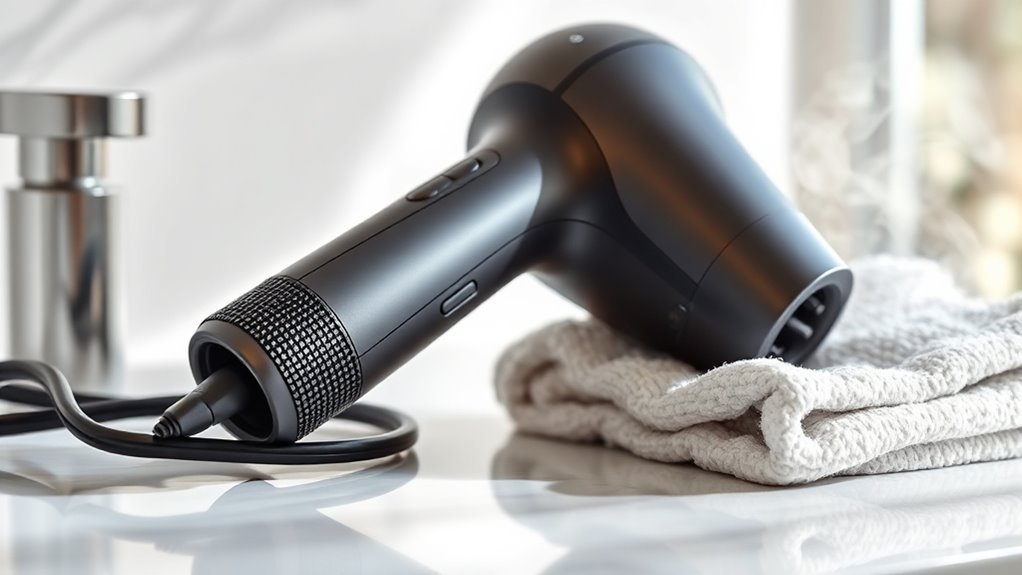
When you choose a hair dryer with higher watts, you’ll usually get faster drying times because it produces more heat and airflow. That means you spend less time styling, but it can also use more energy.
It’s all about balance. Understanding this trade-off helps you pick a dryer that matches your needs for both efficiency and performance.
Higher Watts Faster Drying
Understanding how wattage impacts your hair dryer’s performance helps you choose the right tool for quicker results. Higher wattage means your hair dryer can generate more heat and airflow, which speeds up drying time.
When you pick a dryer with greater wattage, you’re effectively cutting down the time you spend in front of the mirror. This is especially useful if you have thick or long hair that typically takes longer to dry.
However, keep in mind that very high wattage models may get hotter faster, so you’ll want to use heat settings wisely to protect your hair. Essentially, choosing a higher wattage hair dryer lets you dry your hair more efficiently, getting you ready faster without compromising on styling quality.
Energy Use And Efficiency
Since wattage directly influences how quickly your hair dryer heats up and blows air, it also affects how much energy you use during each drying session. Higher wattage dryers use more electricity per minute but dry your hair faster, which can lower overall energy consumption.
If you choose a lower wattage dryer, it might take longer to dry your hair, causing you to use more energy over time. Efficient dryers balance wattage with airflow design to maximize drying speed without wasting power.
You can save energy by selecting a hair dryer with adjustable heat settings and using the highest setting only when necessary. Ultimately, understanding wattage helps you pick a dryer that dries efficiently while managing your electricity usage smartly.
Which Hair Dryer Wattage Is Best for Your Hair Type?

Choosing the right wattage for your hair dryer depends on your hair type. If you have fine hair, a low wattage dryer will protect it from damage.
Medium wattage suits normal hair best. It’s a nice balance that dries your hair efficiently without being too harsh.
For thick hair, a high wattage dryer helps speed up drying and manage volume effectively. It gives you the power you need to handle denser strands.
Low Wattage For Fine Hair
If you have fine hair, opting for a hair dryer with lower wattage—typically between 1000 and 1400 watts—can help you avoid excessive heat that might damage your strands. Fine hair is more delicate and prone to breakage, so using a lower wattage dryer guarantees gentler drying.
This wattage range provides enough power to dry your hair effectively without overheating it. You’ll also reduce the risk of frizz and split ends caused by high temperatures.
Look for dryers with adjustable heat settings and cool shot buttons to customize your drying experience further. By choosing a lower wattage hair dryer, you protect your fine hair’s natural texture and shine while keeping your styling routine safe and efficient.
Medium Wattage For Normal Hair
Fine hair benefits from lower wattage dryers to prevent damage, but if your hair is normal—neither too fine nor too thick—you’ll want a hair dryer that offers a balance of power and control.
A medium wattage dryer, typically between 1600 and 1800 watts, is ideal for your hair type. This range provides enough heat and airflow to dry your hair efficiently without causing excessive dryness or damage.
With a medium wattage dryer, you can style your hair quickly while maintaining its natural texture and shine. Look for models with adjustable heat settings so you can customize the temperature based on your hair’s needs.
This wattage level gives you versatility for everyday use without overloading your hair with heat. It’s all about finding that sweet spot to keep your hair healthy and looking great!
High Wattage For Thick Hair
Thick hair demands more power to dry efficiently and maintain its health. When your hair is dense or coarse, a hair dryer with high wattage—typically between 1800 and 2200 watts—is your best bet.
This higher power helps you cut down drying time, reducing the risk of heat damage from prolonged exposure. It also guarantees even heat distribution, which is key to preventing frizz and maintaining smoothness.
While using a high-wattage dryer, always opt for heat protection products and adjustable heat settings to avoid overheating. You’ll find that investing in a powerful dryer not only speeds up your routine but also keeps your thick hair looking vibrant and healthy.
Balancing Hair Health and Power With Wattage
Finding the right balance between wattage and hair health is essential when choosing a hair dryer. While higher wattage means faster drying, it can also increase heat exposure, risking damage to your hair’s cuticle. You don’t want to sacrifice health for speed.
Aim for a dryer with adjustable heat settings so you can control the temperature according to your hair type. Lower wattage dryers often produce gentler heat, reducing breakage and dryness.
If your hair is fine or damaged, consider wattage around 1000-1400 watts and use cooler settings. For thicker or coarser hair, 1600-2000 watts with adjustable heat options work best.
How Wattage Impacts Energy Use and Your Bill
Although a higher wattage hair dryer dries your hair faster, it also uses more electricity. This can increase your energy bill over time.
Higher wattage hair dryers speed up drying but can raise your electricity bill over time.
When choosing a hair dryer, understanding how wattage affects energy consumption helps you manage costs better. Higher wattage means more power, which translates to quicker drying but greater energy use.
Conversely, lower wattage models use less electricity but take longer to dry your hair.
Consider these points about wattage and energy use:
- Higher wattage hair dryers consume more kilowatt-hours (kWh), impacting your monthly bill.
- Frequent use of a powerful dryer can notably add to energy costs.
- Using a hair dryer efficiently and for shorter periods can help offset higher wattage energy consumption.
Balancing wattage and usage habits keeps your energy bill in check without sacrificing convenience.
How to Choose the Perfect Wattage for Your Hair Dryer
Consider your hair type and daily routine when choosing the perfect wattage for your hair dryer. If you have thick or curly hair, a higher wattage dryer (around 1800-2000 watts) will help you dry your hair faster and style more efficiently.
For fine or thin hair, a lower wattage (1200-1600 watts) provides gentle drying without causing damage. Also, think about how often you use your dryer; frequent users might want a more powerful model to save time.
If you travel often, a lightweight, lower wattage dryer could be more convenient. Ultimately, balance power with your hair’s needs and your lifestyle to pick a wattage that dries effectively without wasting energy or harming your hair.
Frequently Asked Questions
Can I Use a Hair Dryer With a Voltage Converter?
Yes, you can use a hair dryer with a voltage converter, but make sure the converter supports the dryer’s wattage. Otherwise, you risk damaging the dryer or the converter.
Always check both devices’ specs before plugging in. It’s better to be safe than sorry!
Are Higher Wattage Hair Dryers Louder?
Yes, higher wattage hair dryers often produce more noise, sometimes exceeding 80 decibels, similar to city traffic.
You’ll notice louder sound because powerful motors generate stronger airflow, which creates more noise while drying your hair faster. It’s kind of like the trade-off you get for speed.
How Long Do Hair Dryers Usually Last?
Hair dryers usually last about 3 to 5 years with regular use.
You’ll want to replace yours sooner if it gets unusually hot, makes strange noises, or stops drying efficiently.
It’s better to act early to avoid damage or accidents.
Can Wattage Affect Hair Dryer Weight?
Yes, wattage can affect your hair dryer’s weight because higher wattage often means a bigger motor and heating element, making it heavier.
But design and materials also play a big role, so it’s not always directly proportional. It really depends on how the manufacturer balances power with portability.
Are There Energy-Saving Hair Dryers Available?
Yes, you can find energy-saving hair dryers that use lower wattage and efficient technology. They dry hair quickly while using less power.
This helps you save on electricity bills and reduce your environmental impact. It’s a win-win!
Conclusion
Choosing the right hair dryer wattage means balancing power and care—you want quick drying without frying your hair. Higher watts speed things up but can risk damage, while lower watts protect strands but take longer.
It’s not just about efficiency; it’s about what works best for your hair type and your energy bill. So, don’t just chase power—find the sweet spot that dries smart and keeps your hair healthy.
When thinking about how many watts for a hair dryer, consider your hair’s thickness and texture. Thicker hair might need higher wattage for faster drying, while fine or damaged hair benefits from lower wattage to avoid heat stress.
Ultimately, the best hair dryer wattage balances drying speed and hair care. Choosing the right wattage helps you save energy and maintain healthy hair without compromising on performance. So, pick a hair dryer wattage that fits your lifestyle and hair needs for smart, efficient drying.