How Many Amps Does a Hair Dryer Draw?
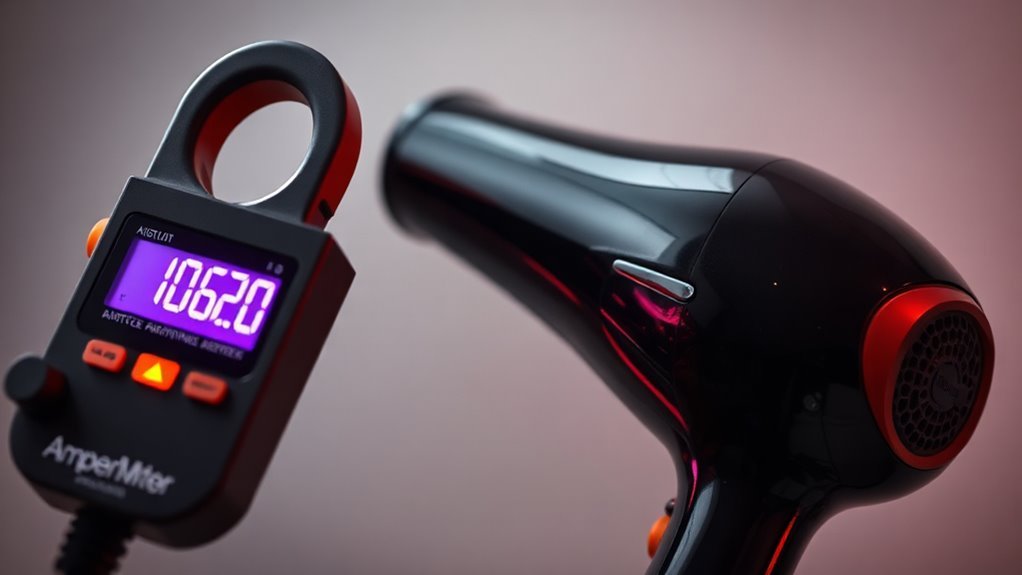
You can expect a typical hair dryer to draw between 7 and 15.6 amps, depending on its wattage and settings.
Standard models usually run around 10 amps, while higher-powered dryers, like 1500- to 1875-watt ones, pull more current.
Factors like heating element design and motor speed also influence amperage. Knowing this helps you avoid overloading circuits and save energy.
Keep exploring to discover how these details impact your dryer’s efficiency and performance.
Understanding how many amps a hair dryer draws can make a big difference in both safety and cost.
Key Takeaways
- Most typical hair dryers draw between 7 to 12 amps during use, with standard models around 10 amps.
- A 1500-watt hair dryer on a 120-volt circuit draws about 12.5 amps.
- Higher wattage dryers, like 1875 watts, draw approximately 15.6 amps on a 120-volt circuit.
- Amperage varies based on heating element design, motor speed, and multiple heat/speed settings.
- Calculating amps is done by dividing wattage by voltage (amps = watts ÷ volts).
So, if you know the wattage and voltage, you can figure out the amps pretty easily!
How Many Amps Does a Typical Hair Dryer Use?
Most typical hair dryers draw between 7 to 12 amps when in use. When you plug in your hair dryer, it pulls this amount of current to power its heating element and fan motor.
You’ll find that standard models usually hover around 10 amps, which is enough to dry your hair efficiently without tripping your circuit breaker. If you’re using a dryer rated at 1500 watts on a 120-volt circuit, it’ll draw about 12.5 amps.
Lower-wattage dryers consume fewer amps but might take longer to dry your hair. Knowing the amps your hair dryer uses helps you avoid overloading electrical outlets and guarantees safe operation.
What Factors Affect a Hair Dryer’s Amperage?

You’ll notice a hair dryer’s amperage changes based on its wattage and power rating. The design of the heating element also plays a big role in how much current it draws.
Plus, the motor speed can affect the overall electrical load. So, when you’re checking out different models, keep these factors in mind—they all impact how much power the dryer uses.
Wattage And Power Rating
Because hair dryers rely on electrical power to generate heat and airflow, their amperage depends largely on their wattage and power rating. When you check a hair dryer’s label, you’ll see its wattage—this number tells you the power it consumes.
Higher wattage means more power, which typically leads to higher amperage draw. For example, a 1875-watt hair dryer running on a 120-volt circuit draws about 15.6 amps (watts divided by volts).
If you use a lower wattage dryer, it pulls fewer amps and is easier on your electrical circuit. Keep in mind, power ratings can vary between models, and features like multiple speed settings may alter actual amperage during use.
Understanding wattage helps you choose a dryer that fits your power supply safely. It’s all about matching your device to your home’s electrical setup without overloading it.
Heating Element Design
The heating element design plays a pivotal role in determining how many amps a hair dryer draws. When you look at the element, its material and thickness directly affect electrical resistance. Lower resistance means more current flows, increasing amperage.
You’ll find most hair dryers use nichrome wire because it heats up quickly and resists corrosion. If the element is longer or thinner, resistance rises, reducing current draw. However, a thicker or shorter wire lowers resistance, causing the hair dryer to pull more amps.
Additionally, the heating element’s arrangement, such as coils packed tightly or spaced out, influences heat output and current requirements. So, the specific design choices manufacturers make here impact how much power your hair dryer needs to operate efficiently and safely.
Motor Speed Impact
Motor speed directly influences how many amps your hair dryer pulls during operation. When the motor runs faster, it demands more electrical current to maintain that speed, increasing the amperage.
If you switch to a higher speed setting, you’ll notice the motor’s power consumption rises, drawing more amps. Conversely, at lower speeds, the motor uses less current, reducing the overall amperage.
Factors like motor design and efficiency also play a role—more efficient motors can spin faster without drastically increasing amps. So, when you choose a hair dryer with multiple speed settings, you’re essentially selecting how much current it will draw.
Understanding this helps you manage power usage and guarantees your electrical circuit can handle your hair dryer’s demands safely. It’s pretty handy to know, right?
Why Knowing Your Hair Dryer’s Amps Prevents Circuit Overload
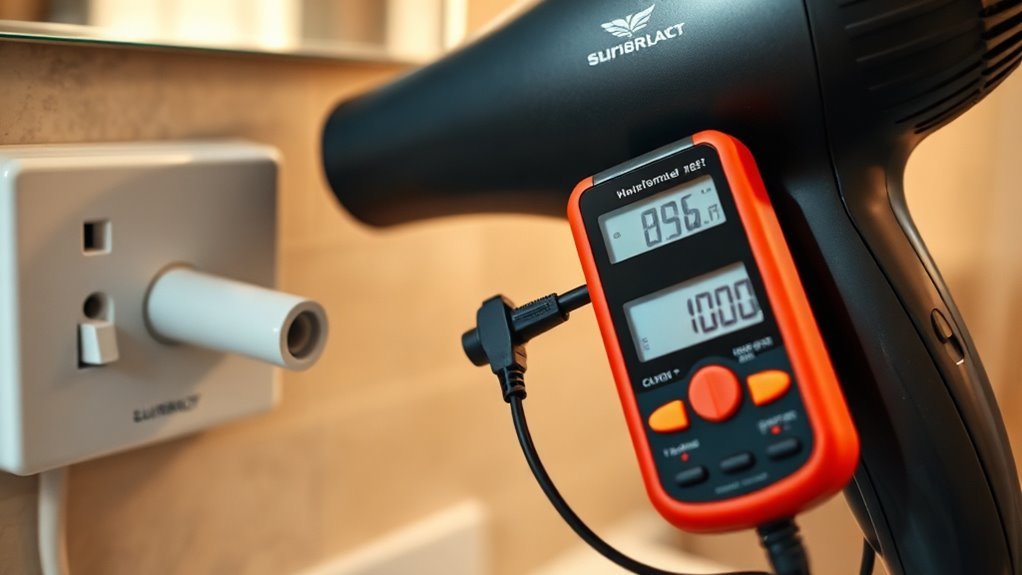
You need to know your hair dryer’s amps to avoid exceeding your circuit’s capacity. When you use too many high-amp devices at once, you risk overloading the circuit and causing electrical hazards.
It’s really about staying aware. This helps you keep your home safe and your devices running smoothly.
Circuit Capacity Awareness
Understanding your hair dryer’s amp draw can save you from unexpected power trips and potential hazards. When you’re aware of how much current your device pulls, you can better gauge if your circuit can handle it without overloading.
Overloading not only disrupts your day but can also damage your electrical system. Knowing your circuit’s capacity helps you avoid these frustrations and keeps your home’s wiring safe.
Consider these points to keep your peace of mind:
- Avoid sudden blackouts during your morning routine
- Prevent damage to other devices on the same circuit
- Save money by not overloading circuits and causing repairs
- Make sure your hair dryer runs efficiently without interruptions
- Feel confident using multiple appliances without worry
Being mindful of circuit capacity keeps your home safer and your day smoother.
Preventing Electrical Hazards
When dealing with high-powered devices like hair dryers, knowing their amp draw helps you prevent circuit overloads that could spark electrical hazards.
If you plug too many high-amp appliances into one circuit, it risks overheating wires or tripping breakers. By checking your hair dryer’s amps, you can balance load and keep your home safe.
| Device | Amp Draw (Approx.) | Risk Level |
|---|---|---|
| Hair Dryer | 12-15 A | High |
| Toaster | 8-10 A | Moderate |
| Laptop Charger | 1-3 A | Low |
| Vacuum Cleaner | 7-12 A | Moderate-High |
| LED Lamp | 0.5-1 A | Low |
Keep loads balanced, and avoid using multiple heavy devices simultaneously on one circuit.
It’s a simple step that can save you from a lot of trouble!
How to Calculate Your Hair Dryer’s Power Use
Calculating your hair dryer’s power use starts with knowing its wattage, which is usually listed on the device or in the manual. Once you have that number, you can figure out the current it draws by dividing the wattage by your home’s voltage (typically 120 volts in the U.S.).
For example, a 1500-watt dryer uses about 12.5 amps (1500 ÷ 120 = 12.5). This helps you understand how much power it consumes and guarantees you don’t overload circuits.
Keep in mind:
- Knowing your dryer’s power helps prevent electrical hazards
- It lets you estimate your energy costs
- You can avoid tripping breakers
- You’ll feel more in control of your home’s safety
- It can guide you when choosing outlets or extension cords
Hair Dryer Features That Affect Energy Consumption
Although hair dryers may seem similar, several features can markedly impact how much energy they consume. For instance, the wattage rating directly affects power draw—higher wattage means more amps used.
You’ll also notice multiple heat and speed settings; using lower settings reduces energy use since the motor and heating element run less intensely. Some models include ionic technology, which may improve drying efficiency but doesn’t noticeably change energy consumption.
The type of motor matters too: ceramic and tourmaline elements heat up faster, often cutting drying time and energy use. Additionally, the size and design of the dryer influence airflow and efficiency, affecting how long you need to run it.
How to Choose an Energy-Efficient Hair Dryer
Understanding the features that affect your hair dryer’s energy use helps you make smarter choices. When choosing an energy-efficient hair dryer, focus on models with lower wattage but effective performance.
Choosing a lower wattage hair dryer with strong performance leads to smarter, energy-efficient styling decisions.
Look for dryers with multiple heat and speed settings so you can adjust power according to your needs, saving energy. Consider hair dryers with ceramic or tourmaline technology—they dry hair faster and protect it better, reducing the time you use electricity.
Also, check for an Energy Star rating or similar certification to guarantee efficiency.
- Feel confident saving on your electric bill without sacrificing style
- Enjoy quicker drying times that respect your hair’s health
- Reduce your carbon footprint with smarter technology
- Experience less noise during your routine
- Invest in a device that lasts longer and works smarter
Frequently Asked Questions
Can Using a Hair Dryer Damage My Electrical Wiring?
Yes, using a hair dryer can damage your electrical wiring if the circuit is overloaded or the wiring is old.
Make sure your wiring is up to code and avoid running multiple high-power devices simultaneously to prevent damage.
It’s better to be safe than sorry when it comes to electrical safety!
Are Cordless Hair Dryers Less Powerful Than Corded Ones?
When push comes to shove, cordless hair dryers usually aren’t as powerful as corded ones because they rely on batteries. You’ll notice shorter run times and lower heat.
But hey, they offer more convenience without being tied down. It’s all about what works best for you!
How Often Should I Clean My Hair Dryer for Safety?
You should clean your hair dryer every one to three months to prevent lint buildup and overheating. Regular cleaning keeps it safe, efficient, and extends its lifespan.
Does Hair Type Affect Drying Time and Energy Use?
Yes, your hair type affects drying time and energy use. Thicker or curlier hair takes longer to dry, using more energy.
You’ll save time and power if your hair is fine or straight. It dries faster overall, which is a nice bonus!
Can Hair Dryers Be Used Safely During Travel Abroad?
Think of your hair dryer as a traveler adapting to new climates. You can safely use it abroad if you check voltage compatibility and use the right plug adapter or a voltage converter.
This way, you avoid frying your device or the outlet. It’s really all about making sure your hair dryer fits in with the local electrical setup. Just a little prep goes a long way!
Conclusion
Now that you know how many amps your hair dryer draws, you can confidently control your consumption and curb circuit chaos. By being aware of amperage and power, you prevent pesky power problems while picking a perfect, energy-efficient model.
Remember, mastering your hair dryer’s power means maintaining your home’s harmony and helping your wallet while whipping up wonderful waves or sleek styles. Stay smart, save energy, and style stress-free! Understanding how many amps a hair dryer uses helps you avoid overloading circuits and reduces your electricity bills. So, next time you shop for a hair dryer, keep amperage in mind to find one that fits your needs without draining too much power. This way, you keep your home safe and your styling routine smooth and efficient.