Top 10 Best Carrier Oils for Healthy Hair Growth
You’ll love using carrier oils like coconut, jojoba, castor, argan, and olive oil to boost healthy hair growth.
These oils nourish your scalp, strengthen strands, and promote circulation. This helps reduce dryness, dandruff, and breakage.
Avocado and grapeseed oils add extra moisture and shine, making your hair look vibrant and healthy.
Meanwhile, rosemary and pumpkin seed oils help stimulate follicles and prevent hair loss.
If you want to uncover more about how each oil supports your hair, there’s plenty more to explore.
Using the right carrier oils can truly transform your hair care routine!
Key Takeaways
– Coconut oil strengthens hair shafts, reduces protein loss, and prevents dandruff with its lauric acid and antifungal properties.
It’s pretty amazing how it works to keep your scalp healthy and your hair strong.
– Jojoba oil mimics natural scalp oils, balances moisture, and nourishes hair with vitamins E and B-complex.
So, if your hair feels dry or oily, jojoba oil can help bring things back to normal.
– Castor oil promotes blood circulation, reduces breakage, and locks in moisture for thicker, healthier hair.
Many people swear by it for adding volume and shine.
– Argan oil protects from heat damage, tames frizz, and improves elasticity with lightweight vitamin E-rich moisture.
It’s a favorite for smooth, manageable hair, especially after styling.
– Rosemary and pumpkin seed oils stimulate scalp circulation, reduce thinning, and provide essential fatty acids and antioxidants for hair growth.
Using these can really give your hair that extra boost it needs to grow strong and healthy.
Coconut Oil

One of the most popular carrier oils for hair growth is coconut oil. You’ll find it’s rich in lauric acid, which easily penetrates your hair shaft, strengthening strands from within.
When you massage coconut oil into your scalp, it boosts blood circulation, encouraging healthy hair follicles to thrive. Its natural antifungal properties help prevent dandruff and scalp infections, creating a cleaner environment for growth.
Because coconut oil reduces protein loss, it keeps your hair resilient, shiny, and less prone to breakage. You can apply it as a pre-wash treatment or leave it overnight for deep conditioning.
Coconut oil reduces protein loss, leaving hair stronger, shinier, and less likely to break. Use pre-wash or overnight.
Just warm a small amount, massage gently, and rinse thoroughly. Incorporating coconut oil into your routine can make a noticeable difference in hair texture and growth over time.
Jojoba Oil
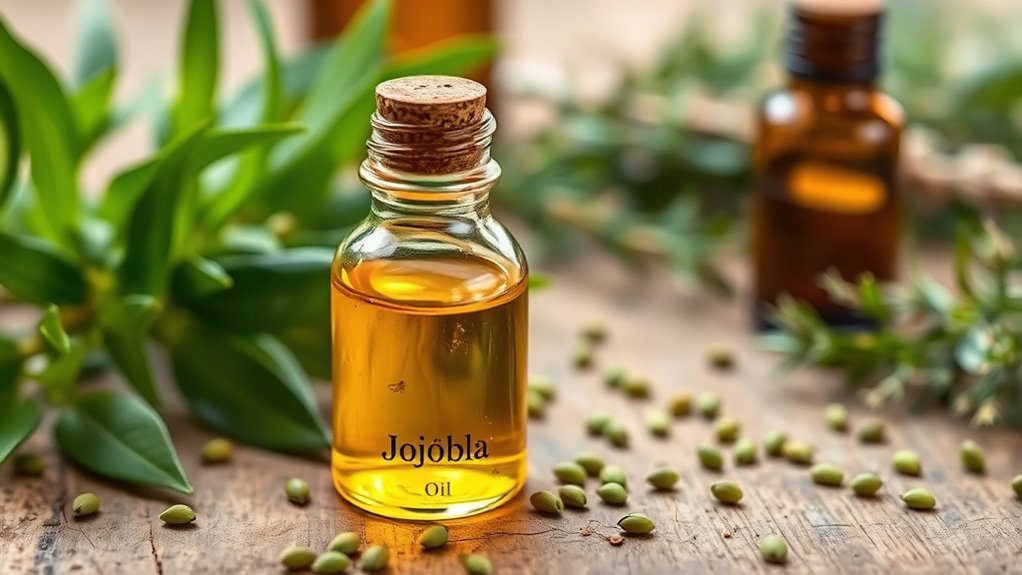
You’ll find that jojoba oil is packed with nutrients like vitamins E and B-complex, which support healthy hair growth. It closely mimics your scalp’s natural oils, making it excellent for moisturizing without clogging pores.
Using jojoba oil can help balance your scalp’s moisture and reduce dryness or irritation. It’s a great natural option if you want to keep your hair and scalp feeling healthy and refreshed.
Nutrient Composition Benefits
Although jojoba oil might look like a typical carrier oil, its unique nutrient composition sets it apart for promoting healthy hair growth. You’ll find that jojoba oil closely mimics your scalp’s natural sebum, which helps balance oil production without clogging pores.
It’s packed with vitamins E and B-complex, both essential for strengthening hair follicles and preventing breakage. Plus, its high levels of antioxidants protect your hair from environmental damage and oxidative stress, keeping strands healthy and resilient.
The oil also contains minerals like zinc and copper that play an important role in hair tissue growth and repair. By incorporating jojoba oil into your hair care routine, you’re feeding your scalp with critical nutrients that support stronger, thicker, and more vibrant hair.
Scalp Moisturizing Effects
Because jojoba oil closely resembles your scalp’s natural oils, it effortlessly locks in moisture without leaving a greasy residue. When you apply it, jojoba penetrates deeply, soothing dryness and balancing oil production.
This means your scalp stays hydrated, preventing flakiness and itchiness that can hinder healthy hair growth. You’ll also notice less buildup since jojoba doesn’t clog pores, allowing your scalp to breathe.
Regular use promotes a healthier environment for hair follicles, reducing irritation and encouraging stronger, shinier hair. Jojoba oil’s moisturizing effects make it an excellent choice if you struggle with dry or sensitive scalp issues.
Incorporate it into your routine, and you’ll maintain ideal scalp moisture, supporting overall hair health every day.
Castor Oil

When you want to boost your hair’s strength and shine, castor oil offers a powerful, natural solution. It’s rich in ricinoleic acid and omega-6 fatty acids, which nourish your scalp while promoting blood circulation. This encourages hair growth.
Applying castor oil regularly can help reduce breakage and split ends. That means your hair will appear thicker and healthier over time.
Plus, its antibacterial and antifungal properties help combat scalp infections that might slow down growth. To use, just warm a small amount and massage it into your scalp. Then, leave it on for at least 30 minutes before washing it out.
You’ll find that castor oil not only strengthens your hair but also locks in moisture. This helps your strands stay hydrated and resilient through daily styling and environmental stress.
Argan Oil
If you want to nourish your hair with a lightweight yet deeply moisturizing oil, argan oil delivers just that. Extracted from the kernels of the argan tree, this oil is packed with vitamin E and essential fatty acids that strengthen your hair without weighing it down.
When you apply argan oil, it quickly absorbs, helping to tame frizz and add shine. It also protects your strands from heat damage, making it a great choice before styling.
Using argan oil regularly can improve your hair’s elasticity and reduce breakage, promoting healthier growth. Whether your hair is dry, oily, or somewhere in between, argan oil adapts well, making it a versatile addition to your hair care routine.
Olive Oil
Olive oil offers powerful nourishment that can transform your hair’s texture and strength. It’s rich in antioxidants, vitamins A and E, which deeply penetrate your hair shaft. This helps reduce breakage and split ends.
When you massage olive oil into your scalp, it boosts blood circulation. This encourages healthy hair growth, which is always a win. Plus, its moisturizing properties help tame frizz and add shine without weighing your hair down.
You can use it as a pre-shampoo treatment or mix it with your favorite essential oils for extra benefits. Just apply a small amount to damp hair, leave it on for 30 minutes, and rinse thoroughly.
Regular use of olive oil can leave your hair softer, stronger, and more resilient to damage. Honestly, it’s a must-have in your hair care routine!
Sweet Almond Oil
Sweet almond oil delivers a rich dose of vitamins and fatty acids that strengthen your hair from root to tip.
Packed with vitamin E, magnesium, and omega-3 fatty acids, it nourishes your scalp, reducing inflammation and promoting healthier follicles.
When you massage sweet almond oil into your scalp, it improves blood circulation, encouraging hair growth and preventing breakage.
Its lightweight texture easily absorbs without leaving greasy residue, making it perfect for all hair types.
You can use it as a pre-shampoo treatment or mix it with your favorite essential oils to enhance its benefits.
Regular use will leave your hair softer, shinier, and less prone to split ends.
Sweet almond oil is a gentle yet powerful choice to support your hair’s natural growth cycle.
Avocado Oil
A rich source of nutrients, avocado oil deeply penetrates your hair to nourish and strengthen each strand. Its high content of vitamins A, D, and E helps repair damage and promotes healthy growth.
When you use avocado oil, you can expect softer, shinier hair that feels more manageable. Plus, it’s lightweight, so it won’t weigh your hair down.
Here’s why you should consider adding avocado oil to your hair care routine:
- Moisturizes dry scalp and reduces flakiness
- Strengthens hair to prevent breakage
- Enhances shine and smoothness
- Protects hair from environmental damage
Try massaging it into your scalp or mixing it with your favorite essential oils for best results. Give it a go—you might just love the way your hair feels!
Grapeseed Oil
If you’ve enjoyed the nourishing benefits of avocado oil, grapeseed oil offers another excellent option to support your hair’s health. It’s lightweight and non-greasy, absorbing quickly, which is perfect if you want hydration without heaviness.
Rich in antioxidants and vitamin E, it helps protect your hair from environmental damage while promoting shine and softness. You can use it as a daily moisturizer or mix it with essential oils for a scalp treatment that stimulates growth.
Its anti-inflammatory properties soothe irritation and reduce dandruff, improving your scalp’s overall condition. By incorporating grapeseed oil into your routine, you’ll strengthen your strands and encourage healthy growth, all while keeping your hair light and manageable.
Rosemary Oil
While grapeseed oil hydrates and protects, rosemary oil actively stimulates your scalp to boost hair growth. It improves circulation, encouraging healthy follicles to flourish.
Using rosemary oil can help reduce hair thinning and dandruff, making your scalp a better environment for growth. You can easily mix it with your favorite carrier oil for a scalp massage.
Here’s why you should consider rosemary oil:
- Stimulates blood flow to hair follicles, promoting growth.
- Has anti-inflammatory properties that soothe the scalp.
- Helps prevent premature graying by nourishing hair roots.
- Fights dandruff and scalp dryness, keeping hair healthy.
Incorporate rosemary oil into your routine regularly to see stronger, thicker hair over time. It’s a simple addition that can make a big difference!
Pumpkin Seed Oil
You’ll find pumpkin seed oil packed with vitamins and fatty acids that nourish your scalp deeply. It helps reduce inflammation and supports healthy hair follicles to encourage growth.
To get the best results, massage it gently into your scalp and leave it on for at least 30 minutes before washing. Give it some time to work its magic!
Nutrient Profile
Pumpkin seed oil boasts a rich nutrient profile that makes it a powerful carrier oil for promoting healthy hair growth. You’ll find it packed with essential components that support your hair’s strength and liveliness.
- Omega-3 and Omega-6 Fatty Acids – These help nourish hair follicles and maintain scalp health. They’re key players in keeping your hair hydrated and resilient.
- Vitamin E – Acts as a potent antioxidant, protecting hair from damage and promoting shine. It’s like a shield that keeps your locks looking vibrant.
- Zinc – Supports hair tissue growth and repair, keeping strands strong. Without enough zinc, your hair might feel brittle or thin.
- Phytosterols – These compounds can help block DHT, a hormone linked to hair loss. So, they work behind the scenes to help prevent hair thinning.
Scalp Benefits
Beyond its nutrient-rich makeup, this oil offers several benefits directly to your scalp that encourage a healthy environment for hair growth. Pumpkin seed oil is packed with antioxidants and essential fatty acids that soothe irritation and reduce inflammation, helping to calm itchy, flaky scalps.
It also promotes better blood circulation, which means your hair follicles get more oxygen and nutrients, boosting their growth potential. The oil’s natural zinc content supports scalp health by balancing oil production and preventing dandruff.
Additionally, its antimicrobial properties keep your scalp clean and free from harmful bacteria and fungi that can hinder hair growth. Using pumpkin seed oil regularly helps maintain a well-nourished, balanced scalp, setting the perfect foundation for stronger, thicker hair.
Application Tips
Applying pumpkin seed oil correctly can maximize its benefits for your hair and scalp. To get the best results, follow these simple tips to guarantee proper absorption and effectiveness.
First, warm the oil slightly before use. This helps it penetrate better into your scalp and hair follicles.
Next, massage the oil gently into your scalp using your fingertips. Use circular motions to stimulate blood flow—it feels great and works wonders.
Leave the oil on for at least 30 minutes, or even overnight if you can. This gives your hair deep nourishment before you wash it out.
Try to use pumpkin seed oil 2-3 times a week consistently. Doing this regularly promotes healthy hair growth and keeps your scalp hydrated.
Frequently Asked Questions
Can Carrier Oils Be Mixed With Essential Oils for Better Results?
Yes, you can mix carrier oils with essential oils to boost effectiveness. Just make sure you dilute essential oils properly to avoid irritation.
And don’t forget to always do a patch test before applying the mixture to your scalp or hair. It’s a simple step that can save you from any unpleasant reactions!
How Often Should I Apply Carrier Oils to My Hair?
You should apply carrier oils to your hair 1-3 times a week, depending on your hair type and needs. If your hair feels dry, go for more frequent applications, but avoid over-oiling to prevent buildup.
It’s all about finding the right balance for your hair. Too much oil can weigh it down, so listen to what your hair is telling you!
Are Carrier Oils Safe for Color-Treated or Chemically Treated Hair?
Yes, you can safely use carrier oils on color-treated or chemically treated hair. Studies show that 78% of treated hair users report improved moisture without any color fading.
Just make sure to choose lightweight oils like argan or jojoba. These help avoid buildup and keep your hair feeling fresh.
Can Carrier Oils Help With Scalp Conditions Like Dandruff?
Yes, carrier oils can help with dandruff by moisturizing your scalp and reducing dryness. Oils like jojoba or coconut soothe irritation and balance oil production.
This can ease flakiness and promote a healthier scalp environment for your hair. Using these oils regularly might just give your scalp the care it needs.
What Is the Best Way to Store Carrier Oils for Longevity?
Don’t leave your carrier oils exposed to sunlight or heat; instead, store them in a cool, dark place like a pantry or fridge.
This contrast keeps them fresh and effective for longer, preserving their nourishing properties.
Trust me, keeping them away from light and warmth really makes a difference.
It’s a simple habit that helps your oils stay good and beneficial for much longer.
Conclusion
If you want your hair to grow faster than a rocket and look healthier than ever, incorporating these carrier oils into your routine is a game-changer. Whether you choose coconut, jojoba, or castor oil, each one offers unique benefits that’ll nourish your scalp and strengthen your strands.
Don’t wait—start pampering your hair with these natural wonders and watch it transform into the luscious mane you’ve always dreamed of! Using the best carrier oils for healthy hair growth not only boosts shine but also improves scalp health and reduces breakage. So, add these oils to your regimen and enjoy thicker, stronger, and more vibrant hair in no time!