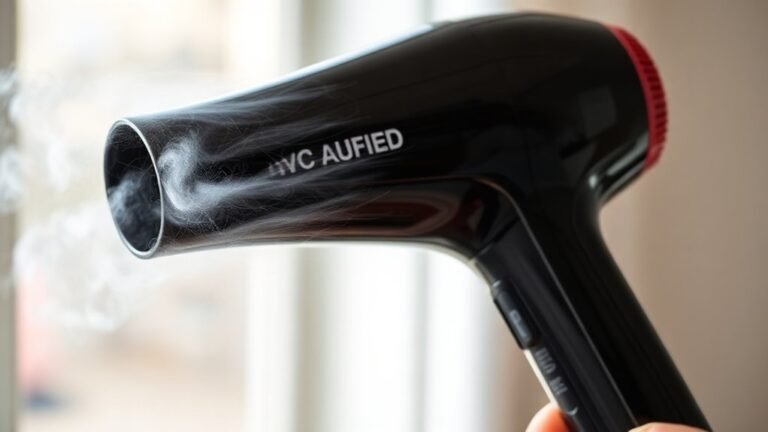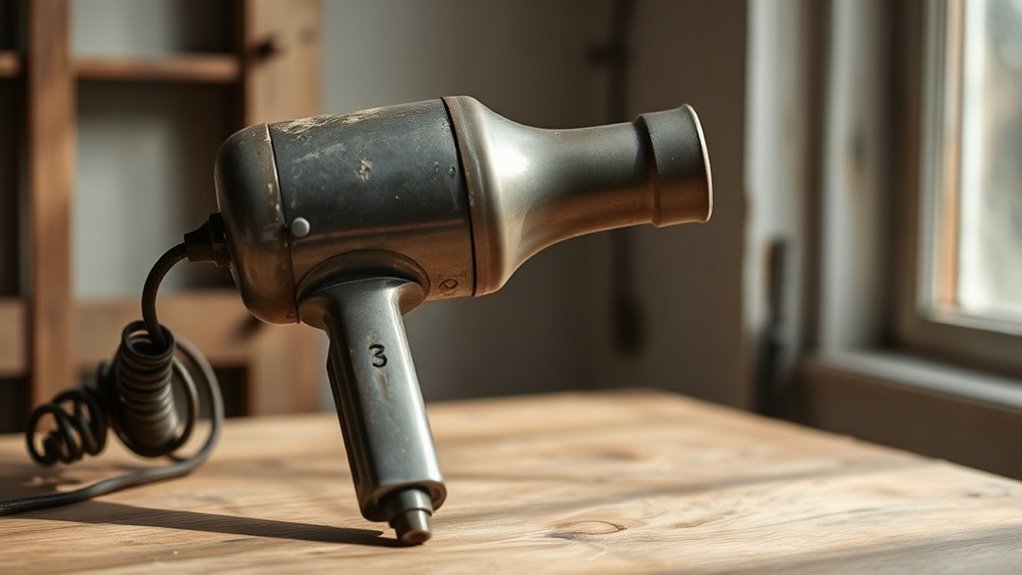
When Was Hair Dryer Invented?
You’ll find that the hair dryer was first invented in 1890 by Alexandre-Ferdinand Godefroy. This early invention marked the beginning of a new way to dry hair faster using heated air. Back then, the bulky device was mainly designed for salons and wasn’t something you could easily use at home.
Early models were heavy and lacked safety features, quite different from today’s lightweight, customizable tools with advanced heat and ionic technology. It’s pretty amazing how far hair dryers have come since then, right?
If you want to discover how this invention evolved and transformed your beauty routine, there’s a lot more to explore.
Key Takeaways
- The hair dryer was invented in 1890 by Alexandre-Ferdinand Godefroy. Early hair dryers were bulky and primarily designed for salon use.
- Godefroy’s invention used an electric heating element to blow warm air. This was a big change from just letting hair air dry slowly.
- Initial hair dryers marked a shift from slow air drying to faster heated drying. Nowadays, modern hair dryers have evolved a lot with better safety and technology.
When Was the Hair Dryer First Invented?
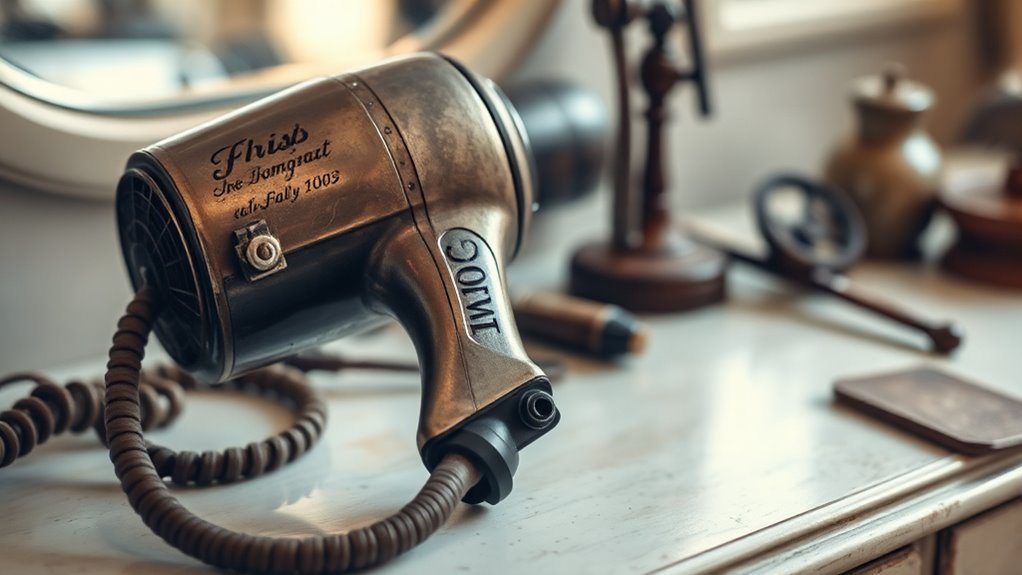
The hair dryer first appeared in the late 19th century, revolutionizing personal grooming. When you think about it, before its invention, drying your hair took much longer and was less convenient.
Early hair dryers were bulky and not as efficient as today’s models, but they marked a significant shift. You’d find these initial devices often used in salons rather than at home.
They worked by blowing warm air, speeding up the drying process compared to air drying alone. Over time, improvements made hair dryers more accessible and practical for everyday use.
Who Invented the First Hair Dryer: and How?
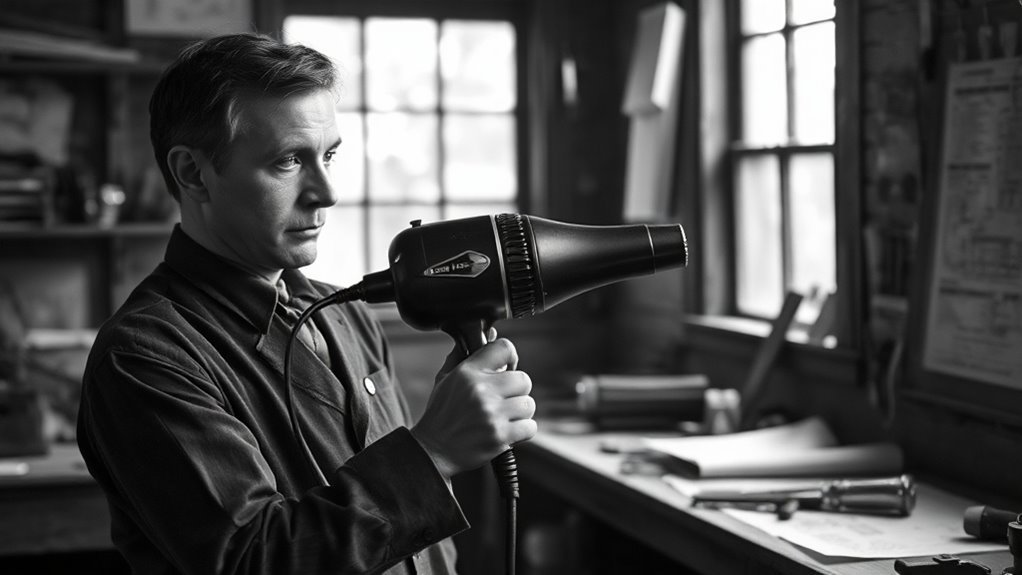
Although you might not know the name behind this everyday tool, Alexandre-Ferdinand Godefroy invented the first hair dryer in 1890. You can appreciate how he transformed hair care by creating a device that used heated air to speed up drying.
Alexandre-Ferdinand Godefroy revolutionized hair care in 1890 with the first heated air hair dryer.
Godefroy’s invention was bulky and resembled a vacuum cleaner more than the sleek models you use today. Here’s what you should know about his pioneering work:
- It was made of a large, handheld unit connected to a hose.
- The dryer blew warm air generated by an electric element.
- It was designed for salon use, not personal home use.
- Safety features were minimal compared to modern standards.
This invention laid the groundwork for the hair dryers you rely on daily. Pretty cool how something so big and basic back then has turned into a must-have gadget, right?
How Did Early Hair Dryers Work Compared to Today’s?
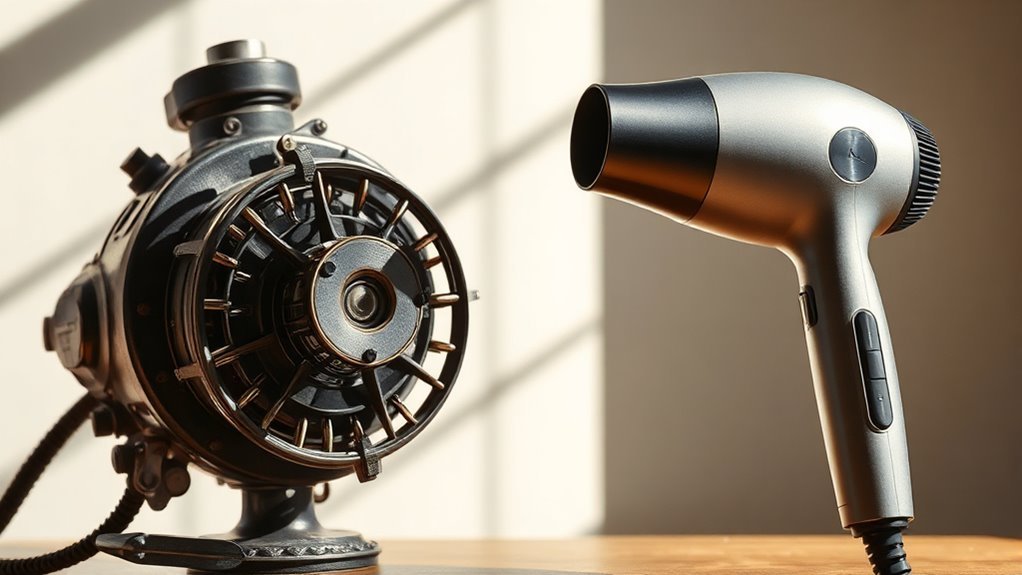
Early hair dryers operated with much less efficiency and safety than the models you use today. Back then, these devices were bulky, heavy, and often difficult to handle. They relied on simple heating elements and basic motors that produced inconsistent airflow and heat.
You had to be careful because early models lacked safety features like automatic shut-off or heat regulation. That increased the risk of burns and electrical hazards.
In contrast, today’s hair dryers are lightweight and ergonomically designed. They’re equipped with advanced technology that delivers steady airflow and peak heat control.
You get faster drying times and can avoid damage thanks to features like ionic technology and multiple heat settings. Overall, early hair dryers were basic tools, whereas modern versions prioritize performance, safety, and user comfort.
What Innovations Shaped Modern Hair Dryer Technology?
Innovations have revolutionized how hair dryers function, making them faster, safer, and more versatile than ever before. You’ll notice that modern hair dryers aren’t just about blowing hot air—they incorporate technology that protects your hair and enhances styling efficiency.
Here are some key innovations that shaped today’s hair dryers:
- Ionic technology: Reduces frizz and speeds up drying by breaking down water molecules.
- Ceramic and tourmaline elements: Provide even heat distribution, preventing hot spots that damage hair.
- Adjustable heat and speed settings: Give you control to customize drying based on your hair type.
- Lightweight and ergonomic designs: Make handling easier, reducing arm fatigue during styling.
These features make certain your hair dries quickly, stays healthy, and looks great every time. It’s pretty amazing how much smarter hair drying has become, right?
How Have Hair Dryers Changed Our Beauty Routines?
You’ve probably noticed how hair dryers speed up your styling routine, saving you valuable time each day. They also help protect your hair by reducing the need for excessive heat from other tools.
Pretty cool, right? Let’s explore how these changes have reshaped your approach to beauty.
Speeding Up Styling
Hair dryers have truly shaken up our beauty routines by cutting down the time it takes to style hair. Instead of waiting hours for your hair to air dry, you can now achieve your desired look in minutes.
This speed lets you experiment with styles without the usual time commitment. Plus, modern dryers come with features designed to make styling quicker and easier.
When you use a hair dryer, you can smooth out wet hair fast, reducing frizz. You can also add volume and lift with a quick blast of air.
Shape curls or straighten hair efficiently, and prep your hair for further styling tools like straighteners or curling irons.
This means you spend less time getting ready and more time enjoying your look throughout the day.
Enhancing Hair Health
Protecting your hair from heat damage has become much easier with modern hair dryers. Today’s models offer adjustable heat settings and ionic technology, which reduce frizz and lock in moisture.
You can style your hair faster while keeping it healthier. It makes your beauty routine less damaging and more efficient.
| Feature | Benefit | Effect on Hair |
|---|---|---|
| Adjustable Heat | Customizable drying | Prevents overheating |
| Ionic Technology | Reduces static | Enhances smoothness |
| Cool Shot Button | Sets hairstyles | Locks in moisture |
What’s Next for Hair Dryer Technology?
Advancements in technology continue to reshape how we dry and style our hair, promising faster, smarter, and more personalized experiences. You can expect hair dryers to become more intuitive, adjusting heat and airflow based on your hair type and condition automatically.
Future models might also focus heavily on protecting hair health while cutting down drying time. It’s pretty cool how these devices will know exactly what your hair needs without you having to guess.
Look out for these exciting innovations:
- AI-powered sensors that tailor settings for your specific hair needs
- Enhanced ionic and infrared technology to reduce damage and frizz
- Wireless, rechargeable designs for ultimate convenience
- Integration with smart home devices for voice control and scheduling
These developments will make drying your hair not just quicker but gentler and more customized than ever before. It’s all about making your hair care routine easier and better!
Frequently Asked Questions
Are Hair Dryers Safe to Use on Wet Hair?
Yes, you can use hair dryers on wet hair, but don’t hold it too close to avoid damage.
Using a heat protectant spray and a lower heat setting helps keep your hair healthy while drying quickly.
Just take it easy with the heat, and your hair will thank you!
Can Hair Dryers Cause Hair Damage?
Think of your hair as delicate petals; yes, your hair dryer can cause damage if you use high heat or hold it too close.
You’ll want to use lower settings and keep it moving to protect those fragile strands.
It’s all about being gentle and patient with your hair.
That way, you keep it healthy and looking great!
What Is the Best Hair Dryer for Curly Hair?
You’ll want a hair dryer with a diffuser attachment, multiple heat settings, and ionic technology to reduce frizz.
Brands like DevaCurl or Dyson work great for curly hair, helping you maintain definition and moisture.
These features really make a difference when you’re trying to keep those curls looking their best!
How Often Should You Replace Your Hair Dryer?
You’ll want to replace your hair dryer every 3-4 years, unless you enjoy the thrill of sparks and odd smells.
Don’t wait for your bathroom to turn into a science experiment—upgrade before disaster strikes!
Do Hair Dryers Consume a Lot of Electricity?
Yes, hair dryers do consume a lot of electricity because they use high wattage to generate heat quickly.
To save energy, you can use them for shorter periods or choose energy-efficient models that won’t spike your bill. It’s pretty simple to cut down on your electricity use this way.
Conclusion
You might think the hair dryer was just a simple invention, but its history shows how innovation shapes our daily lives. From bulky, risky devices to sleek, safe tools, each step improved how you style your hair.
The theory that technology only changes gadgets overlooks how it transforms your routines and confidence. So next time you grab your hair dryer, remember—it’s not just about drying hair; it’s about empowering you every day.
Hair dryers have come a long way since they were invented in the early 20th century. Today, these tools combine convenience with safety and style, making them essential in daily grooming. Using a hair dryer isn’t just about managing wet hair—it’s about boosting your confidence and helping you feel your best every single day. So, when you turn on your hair dryer, you’re connecting with a piece of history that’s all about enhancing your routine and empowering your look.