Is a Hair Dryer Conduction Convection or Radiation?
You use a hair dryer mainly through convection, as the fan pushes heated air that sweeps away moisture from your wet hair.
This moving hot air is the key to drying your hair quickly and effectively.
Radiation also plays a key role, with infrared waves warming your hair strands deeper to speed drying and reduce surface damage.
So, it’s not just about blowing hot air on your hair.
Conduction has only a minor part since there’s no direct contact with hot surfaces.
If you want to understand how these heat methods balance for faster, safer drying, there’s more to explore.
It’s pretty interesting once you get into the details!
Key Takeaways
- Hair dryers primarily use convection by blowing warm air to evaporate moisture from hair surfaces efficiently. This airflow helps speed up the drying process by moving the warm air around your hair.
- Infrared radiation from heating elements directly warms hair strands, which helps with faster drying and allows the heat to penetrate deeper. So, it’s not just about hot air; the radiation plays a key role too.
- Conduction plays a minimal role since hair rarely touches hot surfaces inside the dryer. The design usually prevents direct contact to avoid heat damage.
- Protective mesh and casing are there to stop direct heat transfer through conduction. This way, the dryer focuses on convection and radiation methods instead.
- Most modern dryers actually combine convection and infrared radiation. This combo gives you a good balance between drying speed and reducing heat damage to your hair.
How Hair Dryers Use Heat to Dry Hair
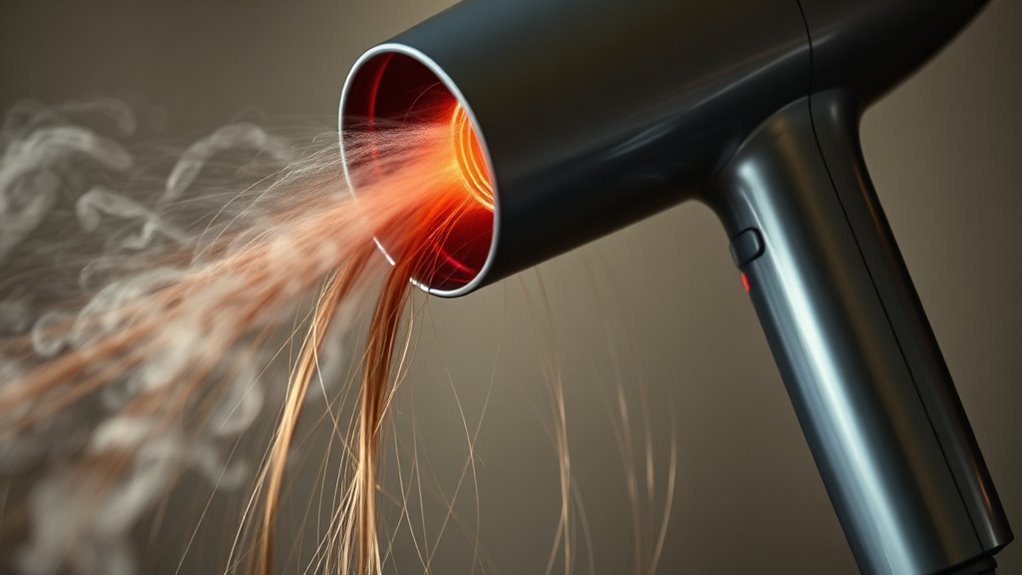
When you turn on a hair dryer, it quickly heats the air and blows it over your wet hair. This warm air raises the temperature of the water on your hair strands, causing the water to evaporate faster than it would at room temperature.
As the water changes from liquid to vapor, your hair dries more efficiently. You’ll notice that the heat also helps loosen the water molecules clinging to each strand, speeding up the drying process.
The hair dryer’s heating element converts electrical energy into heat, which is then transferred to the air passing through. This targeted warmth makes drying quicker and more effective, saving you time.
You control the temperature and airflow to avoid overheating and damaging your hair. It’s pretty handy because you get to dry your hair just the way you like it without worrying about harm.
How Convection Drives Hair Drying in Hair Dryers
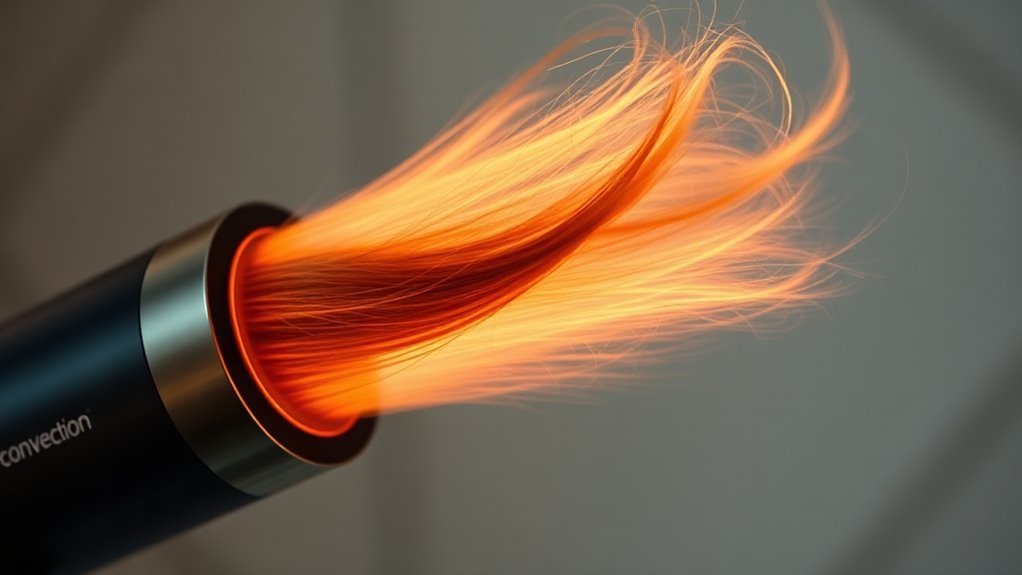
Convection plays a key role in how your hair dryer speeds up drying by moving warm air across your wet hair. When you turn on your hair dryer, a fan pushes heated air toward your hair.
This moving air sweeps away moisture, allowing the heat to evaporate water faster than if the air were still. As the warm air passes over your damp strands, it picks up water vapor, which gets carried away, making room for more evaporation.
Without this continuous airflow, drying would take much longer because the moisture would linger close to your hair. So, by relying on convection, your hair dryer efficiently transfers heat and removes moisture, ensuring your hair dries quickly and evenly.
The Role of Radiation in Hair Dryer Heating
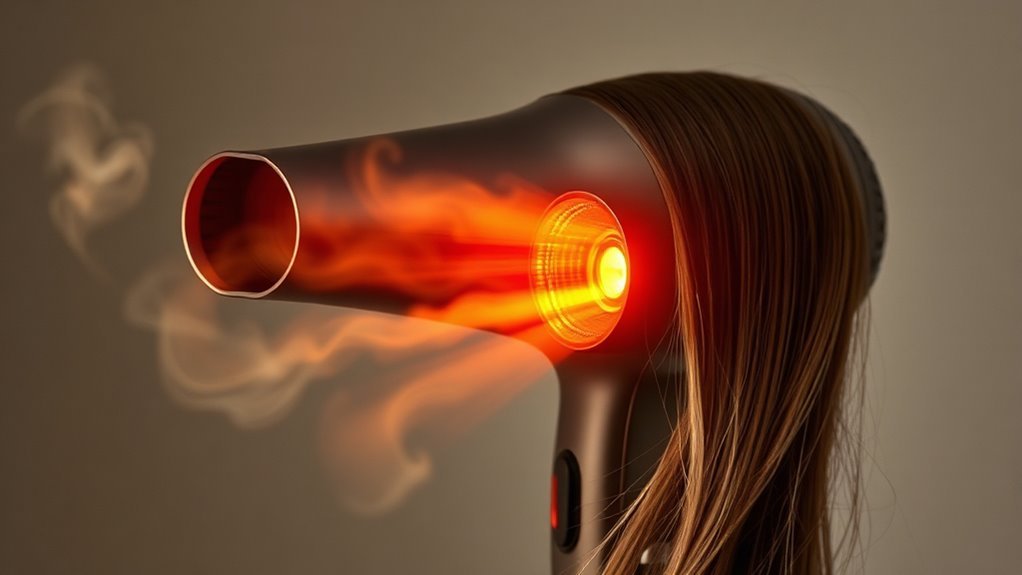
You’ll notice that hair dryers emit infrared radiation, which plays a key role in heating your hair. This radiation directly warms the hair strands, making the drying process more efficient.
Understanding how this energy transfers can help you appreciate the full impact of radiation in hair drying. It’s pretty interesting how something invisible to our eyes can make such a difference!
Infrared Heat Emission
Although most hair dryers rely on hot air to dry hair, infrared heat emission plays an essential role by directly transferring energy through radiation. When you use a hair dryer, the heating element emits infrared waves that reach your hair and scalp without needing a medium like air.
This process heats your hair fibers more efficiently.
Here’s how infrared heat emission works in your hair dryer:
- The heating coil glows, releasing infrared radiation.
- Infrared waves travel straight to your hair and skin.
- Your hair absorbs this radiation, increasing internal temperature.
- This direct heating complements the warm air flowing from the dryer.
You’ll notice infrared radiation helps speed up the drying process by warming hair at a molecular level.
Radiation’s Effectiveness on Hair
Since infrared radiation directly heats your hair fibers, it offers a more targeted drying method than warm air alone. When your hair absorbs this radiation, the energy converts to heat within the strands, speeding up moisture evaporation from inside.
Unlike convection, which warms the air around your hair, radiation penetrates deeper, reducing surface heat damage. This means you can dry your hair faster while minimizing overheating and brittleness.
However, not all hair types respond equally; thicker or darker hair absorbs infrared radiation more efficiently. So, when you use a hair dryer with infrared technology, you’re leveraging radiation’s effectiveness to combine quick drying with gentler heat application.
This targeted approach helps maintain your hair’s natural shine and strength over time. Pretty cool, right?
Why Conduction Plays a Minor Role in Hair Drying
Because hair strands don’t stay in direct contact with the hot surfaces inside a dryer, conduction transfers very little heat during drying. You rely more on the moving hot air than direct touch to warm your hair.
Imagine these points: the heating element stays inside the dryer, separated by a protective mesh. Your hair is exposed to airflow, not touching the hot coils.
Air moves rapidly, preventing prolonged contact between hair and any hot surface. The dryer’s plastic casing also blocks heat conduction to your hair.
Since conduction needs direct contact for efficient heat transfer, it plays a minor role. Instead, the dryer’s design prioritizes convection and radiation to dry your hair effectively.
You won’t feel the heat through touch, but you’ll notice the warm air doing the work.
Comparing Conduction, Convection, and Radiation in Hair Dryers
When you use a hair dryer, convection takes center stage by transferring heat through the moving hot air that surrounds your hair. Conduction plays a smaller role since your hair rarely touches the heating element directly.
Radiation also contributes but minimally, as the heat radiated from the element isn’t the main drying force.
Here’s a quick comparison:
| Heat Transfer Type | Role in Hair Drying |
|---|---|
| Conduction | Minor, direct contact heat transfer |
| Convection | Major, hot air carries heat |
| Radiation | Minimal, heat radiates from element |
| Speed | Convection is fastest |
| Efficiency | Convection is most efficient |
Understanding these differences helps you see why hot air movement is key for drying your hair effectively. It’s really the hot air doing most of the work here.
Choosing a Hair Dryer Based on Heat Transfer Methods
Although all hair dryers use heat transfer, understanding how each model emphasizes conduction, convection, or radiation can help you pick one that dries your hair efficiently without damage. When choosing, consider how the heat reaches your hair and scalp.
- Conduction-focused dryers deliver direct heat through contact. They’re ideal for precise styling but may risk overheating.
- Convection-based dryers circulate hot air gently. This reduces heat damage and promotes even drying.
- Radiation-heavy models emit infrared rays, which penetrate hair strands for quicker drying. They also help preserve moisture.
- Combination dryers use multiple methods, balancing speed and safety. This makes them great for versatile use.
Frequently Asked Questions
Can Hair Dryers Damage Hair With Excessive Heat?
Yes, hair dryers can damage your hair with excessive heat. You should avoid using the highest settings for too long, as this can cause dryness, breakage, and split ends.
Always use heat protectant sprays to help. They really make a difference in keeping your hair safe from damage.
Are Ionic Hair Dryers Better for Frizz Control?
You’ll find ionic hair dryers reduce frizz by up to 60% because they emit negative ions that break water molecules faster, drying hair quicker and sealing cuticles.
How Often Should You Clean a Hair Dryer?
You should clean your hair dryer at least once a month to prevent lint buildup, which can cause overheating and reduce efficiency.
Regular cleaning keeps it working well and extends its lifespan, so don’t skip this step!
Do Hair Dryers Consume a Lot of Electricity?
Hair dryers do consume a fair amount of electricity, usually between 800 to 1800 watts. If you use it frequently or for long periods, your energy bill might go up.
Can Hair Dryers Be Used Safely on Wet Hair?
You can use hair dryers on wet hair, but be careful. Don’t hold it too close or use high heat, as wet hair is fragile.
Always use a dryer with safety features to avoid damage or burns. It’s better to be gentle to keep your hair healthy.
Conclusion
So, you’re wondering if your hair dryer’s a conduction, convection, or radiation champ? Spoiler alert: it’s mostly convection, blowing hot air like a drama queen at a tea party.
Radiation and conduction? They’re just the wallflowers, quietly tagging along.
Next time you battle frizz, remember—it’s not magic, just hot air doing its thing.
So, choose wisely and maybe, just maybe, your hair will thank you instead of staging a rebellion. In short, a hair dryer works mainly through convection by circulating hot air that dries your hair quickly. While conduction transfers heat through direct contact and radiation involves heat waves, neither plays the main role here. Understanding this can help you pick the right tool and technique for better hair care results.