What Type of Heat Transfer Does a Hair Dryer Use?
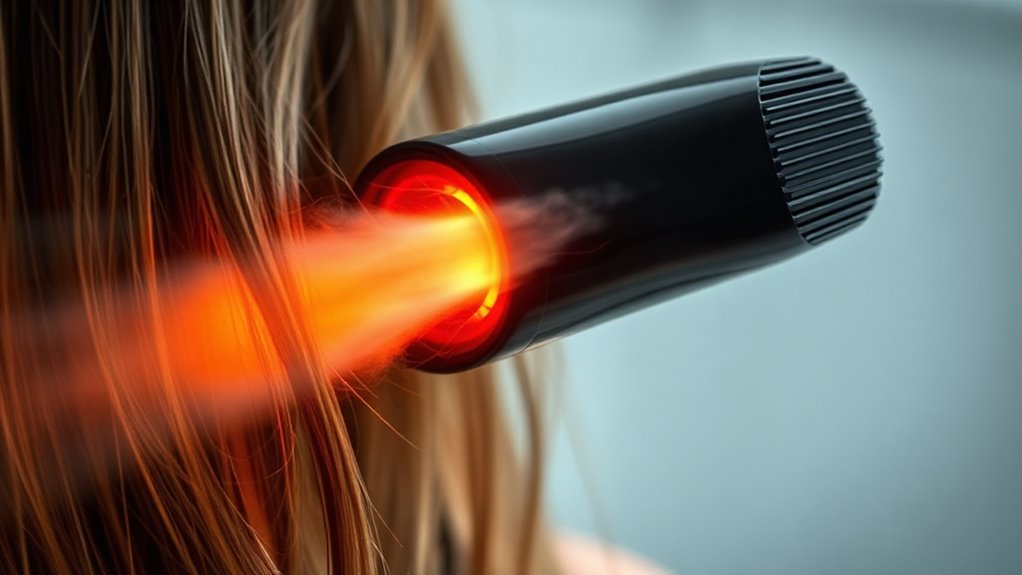
A hair dryer mainly uses convection to dry your hair. It blows warm air over your wet strands, speeding up evaporation and helping your hair dry faster. This movement of warm, dry air replaces the humid air around your hair, making moisture removal more efficient.
It also relies on conduction when your hair touches the hot parts of the dryer. This direct contact transfers heat straight to the wet areas, boosting the drying process.
Plus, infrared radiation gently warms spots that conduction might miss, ensuring an even dry.
Convection is the dominant method because it constantly moves warm air over your hair. Together, these heat transfer methods—convection, conduction, and radiation—work in harmony to give you a quick and effective drying experience.
Keep exploring to see how these combined methods and built-in safety features make drying your hair safe and easy!
Key Takeaways
- Hair dryers primarily use convection by blowing warm air over wet hair to speed up evaporation. This helps ensure your hair dries evenly.
- Conduction happens when your hair touches the heated nozzles or elements directly. This raises the temperature right where it’s needed, helping to remove moisture faster.
- Infrared radiation adds extra heat by penetrating the hair strands without needing direct contact. This promotes a more uniform warming effect.
- When you combine convection, conduction, and radiation, drying becomes faster, more efficient, and more consistent overall.
- Plus, safety features like thermal fuses and temperature sensors help prevent the dryer from overheating during all these heat transfer processes.
How Convection Heat Transfer Dries Hair
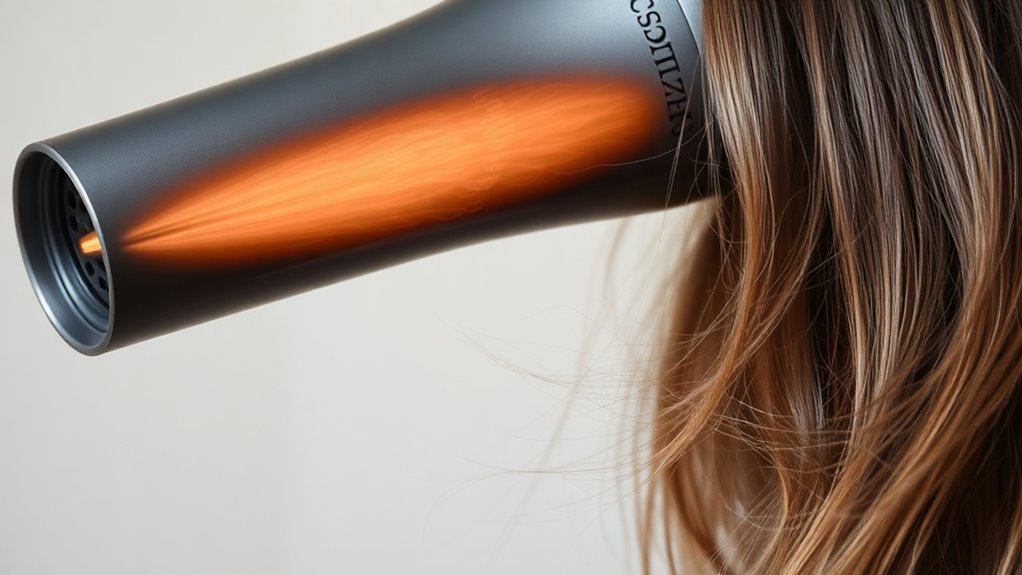
When you turn on a hair dryer, convection heat transfer kicks in to dry your hair efficiently. The dryer blows warm air over your wet strands, causing the water molecules to absorb the heat.
As the warm air moves, it carries away moisture that evaporates from your hair. You’ll notice the airflow accelerates drying by constantly replacing the cooler, humid air near your hair with drier, warmer air.
This process speeds up evaporation, so your hair dries faster than it would in still air. By understanding this, you can adjust the dryer’s heat and airflow settings to find the right balance that dries your hair quickly without causing damage from excessive heat exposure.
How Conduction Heat Transfer Warms Wet Hair
Feel the warmth as your hair dryer’s heated components directly touch the damp strands, transferring heat through conduction. This process happens when your hair makes contact with the dryer’s hot nozzle or internal heating elements, causing heat to flow from the hotter surface to the cooler wet hair.
As the molecules in your hair absorb this heat, their energy increases, helping to evaporate water trapped inside. Unlike convection, which moves heat through air, conduction relies on direct physical contact.
Since your hair is moist, conduction efficiently raises its temperature where it’s needed most. By warming the strands this way, conduction supports the overall drying process, making your hair dryer effective at turning wet hair into dry, styled locks faster than air alone could manage.
How Radiation Heat Transfer Speeds Drying
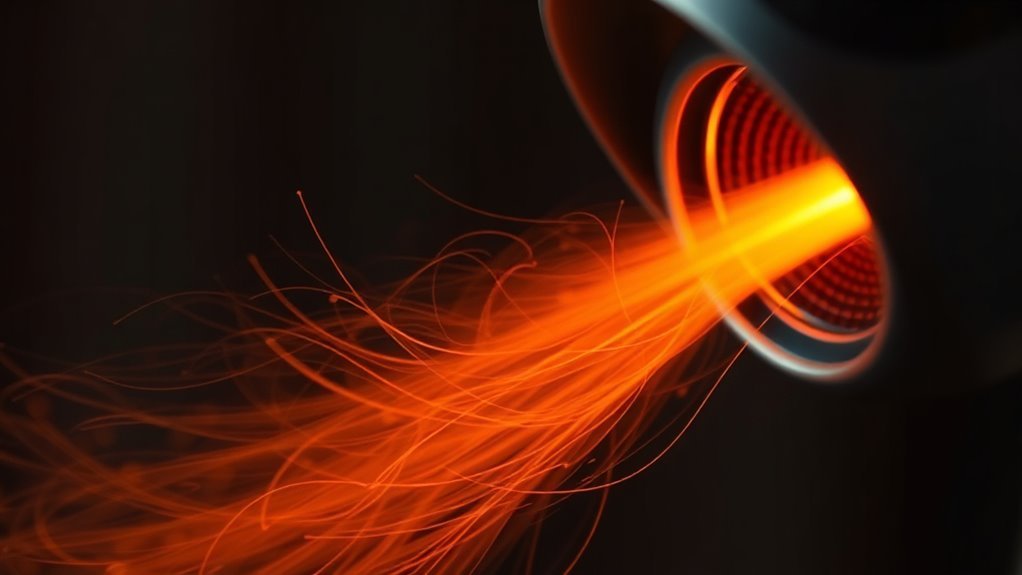
Alongside conduction, radiation plays a key role in speeding up drying by sending heat energy through infrared waves directly to your hair. These waves transfer energy without needing physical contact, so even strands not touching the dryer’s surface start warming up.
Radiation speeds drying by sending heat through infrared waves, warming even hair strands not touching the dryer.
As your hair absorbs this radiant heat, the water molecules inside gain energy, increasing their movement and turning into vapor faster. This process helps break down moisture more efficiently than conduction alone.
You’ll notice that radiation heats your hair uniformly, reaching areas conduction might miss. By combining this with other heat transfer types, your hair dries quicker and more evenly.
Understanding how radiation works can help you appreciate the science behind your hair dryer’s effectiveness. Cool, right?
Why Convection Dominates Hair Dryer Heat Transfer
You can count on convection to take center stage in how your hair dryer transfers heat. When you turn it on, the device blows warm air, which carries heat directly to your wet hair.
This warm air circulates, speeding up evaporation by continuously replacing cooler, moist air with hotter, drier air. Unlike conduction or radiation, convection efficiently covers a larger surface area quickly, making it the dominant heat transfer mode in hair drying.
| Heat Transfer Type | Mechanism | Impact on Drying |
|---|---|---|
| Convection | Warm air movement | Rapid, even heat distribution |
| Conduction | Direct contact heat | Limited, slower |
| Radiation | Infrared heat waves | Supplementary, less direct |
Convection’s airflow guarantees consistent drying performance. It’s really the secret behind how your hair dryer works so well!
How Combined Heat Transfer Speeds Drying
Combining convection, conduction, and radiation lets your hair dryer work faster and more efficiently. When you turn it on, convection moves warm air over your wet hair, carrying away moisture quickly.
At the same time, conduction transfers heat directly to the hair strands, warming them up and helping water evaporate faster. Radiation adds another layer by emitting infrared heat, gently penetrating hair to speed up drying from within.
This blend of heat transfer methods means your hair dries evenly and swiftly without excessive heat exposure. By utilizing all three mechanisms, your hair dryer maximizes moisture removal while minimizing damage.
Hair Dryer Safety Features That Prevent Overheating
While your hair dryer efficiently dries your hair using multiple heat transfer methods, it also includes essential safety features that prevent overheating. You’ll find thermal fuses inside that automatically shut off the device if temperatures climb too high, protecting both you and the dryer.
Many models also have built-in temperature sensors that constantly monitor heat levels, adjusting the power to keep things safe. Plus, the motor often has a cooling fan that circulates air to dissipate excess heat.
You should always check that your hair dryer has these safety features, especially if you use it frequently. By preventing overheating, they reduce fire risks and extend your device’s lifespan, ensuring your drying routine stays safe and reliable every time.
Frequently Asked Questions
Can Hair Dryers Damage Hair With Frequent Use?
Yes, frequent use of hair dryers can damage your hair by causing dryness and breakage.
To protect your hair, use lower heat settings, keep the dryer moving, and apply heat protectant sprays before drying.
These little steps really help keep your hair healthy even if you blow-dry often. Just a bit of care goes a long way!
What Materials Are Used in Hair Dryer Heating Elements?
Hair dryer heating elements usually use nichrome wire because it resists electricity and heats up efficiently.
Sometimes ceramic or tourmaline materials coat the elements to distribute heat evenly and reduce damage to your hair while drying.
These coatings help protect your hair by making the heat gentler and more consistent. It’s pretty cool how they work together to keep your hair safe while drying fast!
How Does Ionic Technology Improve Drying Efficiency?
Like killing two birds with one stone, ionic technology improves drying by breaking water into tiny droplets, speeding evaporation and reducing frizz.
You’ll dry faster and enjoy smoother hair with less heat damage. It’s a win-win for your hair and your time!
Are There Energy-Saving Hair Dryer Models Available?
Yes, you can find energy-saving hair dryer models that use efficient motors and temperature controls. They cut power consumption and dry your hair faster, helping you save both energy and time during your routine.
It’s pretty handy, right? These dryers are designed to be gentle on your hair while still being powerful enough to get the job done quickly. So, you get the best of both worlds—efficiency and care.
How Long Should a Hair Dryer Typically Last?
You can expect your hair dryer to last about 3 to 5 years with regular use. Taking care of it, like cleaning the filter and avoiding drops, helps it stay efficient and extend its lifespan.
It’s pretty simple stuff, really. Just a little bit of attention goes a long way in keeping your dryer working well!
Conclusion
Think of your hair dryer like a team working together—convection blowing warm air, conduction gently heating your strands, and radiation speeding things up. Just like a relay race, each type of heat transfer passes the baton to dry your hair efficiently.
Remember, convection leads the pack, making up most of the drying power. It’s the main way warm air moves heat to your hair. Meanwhile, conduction is all about direct contact, gently warming your hair strands. Radiation adds a boost by sending heat waves to speed up the process.
So next time you dry your hair, know it’s a well-coordinated heat transfer relay keeping you warm and stylish. The hair dryer uses convection, conduction, and radiation together to dry your hair safely and quickly, making the whole experience effective and comfortable.