Best Natural Oils for Fine Hair to Boost Volume and Shine
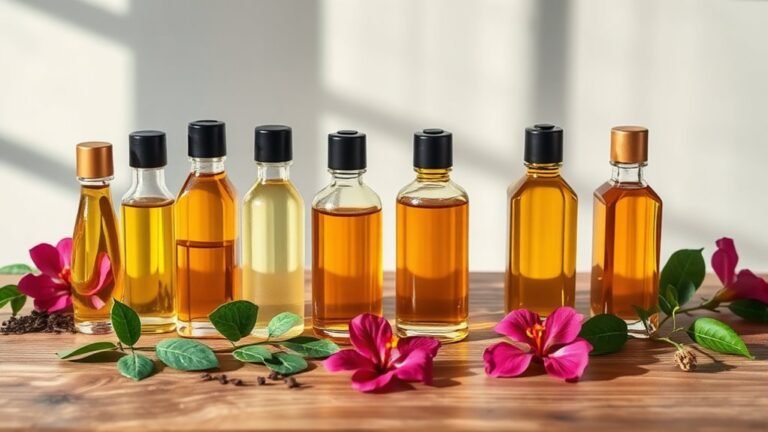
You can boost your fine hair’s volume and shine by using lightweight natural oils like jojoba, grapeseed, and sweet almond oil.
These best natural oils for fine hair hydrate and nourish without weighing your hair down or leaving it greasy. It’s all about giving your hair the right care to keep it looking full and vibrant.
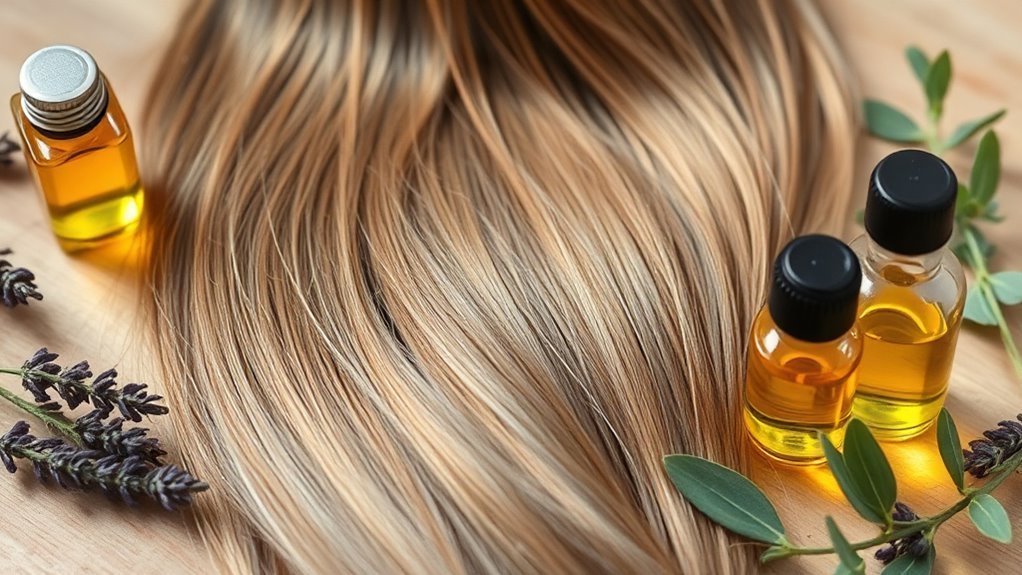
Applying just a few drops mainly to the mid-lengths and ends helps seal in moisture and tame frizz while keeping your hair light and bouncy.
Trust me, a little goes a long way! Explore smart ways to pick and apply oils to maximize your hair’s natural beauty.
This way, you get all the benefits without any heaviness.
Key Takeaways
- Jojoba oil is lightweight and moisturizes fine hair really well. It balances scalp oil and boosts natural shine without feeling heavy.
- Grapeseed oil is super light and helps promote healthy hair growth. It adds volume and absorbs quickly without leaving greasiness behind.
- Sweet almond oil is great for taming frizz. It penetrates hair strands fast, adds a natural shine, and nourishes without weighing your hair down.
- You’ll want to apply oils mainly to the mid-lengths and ends. This way, you keep your roots from getting greasy and preserve your hair’s volume.
- Mixing carrier oils with essential oils like rosemary or peppermint can really help scalp health. Plus, they encourage hair growth, which is always a win!
Benefits of Using Natural Oils on Fine Hair
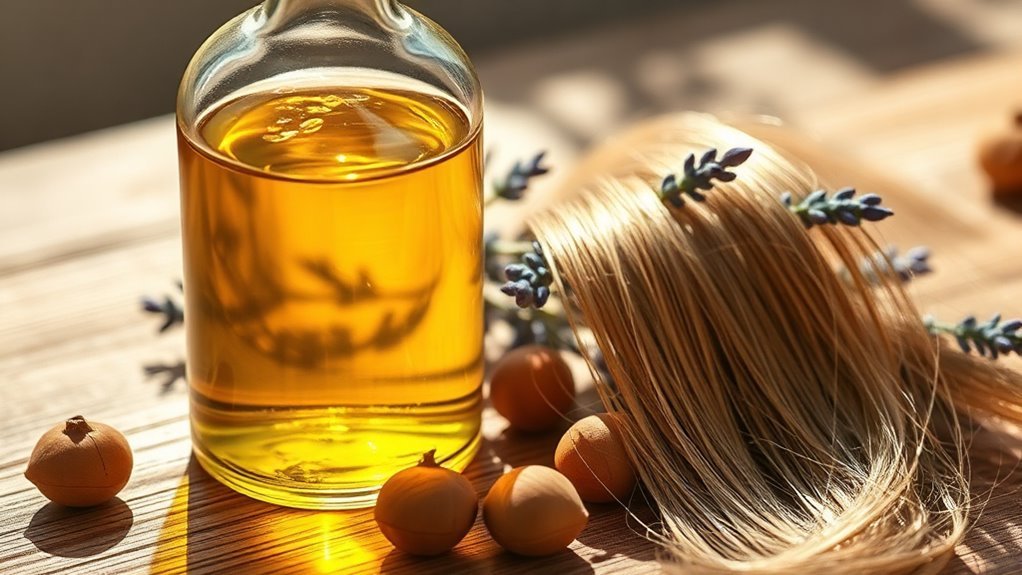
Although fine hair can easily feel weighed down, using natural oils can provide crucial moisture and nourishment without making your strands greasy or heavy. When you apply the right oil sparingly, it helps seal in hydration, preventing dryness and breakage.
Natural oils offer lightweight moisture and protect fine hair from dryness and breakage when used sparingly.
Oils also add a subtle shine that enhances your hair’s natural texture without flattening it. Plus, they can protect your delicate strands from environmental damage, like pollution and heat styling.
You’ll notice your hair feels softer and looks healthier over time. By incorporating natural oils into your routine, you give your fine hair a boost of energy and resilience, making it easier to manage and style.
Just remember, a little goes a long way to keep your hair light and lively.
How to Choose the Right Oil for Your Hair Type
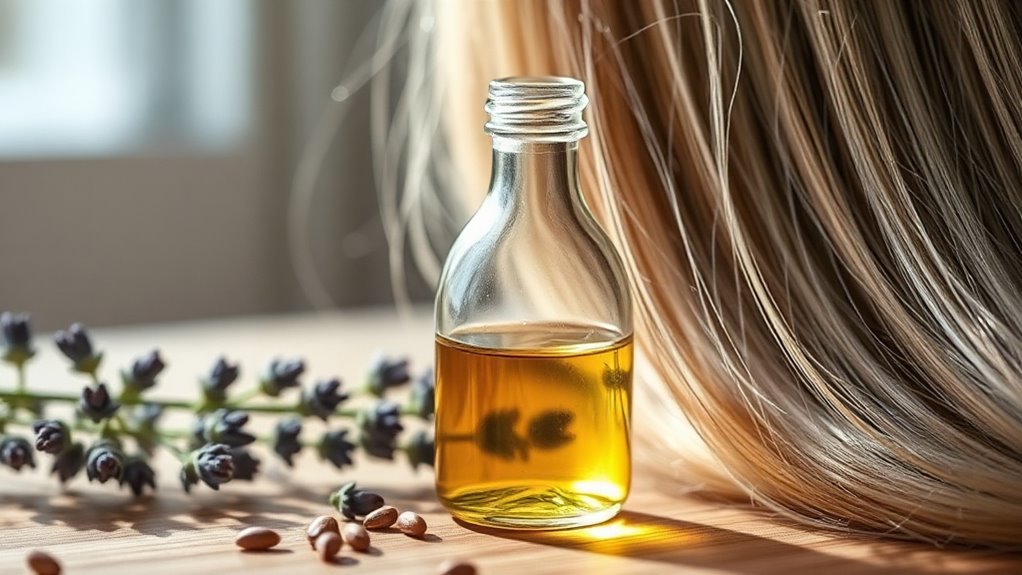
To pick the right oil, start by evaluating your hair’s texture to know what it needs. Then, consider the weight of the oil—lighter oils won’t weigh fine hair down.
Finally, match the oil to your specific hair concerns, like dryness or frizz, for the best results.
It’s all about finding what works best for you! Just a little trial and error can go a long way.
Assess Hair Texture
Understanding your hair texture is key when choosing the right oil for fine hair. First, determine if your hair is straight, wavy, or curly, as each texture absorbs oils differently.
Straight hair often feels weighed down easily, so you’ll want lightweight oils that won’t flatten your strands. Wavy hair can handle slightly richer oils but still benefits from formulations that add shine without heaviness.
Curly hair tends to be drier and may need nourishing oils that provide moisture without making your hair greasy. To assess your texture, observe how your hair behaves naturally: does it tangle easily, appear flat, or feel dry?
Knowing this helps you select an oil that enhances volume and shine without compromising your hair’s natural movement. It’s all about finding what works best for your unique hair type.
Consider Oil Weight
Since fine hair can get weighed down quickly, you’ll want to choose oils based on their weight. Lightweight oils like argan, grapeseed, and jojoba absorb easily without leaving your hair greasy or heavy.
These oils provide moisture and shine while keeping your hair bouncy and voluminous. Avoid heavy oils such as castor or coconut if you want to maintain natural lift and avoid buildup.
When applying, start with a small amount and focus on the ends, where hair tends to be drier. This helps prevent your roots from becoming oily or flat.
Match Hair Concerns
Although choosing the right oil can seem tricky, focusing on your specific hair concerns makes the process much easier.
If your fine hair feels limp or lacks volume, opt for lightweight oils like grapeseed or jojoba—they won’t weigh your strands down but will add shine and bounce.
Struggling with dryness or frizz? Look for oils rich in fatty acids, such as argan or sweet almond oil, to deeply nourish without heaviness.
If scalp health is your priority, tea tree or peppermint oil can soothe irritation and promote growth.
Top Lightweight Oils That Add Volume Without Greasiness
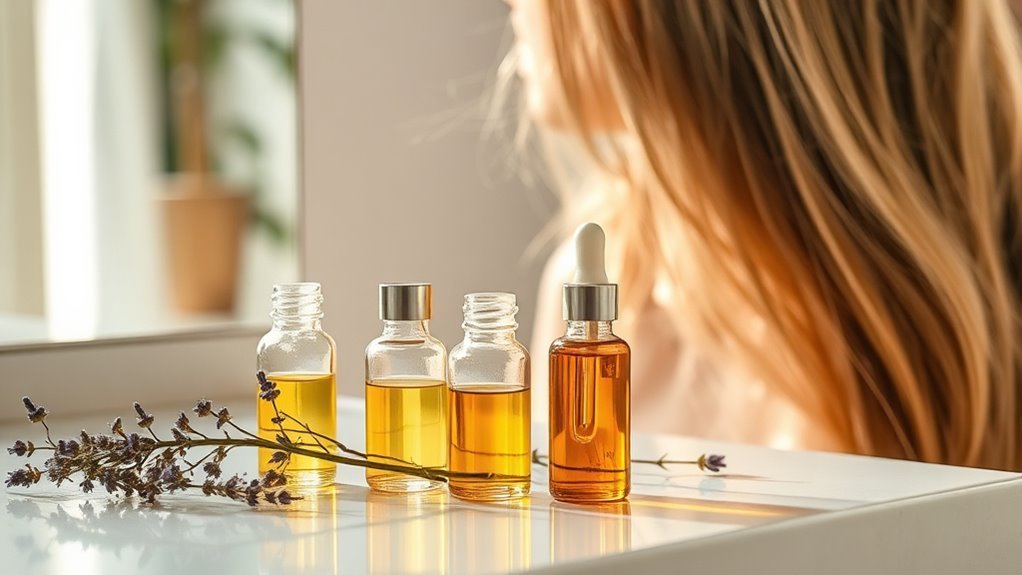
You want oils that boost volume without weighing your fine hair down, and lightweight options like jojoba, grapeseed, and sweet almond oils fit the bill perfectly.
These oils absorb quickly, add shine, and help keep your hair bouncy and fresh. Let’s explore how each one can enhance your hair’s texture and body.
Benefits of Jojoba Oil
When you want to add volume without weighing your fine hair down, jojoba oil stands out as a top choice. It closely resembles your scalp’s natural oils, so it nourishes without leaving greasy residue.
Jojoba oil moisturizes your hair, reduces breakage, and adds a natural shine that lifts limp strands. Plus, it helps regulate oil production, keeping your scalp balanced.
| Benefit | Why It Matters |
|---|---|
| Lightweight | Adds volume without heaviness |
| Moisturizing | Prevents dryness and breakage |
| Scalp Balancing | Controls excess oil naturally |
| Enhances Shine | Gives a healthy, glossy look |
Using jojoba oil regularly keeps your fine hair lively, shiny, and full of body. It’s a simple step that really makes a difference!
Grapeseed Oil Advantages
Jojoba oil’s lightweight nature makes it a favorite for fine hair, but grapeseed oil offers similar benefits with its own unique advantages. Grapeseed oil is exceptionally light, so it won’t weigh your hair down or leave it greasy.
It’s packed with antioxidants and vitamin E, which help protect your hair from damage and promote healthy growth. Plus, its natural astringent properties help balance scalp oil production, keeping your roots fresh and voluminous.
When you apply grapeseed oil, you’ll notice your hair feels soft and looks shinier without losing body. It absorbs quickly, making it perfect for daily use or as a pre-shampoo treatment.
If you want to boost volume and shine without heaviness, grapeseed oil is a smart, natural choice. Give it a try and see the difference for yourself!
Sweet Almond Oil Uses
Sweet almond oil stands out as a top lightweight option that boosts volume without leaving your hair greasy. When you apply it, it penetrates each strand, nourishing your hair without weighing it down.
You can use it as a pre-shampoo treatment to add moisture and improve manageability. A few drops massaged into your scalp stimulate blood flow, promoting healthier hair growth.
Sweet almond oil also tames frizz and adds a natural shine, making your fine hair look fuller and more vibrant. Unlike heavier oils, it absorbs quickly, so you won’t feel greasy or sticky.
Incorporate it into your routine by mixing it with your favorite conditioner or using it as a leave-in serum for lightweight hydration and volume. It’s super easy to use and really makes a difference!
Application Tips for Maximizing Shine and Body
Although applying natural oils might seem straightforward, using the right technique can really boost the shine and body of your fine hair. Start with a small amount—just a few drops warmed between your palms.
Using a few warmed drops of natural oil can enhance shine and volume in fine hair.
Apply the oil mainly to the mid-lengths and ends to avoid weighing down your roots. Use gentle, upward strokes to distribute the oil evenly and encourage volume without greasiness.
For an added boost, try applying oil to damp hair before styling; this locks in moisture and enhances shine. Avoid heavy layering; instead, build up gradually if needed.
Finally, give your hair time to absorb the oil before combing or brushing. This prevents breakage and helps maintain your hair’s natural bounce and luster.
Combining Oils With Other Haircare Products
Getting the most out of natural oils means knowing how they interact with your other haircare products. You’ll want to layer products thoughtfully to keep your fine hair light and voluminous.
For example, apply oils after washing and conditioning but before styling to lock in moisture without weighing hair down. Avoid heavy creams right after oiling to prevent buildup.
Try these combinations for best results:
- Mix a few drops of oil into your lightweight leave-in conditioner for added shine.
- Use oil as a finishing touch on dry hair to tame flyaways and boost softness.
- Apply oil sparingly before heat styling to protect strands without sacrificing volume.
DIY Natural Oil Blends for Fine Hair Care
Creating your own natural oil blends lets you tailor treatments specifically for fine hair’s unique needs. Start with lightweight carrier oils like jojoba or grapeseed, which won’t weigh your hair down.
Add a few drops of essential oils such as rosemary or lavender to stimulate the scalp and promote growth. Mix two tablespoons of your chosen carrier oil with 5-7 drops of essential oil in a small bottle.
Apply sparingly to your scalp and hair ends, focusing on areas needing extra moisture or volume. Use this blend as a pre-shampoo treatment or a light leave-in serum.
Frequently Asked Questions
Can Natural Oils Cause Allergic Reactions on the Scalp?
Yes, natural oils can cause allergic reactions on your scalp if you’re sensitive to certain ingredients.
It’s always a good idea to do a patch test before applying oils fully. This way, you can avoid redness, itching, or irritation.
How Often Should I Wash My Hair When Using Natural Oils?
To maintain marvelous moisture, wash your hair two to three times weekly when using natural oils. This way, you’ll prevent product buildup and keep your scalp fresh.
Plus, it lets the oils work wonders without weighing down your fine strands. Easy, right? Just find that sweet spot that keeps your hair feeling great!
Do Natural Oils Protect Fine Hair From Heat Styling Damage?
Yes, natural oils can protect your fine hair from heat styling damage by creating a lightweight barrier that reduces moisture loss and heat exposure.
Just apply a small amount before styling to avoid weighing your hair down. It’s all about using the right amount so your hair stays light and protected.
Can Natural Oils Help With Dandruff or Scalp Irritation?
Of course, you can ignore natural oils for dandruff, but they actually soothe scalp irritation and reduce flakes.
Oils like tea tree or coconut have antifungal properties, so using them might just save you from endless scratching.
Are Natural Oils Safe to Use During Pregnancy or Breastfeeding?
Yes, you can use many natural oils safely during pregnancy and breastfeeding, but you should avoid certain ones like rosemary or clary sage.
Always check with your healthcare provider before trying new oils to guarantee safety for you and baby.
It’s better to be safe than sorry, right? Your doctor can help you figure out what’s best for both of you.
Conclusion
Imagine your fine hair as delicate silk, craving just the right touch to awaken its natural beauty. By choosing lightweight, natural oils, you can effortlessly boost volume and shine without weighing it down.
With the right application and blends, your hair will glisten like morning dew, full of life and movement. Embrace these oils as your secret garden’s gift—nourishing every strand.
Incorporating the best natural oils for fine hair into your routine is a game-changer. They help enhance volume and add a radiant shine, making your hair look fuller and healthier. So, if you want to bring out the best in your fine hair, start exploring these natural oils today. You’ll love the soft, airy, and vibrant results they deliver!