7 Steps to Dry Your Hair Fast Without a Hair Dryer
To dry your hair fast without heat, start by gently squeezing excess water using a microfiber towel—avoid rubbing to reduce frizz. This simple step helps speed up the drying process while keeping your hair smooth and healthy.
Next, section your hair and twist each part, gently squeezing out moisture to get rid of more water without damage.
After that, detangle with a wide-tooth comb to prevent breakage and apply a lightweight leave-in conditioner. This smooths the cuticles and helps your hair dry faster.
Then, air dry in a breezy spot or near a fan to circulate air around your hair.
Try to keep your hands off your hair as much as possible to avoid frizz and slow drying. Follow these tips to protect your hair’s health while drying efficiently—no heat needed!
Key Takeaways
- Gently squeeze excess water from hair sections using your fingers before wrapping it in a microfiber towel for 10–15 minutes. This helps soak up moisture without roughing up your strands.
- Twist your hair into manageable sections and gently squeeze to remove trapped moisture. Just be sure not to rub or twist too tightly, okay?
- Use a wide-tooth comb to detangle hair in sections after it’s started drying. Then, apply a lightweight leave-in conditioner to the mid-lengths and ends for extra softness.
- Place your hair near a fan or in a breezy spot to boost airflow. This speeds up evaporation without you having to touch or mess with your hair too much.
- Try to avoid brushing, combing, or styling until your hair is mostly dry. This helps prevent frizz and locks in moisture for longer-lasting smoothness.
Why Drying Hair Without Heat Matters for Healthy Hair
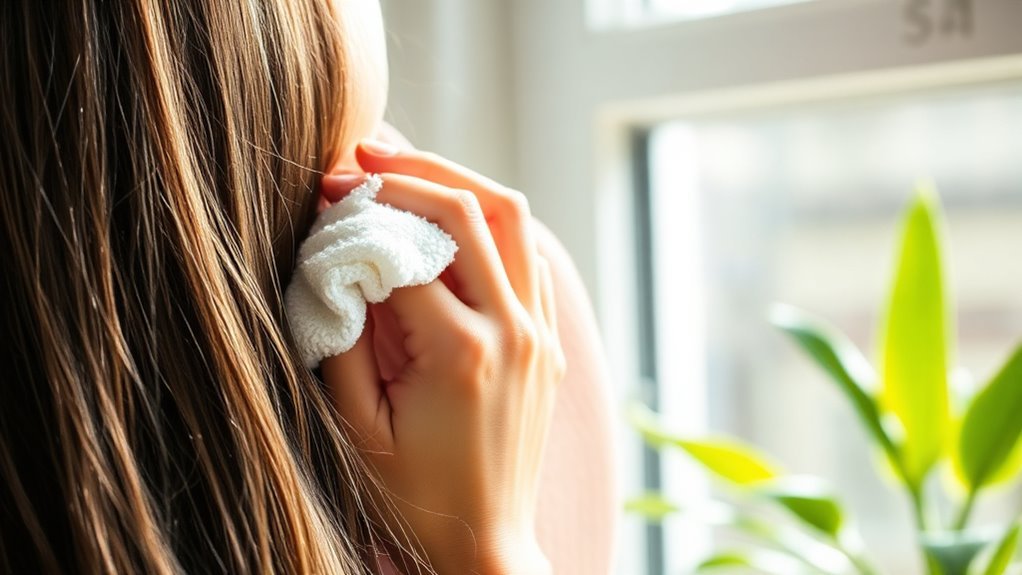
Although using heat can speed up drying, drying your hair without it protects your strands from damage. When you skip heat, you prevent moisture loss, which keeps your hair hydrated and less prone to breakage.
Drying hair without heat preserves moisture, keeping strands hydrated and less likely to break.
Heat weakens the protein structure in your hair, making it brittle and prone to split ends. By drying without heat, you maintain your hair’s natural oils, which are essential for shine and softness.
You also reduce frizz and keep your color vibrant longer if you dye your hair. Plus, avoiding heat lowers the risk of scalp irritation.
Taking the time to air dry or use cooler methods means you’re investing in your hair’s long-term health. Ultimately, this makes it stronger and more resilient.
Use a Microfiber Towel to Dry Hair Faster
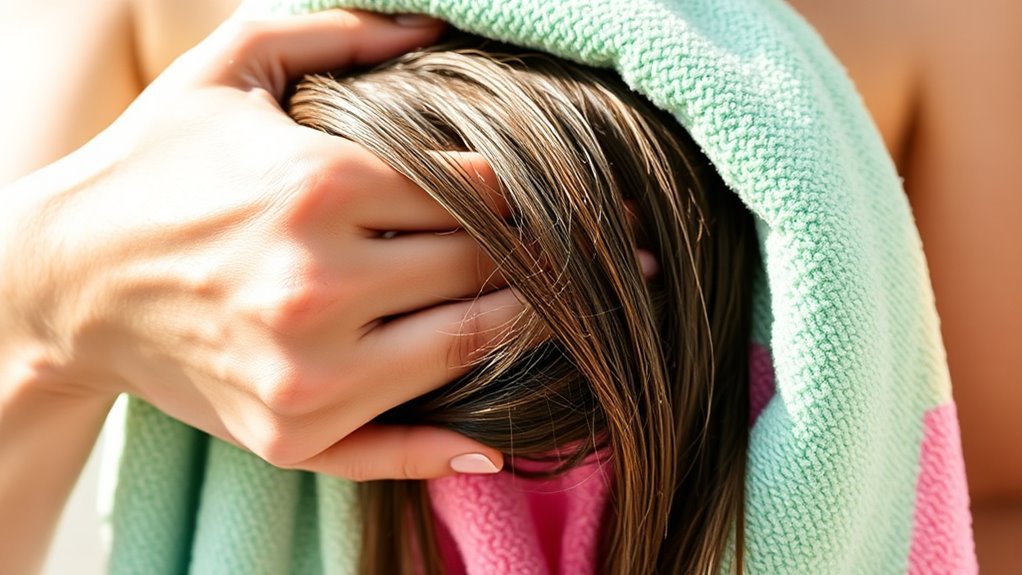
You can speed up drying time and protect your hair by using a microfiber towel designed to absorb water quickly without causing friction.
Just make sure to gently wrap your hair and avoid rubbing to prevent damage.
Choosing a soft, high-quality microfiber towel will give you the best results every time.
Benefits of Microfiber Towels
Many people find that switching to a microfiber towel cuts their drying time markedly. You’ll notice it absorbs water much faster than a regular cotton towel, which means less time spent towel-drying.
Microfiber towels are also gentler on your hair, reducing friction that can cause frizz and breakage. If you want to keep your hair healthy and smooth, this is a great choice.
Plus, microfiber towels are lightweight and easy to wrap around your head, making them very convenient. They dry quickly themselves, so you don’t have to worry about damp towels sitting around.
How to Use Properly
To get the most out of your microfiber towel, start by gently squeezing excess water from your hair before wrapping it up. Avoid rubbing, as this can cause frizz and damage.
Instead, lay the towel over your head, then twist it around your hair like a turban. Secure it at the nape of your neck or on top of your head.
Let it absorb moisture for 10 to 15 minutes. If you need extra drying power, gently pat your hair with the towel to soak up any remaining dampness.
Using the microfiber towel this way speeds up drying time while protecting your hair’s cuticle. Remember to be gentle—microfiber towels work best when you handle your hair with care.
Choosing the Right Towel
Choosing the right towel can make a noticeable difference in how quickly your hair dries. Instead of a regular cotton towel, grab a microfiber towel designed specifically for hair. Microfiber towels absorb water much faster and more efficiently, cutting down drying time markedly.
They’re also gentler on your strands, reducing frizz and breakage since they create less friction. When you use a microfiber towel, gently squeeze or pat your hair instead of rubbing it vigorously. This helps to remove excess moisture without damaging your hair cuticles.
Plus, microfiber towels are lightweight and quick-drying themselves, so they’re convenient for daily use. Switching to a microfiber towel is a simple, effective step to speed up drying and keep your hair healthy without needing a hair dryer.
Twist and Gently Squeeze Hair Sections to Remove Water

Start by twisting small sections of your hair to help wring out excess water without causing damage. Then, gently squeeze each twist to speed up drying while keeping your strands smooth and protected.
This simple technique reduces drying time and prevents frizz effectively. It’s an easy trick that really makes a difference!
Effective Twisting Techniques
Twist your hair sections gently to help speed up drying by removing excess water. Start by dividing your hair into manageable sections.
Hold each section firmly and twist it from root to tip. This motion helps squeeze out water without causing breakage.
Avoid twisting too tightly to prevent tension on your scalp. After twisting, gently squeeze the hair with your fingers to push out trapped moisture.
Repeat the process on all sections.
| Step | Action | Tip |
|---|---|---|
| 1 | Divide hair | Use clips for neat parts |
| 2 | Twist sections | Twist root to tip gently |
| 3 | Squeeze water out | Use fingers, not too hard |
Benefits of Gentle Squeezing
Gently squeezing your hair sections after twisting helps remove excess water more effectively than just air drying alone. When you twist and gently squeeze, you speed up the drying process without causing damage.
Here’s why this method works:
- It reduces water weight, so your hair dries faster.
- It minimizes friction, preventing breakage and frizz.
- It helps maintain your hair’s natural texture and shape.
- It avoids harsh rubbing, which can lead to split ends and dullness.
See? It’s a simple trick that really makes a difference!
Comb Hair Gently to Detangle and Promote Even Drying
When you comb through your hair after washing, you break up tangles and help moisture spread evenly. Use a wide-tooth comb and start detangling from the ends, working your way up to the roots.
This gentle approach prevents breakage and promotes faster drying by allowing air to circulate through your strands.
| Comb Type | Purpose | Tip |
|---|---|---|
| Wide-Tooth | Detangle wet hair | Start at ends, move up |
| Fine-Tooth | Smooth dry hair | Use only on dry strands |
| Paddle Comb | Even distribution | Comb in sections |
Comb in sections to make sure every part dries evenly and quickly without damage.
Apply a Lightweight Leave-In Conditioner to Protect and Speed Drying
Apply a lightweight leave-in conditioner right after combing to shield your hair from damage and speed up drying time. It helps lock in moisture without weighing your hair down, making the drying process more efficient.
Here’s how to apply it properly:
- Dispense a small amount of leave-in conditioner into your palms.
- Rub your hands together to evenly spread the product.
- Run your fingers through your hair, focusing on mid-lengths and ends.
- Avoid the roots to prevent your hair from looking greasy.
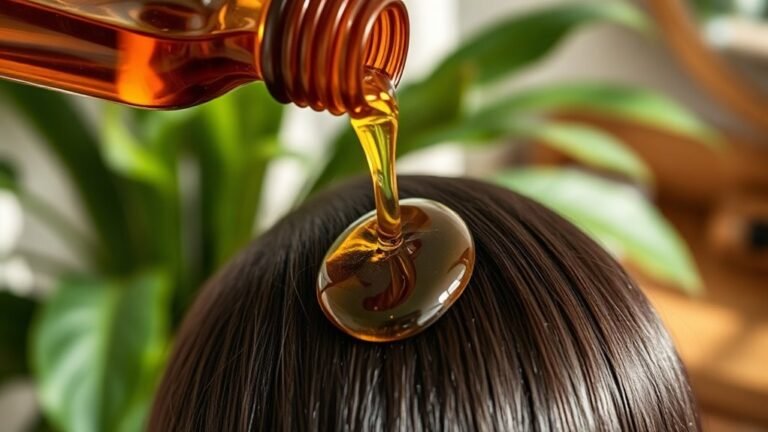
Using a leave-in conditioner also smooths your hair cuticles, reducing frizz and making your hair easier to manage as it dries faster. Just pick a formula that’s labeled lightweight or for fast drying to get the best results.
Air Dry Hair in a Breezy Spot or Near a Fan
Frequently, placing your hair in a breezy spot or near a fan can markedly speed up the drying process. You’ll want to find a well-ventilated area where air can circulate freely around your hair.
Setting up a fan nearby helps by increasing airflow, which evaporates moisture faster than still air. Position yourself so the breeze or fan hits your hair directly, but be careful not to over-dry your scalp.
Using a fan boosts airflow to dry hair quickly, just avoid over-drying your scalp.
This method is especially effective if you’ve already squeezed out excess water with a towel. Just sit back and let the air do the work while you get ready or relax.
It’s a hands-free, energy-saving way to dry your hair without heat damage, making it ideal for daily use or when you want to avoid heat styling.
Avoid Touching Your Hair to Help It Dry Faster
Although it can be tempting to run your fingers through damp hair, resisting the urge helps it dry faster. Touching your hair adds friction, causing strands to stay wet longer and increasing frizz.
To speed up drying, follow these steps:
- Keep your hands away from your hair as much as possible.
- Avoid brushing or combing until hair is mostly dry.
- Use a microfiber towel to gently blot excess water instead of rubbing.
- Style only after your hair feels dry to the touch.
Frequently Asked Questions
Can I Use a Regular Towel Instead of a Microfiber One?
Yes, you can use a regular towel, but it might cause more friction and frizz compared to a microfiber one.
You’ll want to be gentle and avoid rubbing too hard to keep your hair smooth and healthy.
Just take your time and be kind to your hair!
How Long Does Air Drying Typically Take Without a Hair Dryer?
Air drying typically takes 1 to 4 hours, depending on your hair’s length, thickness, and environment.
You’ll dry faster in warm, dry conditions and if your hair is thinner or shorter.
Are There Specific Leave-In Conditioners That Speed up Drying?
You know what they say, “time is money.” Yes, you can find leave-in conditioners with drying agents that speed up the process.
Look for lightweight, water-absorbing formulas—they’ll help your hair dry faster without weighing it down.
Does Hair Type Affect How Quickly Hair Dries Naturally?
Yes, your hair type definitely affects drying time. Thicker, curlier hair holds more moisture and takes longer, while fine, straight hair dries faster.
Knowing your hair type helps you choose the best drying method for quicker results. It’s all about working with what you’ve got!
Can Drying Hair Without Heat Reduce Frizz Permanently?
Imagine Sarah, who switched to air drying and noticed less frizz over time.
Yes, drying hair without heat can reduce frizz permanently by preventing damage and maintaining moisture.
It helps your hair stay smoother and healthier naturally.
Conclusion
Drying your hair without heat is like giving it a gentle morning breeze—refreshing and kind. By using a microfiber towel, twisting out water, and applying a lightweight leave-in, you’re setting your hair up for health and shine.
Letting it air dry in a breezy spot while resisting the urge to touch it helps speed things along naturally. Follow these steps, and you’ll have beautifully dry hair, happy and damage-free, in no time.
If you want to dry your hair fast without a hair dryer, these simple techniques work wonders. Using the right tools and letting your hair air dry naturally keeps it healthy and shiny. So next time, ditch the heat and try these easy steps to get soft, dry hair quickly and safely.