7 Ways to Dry Hair Faster Without a Blow Dryer
You can dry your hair faster without a blow dryer by starting with a microfiber towel to gently blot out excess water without causing frizz. Using a microfiber towel is a game-changer because it soaks up water quickly while being gentle on your strands.
Try plopping with a soft cloth to help curls shape and dry naturally. This technique encourages your curls to form beautifully without any heat damage. Comb your hair with a wide-tooth comb to improve airflow and detangle gently. It’s a simple step that makes a big difference in drying time and hair health.
Use lightweight, fast-drying products on mid-lengths and ends. These products speed up drying without weighing your hair down or making it greasy. Section your hair for targeted drying, position near a fan or breeze, and avoid touching your hair to prevent frizz.
There’s more to learn about protecting your hair while speeding up drying, so keep these tips in mind next time you skip the blow dryer!
Key Takeaways
- Gently blot hair with a microfiber towel to absorb excess water without causing frizz or damage. This helps keep your hair smooth and healthy.
- Section hair into 3–4 parts and pat dry each to improve airflow and speed evaporation. It’s a simple trick that really makes a difference.
- Use a wide-tooth comb to detangle gently and lift hair for better air exposure. This way, your hair dries more evenly and quickly.
- Position hair near a fan or open window and keep it loosely spread to maximize airflow. Fresh air does wonders for drying without heat.
- Apply lightweight, fast-drying products to mid-lengths and ends to avoid root buildup and accelerate drying. These products help your hair dry faster without feeling heavy.
Use a Microfiber Towel to Dry Hair Faster Without a Blow Dryer
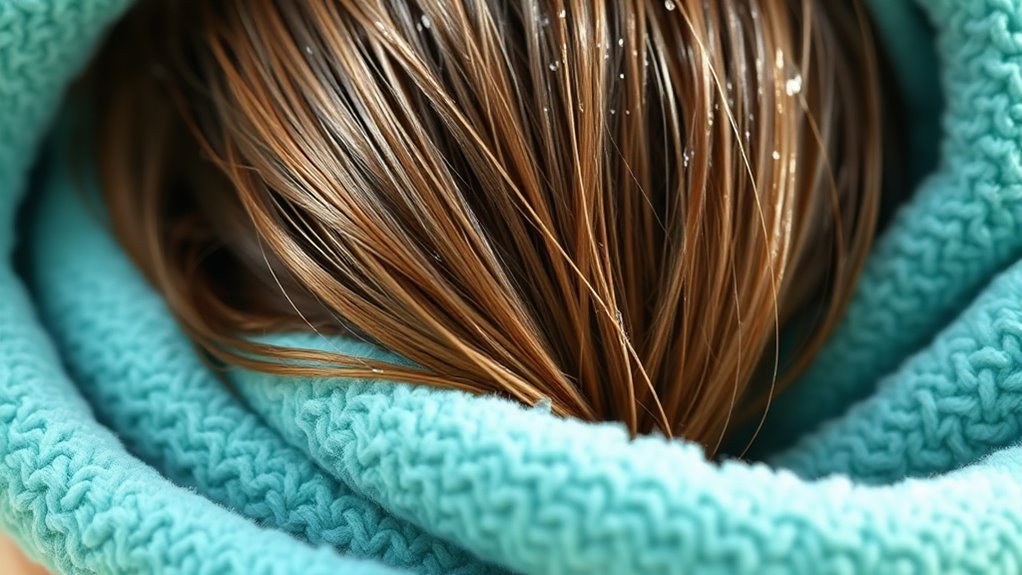
Using a microfiber towel can markedly speed up drying your hair without a blow dryer. Unlike regular towels, microfiber is designed to absorb water quickly and gently, reducing the time your hair stays wet.
When you finish washing, wrap your hair in a microfiber towel and press gently to soak up excess moisture. Avoid rubbing, as that can cause frizz and damage.
The lightweight fabric also lessens friction, helping you keep your hair smooth and healthy. Microfiber towels are compact and easy to use, making them ideal for busy mornings or travel.
Try Plopping to Speed Up Hair Drying Naturally

Try plopping to speed up your hair drying naturally while enhancing your curls and reducing frizz. You’ll simply wrap your damp hair in a soft cloth or microfiber towel, securing it on top of your head.
This method helps absorb moisture quickly and lets your hair dry without heat damage. It’s a simple trick that can make a big difference for your hair care routine!
Benefits Of Hair Plopping
Plopping speeds up your hair drying by gently wrapping your damp curls in a soft, absorbent cloth or T-shirt. This method not only speeds up drying but also preserves your natural curl pattern without causing frizz.
Here are three key benefits you’ll enjoy when you plop your hair:
- Reduced Drying Time – The fabric absorbs excess moisture quickly, letting your hair dry faster than air drying alone.
- Enhanced Curl Definition – Plopping encourages curls to clump naturally, giving you more defined, bouncy locks.
- Less Heat Damage – Since you skip the blow dryer, your hair stays healthier and less prone to breakage or dryness.
Try plopping to enjoy these perks and cut down your drying routine effortlessly! It’s a simple trick that really makes a difference.
How To Plop Hair
To speed up drying without heat, start by gently squeezing out excess water from your damp hair. Next, grab a soft cotton T-shirt or microfiber towel.
Flip your head forward and lay the fabric flat. Then, carefully lower your curls onto the center of the cloth.
Wrap the sides of the fabric around your head, twisting it at the back or securing it with a loose knot to hold your hair in place. Leave it on for 20-30 minutes to absorb moisture and encourage natural drying.
| Step | Tip |
|---|---|
| Squeeze water out | Avoid rubbing to reduce frizz |
| Use soft fabric | T-shirt or microfiber works best |
| Secure and wait | Twist and tie loosely for comfort |
Comb Hair With a Wide-Tooth Comb to Help Airflow

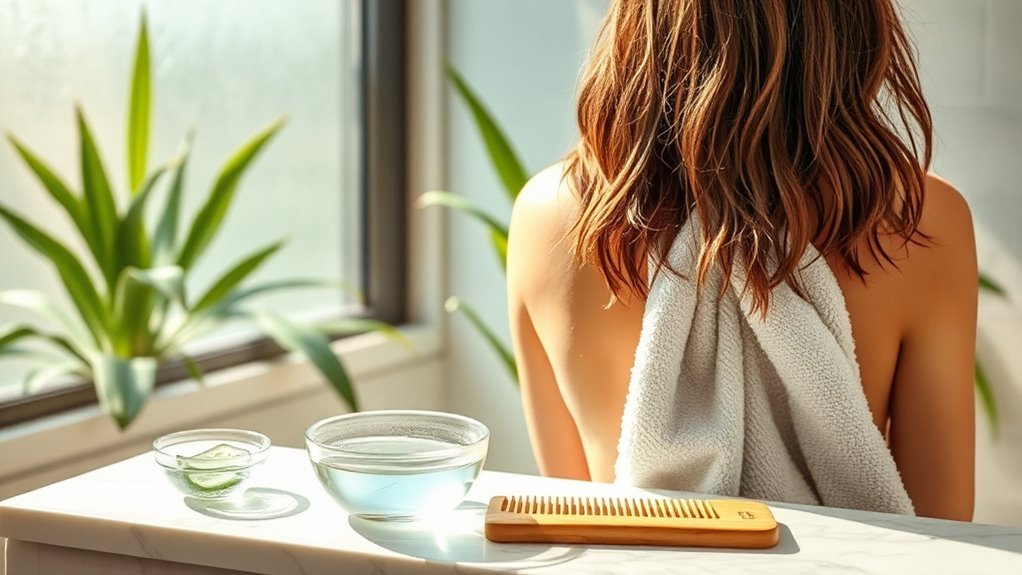
You’ll want to use a wide-tooth comb to gently detangle your wet hair without causing breakage. This type of comb helps separate strands, allowing better airflow between them.
Prevent Hair Breakage
Although it might seem faster to rush through detangling, using a wide-tooth comb gently prevents hair breakage and promotes better airflow. When you comb your hair carefully, you reduce stress on strands, helping them stay strong and healthy.
Plus, allowing air to circulate freely means quicker drying, which is always a win.
Here’s how to prevent hair breakage effectively:
- Start from the ends: Work your way up slowly to avoid pulling and snapping strands.
- Comb when damp, not soaking wet: Wet hair is more fragile; wait a few minutes after washing.
- Use gentle strokes: Avoid harsh tugging to keep your hair intact and smooth.
Detangle Wet Hair
Start by gently detangling your wet hair with a wide-tooth comb to boost airflow and speed up drying. This tool helps separate strands without causing breakage, unlike fine-tooth combs or brushes.
By loosening knots, you allow air to circulate more freely between your hair, which accelerates evaporation. Work from the ends upward, slowly easing out tangles to prevent damage.
Detangling also reduces clumps of wet hair that trap moisture, so your hair dries more evenly and quickly. Avoid tugging or pulling hard, as wet hair is more fragile.
Taking a few extra minutes to detangle properly sets the stage for faster drying and healthier hair overall. This simple step makes a big difference when you skip the blow dryer.
Enhance Air Circulation
Frequently, combing your hair with a wide-tooth comb encourages better air circulation, which speeds up drying. Unlike fine-tooth combs, wide-tooth combs gently separate strands without causing breakage. This allows more airflow between them.
To maximize this effect, follow these tips:
- Start at the ends: Work the comb through the tips first, gradually moving upward to avoid tugging and breakage.
- Comb in sections: Divide your hair into manageable sections to guarantee every part gets enough airflow.
- Lift hair while combing: Gently lift sections away from your scalp as you comb to expose more surface area to the air.
Use Lightweight Hair Products to Speed Drying
Many lightweight hair products dry quicker than their heavier counterparts, helping you reduce your overall drying time. Opt for sprays, mousses, or light leave-in conditioners instead of thick creams or heavy oils.
These lighter formulas won’t weigh your hair down or trap moisture, allowing water to evaporate faster. When applying, focus on the mid-lengths and ends to avoid buildup at the roots, which can slow drying.
Also, look for products labeled “fast-drying” or “weightless” to make certain they aid the drying process. By choosing the right lightweight products, you’ll speed up your hair’s drying time naturally without relying on heat.
This simple swap can make a noticeable difference in how quickly your hair dries throughout the day. Give it a try—you might be surprised how much time you save!
Dry Your Hair in Sections to Help It Dry Faster
Dividing your hair into sections lets you target smaller areas for quicker drying. Instead of drying all your hair at once, focusing on sections helps moisture evaporate faster and reduces drying time.
Here’s how to do it effectively:
- Create Sections: Use clips or hair ties to divide your hair into 3-4 manageable parts—top, sides, and back.
- Pat Dry Each Section: Use a microfiber towel or cotton T-shirt to gently press out excess water from each section without rubbing.
- Air Dry One Section at a Time: Let each section dry partially before moving on. This way, air can circulate better around the strands.
Boost Drying With a Fan or Natural Breeze
By positioning yourself near a fan or opening a window, you can speed up your hair’s drying process without heat damage. The moving air helps evaporate moisture faster, cutting down drying time markedly.
If you have a small, portable fan, angle it to blow gently over your hair while you sit or move around. Natural breezes work just as well—stepping outside or near an open window lets the air circulate, accelerating drying.
Make sure your hair is loosely spread out to maximize airflow and avoid clumping, which slows drying. This method is gentle and effective, preserving your hair’s health and texture while saving you time.
It’s a simple, energy-efficient way to dry your hair when you want to skip the heat.
Avoid Touching Hair to Dry Faster and Prevent Frizz
Frequently touching your hair while it dries slows the process and increases frizz. When you keep running your fingers through damp strands, you disturb the natural drying pattern. This causes uneven drying and flyaways.
To dry your hair faster and keep it smooth, try these tips:
- Let your hair be: Avoid touching or playing with your hair as it dries. This helps moisture evaporate more evenly.
- Use a microfiber towel: Gently blot your hair to remove excess water without roughing up the cuticles.
- Tie hair loosely: If you want to keep hair out of your face, use a loose scrunchie to prevent creases and minimize frizz.
Frequently Asked Questions
Can Drying Hair Faster Damage My Scalp?
Yes, drying hair faster can damage your scalp if you use harsh methods like rubbing vigorously or applying excessive heat.
Be gentle, avoid tight towels, and let your scalp breathe to prevent irritation and dryness.
It’s all about treating your scalp with care while drying. Taking it slow and easy helps keep your skin healthy and happy!
Is It Better to Air Dry Hair Overnight?
Yes, air drying your hair overnight can be better since it reduces heat damage.
Just make sure your hair is loosely braided or twisted to prevent tangles and breakage while you sleep. And definitely use a silk pillowcase. It helps keep your hair smooth and protects it even more.
How Does Water Temperature Affect Hair Drying Time?
Think of warm water as a gentle sun melting morning frost—it speeds up drying by opening hair cuticles, letting moisture escape faster.
Cold water tightens cuticles, slowing drying time, so you’ll dry your hair quicker with warmth.
Can Diet Impact How Quickly Hair Dries?
Yes, your diet can impact how quickly your hair dries. Proper hydration and nutrients like vitamins A, C, and E strengthen hair health, making it less porous and helping moisture evaporate more efficiently.
This can actually speed up drying time. So, eating well isn’t just good for your body—it’s good for your hair too!
Are There Specific Hair Types That Dry Slower Naturally?
Your thick, curly hair is like a dense forest, holding onto moisture longer, so it dries slower.
Fine or straight hair acts like open plains, releasing water quickly.
Knowing this helps you tailor your drying routine wisely.
Conclusion
If you want to dry your hair faster without a blow dryer, these simple tricks really work. Did you know that using a microfiber towel can reduce drying time by up to 50%? It’s a game-changer for anyone looking to save time.
By plopping, sectioning your hair, and letting natural airflow do its job, you’ll save time and keep your hair healthier. These easy steps help your hair dry more efficiently without the heat damage.
Just remember to avoid touching your hair too much to prevent frizz. It’s tempting, but less is more when drying naturally.
Give these tips a try and enjoy quicker drying with less damage! Using these methods not only speeds up the drying process but also protects your hair’s natural shine and strength. Dry hair faster without a blow dryer and keep your locks looking their best every day!