How Many Watts Does a Hair Dryer Use?
You’ll typically use between 800 and 1800 watts with a hair dryer, depending on the model and your hair type. Hair dryer wattage varies a lot, so it’s good to know what works best for you. Travel dryers lean toward 800-1200 watts, while professional ones can reach 1800 watts for faster drying.
Higher wattage means quicker results but also more energy use. Your hair’s thickness affects the ideal wattage—thicker hair needs more power. If you want to understand how wattage influences efficiency, cost, and drying time, keep exploring these details. It’s all about finding the right balance between performance and energy use.
Key Takeaways
- Hair dryers typically use between 800 and 1800 watts, depending on the model and power level.
- Travel-sized hair dryers usually consume around 800 to 1200 watts, making them more portable.
- Salon-grade dryers can reach up to 1800 watts, which helps with faster drying performance.
- Higher wattage dryers dry hair quicker, but they do use more electricity per minute.
- Picking the right wattage based on your hair type can improve efficiency and cut down your drying time.
How Many Watts Does a Typical Hair Dryer Use?
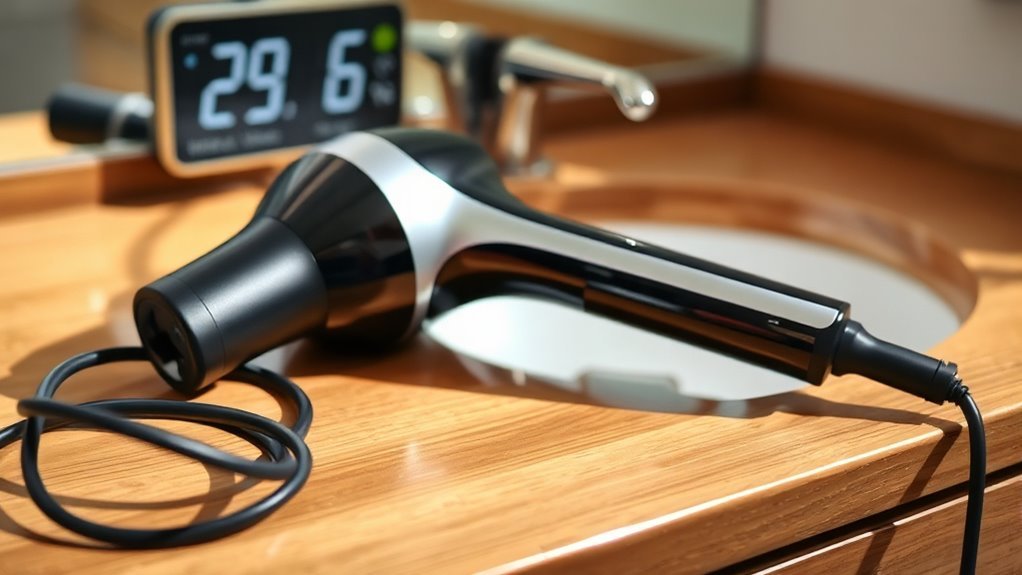
A typical hair dryer uses between 800 and 1800 watts of power, depending on its size and features. When you pick up a hair dryer, you’ll notice most fall within this range.
Smaller, travel-sized models usually consume around 800 to 1200 watts, making them lighter on your electricity bill but often less powerful. On the other hand, professional or salon-grade hair dryers can use up to 1800 watts, delivering faster drying times.
If you want a balance between efficiency and power, many consumer models hover around 1500 watts. Understanding this wattage range helps you anticipate how much energy your hair dryer will draw when in use, so you can choose one that fits your needs without surprising you with high electricity consumption.
What Affects a Hair Dryer’s Power Consumption and Efficiency?
Knowing the wattage range of hair dryers gives you a basic idea of their energy use, but several factors influence how much power your hair dryer actually consumes and how efficiently it works.
Your drying time, heat settings, motor type, and airflow design all play vital roles. Using higher heat settings or longer drying times increases power consumption.
Efficient motors and optimized airflow reduce energy use while maintaining performance. It’s a balance between power and efficiency that makes a difference in your energy bills.
| Factor | Impact on Power/Efficiency |
|---|---|
| Heat Settings | Higher heat uses more energy |
| Motor Type | Brushless motors are more efficient |
| Drying Time | Longer use increases total power consumed |
| Airflow Design | Better airflow means faster drying |
| Additional Features | Cool shot or sensors can improve efficiency |
What Hair Dryer Wattage Is Best for Your Hair Type?

Choose your hair dryer’s wattage based on your hair type to get the best results without overusing energy. If you have fine or thin hair, a lower wattage dryer around 1000 to 1400 watts works well. It dries gently, preventing damage and frizz.
For medium or normal hair, aim for a mid-range wattage between 1600 and 1800 watts. This range balances drying speed and heat without overwhelming your strands.
If your hair is thick, coarse, or curly, opt for a higher wattage dryer of 1800 to 2000 watts. It delivers stronger airflow and heat, cutting down drying time and taming stubborn hair.
Matching wattage to your hair type guarantees efficient drying while protecting your hair’s health and saving energy. So, picking the right wattage really makes a difference!
Estimating Your Hair Dryer’s Energy Use and Cost
To estimate your hair dryer’s energy use, start by noting its wattage and how long you typically use it. Then, multiply these to calculate the kilowatt-hours consumed.
Finally, check your electricity rate to figure out the cost of each drying session. It’s an easy way to get a sense of what your hair dryer is costing you in energy.
Calculating Energy Consumption
Calculating your hair dryer’s energy consumption helps you understand how much electricity it uses and what that means for your utility bill.
To do this, check the wattage label on your hair dryer—usually between 800 and 1800 watts. Then, note how many minutes you use it each day.
Convert that time to hours, since energy consumption is measured in kilowatt-hours (kWh). Multiply the wattage by the hours used, then divide by 1,000 to get kWh.
For example, if your 1,500-watt dryer runs for 15 minutes (0.25 hours), it consumes 1.5 × 0.25 = 0.375 kWh.
Tracking this helps you see how much energy your hair dryer uses. It can also guide you in managing your overall electricity usage more effectively.
Estimating Electricity Costs
Once you know how much energy your hair dryer uses, you can estimate the cost it adds to your electricity bill. Start by checking your utility rate, which is usually listed in cents per kilowatt-hour (kWh) on your bill.
Multiply your hair dryer’s energy consumption (in kWh) by this rate. For example, if your dryer uses 0.1 kWh per session and your rate is $0.12/kWh, each use costs about 1.2 cents.
To find monthly or yearly costs, just multiply by how often you use it. This simple calculation helps you see how your hair dryer impacts your electricity expenses.
It also highlights ways to save, like reducing use or choosing a more energy-efficient model. Tracking this small cost can add up and really influence your energy habits over time.
How to Pick an Energy-Efficient Hair Dryer
Finding an energy-efficient hair dryer starts with understanding how wattage affects power consumption and drying time.
To choose the right one, look for models with adjustable heat and speed settings—they let you tailor power use to your hair type and reduce unnecessary energy waste.
Consider hair dryers with a high wattage-to-efficiency ratio; these dry hair quickly without excessive power draw.
Technology like ionic generators or ceramic components also boosts efficiency by distributing heat evenly, so you spend less time drying.
Finally, choose a lightweight, ergonomic design to encourage consistent use without fatigue, optimizing your overall drying routine.
These factors help you save energy while keeping your hair healthy.
How Hair Dryer Wattage Impacts Drying Time and Energy Use
Understanding the wattage of your hair dryer can help you balance drying time with energy use effectively. Higher wattage means your dryer produces more heat and airflow, so your hair dries faster.
If you’re in a rush, a 1800- to 2000-watt dryer saves time compared to a lower-watt model. However, higher wattage also means more electricity consumption per minute.
On the other hand, a lower wattage dryer uses less power but takes longer to dry your hair. This could offset energy savings if you run it for extended periods.
To optimize efficiency, pick a dryer wattage that suits your hair type and drying habits. Using heat settings wisely and limiting drying time also helps reduce electricity use without compromising results.
Frequently Asked Questions
Can Hair Dryers Cause Hair Damage Over Time?
Yes, hair dryers can cause damage over time if you use high heat frequently.
So, it’s a good idea to use lower heat settings and keep the dryer moving while you style.
Also, applying a heat protectant can really help keep your hair healthy and strong.
Are Ionic Hair Dryers Better for Frizz Control?
Yes, ionic hair dryers are better for frizz control because they emit negative ions that break down water molecules. This helps your hair dry faster and smoother while reducing static and frizz.
You’ll notice shinier, less frizzy hair. It’s like giving your hair a little extra love every time you dry it!
How Often Should You Clean a Hair Dryer?
You should clean your hair dryer every one to three months to keep it working efficiently and prevent overheating. Just unplug it first—safety first!
Then, remove lint from the filter and wipe down the exterior regularly. This helps avoid buildup and keeps your dryer running smoothly. Easy, right? Just a little effort goes a long way!
Can Hair Dryers Be Used Safely in Bathrooms?
You shouldn’t use hair dryers near water because it’s like mixing electricity and puddles—dangerous! Always keep your dryer away from sinks or tubs.
And make sure to use outlets with Ground Fault Circuit Interrupters (GFCIs) for safety. It’s a simple step that can really protect you.
What Are Common Safety Features in Hair Dryers?
You’ll find common safety features like automatic shut-off, thermal fuses, and cool-touch housings in hair dryers. These prevent overheating and reduce fire risks.
Plus, they keep the device safe to handle while you style your hair. It’s all about making your styling routine safer and easier.
Conclusion
Now that you know a typical hair dryer uses between 800 and 1800 watts, you can see how choosing the right wattage impacts both drying time and your energy bill.
For example, a higher wattage dryer can cut drying time in half, saving you energy in the long run. By picking an energy-efficient model that suits your hair type, you’ll get great results without wasting power.
It’s all about balancing performance and efficiency for smarter hair care. Choosing the right wattage hair dryer means not only faster drying but also lower electricity usage, which helps keep your energy bills in check. So, when shopping for a hair dryer, think about how much power you really need. That way, you can enjoy quick, effective drying without paying more than necessary. In the end, a well-chosen hair dryer combines convenience, energy efficiency, and good results, making your hair routine easier and more eco-friendly.