How Many Watts Are in a Hair Dryer?
Hair dryers usually range from 800 to 2,000 watts, which determines their power and heat output. The wattage is a key factor in how quickly your hair dries and how much heat is applied. Understanding how many watts are in a hair dryer can help you choose the right one for your hair type and styling needs.
If you have fine hair, a lower wattage around 1,000–1,400 watts works well to avoid damage. Thicker hair benefits from higher wattage for faster drying, which means more heat and stronger airflow.
But keep in mind, higher wattage can also use more energy per minute. So, if you want to save energy and still get great results, it’s worth considering these details before buying.
Key Takeaways
- Most hair dryers operate between 800 and 2,000 watts, depending on power and performance levels.
- Low-wattage dryers range from 800 to 1,200 watts and are lightweight, making them perfect for travel or fine hair.
- High-wattage dryers use 1,800 to 2,000 watts to deliver stronger airflow and faster drying times.
- Wattage indicates the power consumption and affects both airflow strength and heat output during use.
- Choosing wattage really depends on your hair type. Higher watts work great for thick hair, while lower watts are better for fine hair.
Typical Wattage Ranges of Hair Dryers
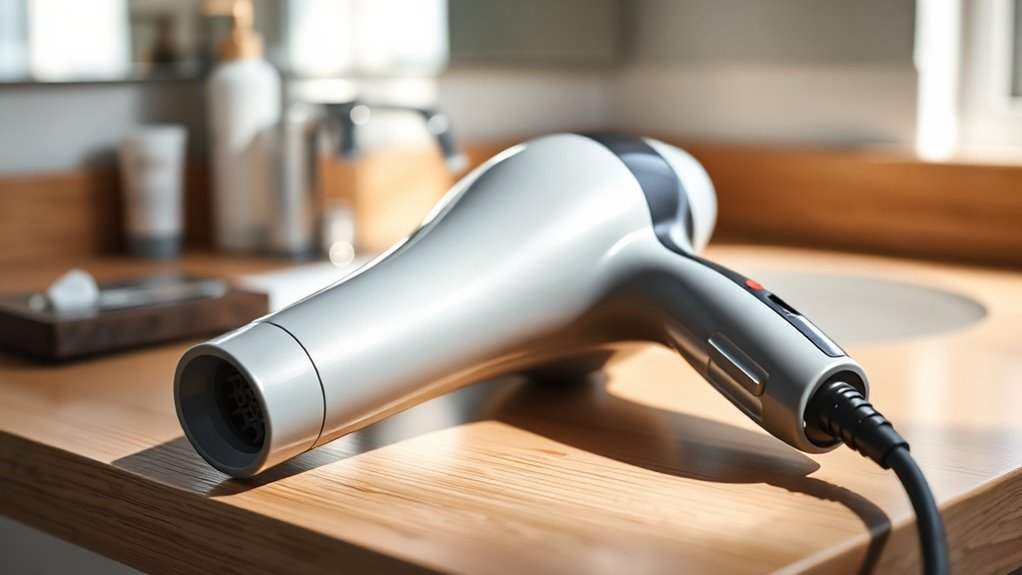
When you choose a hair dryer, understanding its wattage can help you pick the right one for your needs. Hair dryers typically range between 800 and 2,000 watts.
Lower wattage models, around 800 to 1,200 watts, tend to be lightweight and ideal for travel or gentle drying. If you want quicker drying times, look for dryers in the 1,800 to 2,000-watt range, which deliver stronger airflow and heat.
Keep in mind, though, higher wattage doesn’t always mean better quality—it just means more power. Your hair type and drying habits also matter.
What Wattage Means for Hair Dryers
Understanding wattage helps you see how much power a hair dryer uses to generate heat and airflow. When you look at a hair dryer’s wattage, you’re basically checking how much energy it consumes to function.
This matters because wattage impacts several practical aspects of using the dryer: higher wattage means more electricity used while running. It can also affect the dryer’s heat output and airflow strength.
Wattage influences the device’s energy efficiency, and it determines the electrical requirements, like the type of outlet needed. Knowing what wattage means guarantees you pick a dryer that matches your power availability and personal preferences.
It also helps you avoid overloading circuits or using a device that doesn’t meet your styling needs. So, paying attention to wattage is pretty important when choosing the right hair dryer for you.
How Wattage Influences Hair Drying Speed and Performance
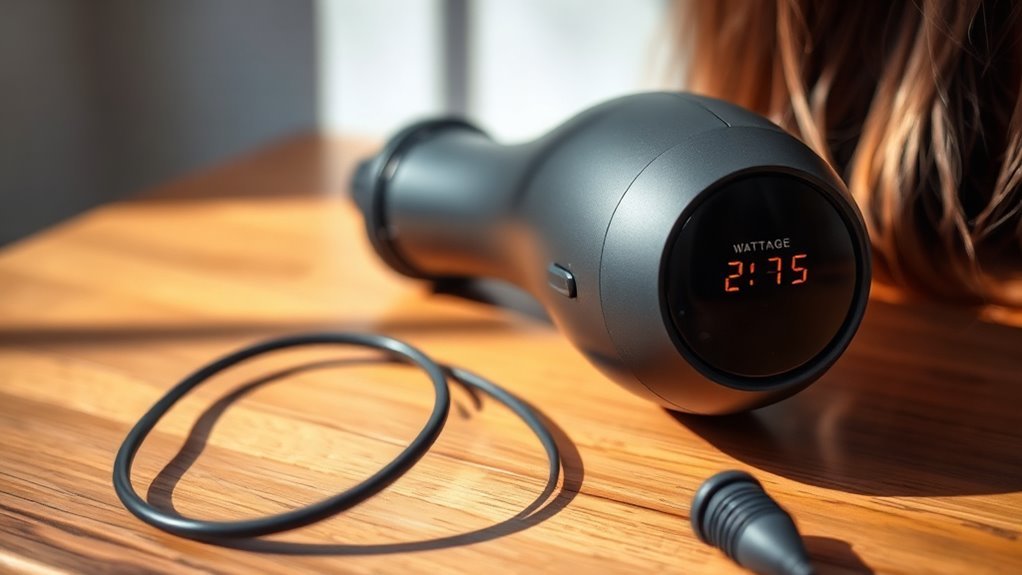
Boosting the wattage of your hair dryer directly speeds up how quickly it dries your hair. Higher wattage means the device can generate more heat and airflow, allowing moisture to evaporate faster. This efficiency helps you cut down drying time, especially if you have thick or long hair.
You’ll also notice consistent performance because a powerful motor maintains steady airflow and temperature. However, wattage isn’t the only factor—design and heat settings matter too. Still, choosing a hair dryer with adequate wattage guarantees it works effectively without struggling.
In short, a higher wattage hair dryer enhances your styling routine by delivering quicker, more reliable drying results. So, you can spend less time waiting and more time enjoying your look.
Does Higher Wattage Increase Your Hair Dryer’s Energy Costs?
Although a higher wattage hair dryer uses more power per minute, it doesn’t necessarily mean your energy bills will skyrocket. In fact, using a powerful dryer might save energy overall by drying your hair faster.
Here’s why: higher wattage means quicker drying time, so you use it for fewer minutes. Energy consumption depends on total usage time, not just wattage.
Also, frequent long drying sessions with lower wattage models might consume more energy. How often and how long you use your hair dryer impacts your energy costs more than wattage alone.
Choosing the Right Wattage Hair Dryer for Your Hair Type
When picking a hair dryer, you’ll want to match its wattage to your hair type for the best results. If you have fine or thin hair, a lower wattage dryer around 1000-1400 watts works well. It prevents heat damage while drying gently.
For medium or wavy hair, opt for a mid-range wattage between 1400-1800 watts. This helps balance drying speed and care, so your hair stays healthy and looks great.
Thick or coarse hair needs more power, so choose a dryer with 1800-2000 watts. This cuts down drying time effectively and makes styling easier.
Simple Tips to Save Energy When Using Your Hair Dryer
You can save energy by using lower heat settings on your hair dryer whenever possible. Cutting down your drying time also helps reduce power consumption.
These simple changes make a big difference without compromising your style. Give them a try and see how easy it is to save energy!
Use Lower Heat Settings
Since high heat settings consume more energy, choosing a lower heat level on your hair dryer can markedly cut your electricity use. Not only does this save watts, but it also helps protect your hair from excessive heat damage.
To make the most of lower settings, consider these tips:
- Use the warm or cool setting instead of the highest heat.
- Combine lower heat with a higher airflow speed for efficient drying.
- Apply a heat protectant to reduce drying time at lower temperatures.
- Focus on drying roots first, then let the residual heat finish the ends.
Limit Drying Time
Although drying your hair thoroughly is important, cutting down the time you spend using your hair dryer can markedly reduce energy consumption. You can start by towel-drying your hair gently to remove excess moisture before turning on the dryer.
This simple step decreases the time your hair dryer needs to run. Also, try breaking your drying session into shorter bursts rather than continuous use.
This technique prevents overheating and allows you to focus on drying specific sections efficiently. Using a hair dryer with a high wattage may dry your hair faster, but limiting the overall drying time still saves energy.
Frequently Asked Questions
Can Hair Dryers With Ionic Technology Use Less Wattage?
Yes, hair dryers with ionic technology often use less wattage because they dry hair faster by breaking water molecules efficiently.
You’ll save energy and reduce heat exposure, making your hair healthier while using less power overall. It’s a win-win!
Are Cordless Hair Dryers Less Powerful Than Plug-In Models?
Cordless hair dryers are like a gentle breeze compared to plug-in models’ roaring wind. You’ll find they’re less powerful since batteries limit wattage, but they offer freedom and convenience without being tethered to an outlet.
They’re perfect if you want to move around easily or don’t have quick access to a power source. Sure, they might take a bit longer to dry your hair, but that trade-off is often worth it for the flexibility you get.
How Does Wattage Affect the Lifespan of a Hair Dryer?
Higher wattage means your hair dryer works harder and heats up more, which can shorten its lifespan if used frequently.
But if you don’t overuse it, a powerful dryer can last just as long as a lower-watt one. It really depends on how often and how long you use it.
Do Travel Hair Dryers Have Different Wattage Requirements?
Yes, travel hair dryers usually have lower wattage, often around 800-1200 watts, to meet airline regulations and prevent overheating.
You’ll find they’re lighter but may take longer to dry your hair compared to regular models. It’s a bit of a trade-off, but makes traveling way easier.
Is Wattage Related to the Noise Level of a Hair Dryer?
No, wattage doesn’t directly affect noise level. You’ll find that design, motor type, and airflow shape impact sound more.
Higher wattage means more power, but quieter operation depends on engineering, not just wattage alone. It’s really about how the hair dryer is built and designed.
Conclusion
When you choose a hair dryer, knowing that most range between 800 to 1875 watts helps you pick the right balance of power and energy use. Higher wattage means faster drying, but it can also bump up your energy costs.
For example, a 1875-watt dryer uses just about 1.875 kilowatt-hours if used for an hour, which adds up over time. So, choose wisely and save energy while keeping your hair flawless!
Understanding how many watts are in a hair dryer is key to making smart choices. Remember, higher wattage means quicker drying but also more electricity consumption. By selecting a hair dryer with the right wattage, you can enjoy efficient drying without skyrocketing your energy bills. So, when shopping, think about both power and energy use to find the perfect hair dryer that works for you and your budget.