7 Best Hair Oils for Natural African American Hair in 2027
You’ll love using Jamaican Black Castor Oil to strengthen and boost growth, while Argan Oil locks in moisture without greasiness.
Coconut Oil deeply hydrates and prevents breakage, and Moringa Oil nourishes and reduces dryness.
Marula Oil smooths frizz and adds shine, and lightweight Grapeseed Oil improves manageability.
Avocado Oil penetrates deeply to soften and strengthen your strands.
Keep exploring, and you’ll discover how to maximize these oils for vibrant, healthy natural hair.
Key Takeaways
– Jamaican Black Castor Oil strengthens hair strands and promotes scalp circulation for enhanced growth and reduced breakage.
It’s a great pick if you’re looking to boost your hair’s health naturally.
– Argan Oil locks in moisture, soothes the scalp, and adds shine without greasiness. This makes it ideal for softness and scalp balance.
You’ll love how light it feels while keeping your hair nourished.
– Coconut Oil deeply hydrates and reduces protein loss. Best used 2-3 times weekly on damp hair for moisture retention.
It’s like a hydration boost your hair will thank you for.
– Lightweight oils like Grapeseed and Avocado improve manageability, boost shine, and prevent breakage without weighing hair down.
They’re perfect if you want your hair to feel light and look glossy.
– Oils rich in vitamins and fatty acids, such as Moringa and Marula, enhance elasticity, reduce frizz, and support scalp health.
They help keep your hair resilient and smooth, making your routine easier.
Jamaican Black Castor Oil
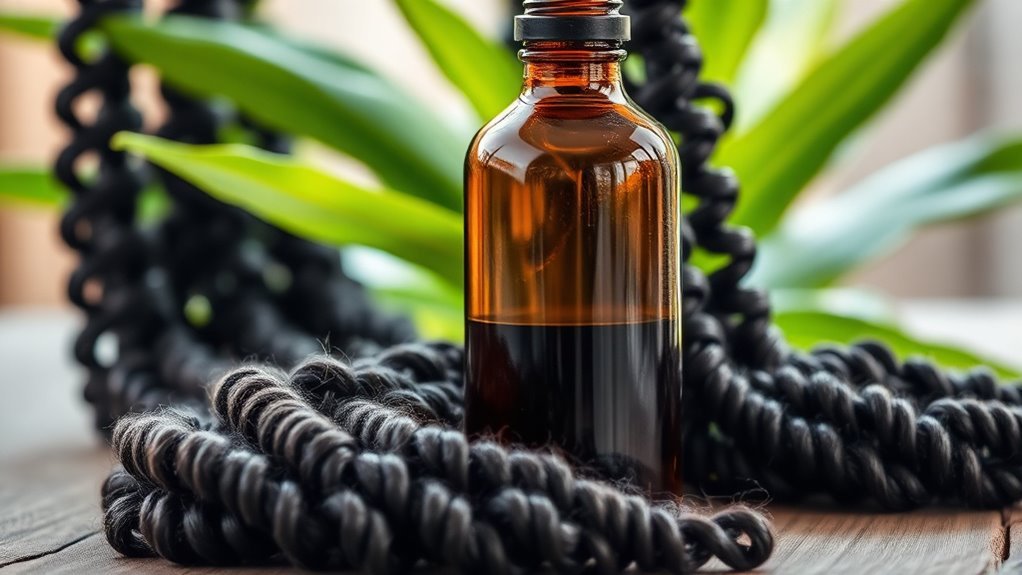
One of the most popular oils for African American hair is Jamaican Black Castor Oil. You’ll find it’s thick, nourishing, and perfect for strengthening your strands.
When you apply it to your scalp, it promotes circulation, which can encourage hair growth. Plus, its moisturizing properties help reduce breakage and dryness, common challenges you face with natural hair.
You can use it as a pre-shampoo treatment or seal in moisture after washing. Because it’s rich in ricinoleic acid and omega-6 fatty acids, it supports scalp health and adds shine without leaving your hair greasy.
Just remember to warm it slightly before use, so it spreads easily and absorbs better. Jamaican Black Castor Oil works great whether your hair is curly, coily, or kinky.
Argan Oil
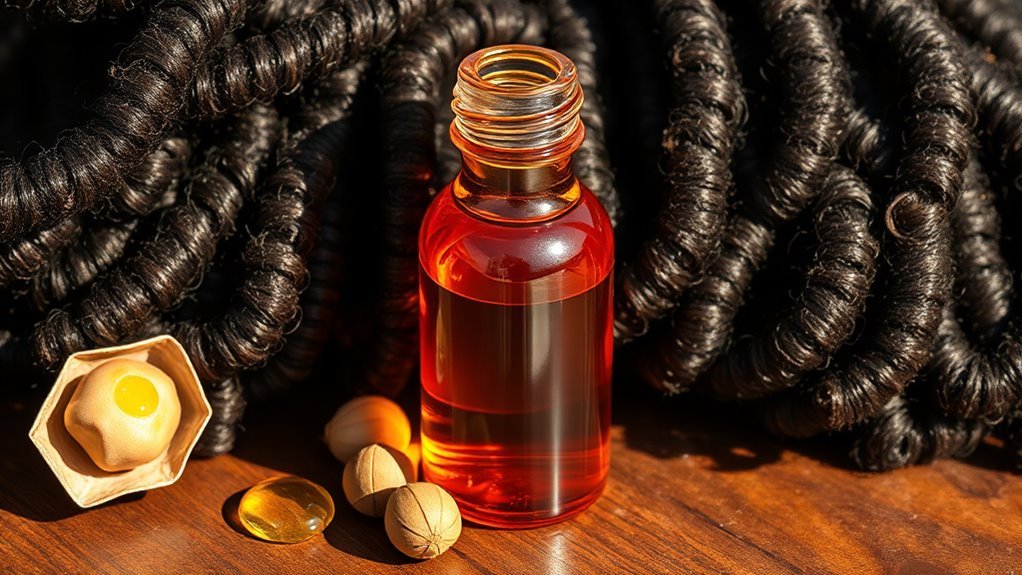
You’ll love how argan oil locks in moisture and keeps your hair soft without feeling greasy. It also soothes your scalp, reducing dryness and irritation.
To get the best results, apply a small amount to damp hair and massage it gently into your scalp. Give it a little time to absorb, and you’ll notice the difference!
Moisturizing Benefits
Although African American hair often requires extra hydration, argan oil delivers deep moisturizing benefits that help restore softness and shine. When you apply argan oil, its rich fatty acids and vitamin E penetrate your hair shaft, locking in moisture without weighing your strands down.
This helps prevent dryness and brittleness, common challenges for natural hair textures. Using argan oil regularly can smooth frizz and reduce split ends, making your hair more manageable and vibrant.
Plus, it absorbs quickly, so you won’t feel greasy or heavy. Whether you use it as a leave-in treatment or a finishing touch, argan oil keeps your hair hydrated, revitalized, and glowing with health.
It’s a must-have for maintaining moisture in your natural hair routine. Trust me, once you try it, you’ll wonder how you ever lived without it!
Scalp Health
Beyond moisturizing your strands, argan oil also supports a healthy scalp, which is the foundation for strong, thriving hair. When you apply argan oil, its anti-inflammatory properties help soothe irritation and reduce dryness, preventing flakiness and itchiness.
Rich in antioxidants and vitamin E, it nourishes your scalp, promoting better blood circulation that encourages hair growth. You’ll find that regular use can balance your scalp’s natural oils, preventing both excess oiliness and dryness.
This balance creates an ideal environment for your hair follicles to flourish. Plus, argan oil’s lightweight texture won’t clog your pores or weigh down your hair, making it perfect for maintaining scalp health without greasiness.
Incorporating argan oil into your routine can give your scalp the care it truly needs. It’s a simple step that can make a big difference!
Application Tips
When applying argan oil, start with a small amount to avoid weighing down your hair, especially if it’s fine or thin. Warm the oil slightly by rubbing it between your palms, then distribute it evenly through your hair, focusing on the ends where dryness is most common.
For thicker hair, you can use a bit more, but always build up gradually. Apply argan oil to damp hair to lock in moisture or use it as a finishing touch on dry hair to add shine and tame frizz.
Avoid the scalp if you’re prone to oiliness or buildup; instead, concentrate on strands. Regular, light application helps maintain softness and manageability without greasiness.
Coconut Oil
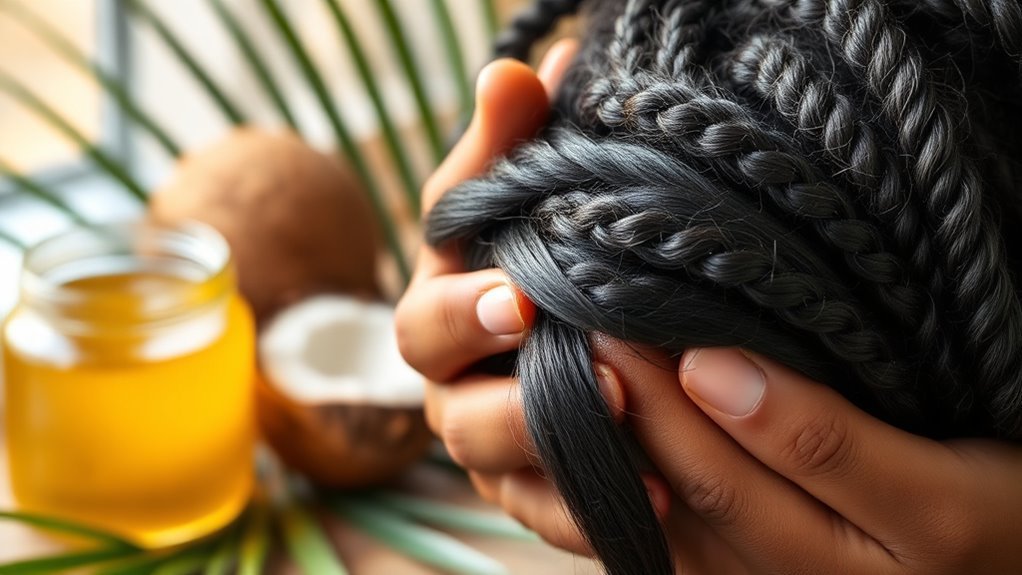
You’ll love how coconut oil locks in moisture, keeping your hair soft and hydrated.
Applying it properly can make all the difference, whether you use it as a pre-shampoo treatment or a daily moisturizer.
Let’s explore the best ways to get the most from this nourishing oil.
Moisturizing Benefits
Since African American hair tends to be naturally dry, coconut oil is a powerful moisturizer that can deeply hydrate your strands. It penetrates the hair shaft, reducing protein loss and locking in moisture, keeping your hair soft and manageable.
Using coconut oil regularly can help prevent breakage and split ends caused by dryness. It’s a simple way to keep your hair healthy and strong.
| Benefit | Effect on Hair | Frequency Recommended |
|---|---|---|
| Deep Hydration | Restores moisture | 2-3 times weekly |
| Protein Retention | Strengthens strands | After shampooing |
| Split End Prevention | Maintains hair health | Weekly |
Incorporating coconut oil into your routine guarantees your hair stays nourished and vibrant. It’s an easy trick to combat dryness effectively and keep your hair looking its best.
Application Techniques
Although coconut oil offers excellent benefits, applying it correctly guarantees you get the most out of its moisturizing and strengthening properties. To maximize results, start with clean, damp hair to help the oil penetrate effectively.
Use these techniques for best application: warm a small amount between your palms to improve absorption. Then, section your hair to assure even distribution from roots to tips.
Gently massage your scalp to stimulate blood flow and promote hair growth. Leave the oil in for at least 30 minutes or overnight for deep conditioning.
Just a heads up—avoid applying too much, as coconut oil can weigh hair down. But with consistent, mindful application, your natural African American hair will stay nourished, strong, and beautifully shiny.
Moringa Oil
Moringa oil offers a powerful boost for African American hair by deeply nourishing and strengthening strands. It’s rich in vitamins A, C, and E, which help repair damage and promote healthier hair growth.
You’ll find its lightweight texture perfect for sealing in moisture without weighing your hair down. Regular use can reduce breakage and improve shine, making your curls look vibrant and well-defined.
To get the best results, apply moringa oil to damp hair or use it as a hot oil treatment to penetrate deeply. It also soothes the scalp, reducing dryness and irritation.
If you want a natural, effective way to enhance your hair’s strength and manageability, moringa oil is an excellent addition to your routine. Give it a try—you might just love the difference it makes!
Marula Oil
Marula oil delivers intense hydration and shine to African American hair, making it a favorite for those seeking soft, manageable curls. You’ll love how it nourishes dry strands without feeling greasy.
This lightweight oil penetrates deeply, sealing moisture and reducing breakage. When you use marula oil, you’ll notice enhanced elasticity, preventing split ends.
It also gives a natural shine that doesn’t weigh down your hair. Plus, it reduces frizz and flyaways for smoother styles.
Marula oil improves scalp health, promoting stronger growth. Incorporate it into your routine by applying it to damp or dry hair as a leave-in treatment or a finishing touch.
It’s perfect for keeping your curls defined and vibrant throughout the day. Give it a try and see the difference it makes!
Grapeseed Oil
While grapeseed oil might not be as well-known as some other oils, it offers incredible benefits for African American hair. You’ll find it’s lightweight, so it won’t weigh down your curls or leave a greasy residue.
It’s rich in linoleic acid, which helps strengthen your hair and prevent breakage—perfect if you’re dealing with fragile strands. Grapeseed oil also seals in moisture without clogging your pores, making it great for both your scalp and hair.
You can use it as a daily moisturizer or mix it with other oils to boost shine and softness. If you want a non-greasy oil that enhances manageability and supports healthy growth, grapeseed oil is definitely worth adding to your hair care routine.
Avocado Oil
Avocado oil offers powerful nourishment that can transform your African American hair. Rich in vitamins A, D, and E, it deeply moisturizes and strengthens your strands from root to tip.
You’ll notice your hair becoming softer, shinier, and more manageable with regular use.
Here’s why avocado oil should be your go-to:
- Penetrates the hair shaft to prevent breakage
- Seals in moisture without weighing hair down
- Soothes dry scalp and reduces flakiness
- Boosts elasticity, helping to avoid split ends
Apply it as a pre-shampoo treatment or add a few drops to your leave-in conditioner. Either way, with avocado oil, you’re giving your hair the nourishment it craves for healthy, vibrant growth every day.
Frequently Asked Questions
How Often Should I Apply Hair Oil to Natural African American Hair?
You should apply hair oil 2-3 times a week to keep your natural hair moisturized without weighing it down.
Adjust the frequency based on how dry your hair feels.
Always focus on your ends and scalp for the best results.
Can Hair Oils Prevent Hair Breakage and Promote Growth?
Of course, hair oils are magical potions that instantly stop breakage and make your hair grow like Jack’s beanstalk.
But seriously, they mainly nourish and protect, helping reduce breakage and supporting healthy growth over time.
Are There Oils to Avoid for Natural African American Hair?
Yes, you should avoid heavy oils like mineral oil and certain synthetic oils because they can clog pores and weigh your hair down.
Stick to natural oils that nourish and moisturize without causing buildup or damage. That way, your hair stays healthy and happy!
How Do I Properly Cleanse My Hair After Using Oil?
You might think oil makes washing tough, but just use a gentle sulfate-free shampoo and warm water. Massage your scalp well to break down oil, then rinse thoroughly.
After that, follow up with a moisturizing conditioner to keep hair soft. It’s pretty simple once you get the hang of it!
Can Hair Oils Be Mixed for Better Results?
Yes, you can mix hair oils to boost benefits. Just combine lightweight oils like jojoba with heavier ones like castor oil.
Always do a patch test to avoid irritation. And make sure to adjust blends based on your hair’s needs.
Conclusion
Choosing the right hair oil is like finding the perfect key to open up your natural hair’s true beauty. Whether you go for Jamaican Black Castor Oil’s strength or the nourishing touch of Argan and Coconut Oil, each option nourishes and protects your hair uniquely.
Don’t be afraid to mix and match to see what your strands love. With these oils, you’re not just caring for your hair—you’re celebrating it every day. Using the best hair oils for natural African American hair can transform your routine, helping to lock in moisture and boost shine.
So, explore these options and find the perfect blend that keeps your curls healthy, hydrated, and thriving. Remember, great hair starts with the right care!