How to Dry Your Hair Without a Blow Dryer in 7 Steps
To dry your hair without a blow dryer, start by gently blotting with a microfiber towel or soft cotton T-shirt. This helps absorb water without causing frizz, which is key for healthy-looking hair.
Next, section your hair to speed up drying and guarantee evenness.
Detangle gently with your fingers or a wide-tooth comb, then apply a small amount of leave-in conditioner. This will smooth frizz and keep your hair feeling soft.
After that, just let your hair air-dry naturally or braid it for added texture and style.
To finish off, spritz on a cool mist spray to refresh and polish your look. Keep going to discover more tips for flawless drying that’ll help you skip the blow dryer and still get great results!
Key Takeaways
- Gently blot hair with a microfiber towel to remove excess water without causing frizz or breakage.
- Section hair into halves or quarters to speed drying and ensure even air circulation.
- Detangle with fingers first, then use a wide-tooth comb made of gentle material to prevent damage.
- Apply a small amount of leave-in conditioner on damp hair to lock in moisture and reduce frizz.
- Braid or twist damp hair and let it air-dry completely for added texture and volume without heat.
Use a Microfiber Towel or Cotton T-Shirt to Gently Blot Hair
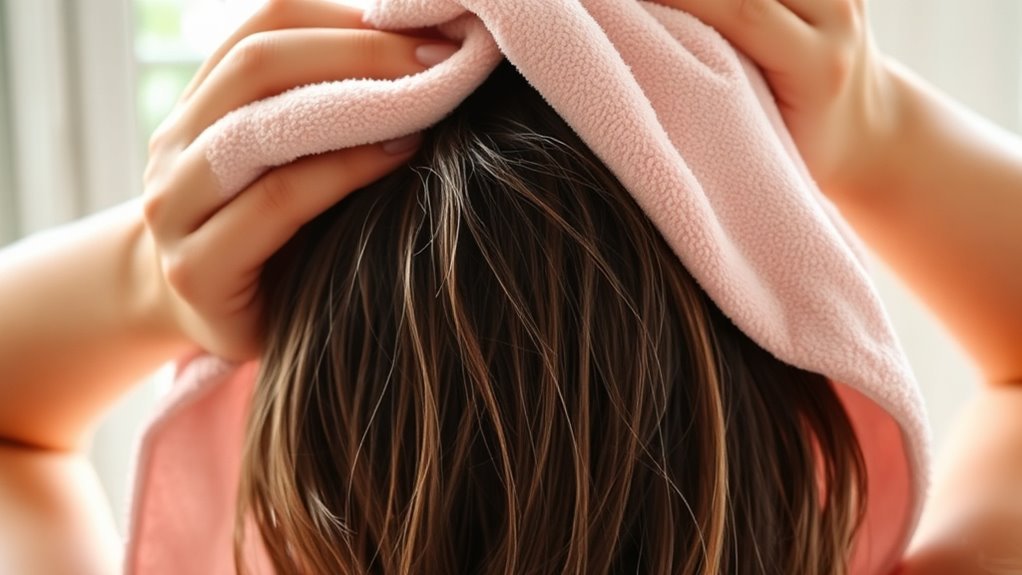
To dry your hair without a blow dryer, start by using a microfiber towel or a soft cotton T-shirt to gently blot your strands. Avoid rubbing your hair, as that can cause frizz and breakage. Instead, press the fabric against your hair to absorb excess water.
Microfiber towels are especially effective because they soak up moisture quickly without roughing up the cuticle. Cotton T-shirts work similarly and are an excellent alternative if you don’t have a microfiber towel.
After blotting, let your hair air-dry partially before styling. This method minimizes damage and helps maintain your hair’s natural shine and texture. You’ll notice your hair feels less frizzy and softer when you use gentle blotting instead of harsh towel drying.
Section Hair to Speed Drying and Ensure Evenness
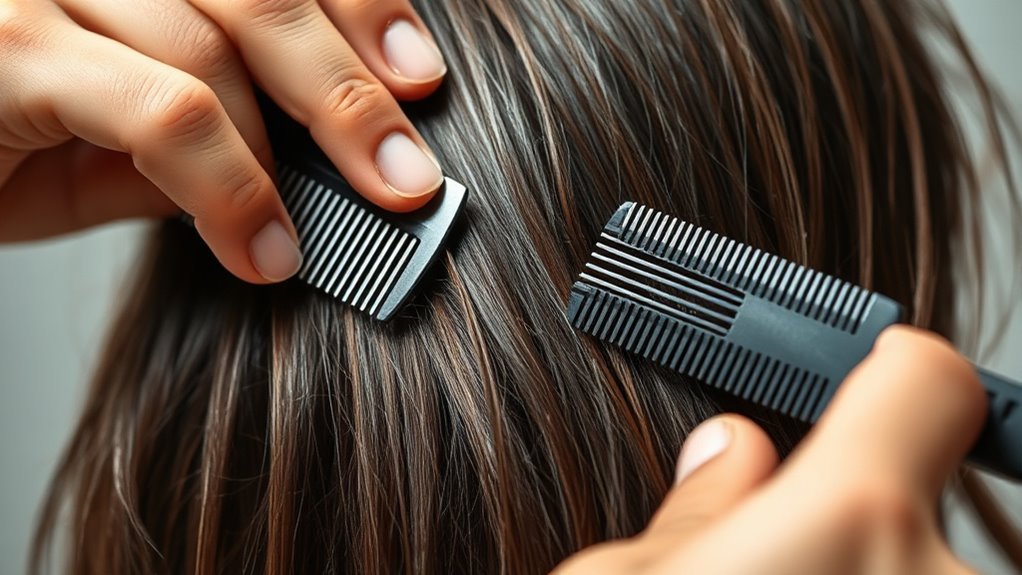
To speed up drying and make sure your hair dries evenly, start by sectioning it into manageable parts. You can divide your hair into halves or quarters depending on its thickness and length.
This method helps you focus on each section, ensuring every strand gets the attention it needs. It really makes a difference when you want a smooth, even dry.
Benefits Of Hair Sectioning
Breaking your hair into sections can make drying it without a blow dryer much easier and faster. When you section your hair, you target smaller areas, allowing air to circulate better and speed up the drying process.
This method helps you avoid missing damp spots, so your hair dries evenly. You’ll also reduce tangling and minimize frizz since you’re handling manageable portions instead of a thick, wet mass.
Plus, sectioning makes it simpler to apply any leave-in products evenly, enhancing your hair’s health and appearance. Overall, dividing your hair into sections gives you more control, saves time, and leads to a smoother, more polished look—without needing heat.
It’s a smart step in your no-blow-dryer drying routine. Trust me, once you get the hang of it, you’ll wonder why you didn’t try it sooner!
How To Divide Hair
Sectioning your hair effectively starts with knowing how to divide it properly. Begin by parting your hair down the middle from your forehead to the nape of your neck, creating two equal halves. Clip one side up to keep it out of the way.
Next, take each half and split it horizontally into top and bottom sections. This usually results in four manageable sections. If you have thick or long hair, consider dividing it further into six or eight smaller sections to speed up drying.
Use clips or hair ties to secure each section firmly but comfortably. Dividing your hair this way not only speeds up the drying process but also guarantees each part gets the attention it needs. This helps your hair dry evenly and more efficiently.
Tips For Even Drying
When you divide your hair into sections, you’ll find it dries faster and more evenly. To speed up drying and make sure every strand gets attention, follow these tips:
- Use a microfiber towel to gently squeeze out excess water from each section without causing frizz. It’s way better than rough rubbing.
- Finger comb through each section to separate strands and let air circulate better. This little trick really helps.
- Rotate sections while drying, so each part gets exposed to air equally. Don’t just leave one spot drying too long.
- Avoid overlapping sections because wet hair underneath dries slower. That just leads to uneven dryness, which nobody wants.
Detangle and Speed Drying With Fingers or a Wide-Tooth Comb
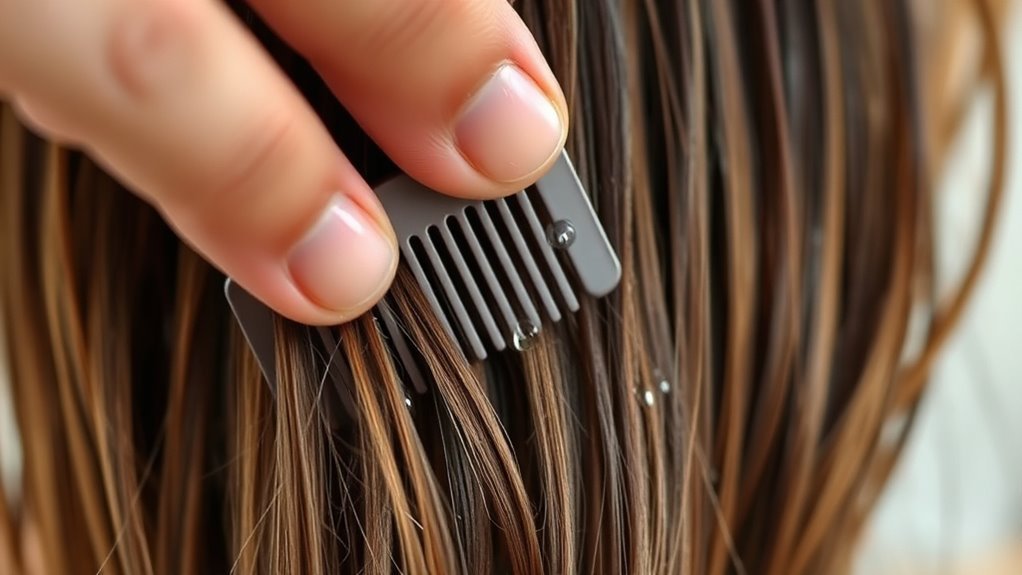
You can gently detangle your hair with your fingers to prevent breakage and reduce frizz.
If you prefer a tool, choose a wide-tooth comb that glides through wet strands without causing damage.
Both methods help speed up drying by allowing better air circulation through your hair.
Benefits of Finger Detangling
Glide your fingers or a wide-tooth comb gently through damp hair to detangle knots without causing breakage. Finger detangling offers several benefits that help you care for your hair while drying it naturally.
- Reduces Breakage: Your fingers are gentler than brushes, lowering the risk of snapping strands.
- Improves Hair Health: You can feel the knots and avoid pulling too hard, preserving your hair’s integrity.
- Encourages Even Drying: Detangling promotes better air circulation through strands, speeding up drying time.
- Enhances Natural Texture: It helps maintain your hair’s natural pattern by avoiding over-manipulation.
Choosing a Wide-Tooth Comb
Finger detangling works wonders, but pairing it with a wide-tooth comb can make the process even smoother. When choosing a wide-tooth comb, look for one made from gentle materials like wood or high-quality plastic to reduce static and breakage.
The wide spacing between the teeth helps you glide through your hair without tugging, minimizing damage. Use the comb on damp hair after finger detangling to speed up drying and prevent knots.
Avoid fine-tooth combs or brushes at this stage, as they can cause frizz and split ends. Keep the comb clean to guarantee it works effectively and doesn’t transfer oils or dirt to your strands.
With the right wide-tooth comb, you’ll detangle and dry your hair gently and efficiently. It really makes a difference!
Smooth Frizz With Leave-In Conditioner or Detangler
Frequently, the best way to tame frizz without heat is by applying a leave-in conditioner or detangler to damp hair. This helps smooth your strands and keeps them manageable as they dry.
Here’s how to do it right:
- Start with damp hair, not soaking wet, for better product absorption.
- Dispense a small amount of leave-in conditioner or detangler into your palm.
- Evenly distribute the product through your hair, focusing on the mid-lengths and ends where frizz tends to appear.
- Use your fingers or a wide-tooth comb to gently detangle, preventing breakage.
This simple step locks in moisture, reduces static, and leaves your hair feeling soft and smooth. Plus, you get all this without any heat damage. Easy, right?
Air-Dry Hair Naturally Without a Blow Dryer
After smoothing frizz with leave-in conditioner or detangler, you can let your hair dry naturally to avoid heat damage altogether. Simply allow your hair to air-dry in a comfortable environment with good airflow.
Try not to touch or comb your hair too much while it dries. This helps prevent frizz and breakage.
If you want to speed up the process, gently blot excess water with a microfiber towel or a soft cotton t-shirt instead of rubbing. You can also part your hair in different sections to promote even drying.
Staying in a well-ventilated room or near a fan helps water evaporate faster without using heat. Embracing air-drying not only preserves your hair’s natural texture but also keeps it healthier and shinier over time.
Dry Hair With Braids or Twists to Add Texture
While your hair air-dries, braiding or twisting it can create beautiful texture and waves without heat. This method not only speeds drying but also adds style and volume.
Braiding or twisting hair while air-drying enhances natural waves, volume, and speeds up drying—no heat needed.
Here’s how to do it:
- Start with damp, towel-dried hair to avoid soaking wet strands.
- Divide your hair into sections, depending on how tight or loose you want your waves.
- Braid or twist each section firmly but gently to prevent breakage.
- Leave the braids or twists in until your hair is completely dry, then carefully unravel and style.
Refresh Damp Hair With Cool Mist Spray for a Polished Look
You can easily refresh your damp hair by spritzing it with a cool mist spray, which instantly smooths frizz and adds shine. Simply fill a spray bottle with cool water, or add a few drops of your favorite leave-in conditioner for extra nourishment.
Lightly mist your hair, focusing on areas that look dry or unruly. Then, use your fingers or a wide-tooth comb to gently reshape and smooth your strands.
The cool mist helps seal the hair cuticle, reducing flyaways and giving your hair a polished finish without heat. This method is perfect for quick touch-ups throughout the day or when you want a sleek look without re-wetting your hair completely.
It’s an easy, invigorating way to maintain a neat style naturally. Give it a try—you’ll love how fresh and smooth your hair feels!
Frequently Asked Questions
Can I Use Essential Oils to Speed up Hair Drying?
You can use essential oils, but they won’t directly speed up drying. Instead, they nourish your scalp and hair.
For faster drying, focus on towel-drying and air circulation. Plus, you get to enjoy the pleasant scent of the oils.
How Long Does Air-Drying Typically Take for Thick Hair?
Air-drying thick hair can take as long as waiting for a slow-cooked stew—usually 3 to 6 hours.
You’ll want to be patient and avoid touching your hair too much to speed up drying.
It might feel like forever, but giving your hair time to dry naturally really pays off. Just hang in there!
Is It Safe to Sleep With Damp Hair?
It’s generally safe to sleep with damp hair, but it might cause breakage or scalp irritation.
You can reduce risks by loosely braiding your hair or using a silk pillowcase to minimize friction while you sleep.
These little tricks can really help protect your hair overnight and keep your scalp comfortable.
Can Drying Hair Without Heat Prevent Split Ends?
Yes, drying your hair without heat can prevent split ends because it reduces damage caused by high temperatures.
You’ll keep your hair healthier, stronger, and less prone to breakage by avoiding heat styling tools regularly.
What Are the Best Hairstyles for Overnight Drying?
You can try loose braids, gentle buns, or a twisted ponytail for overnight drying. They protect your hair, reduce frizz, and keep your strands intact while you sleep.
That way, you wake up with manageable, soft hair. It’s an easy trick to keep your locks looking great without much effort!
Conclusion
Drying your hair without a blow dryer might seem slow, but it actually helps protect your strands from heat damage. This way, you promote healthier hair over time.
By using a microfiber towel, sectioning your hair, and applying leave-in conditioner, you speed up drying naturally. Plus, styling with braids or twists adds texture effortlessly.
So, skip the heat—you’ll not only save time in the long run but also enjoy shinier, stronger hair. Drying your hair without a blow dryer is a great way to keep your locks healthy and vibrant every day. Give it a try and see the difference in your hair’s texture and strength!