Top 10 Best Hair Oils for Low Porosity Hair in 2027
For low porosity hair in 2027, choosing the right hair oils is key to keeping your strands healthy and vibrant.
You want lightweight oils like jojoba and argan oil that boost moisture and shine without causing buildup. These oils absorb easily, making them perfect for hair that tends to resist moisture.
Grapeseed and sweet almond oils are fantastic for sealing in softness and nourishing each strand.
Meanwhile, marula and rosehip oils help combat dryness and promote growth, giving your hair that extra boost it needs.
Camellia oil provides deep conditioning, which is great if your hair feels a bit stiff or dry.
Kukui nut oil helps prevent breakage, so you can keep your hair strong and resilient.
Lastly, moringa oil hydrates without feeling heavy, making it a perfect finishing touch.
Trying out these oils can really help you perfect your hair care routine and keep your low porosity hair looking its best.
Key Takeaways
- Jojoba oil mimics natural scalp oils, providing lightweight moisture and balancing oil production for low porosity hair. It’s great because it feels light and doesn’t weigh your hair down.
- Grapeseed oil seals moisture with a thin consistency, enhancing elasticity and preventing heaviness or buildup. So, if you want something that locks in moisture without feeling greasy, this is a solid choice.
- Argan oil penetrates deeply, boosting shine, smoothing frizz, and strengthening strands without greasiness. You’ll notice your hair looking shinier and feeling softer in no time.
- Rosehip oil soothes scalp dryness, improves texture, and reduces breakage with antioxidant-rich, lightweight absorption. It’s perfect if your scalp needs a little extra care while keeping things light.
- Kukui nut oil restores elasticity, protects against environmental damage, and strengthens hair while maintaining flexibility. Basically, it helps keep your hair healthy and resilient without being heavy.
Jojoba Oil for Lightweight Moisture

One of the best oils you can use for low porosity hair is jojoba oil because it mimics your scalp’s natural oils. This similarity allows it to absorb easily without leaving your hair greasy or weighed down.
When you apply jojoba oil, it penetrates the hair shaft, delivering lightweight moisture that helps maintain softness and manageability. You’ll notice it balances oil production, preventing your scalp from becoming too oily or too dry.
Plus, jojoba oil forms a protective layer that locks in hydration while allowing your hair to breathe. Use it as a pre-shampoo treatment or a daily moisturizer to enhance your hair’s natural texture without buildup.
Jojoba oil locks in moisture and enhances texture without weighing hair down or causing buildup.
Its non-comedogenic properties make it ideal for maintaining a healthy scalp and strands. So, it’s really a great go-to if you want moisture without the heaviness.
Argan Oil to Boost Shine and Manageability
Although low porosity hair can be resistant to moisture, argan oil easily penetrates the hair shaft to boost shine and improve manageability. You’ll find it lightweight, so it won’t weigh your hair down or leave it greasy.
Using argan oil regularly helps smooth frizz and adds a natural glow to your strands. To get the most out of argan oil, try these tips:
- Apply a few drops to damp hair after washing for instant shine.
- Use it as a pre-shampoo treatment to nourish your scalp and strands.
- Combine with your favorite leave-in conditioner for enhanced softness.
- Massage into ends to reduce split ends and breakage.
Argan oil’s rich antioxidants and vitamins make it perfect for low porosity hair care. Give it a try and see how your hair responds!
Grapeseed Oil for Sealing and Softness
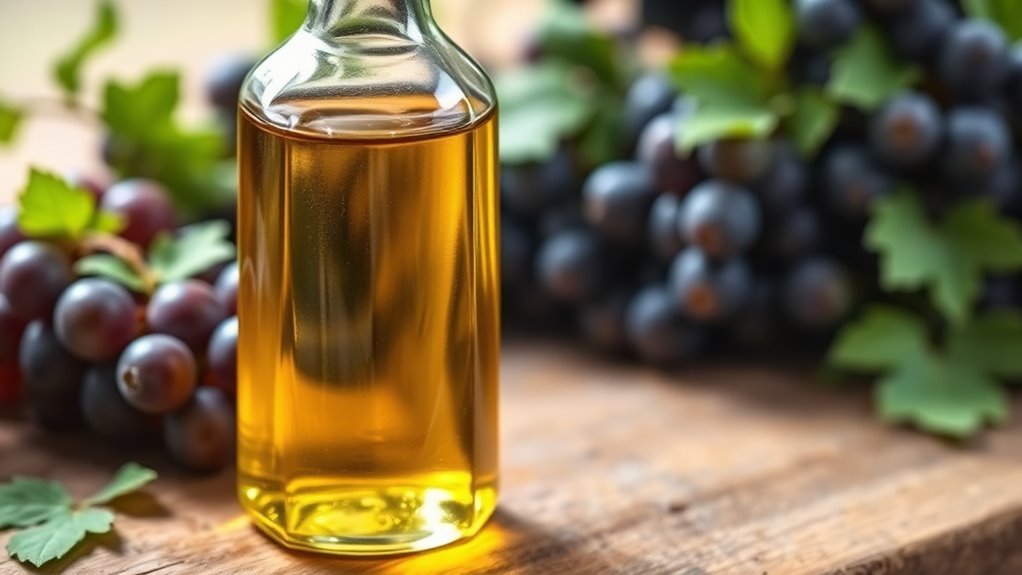
Grapeseed oil offers a lightweight yet effective way to seal moisture in low porosity hair, leaving it soft and manageable. Because your hair struggles to absorb moisture, sealing it is essential to prevent dryness and breakage.
Grapeseed oil’s thin consistency allows it to lock in hydration without weighing your strands down or causing buildup. When you apply it after moisturizing, it creates a protective barrier that keeps water locked inside your hair shaft.
Grapeseed oil locks in moisture without heaviness, creating a barrier that seals hydration within your hair strands.
Plus, its high linoleic acid content helps improve hair elasticity and smoothness, making your texture feel silky. You can use grapeseed oil as a final step in your routine or mix it with your leave-in conditioner for added softness.
Its non-greasy feel and fast absorption make it perfect for daily use on low porosity hair. Give it a try, and you might just find your hair feeling softer and more manageable every day.
Sweet Almond Oil for Nourishment and Strength
If you’re looking to add more nourishment and strength to your low porosity hair, sweet almond oil is a fantastic option. It’s lightweight, so it won’t weigh your hair down or leave it greasy.
Rich in vitamins A, E, and fatty acids, it helps repair damage and promote healthy growth. You’ll notice softer, shinier strands with regular use.
Here’s why sweet almond oil works well for you:
- Deeply nourishes without clogging pores or buildup.
- Strengthens hair strands to reduce breakage.
- Seals in moisture while allowing your hair to breathe.
- Improves scalp health, preventing dryness and flakiness.
Adding sweet almond oil into your routine will give your low porosity hair the boost it needs. It’s simple but effective, and your hair will thank you for it!
Marula Oil to Combat Dryness
You’ll love how marula oil locks in moisture without weighing your hair down, making it perfect for low porosity hair. Its lightweight absorption helps your strands stay hydrated and soft all day.
Plus, the antioxidants in marula oil protect your hair from damage while boosting shine. It’s like a little shield that keeps your hair healthy and glowing all day long.
Moisture Retention Benefits
Although low porosity hair tends to resist moisture absorption, using marula oil can help lock in hydration effectively. When you apply marula oil, it creates a protective barrier on your hair strands, preventing moisture from escaping. This is vital for maintaining softness and preventing dryness throughout the day.
Here’s how marula oil boosts moisture retention:
- Seals in water and moisturizing products you use.
- Strengthens the hair cuticle, reducing moisture loss.
- Provides antioxidants that protect hair from environmental damage.
- Nourishes with essential fatty acids that improve elasticity and hydration.
Lightweight Absorption Properties
Because low porosity hair tends to resist heavy products, marula oil’s lightweight absorption makes it an ideal choice to combat dryness without weighing your hair down. When you apply marula oil, it quickly penetrates the hair shaft rather than sitting on the surface, delivering moisture where it’s needed most.
This means your hair won’t feel greasy or heavy, which often happens with thicker oils. You’ll notice your strands feel softer and more manageable without buildup.
Plus, marula oil’s light texture guarantees it blends well with other products in your routine, enhancing overall hydration. If you want to keep your low porosity hair nourished and easy to style, marula oil’s absorption properties make it a smart, effective option for daily use.
Antioxidant Rich Composition
When you choose marula oil, you tap into its powerful antioxidant-rich composition that helps protect low porosity hair from environmental damage. This oil is packed with vitamins C and E, which fight free radicals and reduce oxidative stress on your hair strands.
Its antioxidants also work to lock in moisture, preventing dryness and brittleness common in low porosity hair. By nurturing your hair at the cellular level, marula oil supports strength and shine without weighing your hair down.
Here’s why marula oil’s antioxidants matter:
- Neutralizes free radicals that cause damage
- Strengthens hair cuticles against environmental stress
- Enhances moisture retention to combat dryness
- Promotes healthy, vibrant hair growth
Incorporating marula oil means you’re giving your hair a natural defense boost. It’s like giving your locks the care they truly deserve!
Baobab Oil for Scalp Health
If you want to soothe your scalp while promoting healthy hair growth, baobab oil is an excellent choice. It’s rich in vitamins A, D, E, and essential fatty acids, which nourish your scalp deeply. This helps reduce dryness and irritation.
Baobab oil has a lightweight texture, making it perfect for low porosity hair. It absorbs quickly without leaving a greasy residue, so your hair feels fresh and clean.
Lightweight baobab oil absorbs fast, leaving low porosity hair fresh without any greasy feel.
Applying it regularly can help balance your scalp’s moisture levels. This prevents flakiness and itchiness, which can be really annoying.
Plus, baobab oil has anti-inflammatory properties that calm redness or sensitivity you might experience. When you massage it into your scalp, you also stimulate circulation, which encourages healthier hair follicles.
Rosehip Oil to Promote Hair Growth
Although low porosity hair can be challenging to moisturize, rosehip oil penetrates deeply to support healthy hair growth. It’s rich in essential fatty acids and vitamins A and C, which nourish your scalp and strengthen hair follicles.
Using rosehip oil regularly can improve your hair’s texture and reduce breakage. It’s definitely worth adding to your routine!
Here’s why you should add rosehip oil to your routine:
- Deep Absorption: Its lightweight texture helps it soak into low porosity hair without leaving residue.
- Scalp Health: It soothes dryness and inflammation, creating a healthy environment for growth.
- Antioxidant Protection: Vitamins combat damage from free radicals, preserving hair integrity.
- Strengthening: Fatty acids reinforce hair strands, minimizing split ends and shedding.
Camellia Oil for Deep Conditioning
Since low porosity hair tends to resist moisture, camellia oil steps in as an excellent deep conditioning treatment that penetrates the hair shaft effectively.
You’ll find its lightweight texture won’t weigh your hair down, allowing nutrients to absorb deeply. Rich in oleic acid and antioxidants, camellia oil softens and strengthens your strands while enhancing shine.
Use it as a pre-shampoo treatment or mix a few drops into your conditioner for added hydration. It’s super easy to incorporate into your routine and gives your hair that extra boost it needs.
| Benefit | Key Component | How to Use |
|---|---|---|
| Deep Moisturizing | Oleic Acid | Apply before shampooing |
| Strengthening | Antioxidants | Mix with conditioner |
| Lightweight | Easily absorbed | Use on damp hair post-wash |
| Enhances Shine | Vitamins A & E | Massage into scalp and strands |
Kukui Nut Oil to Prevent Breakage
Just like camellia oil nourishes your hair from within, kukui nut oil offers a powerful defense against breakage. When you use kukui nut oil, you strengthen your strands while keeping them flexible and resilient.
It penetrates easily, sealing moisture without weighing your low porosity hair down. To make the most of kukui nut oil, remember these key benefits:
- Restores elasticity, reducing brittleness and split ends.
- Provides essential fatty acids that repair damage and reinforce hair structure.
- Acts as a natural barrier against environmental stressors like UV rays and pollution.
- Enhances shine and smoothness without causing buildup.
Incorporate kukui nut oil into your routine to protect your hair and maintain healthy, breakage-free locks. Give it a try and see the difference it makes!
Moringa Oil for Lightweight Hydration
When you want to hydrate your low porosity hair without heaviness, moringa oil provides an ideal solution. This lightweight oil absorbs quickly, delivering essential nutrients like vitamins A and C, antioxidants, and oleic acid directly to your strands.
It moisturizes without leaving a greasy residue, making it perfect for hair that struggles to absorb heavier oils. You can apply moringa oil as a daily leave-in treatment or mix it with your favorite conditioner for an added boost.
Its ability to strengthen hair and improve elasticity helps reduce breakage and split ends. Plus, moringa oil promotes scalp health, encouraging hair growth.
Strengthens hair, improves elasticity, reduces breakage and split ends, while promoting scalp health and encouraging growth.
If you’re after lightweight hydration that nourishes and protects, moringa oil is a smart choice to keep your low porosity hair soft and manageable.
Frequently Asked Questions
How Do I Test if an Oil Suits My Low Porosity Hair?
You can test if an oil suits your low porosity hair by applying a small amount to a section. Then, wait 24 hours to see if it absorbs well or leaves buildup.
If your hair feels greasy or heavy, it might not be the best choice. But if it feels soft and hydrated, you’re probably good to go. Just adjust based on how your hair feels!
Can I Mix These Oils for Better Results?
Yes, you can mix oils for better results. Just start with small amounts to see how your hair reacts.
Combining lighter oils with heavier ones helps balance moisture and seal in hydration effectively. Give it a try and see what works best for you!
How Often Should I Apply Hair Oil to Low Porosity Hair?
You don’t want to overdo it or leave your hair dry. Apply hair oil to low porosity hair once or twice a week, letting it absorb well to avoid buildup and keep your strands healthy and shiny.
Just remember, a little goes a long way. If you notice your hair feels greasy, cut back a bit. Keeping a balance is key to maintaining that natural glow!
Are These Oils Safe for Color-Treated Low Porosity Hair?
Yes, these oils are safe for color-treated low porosity hair. They nourish your strands without stripping away the color, which helps keep that vibrancy and moisture locked in.
Just make sure to do a patch test first. Also, try to avoid oils that cause heavy buildup so your color stays fresh and healthy.
What’s the Best Method to Apply Oil for Maximum Absorption?
You should warm the oil slightly, apply it to damp hair, and gently massage your scalp. This opens up your cuticles, helping the oil absorb better.
Leave it in for at least 30 minutes before washing. Trust me, giving it that time really makes a difference!
Conclusion
Choosing the right oil can transform your low porosity hair routine. Imagine Sarah, who struggled with dry, weighed-down strands until she started using jojoba oil. Its lightweight moisture revealed her hair’s natural shine without buildup.
Whether you pick argan for shine or moringa for hydration, the key is consistency. With the right oil, your hair will feel softer, stronger, and more manageable—just like Sarah’s did in a few weeks.
Finding the best hair oils for low porosity hair in 2027 means looking for lightweight, nourishing options that won’t weigh your strands down. Oils like jojoba, argan, and moringa are excellent choices that penetrate well and boost moisture retention. Stick with your favorite, apply regularly, and watch your hair transform with improved softness, shine, and strength. Consistency is really what makes all the difference when caring for low porosity hair.