7 Best Dry Scalp Remedies You Should Try
You can soothe your dry scalp naturally with a few easy remedies.
Dry scalp remedies like massaging warm coconut oil help lock in moisture and keep your scalp feeling nourished.
Aloe vera gel is another great option—it calms itchiness and reduces redness effectively.
Using a gentle tea tree oil shampoo a few times a week can also reduce dryness and fight irritation.
Plus, rinsing with diluted apple cider vinegar helps balance your scalp’s pH, which is super important for scalp health.
Don’t forget to treat your scalp with moisturizing masks regularly.
Avoid harsh hair products that can strip away natural oils.
Also, consider using a humidifier indoors to keep your scalp hydrated, especially in dry weather.
Try out these simple tips and enjoy healthier, happier hair in no time!
Key Takeaways
– Use coconut oil as a deep moisturizer by massaging it into the scalp and leaving it on for 30 minutes or overnight.
It really helps to nourish dry skin and adds a nice shine too.
– Apply aloe vera gel directly to soothe irritation and restore the scalp’s natural pH, leaving it on for 20-30 minutes.
Aloe vera is super calming and can reduce that itchy feeling.
– Incorporate tea tree oil shampoo 2-3 times weekly to reduce itchiness and fight scalp infections.
Tea tree oil has natural antifungal properties, which is great for scalp health.
– Rinse hair with diluted apple cider vinegar after shampooing to balance scalp pH and reduce dryness.
This simple trick can make a big difference in how your scalp feels.
– Avoid harsh hair products with sulfates and alcohol, and consider using a humidifier to maintain scalp hydration.
Keeping moisture in is key, especially in dry environments.
Coconut Oil Treatment
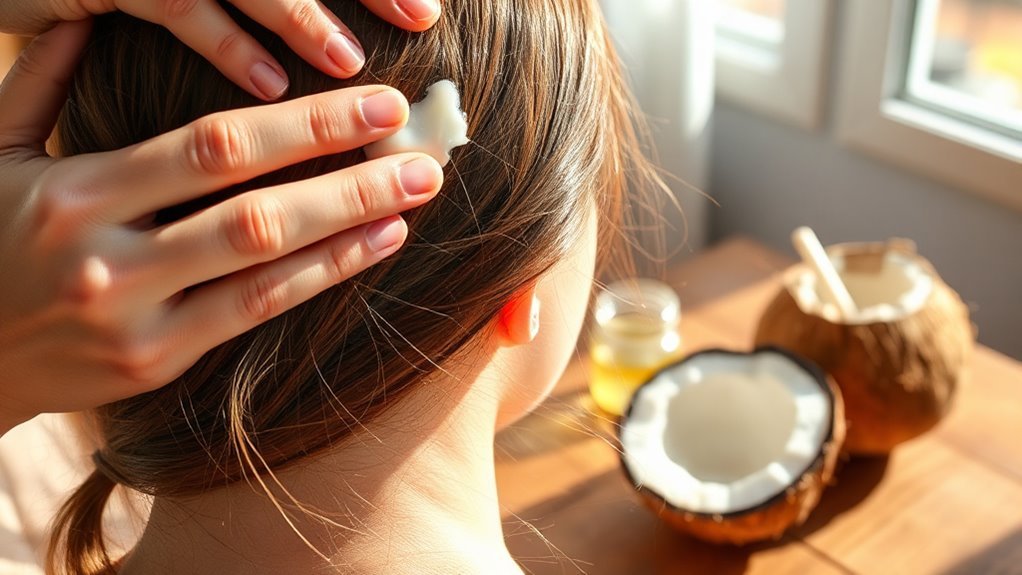
Coconut oil works wonders for dry scalp by moisturizing and soothing irritation. When you apply it, the oil penetrates deep into your scalp, locking in moisture and reducing flakiness.
To get started, warm a small amount of coconut oil until it’s liquid, then gently massage it into your scalp using your fingertips. This boosts blood circulation, which helps promote healthier skin.
Leave the oil on for at least 30 minutes or overnight for maximum hydration. Afterward, wash your hair with a mild shampoo to remove excess oil.
Regular use can help calm itchiness and prevent dryness, making your scalp feel more comfortable and balanced. Just be sure not to overdo it, as too much oil can weigh your hair down.
Aloe Vera Gel Application

Although dry scalp can be stubborn, applying aloe vera gel provides quick relief by soothing irritation and moisturizing your skin. You’ll find its natural anti-inflammatory properties calm redness and itchiness effectively.
To use, extract fresh aloe vera gel or grab a pure store-bought option. Apply it directly onto your scalp, focusing on dry or flaky areas. Gently massage it in to boost blood circulation and help absorption.
Extract fresh or use pure aloe vera gel, apply to dry areas, and gently massage for better absorption.
Leave the gel on for 20 to 30 minutes before rinsing with lukewarm water. Repeat this treatment two to three times a week for best results.
Aloe vera also helps restore your scalp’s natural pH balance, preventing further dryness. This simple, natural remedy can quickly revive your scalp’s health and comfort.
Tea Tree Oil Shampoo

You’ll find tea tree oil shampoo great for soothing dryness and reducing itchiness on your scalp. When using it, apply gently and rinse thoroughly to avoid irritation.
Just remember to test a small patch first, since some people can be sensitive to its strong natural oils. It’s always better to be safe, right? Give it a try and see how your scalp feels!
Benefits of Tea Tree
When your scalp feels dry and itchy, tea tree oil shampoo can offer quick relief by targeting the root causes. It naturally soothes irritation, reduces dandruff, and fights bacteria and fungi that worsen dryness.
Using this shampoo regularly helps restore your scalp’s balance and keeps it healthy. It’s a simple step that can make a big difference.
| Benefit | Effect | Why It Matters |
|---|---|---|
| Antimicrobial | Kills bacteria & fungus | Prevents infections |
| Anti-inflammatory | Reduces redness and itching | Soothes discomfort |
| Moisturizing | Helps retain scalp moisture | Stops dryness |
| Cleansing | Removes buildup and flakes | Keeps scalp fresh and clean |
Tea tree oil’s powerful properties make it an effective choice to maintain your scalp’s health and comfort. Give it a try and see how it can help you feel better.
How to Use
Start by wetting your hair thoroughly, then apply a small amount of tea tree oil shampoo directly to your scalp. Gently massage the shampoo with your fingertips to stimulate blood flow and loosen dry flakes.
Let it sit for a couple of minutes to allow the natural antifungal properties to work. Rinse thoroughly with lukewarm water to avoid drying out your scalp.
- Use 2-3 times a week for best results
- Focus on the scalp, not just hair strands
- Avoid using hot water during rinsing
- Follow with a gentle conditioner if needed
This routine helps keep your scalp hydrated and healthy, reducing dryness and itchiness effectively. Give it a try and see how your scalp feels!
Precautions and Tips
Although tea tree oil shampoo offers many benefits, it’s important to use it carefully to avoid irritation or allergic reactions. Always perform a patch test before applying it to your scalp.
Just apply a small amount to your inner forearm and wait 24 hours to see if any redness or itching occurs. If you notice irritation, it’s best to avoid using the shampoo.
Use the shampoo sparingly—too much can dry out your scalp further. Try to limit use to two or three times a week.
Also, be careful to avoid contact with your eyes. If it happens accidentally, make sure to rinse thoroughly.
If you have sensitive skin or existing scalp conditions, it’s a good idea to consult your dermatologist before starting tea tree oil shampoo.
Following these precautions will help you enjoy its benefits safely and effectively.
Apple Cider Vinegar Rinse
Apple cider vinegar rinse offers a natural way to balance your scalp’s pH and reduce dryness. By restoring this balance, it helps prevent flakiness and soothes irritation.
To try it, dilute 2-4 tablespoons of apple cider vinegar with a cup of water, then apply after shampooing. Let it sit for a few minutes before rinsing thoroughly.
Keep these tips in mind: use diluted vinegar to avoid scalp irritation. Apply once or twice a week for best results.
Also, perform a patch test to check for sensitivity and avoid contact with eyes to prevent stinging.
This simple rinse can refresh your scalp, reduce dryness, and promote healthier skin without harsh chemicals. Just remember to be consistent and gentle for noticeable improvements.
Moisturizing Scalp Masks
You’ll find moisturizing scalp masks can soothe dryness and boost hydration quickly. Look for natural ingredients like aloe vera, coconut oil, and honey to nourish your scalp deeply.
Apply the mask evenly and leave it on for at least 15 minutes to get the best results. It’s a simple step that can make a big difference!
Benefits of Hydrating Masks
When your scalp feels dry and itchy, hydrating masks can provide immediate relief by deeply moisturizing and soothing the skin. These masks penetrate hard-to-reach areas, restoring moisture balance and reducing flakiness.
Using them regularly helps improve scalp health and prevents further dryness. It’s a simple step that can make a big difference.
Here’s why hydrating masks are worth trying:
- Deliver intense hydration to dry, flaky patches
- Soothe irritation and reduce itchiness quickly
- Strengthen the scalp’s natural barrier to lock in moisture
- Promote healthier hair growth by improving scalp condition
Give them a go—you might just find your scalp feels happier and healthier in no time!
Popular Natural Ingredients
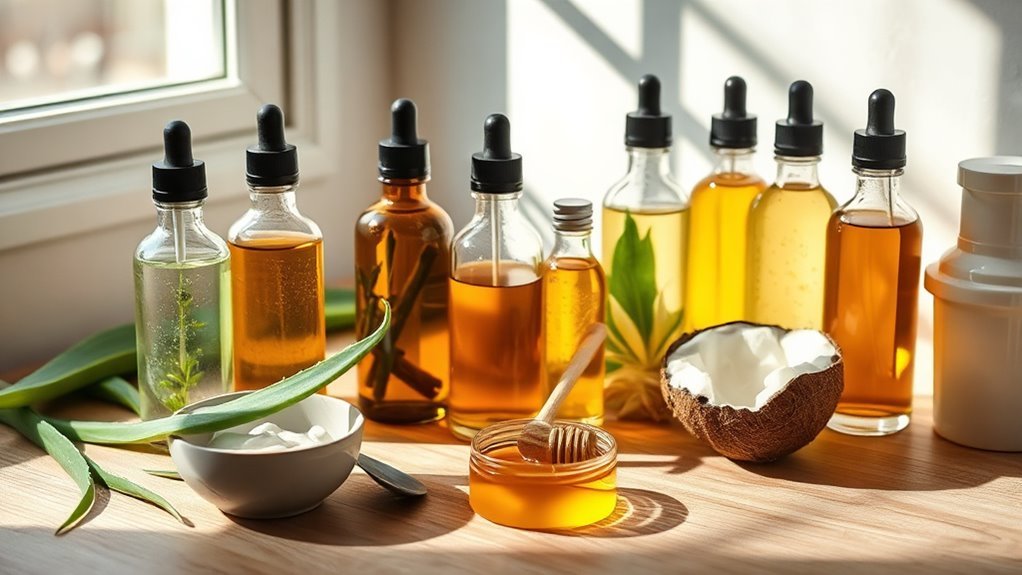
Several natural ingredients stand out for their ability to deeply moisturize and soothe dry scalps. You’ll find aloe vera gel exceptional for its calming and hydrating properties, perfect for reducing itchiness.
Coconut oil penetrates the scalp, locking in moisture while fighting dryness. Honey acts as a natural humectant, attracting moisture and softening flaky skin.
Shea butter offers rich nourishment, sealing in hydration without clogging pores. Jojoba oil closely mimics your scalp’s natural oils, balancing moisture levels effectively.
When combined, these ingredients create powerful moisturizing scalp masks that restore comfort and liveliness. By incorporating them into your routine, you can tackle dryness naturally, promoting a healthier scalp environment and preventing further irritation.
These natural remedies offer gentle yet effective relief you can trust. Give them a try and see how your scalp feels refreshed and nourished!
Application Tips for Effectiveness
Although moisturizing scalp masks can work wonders, applying them correctly is key to maximizing their benefits. To get the most out of your treatment, focus on how you apply and care for your scalp afterward.
Start with a clean scalp; this helps the mask penetrate better. Use your fingertips to gently massage the mask into your scalp, ensuring even coverage. Avoid using nails to prevent irritation.
After application, cover your head with a warm towel or shower cap to trap heat and boost absorption. Finally, rinse with lukewarm water to avoid stripping moisture.
- Apply on a freshly washed scalp
- Use gentle fingertip massage for even distribution
- Cover with a warm towel or shower cap
- Rinse with lukewarm water to preserve moisture
Follow these tips for softer, healthier skin.
Avoiding Harsh Hair Products
Since harsh hair products can strip your scalp of natural oils, you’ll want to steer clear of those containing sulfates, alcohols, and synthetic fragrances. These ingredients often dry out your scalp, causing irritation and flakiness.
Instead, opt for gentle, moisturizing shampoos and conditioners labeled as sulfate-free or designed for sensitive skin. Check ingredient lists carefully to avoid hidden irritants.
You should also limit the use of styling products with alcohol, which can worsen dryness. When trying new products, test them on a small scalp area first to verify they don’t trigger irritation.
Using Humidifiers for Scalp Hydration
When the air in your home gets dry, it can sap moisture from your scalp, leading to itchiness and flakiness. Using a humidifier helps restore that lost hydration, making your scalp less prone to dryness.
Here’s why you should consider adding one to your space:
- Adds moisture to the air, preventing scalp dryness
- Reduces static electricity that can irritate your scalp
- Improves overall skin hydration, including your scalp
- Creates a more comfortable environment, especially in winter
Try placing a humidifier in your bedroom or living area, and make sure to keep it clean to avoid bacteria buildup. Using it consistently can make a noticeable difference, easing dryness and soothing irritation.
It’s a simple, effective step toward healthier, hydrated hair and scalp. Give it a shot—you might be surprised how much better your scalp feels!
Frequently Asked Questions
Can Diet Affect Dry Scalp Conditions?
Absolutely, your diet can impact dry scalp. You might not expect it, but lacking essential fatty acids and vitamins can worsen dryness.
How Often Should I Wash My Hair With Dry Scalp?
You should wash your hair about two to three times a week if you have a dry scalp. Over-washing can strip natural oils, so use a gentle, moisturizing shampoo to keep your scalp balanced and healthy.
It’s all about finding the right balance for your scalp. Too much washing can actually make dryness worse, so stick to those few times a week and keep your hair care routine gentle.
Are There Medical Treatments for Severe Dry Scalp?
Wondering if severe dry scalp needs medical help? Yes, it often does!
You can get prescription shampoos or topical steroids from a doctor. Don’t hesitate—treating it early prevents discomfort and worsening symptoms.
Can Stress Worsen Dry Scalp Symptoms?
Yes, stress can definitely worsen your dry scalp symptoms by triggering inflammation and disrupting your skin’s natural balance.
Managing stress through relaxation techniques can help improve your scalp health and reduce irritation over time. It’s all about giving your body a chance to heal and stay balanced.
Is Dry Scalp Contagious or Linked to Dandruff?
No, dry scalp isn’t contagious, but it can be linked to dandruff since both involve flaking and irritation.
You should treat each condition differently and avoid sharing personal items to keep your scalp healthy and infection-free.
Conclusion
Think of your scalp as a thirsty garden craving rain. Just like plants need gentle care, your scalp thrives with nourishing remedies like coconut oil, aloe vera, and tea tree shampoo.
Avoid harsh products that dry it out, and use humidifiers to keep the air just right. These simple steps make a huge difference.
With these easy remedies, you’ll help your scalp bloom healthily, turning dryness into vibrant, lasting moisture. Your scalp’s well-being is truly in your hands—tend it wisely, and enjoy the benefits of a refreshed, comfortable dry scalp remedy routine.