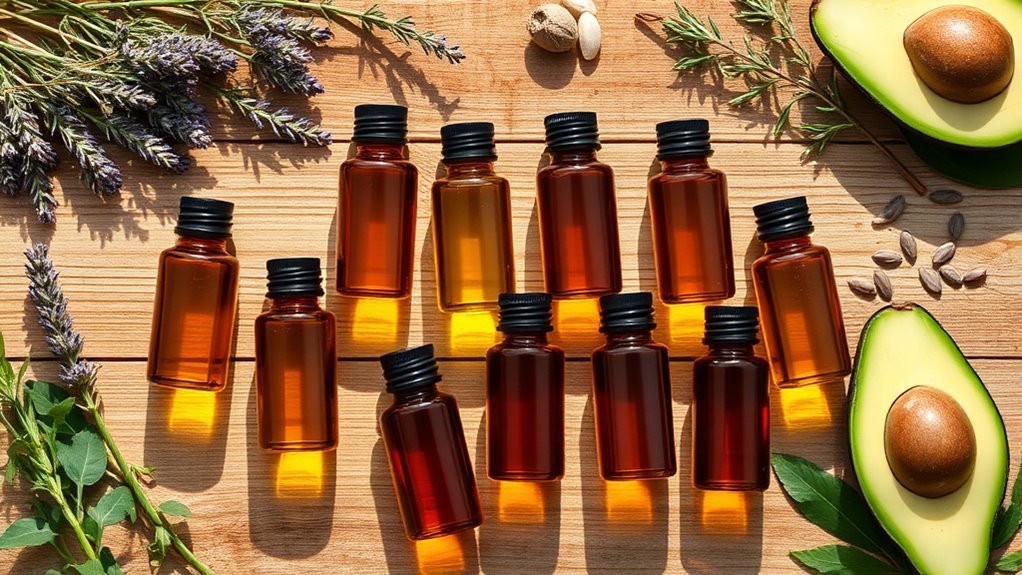
Top 10 Best Oils for Natural Hair in 2027
For natural hair in 2027, you’ll want oils that truly nourish, strengthen, and protect your strands. Choosing the best oils for natural hair helps keep your curls, coils, and waves healthy and manageable.
These oils lock in moisture, reduce frizz, and promote growth—all key for vibrant, resilient hair.
Argan and jojoba oils lock in moisture while taming frizz, making your hair feel soft and smooth. Coconut and castor oils boost growth and reduce breakage, so your hair stays strong and thick.
Avocado nourishes deeply, giving your strands the nutrients they crave. Grapeseed oil seals hydration without weighing your hair down, keeping it light and bouncy.
Then there’s marula, baobab, and moringa oils, packed with antioxidants and vitamins. They restore softness and resilience, helping your hair bounce back from damage.
Try these oils to keep your natural hair healthy, shiny, and full of life with consistent care. It’s all about giving your hair the love it deserves!
Key Takeaways
– Argan oil nourishes, tames frizz, and strengthens hair with lightweight, fast-absorbing fatty acids.
It’s great for adding shine without weighing your hair down.
– Jojoba oil balances scalp oil, deeply hydrates, and promotes faster, stronger hair growth.
Plus, it mimics your scalp’s natural oils, making it super gentle and effective.
– Coconut oil penetrates hair shafts to reduce protein loss and prevent damage and breakage.
It’s like a deep conditioner that works from the inside out, keeping your strands healthy.
– Marula oil provides antioxidant-rich moisture restoration and protects hair from environmental damage.
It’s perfect for shielding your hair from pollution and harsh weather.
– Castor oil boosts hair growth, thickens strands, and soothes dry, itchy scalps with antifungal benefits.
If you’re dealing with scalp irritation, this oil can really help calm things down.
Argan Oil

Argan oil offers a powerful boost for your natural hair, packed with vitamins and antioxidants that nourish and protect. When you apply it, you’ll notice your hair feels softer and looks shinier without feeling greasy.
Argan oil nourishes and protects natural hair, leaving it softer and shinier without any greasy residue.
It’s especially great for taming frizz and preventing split ends, giving your hair a smoother, healthier appearance. You can use argan oil as a leave-in treatment or mix a few drops into your conditioner for added moisture.
Its lightweight formula absorbs quickly, making it ideal for all hair types, including fine strands. Plus, the natural fatty acids in argan oil help strengthen your hair, reducing breakage and promoting growth.
Incorporate argan oil into your routine, and your natural hair will thank you with improved texture and resilience. Give it a try—you might just love the way your hair feels!
Jojoba Oil

You’ll love jojoba oil for its ability to lock in moisture without weighing your hair down.
It also keeps your scalp healthy by balancing oil production and soothing irritation.
Plus, using it regularly can encourage stronger, faster hair growth.
Moisturizing Properties
When caring for natural hair, jojoba oil stands out for its exceptional moisturizing properties. It closely mimics your hair’s natural sebum, allowing it to deeply penetrate and hydrate without leaving a greasy residue.
You’ll notice your strands feeling softer, smoother, and less prone to breakage. Using jojoba oil regularly helps lock in moisture, making your hair more manageable and shiny.
- Enjoy the confidence that comes with hydrated, healthy-looking hair every day.
- Experience relief from dryness and the frustration of brittle strands.
- Reconnect with your hair’s natural beauty through gentle, lasting moisture.
Jojoba oil’s unique ability to moisturize without weighing your hair down makes it a must-have for anyone wanting vibrant, nourished natural hair.
Give it a try and see the difference for yourself!
Scalp Health Benefits
Jojoba oil offers multiple benefits for your scalp, making it an essential part of your natural hair care routine. It closely mimics your scalp’s natural sebum, helping to regulate oil production without clogging pores.
This balance prevents dryness and flakiness, reducing dandruff and irritation. When you massage jojoba oil into your scalp, it soothes inflammation and calms itchiness.
That promotes a healthier environment for your hair. Plus, its anti-bacterial and anti-fungal properties protect your scalp from infections that can cause discomfort or hair issues.
Hair Growth Support
Maintaining a healthy scalp sets the stage for ideal hair growth, and jojoba oil plays a key role in this process. When you apply jojoba oil, it mimics your scalp’s natural oils, deeply moisturizing without clogging pores.
This balance reduces dryness and flakiness, creating an environment where hair follicles can thrive. You’ll notice your hair feels stronger and begins to grow more consistently. Pretty great, right?
Jojoba oil supports hair growth by:
- Nourishing hair follicles with essential vitamins and minerals
- Reducing scalp inflammation that can hinder growth
- Strengthening hair strands to prevent breakage and promote length retention
Coconut Oil
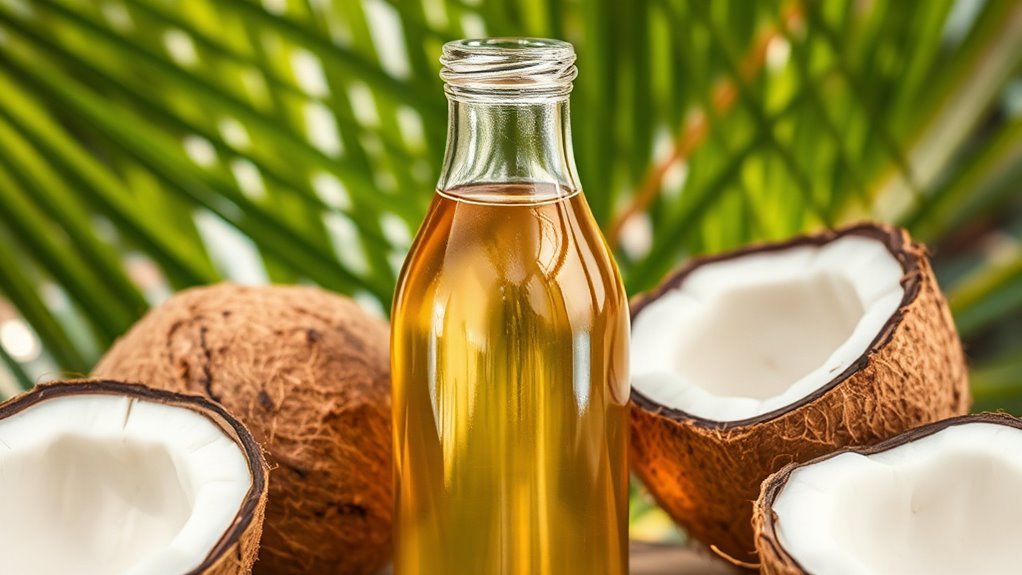
Few oils penetrate natural hair as deeply as coconut oil, making it a favorite for nourishing and strengthening your strands. When you apply coconut oil, it seeps into the hair shaft, reducing protein loss and preventing damage.
This makes your hair less prone to breakage and split ends. Plus, coconut oil adds a natural shine without weighing your hair down.
You can use it as a pre-wash treatment or a daily moisturizer to keep your curls soft and manageable. Just remember, a little goes a long way—too much can leave your hair greasy.
Castor Oil
While coconut oil works wonders for moisture and shine, castor oil offers unique benefits that can boost your hair’s growth and thickness. You’ll find its rich, thick texture nourishing your scalp deeply, promoting healthier follicles and reducing hair breakage.
Castor oil’s natural antifungal and antibacterial properties help keep your scalp clean, preventing dandruff and irritation. When you incorporate castor oil into your routine, you’re not just moisturizing; you’re strengthening and stimulating new growth.
Feel the transformation as your hair becomes fuller and more resilient. Enjoy the confidence that comes with thicker, healthier strands.
Experience the soothing relief on a dry, itchy scalp that you’ve been craving. Castor oil is a powerful ally in your natural hair journey, giving you visible results.
Avocado Oil
Because avocado oil penetrates deeply into the hair shaft, it delivers intense hydration and nourishment where your strands need it most. You’ll notice your hair feels softer and looks shinier after just a few uses.
It’s rich in vitamins A, D, E, and fatty acids, which support scalp health while strengthening your hair to reduce breakage. Plus, it’s lightweight enough not to weigh your hair down, making it perfect for all hair types, especially dry or brittle textures.
You can apply it as a pre-shampoo treatment, a leave-in moisturizer, or even mix it into your conditioner for an extra boost. Using avocado oil regularly helps maintain moisture balance and promotes healthier, more resilient hair growth without leaving a greasy residue.
Sweet Almond Oil
Sweet almond oil is packed with vitamins A, E, and fatty acids that nourish your hair deeply. You’ll find it excellent for locking in moisture and softening dry strands.
To get the best results, try applying it as a pre-shampoo treatment or a lightweight daily moisturizer. It’s super easy to use and can make a real difference!
Nutrient Profile Benefits
When you incorporate almond oil into your hair care routine, you tap into a rich source of vitamins and fatty acids that nourish your scalp and strands. This oil is packed with Vitamin E, a powerful antioxidant that helps protect your hair from damage and promotes healthy growth.
It also contains magnesium, which can reduce hair breakage and improve overall hair strength. Plus, the presence of omega-9 fatty acids helps maintain the health of your hair follicles. You’ll notice your hair feels stronger and looks shinier with consistent use.
- Vitamin E soothes and protects your scalp from environmental stressors
- Magnesium fortifies hair, reducing breakage and loss
- Omega-9 fatty acids support resilient, vibrant hair from root to tip
Moisturizing Properties
One key reason almond oil is a favorite among natural hair enthusiasts is its exceptional moisturizing properties. When you apply almond oil, it penetrates deeply into the hair shaft, locking in moisture without leaving your hair greasy or weighed down.
This oil helps combat dryness and brittleness, common challenges for natural hair, especially in harsh climates or after heat styling. Because almond oil contains emollient qualities, it smooths your hair cuticles, reducing frizz and enhancing shine.
You’ll notice your strands feel softer and more manageable after regular use. Plus, almond oil’s lightweight nature makes it suitable for all hair types, letting you maintain hydration without clogging pores or causing buildup.
It’s an easy, effective way to keep your natural hair moisturized and healthy.
Best Application Methods
To get the most out of almond oil’s moisturizing benefits, you’ll want to apply it correctly. Start with clean, damp hair to help the oil lock in moisture.
Warm a small amount between your palms to activate its nourishing properties before you massage it gently into your scalp and hair strands. This guarantees better absorption and promotes healthy growth.
Try these methods to experience almond oil’s full potential:
- Apply as a pre-shampoo treatment to deeply condition and protect your hair.
- Use it as a lightweight leave-in serum for added shine and frizz control.
- Mix with your favorite conditioner to boost hydration and softness.
Grapeseed Oil
Although it might not be as popular as coconut or argan oil, grapeseed oil offers excellent benefits for your natural hair. It’s lightweight, so it won’t weigh your hair down or leave it greasy.
Grapeseed oil is rich in antioxidants and vitamin E, which help protect your hair from environmental damage while promoting healthy growth. If you struggle with dryness or brittle strands, this oil provides excellent moisture without clogging your pores.
You can use it as a sealant after applying water or leave-in conditioner to lock in hydration. Plus, its non-greasy texture makes it ideal for daily use, even on fine or thin natural hair.
Grapeseed oil’s versatility makes it a smart choice for keeping your natural hair soft, shiny, and manageable. It’s definitely worth giving it a try!
Marula Oil
When you want a deeply nourishing oil that absorbs quickly, marula oil is an excellent choice for your natural hair. It’s packed with antioxidants and essential fatty acids that restore moisture without leaving a greasy residue.
You’ll notice your curls feeling softer, stronger, and more manageable after just a few uses. Marula oil also protects your hair from environmental damage, making it perfect for daily use.
Feel the instant hydration as your hair drinks in the oil without heaviness. Experience renewed shine and energy that makes your natural texture pop.
Enjoy the calming scent and soothing effect that turns your hair care routine into a moment of self-love.
Marula oil truly transforms your natural hair care game.
Baobab Oil
You’ll love baobab oil for its rich blend of vitamins and antioxidants that boost your hair’s health. It strengthens strands and helps reduce breakage, making your hair more resilient.
To get the best results, apply it evenly to damp hair and focus on your ends for deep nourishment. Trust me, your hair will thank you!
Nutrient Profile Benefits
Baobab oil contains four key nutrients that make it exceptional for natural hair care: vitamins A, D, E, and F. These vitamins work together to nourish your scalp and hair strands deeply.
Vitamin A helps maintain a healthy scalp environment, promoting vibrant hair growth. Vitamin D supports hair follicle cycling, keeping your natural hair in its best condition.
Vitamin E acts as a powerful antioxidant, protecting your hair from damage caused by environmental stressors. And vitamin F, rich in essential fatty acids, restores moisture and elasticity, leaving your hair soft and manageable.
When you use baobab oil, you can experience a soothing scalp that feels refreshed and balanced. Plus, your hair shines with natural energy and softness.
You’ll also gain confidence in your hair’s natural resilience and health. It’s pretty amazing what these nutrients can do!
Hair Strengthening Effects
A key advantage of using baobab oil is its ability to strengthen your hair from root to tip. Packed with vitamins A, D, E, and F, it nourishes your scalp and hair follicles, encouraging healthier growth and reducing breakage.
The oil’s fatty acids penetrate deeply, reinforcing the hair shaft and making strands more resilient against damage from styling and environmental stressors. When you regularly incorporate baobab oil into your routine, you’ll notice your hair becoming less prone to split ends and snapping.
Its lightweight texture won’t weigh your hair down, allowing you to enjoy stronger, shinier locks without greasiness. By supporting your hair’s natural structure, baobab oil helps maintain long-term strength and health, keeping your natural hair looking its best.
Application Tips
To get the most out of baobab oil’s strengthening benefits, knowing how to apply it correctly is key. Start with clean, damp hair to help the oil absorb better. Use just a few drops to avoid weighing down your strands.
Warm the oil in your palms before massaging it into your scalp and through the ends of your hair to stimulate growth and lock in moisture.
Remember these tips to make your hair feel amazing:
- Feel the soothing massage as baobab oil nourishes your scalp and revives tired follicles.
- Experience the light, non-greasy touch that leaves your hair soft, not heavy.
- Enjoy the natural shine and bounce that comes from deep hydration.
Apply consistently, and you’ll see stronger, healthier hair in no time.
Moringa Oil
Moringa oil offers a powerful boost for natural hair care with its rich blend of antioxidants and vitamins. When you apply it, you’ll notice how easily it absorbs without leaving a greasy residue.
It deeply nourishes your scalp, promoting healthier hair growth and reducing dryness. You can use moringa oil as a pre-shampoo treatment or mix a few drops into your conditioner for added moisture.
Its anti-inflammatory properties help soothe irritation and strengthen your hair strands, minimizing breakage. If your hair feels dull or brittle, moringa oil restores shine and softness.
Incorporate it into your routine regularly, and you’ll see improved manageability and overall hair health. Just remember, a little goes a long way with this potent, lightweight oil.
Frequently Asked Questions
How Often Should I Switch Oils for Best Hair Results?
You should switch oils every 4 to 6 weeks to prevent buildup and keep your hair nourished. This helps you identify what works best and guarantees your hair stays healthy and moisturized consistently.
Switching it up also keeps things interesting for your hair. Plus, it makes sure you’re not overloading your strands with one type of oil. Just think of it as giving your hair a little variety and extra care!
Can These Oils Be Mixed for Enhanced Benefits?
Absolutely, you can mix oils for enhanced benefits! Combining them reveals unique nutrient blends tailored to your hair’s needs.
Just start with small amounts, observe how your hair reacts, and adjust your blend accordingly for best results. It’s all about finding what works best for you!
Are These Oils Safe for Sensitive Scalps?
Yes, these oils are generally safe for sensitive scalps, but you should always do a patch test first. If irritation occurs, stop using them.
You can mix oils, but choose gentle, soothing varieties for your scalp. That way, you’re less likely to cause any discomfort.
Do These Oils Work on Chemically Treated Hair?
Yes, these oils work on chemically treated hair by restoring moisture and reducing damage. You’ll notice improved shine and softness.
But hey, always do a patch test first to avoid irritation or any adverse reactions on those fragile strands. Better safe than sorry!
What Is the Best Way to Store Natural Hair Oils?
Did you know 85% of oils lose potency when exposed to light? To store your natural hair oils best, keep them in a cool, dark place with airtight lids.
This helps preserve their nutrients and extends their shelf life. Trust me, a little extra care goes a long way!
Conclusion
You might think choosing the right oil is just about hair care, but it’s more than that—it’s about connecting with nature’s gifts in unexpected ways. Just as these oils nourish your strands, they also remind you that beauty and health often come from the simplest, most natural sources.
So, as you pick your favorite from this list, remember: the best oil for your hair might just be the one that aligns with your unique journey, both inside and out. Whether it’s jojoba, argan, or castor oil, each brings its own magic to your natural hair routine.
Embrace the power of these top oils for natural hair in 2027. They don’t just moisturize or strengthen—they help you celebrate your hair’s natural beauty and health every day.