How Many Amps Does a Hair Dryer Pull?
You’ll find most hair dryers pull between 6 and 12 amps, depending on their size and power. This amp range is pretty common in household hair dryers. Standard models usually draw about 10 amps, while smaller travel dryers use closer to 6 amps.
Higher-performance dryers may reach 12 amps, offering stronger airflow and faster drying. Knowing your dryer’s amp draw helps prevent overloading circuits and tripped breakers. It’s a simple but important detail for keeping your home safe.
Keep this in mind, and you can explore how different factors affect amp use and safety for your home. Understanding these details makes it easier to choose the right hair dryer for your needs without risking electrical issues.
Key Takeaways
- Most hair dryers typically draw between 6 and 12 amps depending on the model and power settings.
- Standard hair dryers usually operate around 10 amps, with power ranging from 1000 to 1875 watts.
- Low-amp hair dryers (around 6 amps) consume less electricity but dry hair more slowly and with gentler heat.
- High-amp professional dryers can reach up to 12 amps, delivering stronger airflow and faster drying times.
- Knowing the amp draw helps prevent overloading circuits and electrical hazards during use.
- It’s a simple way to keep things safe while getting your hair done!
Typical Amperage of Hair Dryers
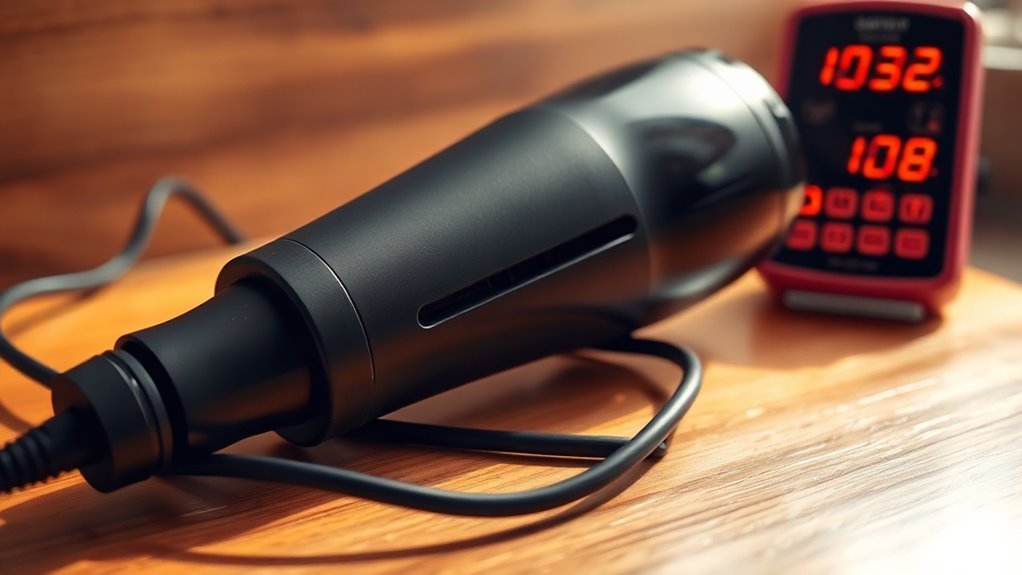
Typically, hair dryers draw between 6 and 12 amps of current, depending on their power settings and design. When you use a standard hair dryer, you’ll notice that most models operate around 10 amps, which corresponds to a power range of roughly 1000 to 1875 watts.
Hair dryers typically draw 6 to 12 amps, with standard models around 10 amps for 1000-1875 watts.
Lower wattage models, like travel-sized hair dryers, often pull closer to 6 amps. These are great for lighter use or smaller outlets.
On the other hand, professional or high-performance dryers can reach up to 12 amps, offering faster drying times but requiring more electrical capacity.
Understanding this range helps you make sure your outlet can handle the load safely. That way, you can avoid tripped breakers or electrical hazards during use.
Key Factors That Influence Hair Dryer Amps and Power Use

Several factors directly impact how many amps your hair dryer uses and its overall power consumption. First, the wattage rating plays a major role—higher wattage means more power drawn, increasing amps.
The heat settings you choose also affect current; using higher heat requires more energy, boosting amp draw. Motor speed influences power use too, since faster airflow demands more electrical power.
Additionally, the design and efficiency of the heating element matter—modern, energy-efficient models often pull fewer amps than older ones with less efficient components.
Finally, voltage variations in your home can alter amps slightly, though most dryers are built to handle standard voltages. Understanding these factors helps you grasp why amp draw can vary between different hair dryers and settings.
How to Safely Check Your Hair Dryer’s Amps
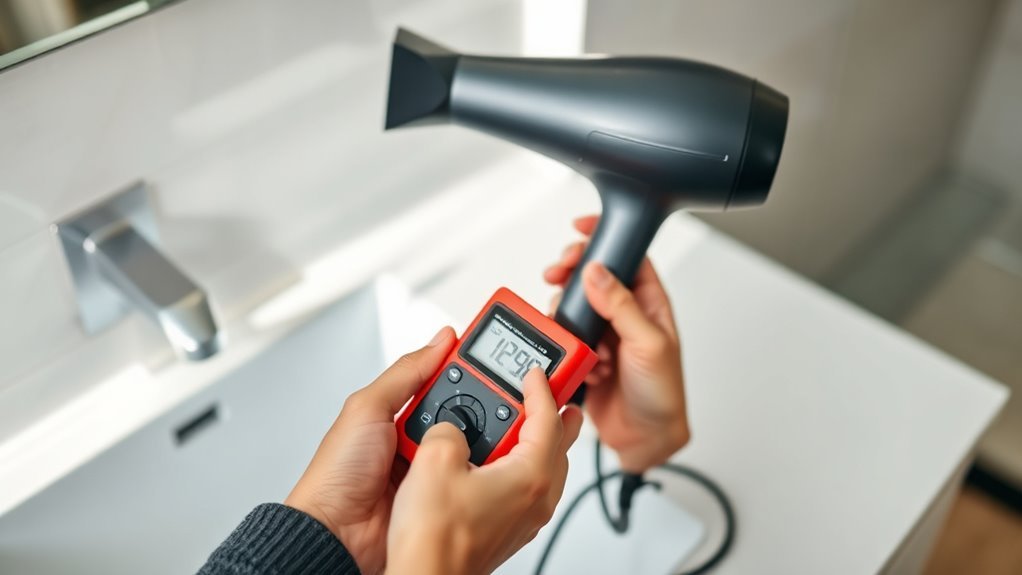
To safely check your hair dryer’s amps, start by locating the label on the device for its electrical information. This label usually has important details like voltage and current ratings.
Next, you can use a clamp meter to measure the current without unplugging the hair dryer. It’s a handy tool that lets you check the amps flowing through the cord safely.
Just remember to always follow safety precautions to avoid any electrical hazards while performing the check. It’s better to be cautious than sorry when dealing with electricity!
Locate Hair Dryer Label
Start by flipping your hair dryer over and looking for its label or sticker, usually found on the handle or near the cord. This label contains essential information, including the amperage rating.
To locate the amps, follow these steps:
- Find the section labeled “Electrical Ratings” or “Specifications.”
- Look for the current value, often indicated as “A” or “Amps.”
If amps aren’t listed, check the wattage (W) and voltage (V) values. Then, use the formula Amps = Watts ÷ Volts to calculate the current draw. It’s pretty straightforward once you have those numbers.
Use a Clamp Meter
If you want to find out your hair dryer’s amps without relying on labels, you can use a clamp meter to measure the current safely and directly. First, make sure your hair dryer is plugged in and turned on.
Open the clamp meter’s jaws and place them around just one of the hair dryer’s power cord wires—never clamp around both wires at once. The meter will detect the magnetic field created by the current flowing through that wire and display the amperage.
This method lets you get an accurate reading while the hair dryer is running, reflecting real-time power usage. Using a clamp meter is quick and non-intrusive, making it a handy tool for checking your device’s current draw without any complicated setup.
Follow Safety Precautions
Whenever you check your hair dryer’s amps, you need to prioritize safety to avoid electric shock or damage. Before you start, make sure the device is unplugged and dry.
Handle the clamp meter carefully and avoid touching the metal parts during measurement. Follow these steps to stay safe:
- Inspect the hair dryer’s cord for any damage or frays before use.
- Use a clamp meter with insulated grips designed for electrical work.
- Clamp around only one wire, not the whole cord, to get an accurate reading.
- Keep your hands dry and avoid working near water or damp areas.
It’s really important to take your time and be cautious. Safety first, always!
Comparing Hair Dryer Amps: Low vs. High Power
While low-amp hair dryers consume less electricity and generate gentler heat, high-amp models deliver more powerful airflow and faster drying times.
Depending on your hair type and daily routine, choosing the right amp level can make a big difference.
Low-amp dryers usually range from 10 to 12 amps, offering energy efficiency and less heat damage.
High-amp dryers, often 15 amps or more, excel in drying thick or long hair quickly.
| Feature | Low-Amp Hair Dryer |
|---|---|
| Amp Range | 10-12 amps |
| Drying Speed | Slower |
| Heat Intensity | Gentler |
| Feature | High-Amp Hair Dryer |
| Amp Range | 15+ amps |
| Drying Speed | Faster |
| Heat Intensity | Higher |
Why Hair Dryer Amps Matter for Your Home’s Electrical Safety
Because hair dryers draw a significant amount of current, understanding their amp requirements is crucial for your home’s electrical safety. If you don’t pay attention, you risk overloading circuits, which can cause breakers to trip or even spark electrical fires.
Knowing how many amps your hair dryer uses helps you manage your home’s power distribution safely. It’s all about keeping things running smoothly without any surprises.
Here’s why amps matter:
- Protects wiring from overheating due to excessive current.
- Guarantees circuit breakers function properly to prevent hazards.
- Helps you avoid simultaneous use of high-amp devices on the same circuit.
- Guides you in selecting the right outlets and extension cords for safety.
Taking a little time to understand amps can save you from a lot of headaches down the road. It’s definitely worth it!
Tips to Avoid Overloading Circuits From Hair Dryer Amps
You need to know how many amps your hair dryer draws and the limits of your home’s circuits to avoid overloads. Don’t plug multiple high-amp devices into the same outlet.
Following simple safety tips can keep your electrical system running smoothly and prevent hazards. It’s all about being aware and careful with how you use your devices.
Understanding Hair Dryer Amps
Calculating how many amps your hair dryer uses can help you prevent overloading your home’s electrical circuits. Hair dryers typically range from 10 to 15 amps, depending on their wattage and voltage.
Understanding these amps is key to safely using your device without tripping breakers. It’s all about knowing what your hair dryer pulls from the outlet.
Here’s how to better grasp hair dryer amps:
- Check the label for wattage and voltage to calculate amps (Amps = Watts ÷ Volts).
- Recognize that higher heat settings usually draw more amps.
- Use a dedicated outlet or avoid plugging multiple high-amp devices into one circuit.
- Consider energy-efficient models that use fewer amps, reducing circuit strain.
Circuit Capacity Limits
When hair dryers draw high amps, they can quickly push electrical circuits to their limits, risking tripped breakers or even damage. You need to know your circuit’s amperage rating—typically 15 or 20 amps in most homes—and avoid plugging multiple high-amp devices into the same circuit.
A hair dryer drawing 12-15 amps can easily max out a 15-amp circuit if other appliances run simultaneously. Keep in mind that older homes might have lower-capacity wiring, increasing overload risks.
If you notice frequent breaker trips, it’s a sign you’re exceeding your circuit’s capacity. To prevent this, spread out appliance use across different circuits and check your breaker panel’s ratings.
Understanding these limits helps you protect your electrical system from overloads caused by heavy hair dryer usage. It’s all about being smart with how you use your appliances.
Safe Usage Practices
Although hair dryers are essential for daily grooming, using them without caution can easily overload your home’s electrical circuits. To avoid tripping breakers or causing damage, follow these safe usage practices:
- Check Circuit Ratings – Know the amp capacity of your bathroom circuits before plugging in your hair dryer. It’s a simple step, but it can save you from a lot of hassle.
- Limit Simultaneous Use – Try not to run other high-amperage devices, like heaters or curling irons, on the same circuit at the same time. Doing this helps prevent overloads and keeps everything running smoothly.
- Use Proper Outlets – Always plug your hair dryer into a grounded outlet designed for bathroom use, which is often protected by GFCI. This adds an extra layer of safety to your routine.
- Inspect Your Dryer – Make it a habit to regularly check your hair dryer’s cord and plug for any signs of damage. Catching issues early can prevent electrical shorts and other hazards.
Frequently Asked Questions
Can Using a Hair Dryer Increase My Electricity Bill Significantly?
Yes, using a hair dryer can increase your electricity bill, especially if you use it often or for long periods.
But honestly, its impact is usually small compared to bigger appliances running continuously in your home. So, while it does add up, it’s not the main culprit for high energy costs.
Are Professional Salon Hair Dryers Safer Than Regular Ones?
Of course, professional salon dryers are practically made of unicorn tears and safety fairy dust—so yes, they’re safer than regular ones.
You’ll still want to watch out for heat and voltage, though; they’re not magic.
How Do Ionic Hair Dryers Affect Electrical Usage?
Ionic hair dryers don’t markedly change electrical usage; they use similar power as regular dryers. You’ll still draw about the same amps, but the ionic technology helps reduce drying time, possibly saving energy overall.
Basically, while the wattage stays pretty much the same, the quicker drying means you might run the dryer for less time. So, even if the electrical draw is similar, your total energy use could be a bit lower in practice.
Can Hair Dryer Amps Vary by Brand or Model?
Yes, hair dryer amps can vary by brand and model because different designs and power settings affect electrical current.
You’ll find some use more amps for higher heat or faster drying, while others focus on energy efficiency.
It really depends on what the manufacturer prioritizes in their design.
Is It Safe to Use a Hair Dryer With an Extension Cord?
It’s generally not safe to use a hair dryer with an extension cord unless it’s heavy-duty and rated for the dryer’s amps. Otherwise, you risk overheating, fire hazards, or damaging the dryer.
Always check ratings first. Better safe than sorry!
Conclusion
Now that you know hair dryers usually pull between 10 to 15 amps, you can avoid overloading your circuits. Imagine plugging in a 15-amp dryer along with other high-power devices on the same breaker—it could trip the fuse or cause electrical issues.
Always check your dryer’s amperage and space out your usage to keep your home safe and your morning routine hassle-free. Being aware of how many amps a hair dryer pulls helps protect your wiring from damage and prevents inconvenient power outages.
So, next time you use your hair dryer, remember to consider its amp draw and the capacity of your electrical circuit. Staying cautious with your hair dryer’s amperage ensures you maintain a safe, efficient home environment without risking blown fuses or electrical hazards. Keep your morning routine smooth by managing your dryer’s power use wisely!