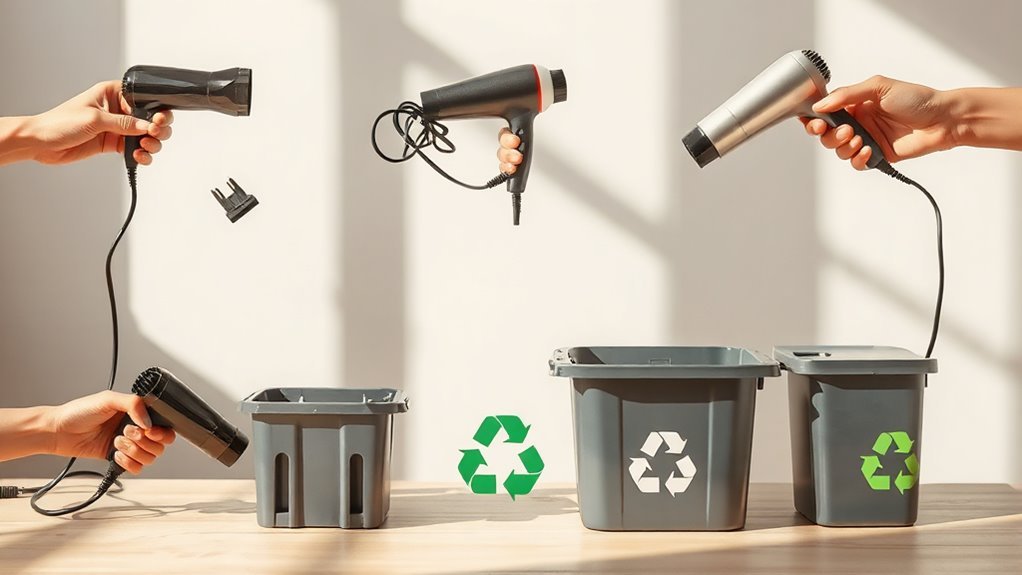
7 Steps to Dispose of a Hair Dryer
To dispose of your hair dryer responsibly, start by checking if it can be repaired or donated to extend its life. This helps reduce waste and supports sustainability.
Never toss it in the trash—this can harm the environment.
Instead, remove any batteries and unplug it for safety. Then, locate nearby e-waste recycling centers or take-back programs where you can drop it off.
Preparing your hair dryer by detaching hazardous parts if needed is important too.
You can also sell or give it away to reduce waste even more. Keep going to discover detailed tips for each step that make disposing of your hair dryer easy and eco-friendly.
Key Takeaways
- Unplug the hair dryer and remove any removable batteries for safe handling before disposal. This step helps prevent accidents and makes sure everything is handled properly.
- Clean the device and check for damage to decide between repair, reuse, donation, or disposal. It’s always good to see if it can have a second life before tossing it out.
- Avoid throwing in regular trash; locate nearby e-waste recycling centers or manufacturer take-back programs. These options are better for the environment and often safer.
- Separate hazardous parts like cords, heating elements, and plastics treated with flame retardants if required. Handling these parts carefully is important to avoid harm.
- Consider selling or donating working hair dryers to extend their life and reduce environmental waste. Someone else might really appreciate it!
Why Responsible Hair Dryer Disposal Matters
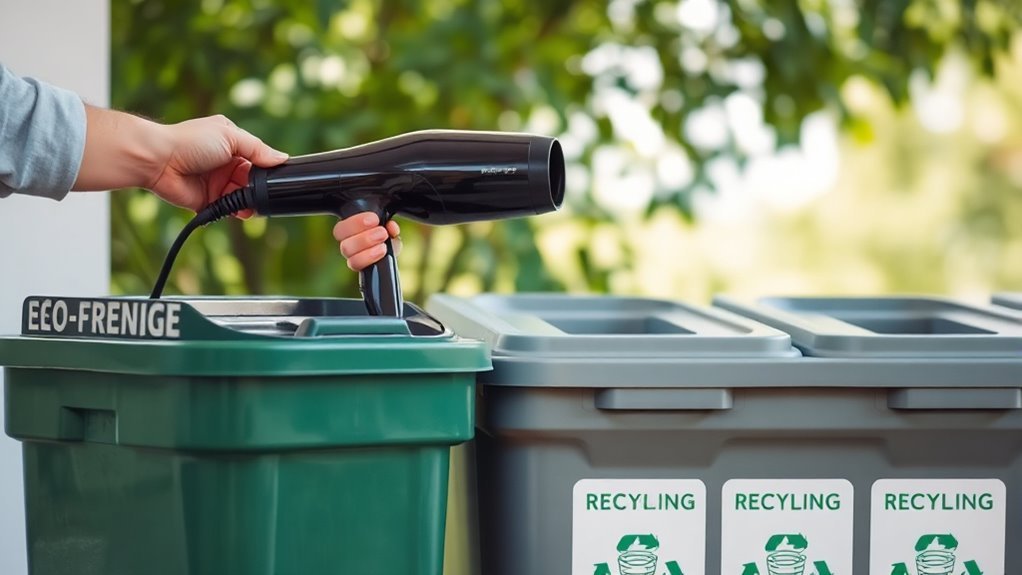
Proper disposal of your hair dryer protects the environment and conserves valuable resources. When you throw it away carelessly, harmful chemicals and metals can leak into the soil and water, damaging ecosystems and potentially harming wildlife.
Properly disposing of your hair dryer prevents harmful chemicals from polluting soil and water, protecting ecosystems and wildlife.
You might not realize it, but hair dryers contain components like copper wiring and plastic that can be recycled and reused. By disposing of your hair dryer responsibly, you help reduce landfill waste and limit the demand for new raw materials.
That saves energy and reduces pollution. Taking a moment to dispose of it properly means you’re making a positive impact on the planet.
It’s a small step that contributes to a bigger effort in protecting the environment for future generations. So, why not do your part? It really does make a difference.
Assess Repair or Reuse Options for Your Hair Dryer

Before you decide to toss your hair dryer, take a moment to check if it can be repaired or reused. Sometimes a simple fix can extend its life and reduce waste. Here’s what you can do:
First, inspect the cord for damage. A replacement cord might be all it needs.
Next, clean out any lint or hair caught in the vents to improve performance.
Then, test the switch and buttons to see if they’re working properly. Repairs may be affordable.
Finally, consider donating a gently used hair dryer to a charity or shelter. It’s a great way to give it a second life!
Avoid Throwing Your Hair Dryer in Regular Trash

You shouldn’t toss your hair dryer in the regular trash because it can harm the environment with its electronic components. Instead, look for proper disposal options like recycling centers or e-waste programs.
Taking these steps helps reduce pollution and supports responsible waste management. It’s a simple way to do your part for the planet!
Environmental Impact Awareness
Because hair dryers contain electronic components and sometimes hazardous materials, tossing them in regular trash can harm the environment. When you throw them away carelessly, those toxic substances can leak into the soil and water, damaging ecosystems and wildlife.
You might not realize it, but improper disposal contributes to soil contamination from heavy metals. It also causes water pollution, which affects aquatic life.
And that’s not all. Burning hair dryers in landfills can lead to air pollution. Plus, you’re wasting recyclable materials like plastic and metal when you don’t recycle them properly.
Proper Disposal Alternatives
Many communities offer specific recycling programs designed to handle electronic devices like hair dryers safely. Instead of tossing your hair dryer in regular trash, you can take advantage of these options to prevent harmful materials from polluting the environment.
You might also find local e-waste collection events or drop-off locations at electronics stores. Some manufacturers provide mail-back programs for old appliances. Here’s a quick guide to proper disposal alternatives:
| Disposal Method | Description | Benefits |
|---|---|---|
| Recycling Centers | Drop off at designated spots | Eco-friendly, safe waste |
| E-Waste Collection Events | Periodic local events | Convenient, community-based |
| Manufacturer Programs | Mail-back or take-back services | Hassle-free, guarantees reuse |
| Donation | Give working dryers to shelters | Supports others, reduces waste |
Choose one to dispose of your hair dryer responsibly. It’s easier than you might think!
Remove Batteries and Unplug Your Hair Dryer Before Recycling
Before recycling your hair dryer, make sure to unplug it and take out any batteries it contains. This step is vital for safety and proper recycling.
Unplugging prevents electrical hazards, and removing batteries avoids chemical leaks or fires during processing. To prepare your hair dryer:
- Unplug it from the power source completely.
- Locate and remove any removable batteries carefully.
- If batteries are built-in, consult the manual for safe removal.
- Store batteries separately in a safe container for proper disposal or recycling.
Taking these precautions guarantees you handle your hair dryer responsibly and protects workers and the environment during recycling. Always prioritize safety before moving on to the next steps in disposal.
Find Local Hair Dryer Recycling Centers Near You
When you’re ready to recycle your hair dryer, start by locating a nearby recycling center that accepts small electronics. Check your city or county’s official website for designated e-waste drop-off points.
Begin recycling your hair dryer by finding a nearby e-waste drop-off center through local government websites.
You can also use online tools like Earth911 or Call2Recycle by entering your zip code to find the closest facility. Many electronics stores offer recycling programs, so consider visiting places like Best Buy or Staples.
Some community centers and local events provide temporary collection services for electronic waste. Before you go, confirm the center accepts hair dryers specifically to avoid multiple trips.
Finding the right place guarantees your old device gets handled responsibly, reducing environmental impact and helping conserve valuable materials. Don’t forget to check hours of operation and any guidelines they may have for drop-offs.
Get Your Hair Dryer Ready for Recycling by Removing Hazardous Parts
Once you’ve identified a recycling center, prepare your hair dryer by removing any hazardous components that could harm the environment or recycling workers. Start by unplugging the device and making sure it’s completely cool.
Then, carefully disassemble parts that might contain harmful materials. Remove the power cord to avoid electrical hazards. Detach the heating element, which can contain metals and insulation.
Take out any batteries if your model has rechargeable features. Also, separate plastic parts that may be treated with flame retardants.
Handle these pieces with care and place them in designated containers if your recycling center requests it. This step guarantees safer recycling and prevents toxic substances from leaking into the environment.
Donate or Sell Your Working Hair Dryer or Try Eco-Friendly Disposal Methods
If your hair dryer still works, consider donating it to local charities where it can find a new home. You can also sell it through online marketplaces to give it a second life.
These options help reduce waste and support eco-friendly disposal efforts. It’s a simple way to make a positive impact while clearing out your space.
Donate To Local Charities
Many local charities gladly accept working hair dryers, giving your device a second life while helping those in need. When you donate, you support individuals who might not afford brand-new appliances.
It’s a simple way to reduce waste and promote sustainability.
Here’s how you can donate effectively:
- Locate nearby shelters, community centers, or thrift stores accepting small appliances.
- Make sure your hair dryer is clean, functional, and includes any necessary accessories.
- Contact the charity to confirm they accept hair dryers and ask about drop-off procedures.
- Package your device securely to avoid damage during transport.
Sell Through Online Marketplaces
You can easily sell your working hair dryer through online marketplaces, reaching buyers who need affordable appliances. Platforms like eBay, Facebook Marketplace, and Craigslist let you list your item quickly and set your price.
Just take clear photos, write a detailed description, and mention any warranties or special features to attract buyers. Selling helps extend your hair dryer’s life, reducing waste.
Before listing, clean it thoroughly and test to make sure it works properly. Be honest about its condition to avoid disputes.
If you’re unsure about shipping, local marketplaces let you arrange in-person pickups. This way, you save resources and help someone get a quality hair dryer at a lower cost.
Selling online offers a practical, eco-friendly way to dispose of your appliance responsibly.
Frequently Asked Questions
Can I Recycle the Cord Separately From the Hair Dryer?
Yes, you can recycle the cord separately, but make sure to check your local recycling guidelines. Some places accept cords as electronic waste, while others require special disposal due to metal and plastic components.
It’s a good idea to double-check so you know exactly how to handle it. Recycling rules can vary quite a bit depending on where you live.
How Do I Safely Dispose of a Hair Dryer With a Broken Cord?
Don’t let that broken cord trip you up—treat your hair dryer like a retired hero. Unplug it completely, then take it to an e-waste facility where it can get a proper, safe send-off.
It’s the best way to make sure it’s handled right and doesn’t cause any harm. Plus, you’re helping the environment by recycling it properly.
Are Hair Dryer Parts Reusable for DIY Projects?
Yes, you can reuse hair dryer parts for DIY projects. Motors, switches, and heating elements work well for crafts or small gadgets.
Just be cautious with electrical components and avoid damaged wires to stay safe while creating.
It’s pretty cool how these parts can find a new life in your projects, right? Just take your time and handle everything carefully!
What Materials Are Hair Dryers Typically Made From?
When it comes to hair dryers, you’re looking at a mix of plastic, metal, and copper wiring under the hood. These materials work together like a well-oiled machine to get your hair dried quickly and efficiently.
Plastic usually makes up the outer shell because it’s lightweight and heat-resistant. Inside, metal components help with heat conduction and durability, while copper wiring powers the motor and heating element.
How Long Does It Take for a Hair Dryer to Decompose?
It takes a hair dryer about 100 to 400 years to decompose because of its plastic and metal parts.
You’ll want to recycle it properly since it doesn’t break down quickly in landfills.
Conclusion
You’d be shocked how much harm tossing your hair dryer in the trash can cause! By following these simple steps, you’re not just ditching an old gadget—you’re protecting the planet.
Before you throw it away, check if it can be repaired, reused, or donated. Always remove batteries and hazardous parts, and find a local recycling center.
Taking these actions guarantees your hair dryer’s disposal is responsible, easy, and eco-friendly—because every small effort counts! Proper disposal of your hair dryer helps reduce electronic waste and prevents harmful chemicals from polluting the environment. So, next time you need to get rid of your hair dryer, remember these steps to make a positive impact on the planet. It’s a simple way to be green and do your part for a cleaner, healthier world.