Best Oils for Managing Dry Scalp Psoriasis
You can manage dry scalp psoriasis effectively by using oils like tea tree, jojoba, coconut, argan, castor, and olive oil.
These oils help soothe irritation, reduce flakes, and improve overall scalp health. Incorporating them into your routine can make a noticeable difference in controlling symptoms and calming inflammation.
Tea tree oil fights inflammation and fungus while controlling dandruff.
Jojoba and coconut oils lock in moisture to soothe irritation and reduce flakes. Argan oil calms redness, and castor oil boosts scalp health. Olive oil softens scales and supports healing.
Keep exploring these oils, and you’ll find more ways they can ease your psoriasis symptoms.
With consistent use, you might notice your scalp feeling healthier and more comfortable over time.
Key Takeaways
– Tea tree oil reduces inflammation, controls dandruff, and prevents psoriasis flare-ups when diluted properly.
It’s pretty effective at calming the scalp, but you’ve got to make sure it’s mixed right before using it.
– Jojoba oil locks in moisture and soothes irritation without clogging scalp pores.
This one feels light and won’t leave your scalp feeling greasy, which is a big plus.
– Coconut oil deeply hydrates and minimizes redness and itchiness with its anti-inflammatory properties.
It’s great for giving your scalp a good dose of moisture and calming those annoying flare-ups.
– Argan oil calms inflammation and promotes scalp healing with vitamin E and essential fatty acids.
It’s like a little healing boost for your scalp that also helps reduce irritation.
– Castor and olive oils moisturize, reduce itching, and support skin repair with antimicrobial and antioxidant effects.
Using these oils can really help keep your scalp healthy and less itchy over time.
Benefits of Tea Tree Oil for Psoriasis Relief
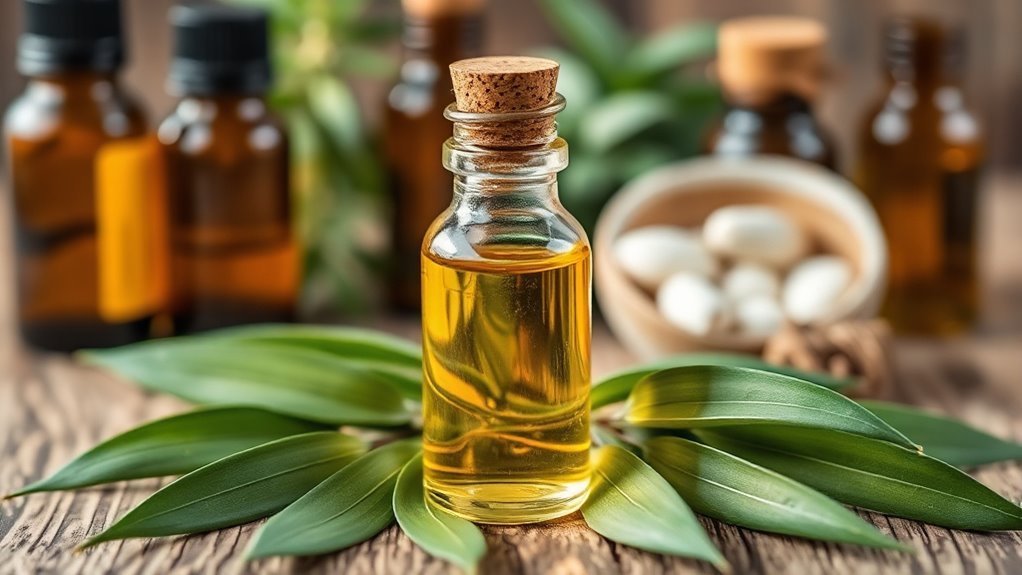
Although managing dry scalp psoriasis can be challenging, tea tree oil offers powerful benefits that can help soothe your symptoms. When you apply tea tree oil, its natural anti-inflammatory and antifungal properties work to reduce redness, itching, and flaking.
Tea tree oil’s natural anti-inflammatory and antifungal properties help ease redness, itching, and flaking in dry scalp psoriasis.
This oil penetrates your scalp, calming irritation and promoting healing. You’ll also find that tea tree oil helps control excess oil and dandruff, which often worsen psoriasis symptoms.
Using it regularly can restore balance to your scalp’s environment, preventing flare-ups. Just be sure to dilute tea tree oil with a carrier oil, as it’s potent and can cause irritation if used undiluted.
Incorporating tea tree oil into your routine gives you a natural way to manage discomfort and improve scalp health. It’s a simple step that might make a big difference!
How Jojoba Oil Supports Scalp Hydration

You’ll find that jojoba oil helps lock in moisture, keeping your scalp hydrated throughout the day. Its anti-inflammatory properties can also soothe irritation and reduce redness caused by psoriasis.
Using jojoba oil regularly can create a healthier environment for your scalp to heal. It’s a simple way to support your scalp’s health and comfort every day.
Moisture Retention Benefits
When you apply jojoba oil to your scalp, it mimics your skin’s natural sebum, locking in moisture without clogging pores. This unique property helps you maintain hydration, preventing the dryness and flaking often linked with scalp psoriasis.
The oil forms a breathable barrier that keeps water in and irritants out, promoting a healthier scalp environment. It’s pretty amazing how it works without feeling heavy or greasy.
| Benefit | How It Helps Your Scalp |
|---|---|
| Sebum-like structure | Blends naturally, avoids buildup |
| Breathable barrier | Retains moisture, blocks irritants |
| Non-comedogenic | Prevents clogged pores |
| Long-lasting hydration | Keeps scalp soft and supple |
Using jojoba oil regularly supports your scalp’s moisture balance, reducing dryness and discomfort effectively. Give it a try—you might be surprised at how much better your scalp feels!
Anti-Inflammatory Properties
Besides locking in moisture, jojoba oil also helps calm inflammation on your scalp, which plays a big role in managing psoriasis symptoms. Its natural anti-inflammatory compounds, like vitamin E and phytosterols, soothe irritated skin and reduce redness.
When you apply jojoba oil, it penetrates deeply without clogging pores, calming flare-ups and preventing further irritation. This calming effect not only eases discomfort but also supports your scalp’s healing process.
The Role of Coconut Oil in Reducing Flakes

You’ll find coconut oil helps reduce flakes by deeply moisturizing your scalp. Its natural anti-inflammatory properties calm irritation and soothe dryness.
Using it regularly can ease the discomfort caused by psoriasis. It’s a simple, natural way to keep your scalp feeling healthy and comfortable.
Moisturizing Benefits of Coconut Oil
Three key moisturizing benefits make coconut oil a go-to for managing dry scalp psoriasis. First, it deeply penetrates your scalp’s skin, delivering lasting hydration that soothes dryness.
Second, coconut oil forms a protective barrier that locks in moisture, preventing your scalp from becoming parched throughout the day. Third, its natural fatty acids nourish your skin cells, promoting healthier scalp texture and reducing flakiness.
When you apply coconut oil regularly, you help restore balance to your scalp’s moisture levels, which can ease the tightness and discomfort caused by psoriasis. By maintaining hydration, coconut oil supports your scalp’s natural healing process, making flakes less noticeable and your skin feel softer.
Using it consistently can be a simple yet effective step in your dry scalp care routine. It’s pretty easy to add to your regimen, and the benefits really show with regular use.
Anti-Inflammatory Properties Explained
Beyond its moisturizing effects, coconut oil also plays a significant role in calming inflammation on your scalp. Its natural compounds, like lauric acid, have anti-inflammatory and antimicrobial properties that reduce redness and itchiness associated with psoriasis.
By soothing irritated skin, coconut oil helps minimize flaking and discomfort. Applying it regularly can create a protective barrier, locking in moisture and preventing further irritation.
| Compound | Property | Effect on Scalp Psoriasis |
|---|---|---|
| Lauric Acid | Anti-inflammatory | Reduces redness and swelling |
| Capric Acid | Antimicrobial | Fights harmful scalp bacteria |
| Vitamin E | Antioxidant | Protects skin cells |
| Medium Chain Fatty Acids | Soothing | Calms itchiness and irritation |
| Fatty Acids | Moisturizing | Prevents dryness and flaking |
Using Argan Oil to Soothe Inflammation
Although dry scalp psoriasis can cause persistent irritation, using argan oil can help soothe inflammation effectively. You’ll find its rich content of vitamin E and essential fatty acids works to calm redness and reduce itching.
Applying argan oil directly to your scalp creates a protective barrier that locks in moisture, which is essential for healing dry, flaky skin. To use it, gently massage a few drops into your scalp daily, allowing the oil to absorb fully.
This not only eases discomfort but also supports your scalp’s natural balance. Plus, argan oil’s lightweight texture means it won’t leave your hair feeling greasy or heavy.
Incorporating argan oil into your routine can offer relief and promote healthier scalp skin over time. Give it a try and see how it helps!
Advantages of Castor Oil for Scalp Health
When you apply castor oil to your scalp, you tap into its powerful moisturizing and antimicrobial properties that help combat dryness and flakiness. This thick oil penetrates deeply, locking in moisture and soothing irritation caused by psoriasis.
It also promotes healthy hair growth by stimulating blood circulation to your scalp.
Here’s a quick look at what castor oil offers:
| Benefit | How It Helps |
|---|---|
| Deep Moisturizing | Prevents dryness and flakes |
| Antimicrobial Action | Reduces scalp infections |
| Hair Growth Stimulation | Encourages healthier, fuller hair |
Using castor oil regularly can greatly improve your scalp’s condition and ease psoriasis symptoms. It’s definitely a valuable addition to your routine.
Incorporating Olive Oil for Moisture and Healing
If you want to soothe your dry scalp and support healing, incorporating olive oil into your routine can make a noticeable difference. Olive oil is rich in antioxidants and vitamins A and E, which help reduce inflammation and promote skin repair.
To use it, warm a small amount and gently massage it into your scalp, allowing it to penetrate dry patches. Leave the oil on for at least 30 minutes or overnight for deeper hydration before washing it out with a gentle shampoo.
Regular use can soften scales, reduce itching, and improve overall scalp moisture. Just remember to patch-test first, as some people might be sensitive.
Frequently Asked Questions
Can Diet Affect the Severity of Scalp Psoriasis?
Yes, your diet can affect scalp psoriasis severity. Eating anti-inflammatory foods, avoiding triggers like gluten or dairy, and staying hydrated may reduce flare-ups.
You’ll notice improvements by maintaining a balanced, nutrient-rich diet consistently. It really helps to pay attention to what you eat and how your skin reacts.
How Often Should I Apply Oil to My Scalp?
You’ll want to pamper your scalp with oil about two to three times a week. This gentle routine helps soothe and nourish without overwhelming, keeping your scalp calm and comfortable between treatments.
It’s kind of like giving your scalp a little spa day regularly. Just enough to keep things happy and healthy, but not so much that it gets greasy or irritated. Easy, right?
Are There Any Oils to Avoid With Scalp Psoriasis?
You should avoid heavy, comedogenic oils like coconut or mineral oil. They might clog your pores and make psoriasis worse.
Also, be careful with essential oils. Unless they’re properly diluted, they can irritate sensitive scalp skin and trigger flare-ups. So, it’s best to steer clear of them or use them cautiously.
Can Essential Oils Cause Irritation on Psoriasis-Affected Skin?
Essential oils can sometimes be a bit too lively for psoriasis-affected skin, causing irritation. You should always patch test, dilute properly, and avoid harsh oils to keep your scalp calm and comfortable.
It’s really about being careful and listening to your skin. If something feels off, it’s best to stop using it and maybe talk to a dermatologist. Taking these simple steps can help you enjoy the benefits of essential oils without the downsides.
Is It Safe to Combine Oils With Prescription Treatments?
You can combine oils with prescription treatments, but you should check with your doctor first.
Some oils might irritate your skin or reduce how well your medication works. So, it’s a good idea to test a small area first.
Always follow your healthcare provider’s advice carefully to stay safe.
Conclusion
Taming dry scalp psoriasis feels like nurturing a thirsty garden, and these oils are your rain. Tea tree oil clears the clouds, while jojoba and coconut oils soak deep like morning dew, quenching your scalp’s thirst.
Argan and castor oils calm the storm of inflammation, and olive oil wraps your scalp in a healing embrace. With these natural allies, you’ll transform discomfort into soothing relief.
Using the best oils for managing dry scalp psoriasis can really make a difference. They help reduce flakes, soothe irritation, and restore moisture to your scalp. Incorporating oils like tea tree, jojoba, coconut, argan, castor, and olive oil into your routine provides a natural, gentle way to support scalp health. So, give your scalp some love and let it breathe and bloom again with these effective oils.