Best Oils for Scalp Psoriasis Relief
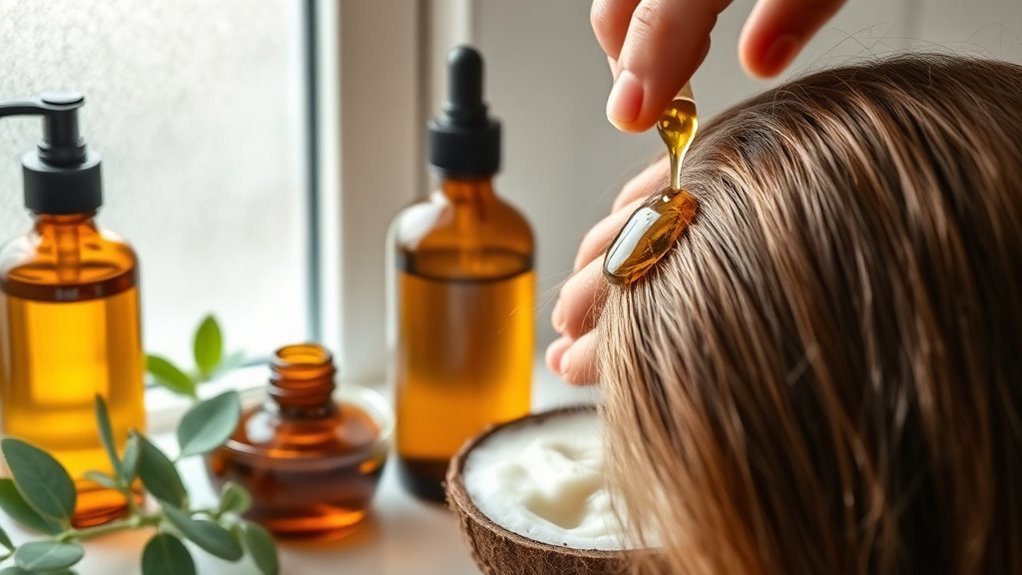
You can relieve scalp psoriasis by using oils that moisturize, reduce inflammation, and control flakes.
These natural oils are great for soothing the itchy, flaky scalp that psoriasis often causes. Coconut oil locks in moisture and soothes irritation, making your scalp feel calmer and less dry.
Tea tree oil is another excellent choice because its antimicrobial properties help target infection triggers.
Jojoba oil works wonders by balancing your scalp’s natural oils, which can get thrown off by psoriasis.
Castor oil, on the other hand, reduces dryness and flakes, giving your scalp extra hydration.
Argan oil gently nourishes and repairs damaged skin, promoting a healthier scalp overall.
Each oil offers unique benefits, so it’s worth exploring which one suits your scalp’s needs best.
With a bit of trial and error, you can find the perfect oil to keep your scalp comfortable and flake-free.
Key Takeaways
– Coconut oil deeply moisturizes and soothes inflammation, reducing itchiness and creating a protective barrier for scalp psoriasis relief.
It’s like giving your scalp a cozy, hydrating hug!
– Tea tree oil fights bacteria and fungi, reducing scalp infections and inflammation associated with psoriasis flare-ups.
This helps keep your scalp calm and less irritated.
– Jojoba oil balances scalp oils by mimicking natural sebum, preventing irritation and regulating oil production.
So, it’s great for keeping things in check without overdoing it.
– Castor oil locks in moisture, reducing dryness and flakes while providing antifungal and antibacterial benefits.
Your scalp stays hydrated and protected.
– Argan oil nourishes and repairs damaged skin with essential fatty acids and vitamin E, soothing itchiness and minimizing redness.
It’s like a little healing boost for your scalp!
Coconut Oil for Moisturizing and Soothing
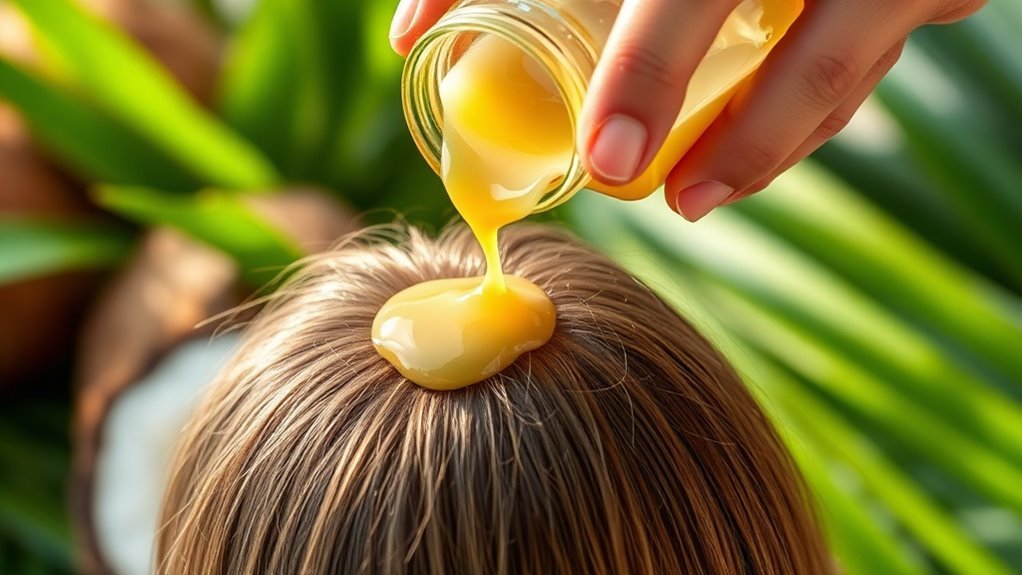
Although scalp psoriasis can cause intense dryness and irritation, applying coconut oil can help you lock in moisture and calm inflammation effectively. When you massage coconut oil into your scalp, it penetrates deeply, softening dry, flaky skin and reducing itchiness.
Its natural fatty acids create a protective barrier that keeps your scalp hydrated longer, easing discomfort. You can use it as a pre-wash treatment—leave it on for at least 30 minutes or overnight to maximize benefits.
Just make sure to apply it on a clean scalp to avoid clogging pores. Regular use of coconut oil can improve your scalp’s texture and provide soothing relief, making your psoriasis flare-ups more manageable without harsh chemicals.
Tea Tree Oil’s Antimicrobial Properties
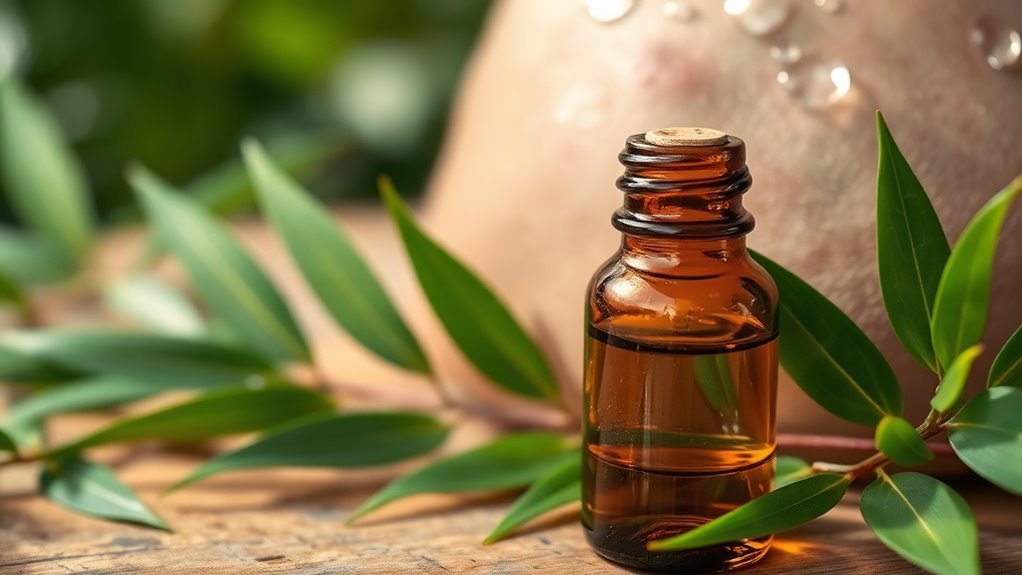
While coconut oil helps keep your scalp hydrated and calm, tea tree oil offers a different kind of relief by targeting the underlying causes of scalp psoriasis. Its powerful antimicrobial properties fight bacteria, fungi, and yeast that can worsen inflammation and irritation.
When you apply tea tree oil diluted with a carrier oil, it helps reduce scalp infections that trigger flare-ups, promoting a healthier environment for your skin to heal. You’ll notice less itching and scaling as tea tree oil controls microbial growth, which often aggravates psoriasis symptoms.
Just remember to do a patch test first, as some people may find it irritating. Incorporating tea tree oil into your scalp care routine could be a game-changer in managing psoriasis’s root problems effectively.
Jojoba Oil to Balance Scalp Oils
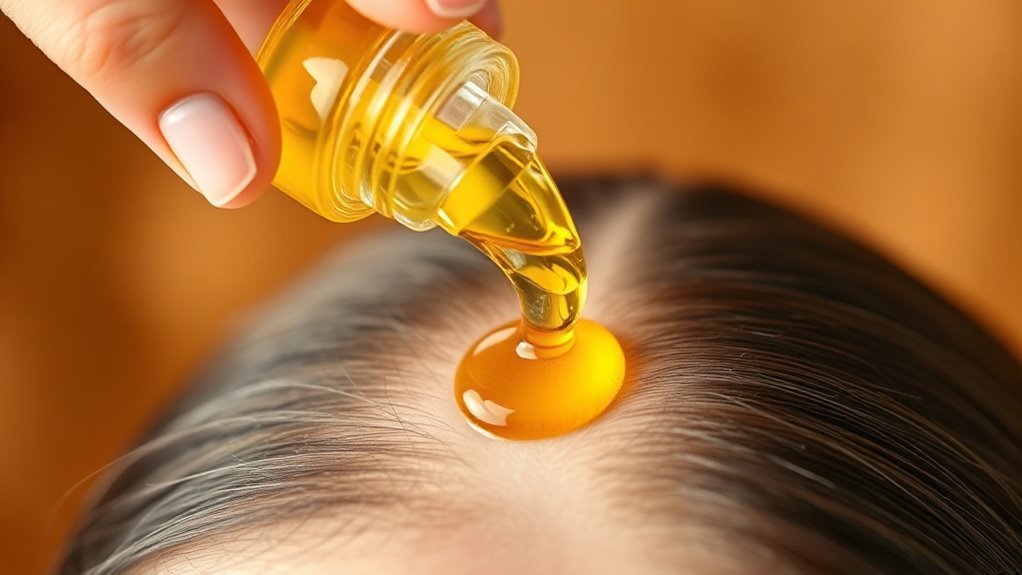
If your scalp feels oily or dry at different times, jojoba oil can help restore its natural balance. This oil closely mimics your scalp’s natural sebum, making it ideal for regulating oil production.
When you apply jojoba oil, it signals your scalp to produce less oil if it’s oily, or adds moisture if it’s dry. Its lightweight texture guarantees it won’t clog pores or weigh down your hair.
Plus, jojoba oil’s anti-inflammatory properties soothe irritation and reduce redness, which is especially helpful for psoriasis flare-ups. Use it as a gentle scalp massage oil or mix it with your shampoo to maintain consistent hydration and oil balance.
Castor Oil for Reducing Flakes
Alongside jojoba oil’s ability to balance scalp oils, castor oil offers a powerful way to tackle flakes caused by scalp psoriasis. Its thick consistency helps lock in moisture, preventing the dryness that often leads to flaky patches.
When you apply castor oil to your scalp, you create a protective barrier that soothes irritation and reduces visible flakes. The oil’s natural antifungal and antibacterial properties also help keep your scalp clean, minimizing the risk of infections that can worsen psoriasis symptoms.
For best results, warm the oil slightly and massage it gently into your scalp, leaving it on for at least 30 minutes before washing it out. Incorporating castor oil regularly can considerably improve the appearance and comfort of your scalp.
Argan Oil to Nourish and Repair
Argan oil delivers rich nourishment and promotes healing for a scalp affected by psoriasis. You’ll find it packed with essential fatty acids and vitamin E, which work together to moisturize dry, flaky skin and reduce inflammation.
When you apply argan oil, it penetrates deeply to repair damaged skin cells and strengthen your scalp’s natural barrier. Regular use can soothe itchiness and minimize redness, making flare-ups less uncomfortable.
Simply massage a few drops into your scalp, leave it on for at least 30 minutes, then rinse thoroughly. Because it’s lightweight and non-greasy, argan oil won’t clog your pores or weigh your hair down.
Incorporating argan oil into your routine can support healthier, more resilient scalp skin over time. It’s a simple step that can really make a difference.
Olive Oil as a Gentle Scalp Treatment
While argan oil works wonders for nourishing your scalp, olive oil offers a gentle, soothing alternative that many find effective for managing psoriasis symptoms. You can apply olive oil directly to your scalp to help soften scales and reduce itching.
Its natural anti-inflammatory properties calm irritation, while its moisturizing effects prevent dryness and flaking.
To use, warm a small amount of olive oil, massage it into your scalp, and leave it on for at least 30 minutes before washing it out with a gentle shampoo. Regular use can improve your scalp’s overall health and comfort.
Just make sure to patch-test first to avoid any adverse reactions, especially if you have sensitive skin or allergies.
Frequently Asked Questions
Can These Oils Be Used Alongside Prescription Scalp Psoriasis Treatments?
Yes, you can use these oils alongside prescription treatments, but you should consult your doctor first. Combining them might enhance relief.
However, your healthcare provider can guarantee there are no harmful interactions or skin sensitivities. It’s always best to check before mixing treatments.
How Often Should I Apply These Oils for Best Results?
You should apply these oils 2-3 times a week for best results. Consistency matters, but avoid overuse to prevent buildup.
Always monitor your scalp’s reaction and adjust frequency if irritation occurs. It’s all about finding what works best for you!
Are These Oils Safe for Children With Scalp Psoriasis?
Yes, many oils are safe for children, but you shouldn’t assume all are gentle. Always test a small patch first and consult your pediatrician to avoid irritation or allergic reactions.
This way, you can make sure your child stays comfortable and safe. It’s always better to be cautious when dealing with sensitive skin.
Can These Oils Cause Allergic Reactions or Side Effects?
Yes, these oils can cause allergic reactions or side effects, especially if you have sensitive skin. Always do a patch test first and stop using if you notice redness, itching, or irritation.
It’s better to be safe than sorry! If you’re unsure about how your skin might react, consult your doctor before using them.
How Do These Oils Compare to Medicated Shampoos for Psoriasis?
Sure, oils don’t promise a miracle cure like medicated shampoos, but you’ll enjoy fewer chemicals and soothing relief. They’re gentler, though less potent—think spa day versus strict dermatologist’s orders.
It’s your scalp’s call.
Conclusion
Did you know that over 7 million Americans struggle with scalp psoriasis? You’re not alone, and using the right oils can make a real difference.
Whether you choose coconut oil to soothe dryness, tea tree oil to fight microbes, or jojoba oil to balance your scalp, these natural options help ease irritation and flakes.
Try incorporating these oils into your routine—you’ll likely notice calmer, healthier skin in no time. Using the best oils for scalp psoriasis relief can be a gentle yet effective way to manage symptoms. With consistent use, these oils can reduce redness, itchiness, and scaling, giving your scalp the care it deserves. So, if you want to find relief naturally, adding oils like coconut, tea tree, or jojoba to your regimen is definitely worth considering.