How to Get Pet Hair Off Clothes in the Dryer in 5 Steps
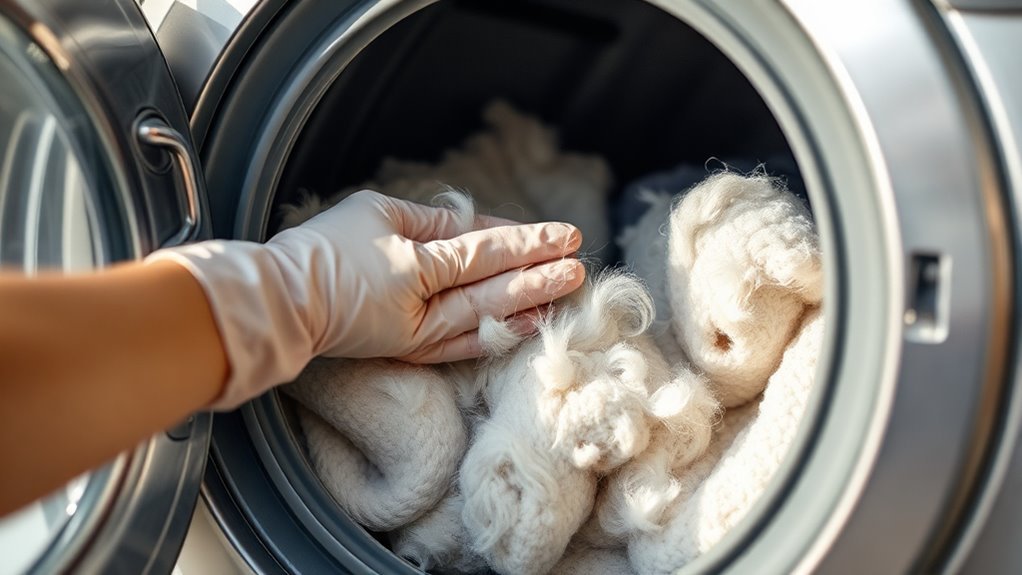
To get pet hair off clothes in the dryer, start by shaking out your garments to loosen any hair. Then, use a lint roller or a damp glove to remove as much loose hair as possible before tossing clothes in the dryer.
Next, throw in 3–4 dryer sheets or wool balls. These help reduce static cling, which lifts pet hair off your clothes and keeps it from sticking back on. Run a short, no-heat cycle for about 10–15 minutes to give the dryer time to work its magic.
After the cycle, make sure to clean the lint trap and wipe down the drum thoroughly to remove all the collected hair. Regularly brushing your pet and sorting your laundry by hair amount can also help prevent buildup over time.
Follow these simple steps, and you’ll find it much easier to keep your laundry hair-free. Stick around for more helpful advice to make pet hair a thing of the past!
Key Takeaways
- Shake out clothes outside and use a lint roller or a damp rubber glove to get rid of loose pet hair before drying. This step really helps cut down on the amount of hair that ends up in the dryer.
- Make sure to clean the dryer’s lint trap and wipe down the drum. This prevents hair buildup and helps keep the airflow strong while drying.
- Toss in 3–4 dryer sheets or some wool balls. They reduce static and help lift pet hair off your clothes during the drying process.
- Run a short, no-heat dryer cycle for about 10–15 minutes. This loosens up pet hair without setting it deeper into the fabric.
- After the cycle finishes, check and clean the lint trap again to remove all the collected pet hair. If you still see hair on your clothes, just repeat the process.
Prep Clothes and Dryer Before Removing Pet Hair
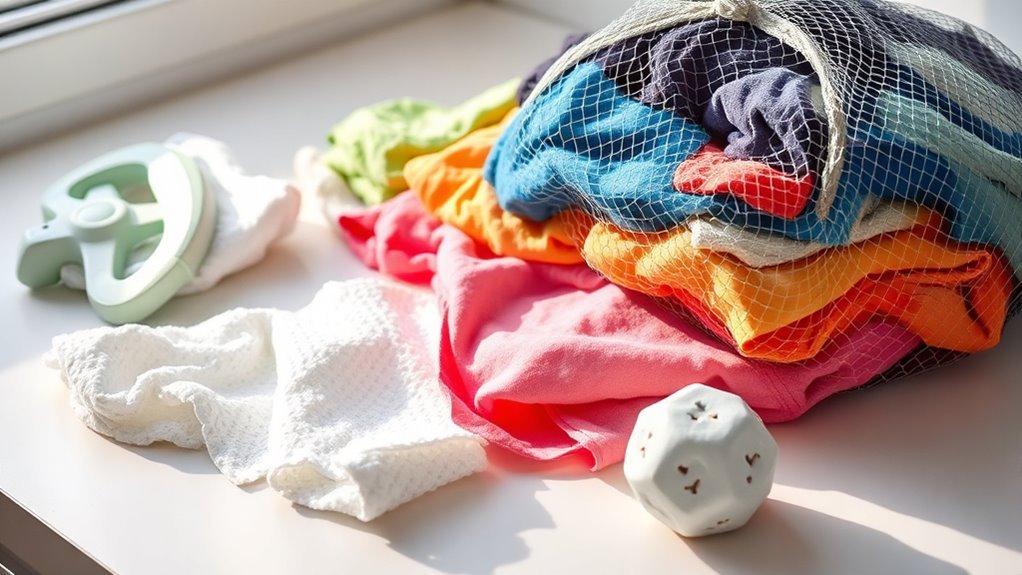
Preparing your clothes and dryer before tackling pet hair makes the removal process much easier. First, shake out each garment outside to loosen loose hairs. Use a lint roller or a damp rubber glove to grab stubborn strands before tossing clothes into the dryer.
Don’t overload the dryer; give garments enough space to tumble freely so pet hair can detach efficiently. Before starting, clean the dryer’s lint trap thoroughly—this prevents buildup and improves airflow.
Wipe the drum with a damp cloth to remove any residual hair from prior loads. If you have a removable lint screen, rinse it under running water to clear fine hairs. Taking these steps sets you up for better pet hair removal and helps keep your dryer running smoothly.
Use Dryer Sheets or Wool Balls to Loosen Pet Hair
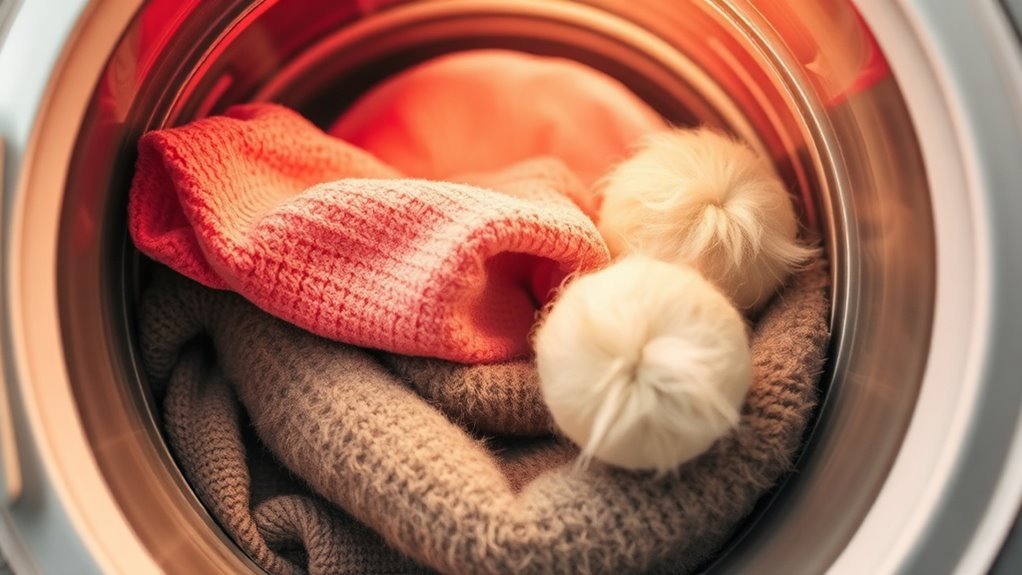
Add dryer sheets or wool balls to your load to help loosen pet hair from your clothes. These items create friction and reduce static cling, making it easier for pet hair to detach during the drying process.
Wool balls naturally lift hair and lint, while dryer sheets add a bit of softness and can reduce static buildup.
Here’s how to maximize their effectiveness:
- Toss 3-4 dryer sheets or wool balls into the dryer with your clothes.
- Choose unscented sheets if you’re sensitive to fragrances.
- Use wool balls made specifically for laundry to avoid residue.
- Combine both dryer sheets and wool balls for extra hair removal power.
- Replace dryer sheets or wool balls regularly for consistent results.
This simple addition can make a big difference in keeping your clothes hair-free.
Run a Short Dryer Cycle to Remove Pet Hair
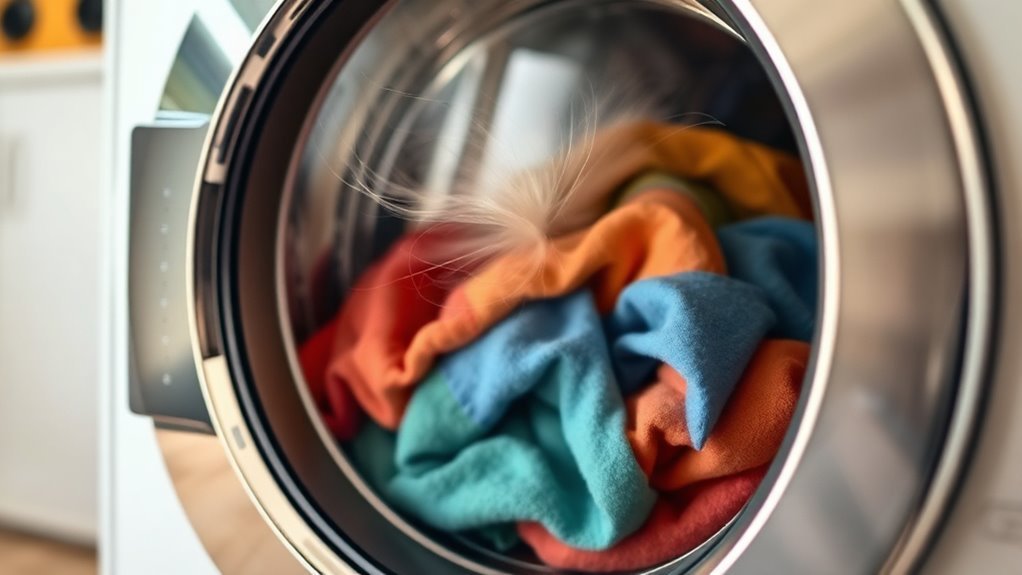
Run a short dryer cycle with your clothes to help loosen and remove pet hair before washing. Set the dryer on a low or air-fluff setting for about 10 to 15 minutes.
This quick tumble helps shake loose pet hair, making it easier to catch in the lint trap. Avoid using heat, as it can set the hair into fabric fibers.
You don’t need to add detergent or fabric softener during this step. After the cycle, check the lint trap and dispose of the collected hair.
If some pet hair remains, just repeat the short cycle or try combining it with other pet hair removal methods before washing. This simple step reduces pet hair buildup, keeping your clothes cleaner and fresher.
Clean the Dryer Lint Trap and Drum
After loosening pet hair with a short dryer cycle, it’s important to clean the lint trap and drum to prevent hair buildup. Pet hair can clog these areas, which reduces dryer efficiency and can cause odors.
Run a short dryer cycle to loosen pet hair, then clean the lint trap and drum to prevent buildup and odors.
Here’s how to keep your dryer hair-free:
- Remove the lint trap and peel off all visible hair and lint.
- Use a soft brush or cloth to wipe inside the lint trap slot.
- Check the dryer drum for stuck pet hair and wipe it down with a damp cloth.
- Vacuum around the lint trap and drum edges to catch hidden hair.
- Clean the lint trap after every load to maintain airflow and keep pet hair from accumulating.
Regular cleaning helps your dryer work better and keeps your clothes fresher. It’s a simple habit that makes a big difference!
Stop Pet Hair From Building Up in Your Laundry
While pet hair can be stubborn, you can prevent it from embedding deeply in your laundry by taking simple steps before washing. Start by brushing your pet regularly to reduce loose hair.
Shake out clothes and bedding outside to remove surface hair before tossing them in the wash. Use a damp rubber glove or lint roller to pick up hair from fabric before laundering.
Separate pet hair-heavy items from other laundry to avoid spreading hair around. Consider washing pet blankets and your clothes inside out to keep hair on the outside.
Adding half a cup of white vinegar to the rinse cycle helps loosen hair fibers. By adopting these habits, you’ll stop pet hair buildup, making your laundry cleaner and your dryer’s job easier.
Frequently Asked Questions
Can Pet Hair Damage My Dryer?
Yes, pet hair can damage your dryer by clogging the lint trap and vents. This reduces efficiency and increases the risk of fire.
You should clean the lint filter and vents regularly. That way, you keep your dryer running safely and smoothly.
Are There Specific Dryer Settings for Removing Pet Hair?
Think of your dryer as a gentle tornado—you’ll want to use a low heat or air fluff setting to loosen pet hair without baking it into fabrics.
Adding dryer sheets helps hair cling to them, making removal easier. It’s a simple trick that really works!
Can I Use Fabric Softener to Reduce Pet Hair?
Yes, you can use fabric softener to reduce pet hair. It helps loosen hair from clothes by softening fibers, making it easier to remove during drying.
Just don’t overuse it, or your dryer sheets might lose effectiveness. Using too much can actually backfire, so keep it moderate.
How Often Should I Wash Pet Hair-Covered Clothes?
Oh, you should wash pet hair-covered clothes as often as you enjoy finding surprises stuck in your lint trap—ideally after every wear.
Regular washing keeps hair at bay and your outfits fresher, trust me.
Will Pet Hair Transfer to Other Clothes in the Dryer?
Yes, pet hair can transfer to other clothes in the dryer, especially if you overload it.
You can prevent this by using dryer sheets or a lint roller beforehand. Also, make sure to clean the lint trap regularly.
These little steps really help keep your clothes hair-free!
Conclusion
Now that you know these simple steps, getting pet hair off your clothes in the dryer is a breeze. For example, Sarah, a busy dog owner, used dryer sheets and a quick cycle to rescue her work shirts from fur buildup—saving time and frustration.
With a little prep and regular dryer cleaning, you’ll keep your clothes hair-free and fresh. This makes laundry day much easier for you and your furry friend. Using the dryer to remove pet hair is a quick and effective way to keep your garments looking clean.
By following these easy steps, you can say goodbye to stubborn pet hair on your clothes. Keep your dryer well-maintained, use dryer sheets, and choose the right cycle to get the best results. Laundry day doesn’t have to be a hassle when you know how to get pet hair off clothes in the dryer!