Can a Hair Dryer Kill Head Lice?
You can’t rely on a hair dryer alone to kill head lice because it rarely reaches the high temperatures needed to kill them or their eggs. Head lice are pretty clever—they survive by moving to cooler areas and using protective layers. So, just blasting hot air for a short time won’t do the job.
Plus, the heat from hair dryers often misses lice hiding close to the scalp, where it’s cooler and harder to reach. That means even if you use a hair dryer, some lice and eggs might survive.
Using proper treatments and techniques is a much safer and more effective way to get rid of lice. Keep exploring to find out the best ways to tackle lice safely and thoroughly. Don’t rely on quick fixes—getting rid of lice takes the right approach!
Key Takeaways
- Standard hair dryers don’t get hot enough to reliably kill head lice or get rid of nits.
- Lice can survive heat by moving to cooler spots on the scalp and using their protective outer layers. So, just using a dryer for a short time won’t do the trick.
- To actually kill lice with heat, you need sustained exposure at around 50°C (122°F) or higher. Typical hair dryers can’t safely provide that kind of heat.
- If you try to use a hair dryer improperly, you risk burns and scalp damage, and you still might not get rid of the lice.
- Hair dryers might weaken lice a bit if you use them along with medicated treatments and thorough combing, but they’re not a solution on their own.
Can a Hair Dryer Kill Head Lice?
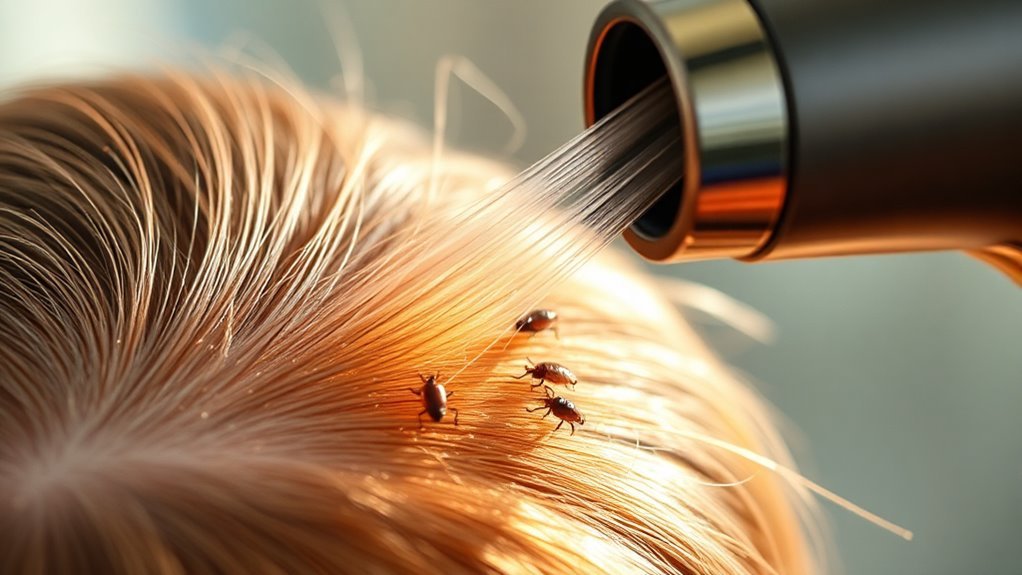
Although using a hair dryer might seem like a quick way to kill head lice, it’s not a reliable method. You might think the heat will dry out or burn the lice, but in reality, hair dryers don’t reach temperatures high enough to eliminate them effectively.
Plus, lice can easily hide close to the scalp, where the heat from the dryer is less intense. Relying on a hair dryer alone won’t remove nits (lice eggs), which are firmly attached to hair shafts.
If you try this method, you risk wasting time and allowing the infestation to continue. Instead, it’s better to use proven treatments designed specifically to kill lice and their eggs safely and thoroughly.
How Do Head Lice Survive Heat?
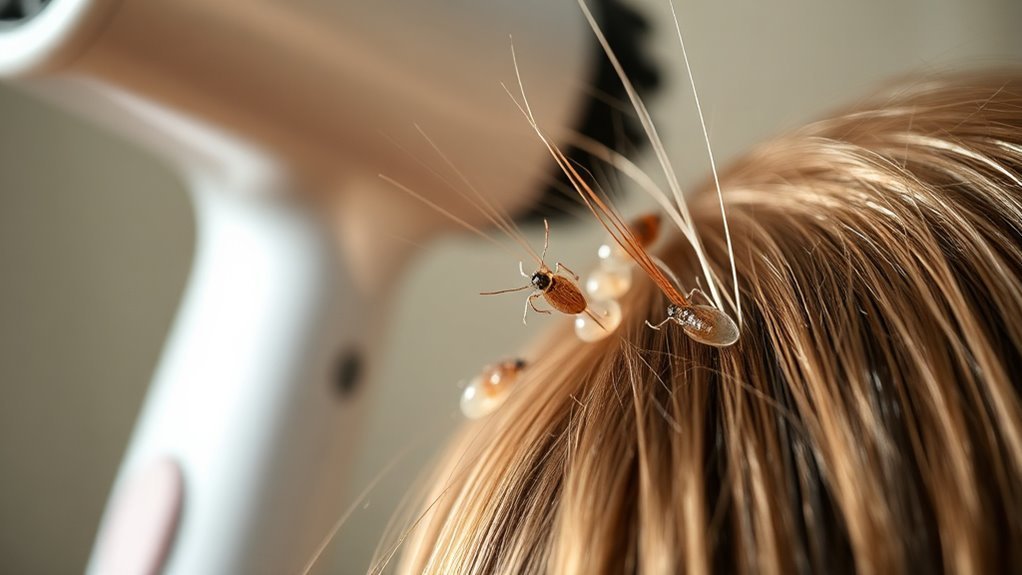
You might wonder how head lice manage to survive heat from a hair dryer. They have protective outer layers and special heat tolerance mechanisms that help them endure certain temperatures.
Understanding their temperature thresholds can show why some heat treatments may not fully eliminate them. It’s kind of surprising how tough these little pests can be!
Heat Tolerance Mechanisms
Understanding how head lice survive heat reveals why simply using a hair dryer might not be enough to eliminate them. Lice have developed specific heat tolerance mechanisms that help them endure short bursts of higher temperatures.
They can temporarily reduce their metabolic rate and seek cooler areas close to the scalp, where heat is less intense.
Here’s a quick look at these mechanisms:
| Heat Tolerance Mechanism | Description |
|---|---|
| Metabolic slowdown | Reduces energy use under heat |
| Heat avoidance behavior | Moves to cooler scalp areas |
| Temporary heat shock proteins | Protects cells from heat damage |
Knowing this, you realize that a quick blast of hot air won’t fully eradicate them — they’re tougher than they seem.
Protective Outer Layers
Since head lice face constant threats from heat, their protective outer layers play a crucial role in their survival. You should know that lice have a tough exoskeleton made of chitin, which acts like a shield against harsh environmental conditions.
This outer shell helps reduce moisture loss and provides some insulation from heat exposure. Plus, the lice’s cuticle contains waxy substances that repel water and can reflect a bit of heat, making it harder for heat to penetrate deeply.
When you use a hair dryer, these layers can slow down how quickly the heat affects the lice, giving them a fighting chance. So, understanding these natural defenses helps explain why simply applying heat isn’t always enough to kill head lice effectively.
Temperature Thresholds for Survival
Although heat can be deadly to many insects, head lice have adapted to survive within specific temperature ranges. They thrive best between 28°C and 38°C (82°F to 100°F), which is close to the human scalp’s natural temperature.
When temperatures rise above 44°C (111°F), lice begin to struggle. Exposure to 50°C (122°F) or higher for several minutes can be lethal.
But here’s the thing: brief bursts of heat, like a quick hair dryer blast, often won’t reach these critical levels throughout the hair and scalp. You need prolonged, consistent heat exposure at or above these thresholds to effectively kill lice.
Understanding these limits helps you see why standard hair dryers aren’t reliable for lice removal—they just don’t maintain lethal temperatures long enough.
Is It Safe to Use a Hair Dryer on Head Lice?
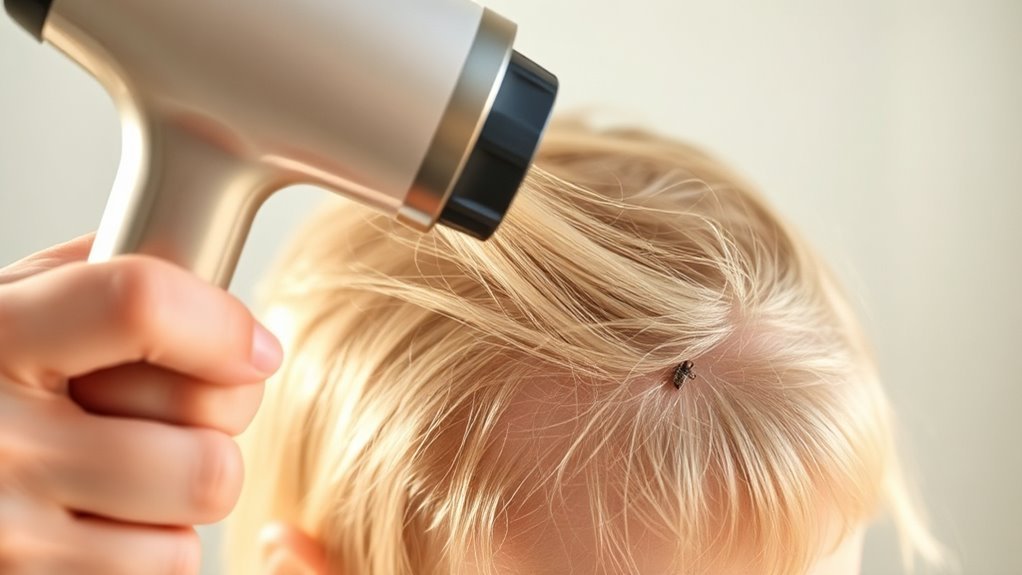
When you consider using a hair dryer to kill head lice, safety should be your top priority. Using a hair dryer improperly can cause burns or damage your scalp and hair.
Before you try this method, keep these points in mind:
- Avoid high heat settings: Excessive heat can burn your skin or scalp.
- Keep the dryer moving: Holding it in one spot increases the risk of burns.
- Maintain a safe distance: Keep the dryer at least 6 inches away from your head to prevent overheating.
While a hair dryer might seem like a quick fix, you’ve got to be cautious. It’s not a guaranteed way to kill lice and could harm you if used incorrectly.
Safe and Effective Head Lice Removal Methods
To get rid of head lice safely, you’ll want to explore recommended treatments and natural remedies that actually work.
It’s also important to know how to prevent lice from coming back after treatment.
Let’s look at the best methods to keep your scalp lice-free.
Recommended Treatment Options
If you’re dealing with head lice, choosing safe and effective treatment methods is essential to quickly eliminate the infestation without harming your scalp or hair. Here are three recommended options you can rely on:
- Medicated Shampoos and Lotions: Use over-the-counter or prescription treatments containing permethrin or pyrethrin. Make sure to follow the instructions carefully for the best results.
- Wet Combing: After washing, use a fine-toothed lice comb on damp hair to physically remove lice and nits. You’ll want to repeat this every few days for at least two weeks to be sure.
- Cleaning Personal Items: Wash bedding, hats, and clothing in hot water and dry them on high heat. This helps prevent any chance of re-infestation.
Avoid DIY heat treatments like hair dryers because they’re not effective and can actually cause burns. It’s better to stick to proven methods for safe lice removal.
Natural Remedies Overview
Although many people prefer chemical treatments, you might want to explore natural remedies that effectively combat head lice without harsh ingredients. These options often use common household items and can reduce lice safely.
You’ll need patience and consistency, as natural methods may take longer but are gentle on sensitive scalps. So, give them a try and see how they work for you!
| Remedy | How It Works | Application Tips |
|---|---|---|
| Olive Oil | Suffocates lice | Apply overnight under a shower cap |
| Tea Tree Oil | Natural insecticide | Mix a few drops with shampoo |
| Vinegar | Loosens nits from hair shafts | Rinse hair after shampooing |
| Coconut Oil | Smothers lice and nits | Use as a conditioner, leave on 1 hour |
Try these remedies regularly for best results. Stick with it, and you’ll likely see improvement over time!
Preventing Lice Reinfestation
Natural remedies can help reduce lice, but keeping them from coming back requires extra steps. To prevent lice reinfestation, you need to be thorough and consistent.
Here’s what you should do:
- Clean Personal Items: Wash hats, pillowcases, and scarves in hot water and dry them on high heat to kill any lingering lice or eggs.
- Avoid Sharing: Don’t share combs, brushes, or hair accessories, as lice spread easily through direct contact.
- Regular Checks: Inspect your hair and family members’ hair frequently for early signs of lice and treat promptly if detected.
Combining Heat With Other Lice Treatments
When you combine heat treatments, like using a hair dryer, with other lice removal methods, you increase your chances of completely eliminating the infestation. Heat can help weaken lice, making them more vulnerable to chemical shampoos or natural remedies.
Start by carefully using a hair dryer on a low setting to avoid burns but raise the scalp temperature enough to affect lice activity. Then, follow this with a thorough application of a lice treatment shampoo or lotion, as directed.
After treatment, use a fine-toothed lice comb to remove dead lice and nits. Combining these approaches attacks lice from multiple angles, reducing the likelihood they’ll survive or return.
Always follow product instructions closely and repeat treatments as recommended for best results. This way, you’ll give yourself the best shot at getting rid of those pesky bugs once and for all.
When Should You See a Doctor About Head Lice?
How do you know if it’s time to see a doctor about head lice? If home treatments aren’t working or the problem worsens, it’s a good idea to get professional advice.
Here are three signs you should visit a doctor:
- Persistent itching and redness — If your scalp stays irritated after several treatments, an infection might be developing.
- Allergic reaction — Swelling, blistering, or severe discomfort could mean you’re reacting to lice treatments or the lice themselves.
- Repeated infestations — If lice keep coming back despite thorough treatment, a doctor can recommend stronger or prescription options.
Seeing a doctor guarantees you get safe and effective care tailored to your situation. That way, you can finally get rid of those stubborn lice for good.
Frequently Asked Questions
How Long Do Head Lice Live Without a Human Host?
Head lice usually live up to 1-2 days without a human host since they need blood to survive.
You won’t find them thriving long off the scalp, so removing them from hair quickly helps control infestations.
Can Pets Get Head Lice From Humans?
You might think pets can get head lice, but they can’t. Head lice are species-specific, meaning they only infest humans.
What Are the Signs of a Head Lice Infestation?
You’ll notice intense itching, small white eggs (nits) attached to hair shafts, and tiny moving lice. Sometimes, you might see red bumps or sores from scratching.
Checking carefully helps you catch an infestation early. It’s a good idea to look closely if you or someone around you is feeling itchy. Early detection makes dealing with head lice a lot easier!
Are There Natural Remedies to Prevent Head Lice?
Yes, you can use natural remedies like tea tree oil, neem oil, and lavender to help prevent head lice. These oils have properties that may keep lice at bay.
Regularly washing hair is important too. And try to avoid sharing combs or hats with others.
These simple steps can really help keep lice away effectively. It’s all about being consistent and careful!
How Often Should You Check Children for Head Lice?
You should check your children for head lice at least once a week, like a vigilant knight inspecting armor before battle.
Regular checks help catch infestations early and keep those pesky lice from taking over their heads unnoticed.
It might seem like a hassle, but trust me, a little effort goes a long way in keeping those critters away.
Plus, it gives you a chance to catch up and make sure everything’s okay up there!
Conclusion
While a hair dryer might seem like a quick fix, it’s not the most reliable way to handle those persistent little guests on your head. Head lice have their own clever ways to resist heat, so relying solely on a dryer won’t do the trick.
Instead, consider safer, proven methods and maybe team up heat with other treatments. Using a hair dryer alone is unlikely to kill head lice completely.
If things get tricky, don’t hesitate to consult a doctor—you deserve a fuss-free, comfortable solution. Remember, effective head lice treatment usually involves a combination of approaches, not just heat from a hair dryer.