How to Dry Hair Without a Hair Dryer?
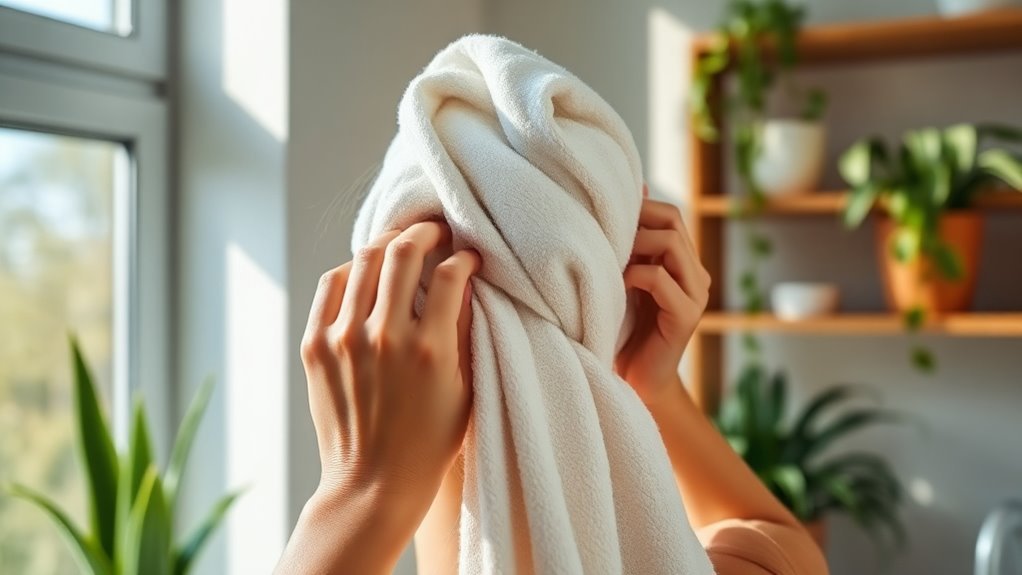
To dry your hair without a hair dryer, start by gently squeezing out excess water with a microfiber towel or cotton t-shirt to avoid frizz. This simple step helps reduce drying time and keeps your hair smooth.
Next, detangle with a wide-tooth comb and apply a lightweight leave-in conditioner to lock in moisture.
Part your hair into sections to speed up drying and let it air dry naturally. Try to avoid brushing while your hair is wet, as this can cause breakage and frizz.
Want to learn more? Keep exploring easy, damage-free methods for drying your hair without heat, plus tips tailored to your hair type and styling ideas that keep your locks healthy and beautiful.
Key Takeaways
- Gently squeeze out excess water using a microfiber towel or soft cotton t-shirt without rubbing to reduce frizz and damage.
- Detangle hair with a wide-tooth comb and part it into sections to speed up even drying.
- Wrap hair loosely in a cotton t-shirt or microfiber towel to absorb moisture while allowing airflow.
- Apply a lightweight leave-in conditioner or hair serum to lock in moisture and enhance texture.
- Avoid touching or brushing hair while drying to maintain natural texture and prevent breakage.
Prep Your Hair to Dry Faster Without a Hair Dryer
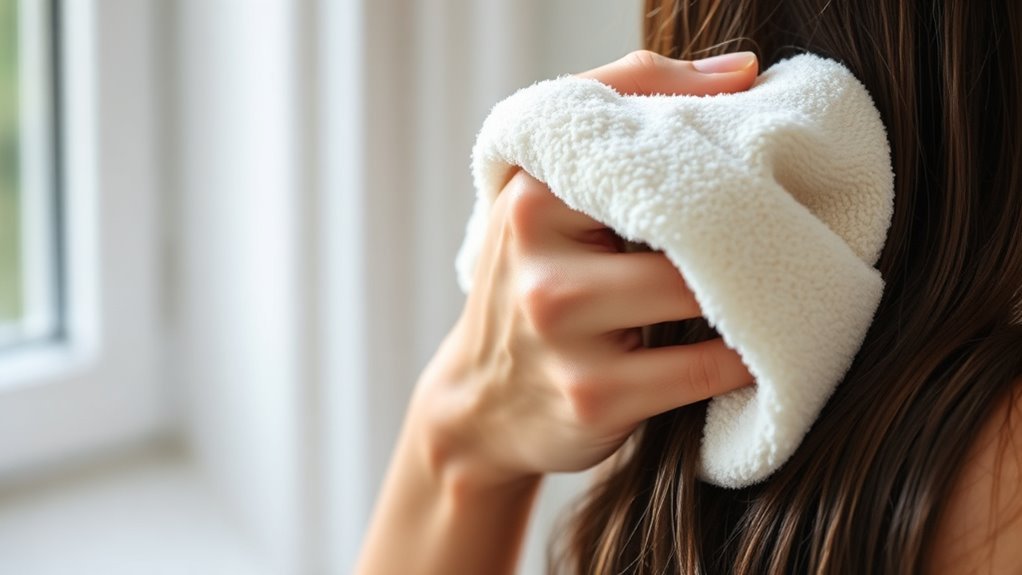
Start by gently squeezing out excess water from your hair with a microfiber towel or a soft cotton t-shirt. This step reduces dripping and speeds up drying time without causing frizz or breakage.
Gently squeeze out excess water using a microfiber towel or soft cotton t-shirt to reduce dripping and frizz.
Next, detangle your hair carefully with a wide-tooth comb to prevent damage and guarantee even drying. Avoid rubbing your hair harshly; instead, pat or blot to keep strands smooth.
Apply a lightweight leave-in conditioner or a hair serum to lock in moisture and protect your hair during air drying. Finally, part your hair in sections to expose more surface area to the air, allowing it to dry faster.
These simple steps prep your hair effectively, making the drying process quicker and healthier without relying on heat.
Remove Excess Water Effectively Without Heat
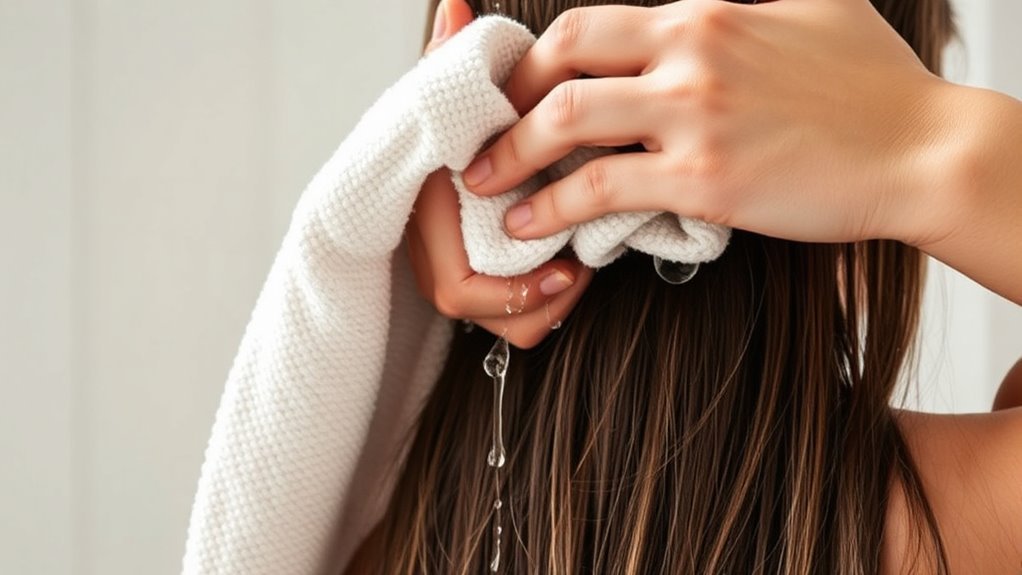
After prepping your hair to reduce moisture and protect strands, the next step is to remove excess water without using heat. Start by gently squeezing sections of your hair with your hands to push out water.
Avoid rough towel rubbing, which causes frizz and breakage. Instead, use a microfiber towel or a soft cotton T-shirt to blot and wrap your hair, absorbing moisture while minimizing friction. Patience is key; gently press rather than rub.
| Method | Material Needed | Key Benefit |
|---|---|---|
| Hand Squeezing | None | Removes bulk water |
| Blotting | Microfiber towel | Reduces frizz |
| Wrapping | Cotton T-shirt | Absorbs moisture gently |
| Air Dry Prep | Wide-tooth comb | Prevents tangles |
| Avoid Rubbing | Soft fabric | Prevents breakage |
Air Drying Tips for Different Hair Types
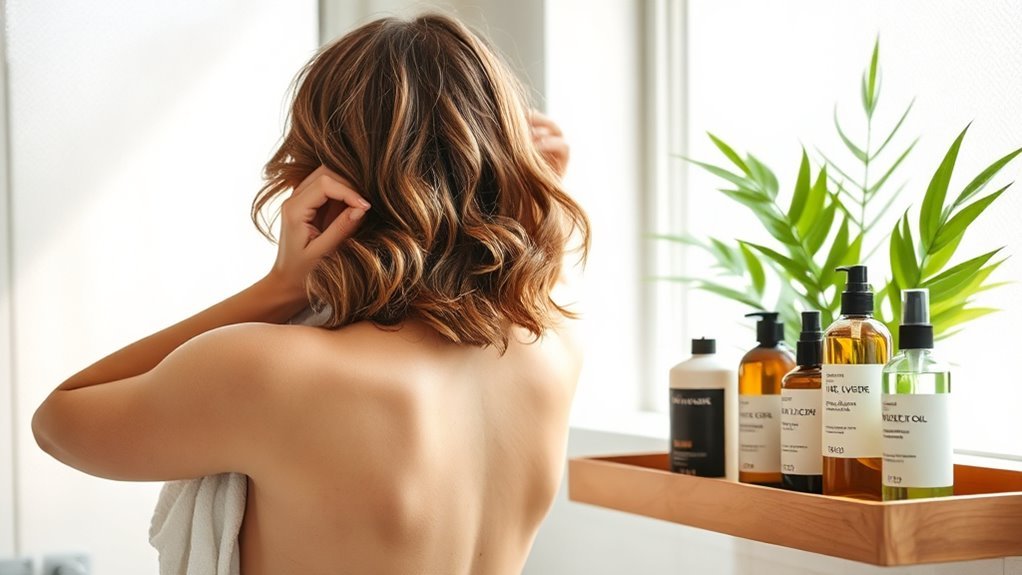
While air drying works well for many, tailoring your approach to your specific hair type helps you achieve the best results. If you have straight or fine hair, avoid touching it too much while drying to prevent frizz and maintain smoothness.
For wavy hair, scrunch your hair gently to encourage natural waves without causing frizz. Curly hair benefits from applying a leave-in conditioner or curl cream to keep curls defined and hydrated as they dry.
Thick or coarse hair may take longer to dry, so part your hair into sections to speed up the process. Regardless of your hair type, avoid brushing while wet to prevent breakage, and let your hair dry naturally for healthier, shinier results.
Safely Using Towels and Wraps to Speed Drying
Using towels and wraps properly can markedly speed up your hair drying without causing damage. Choose soft, microfiber towels or cotton wraps to gently absorb excess moisture.
Avoid rough rubbing; instead, press or squeeze your hair to prevent frizz and breakage. Wrap your hair loosely to allow airflow and avoid tension on your scalp.
| Tip | Why It Helps |
|---|---|
| Use microfiber towels | Absorbs water efficiently |
| Pat, don’t rub | Prevents frizz and damage |
| Wrap loosely | Allows airflow, reduces tension |
| Avoid rough fabrics | Protects hair cuticles |
| Change towel when wet | Prevents bacterial growth |
Following these tips lets you dry your hair faster while keeping it healthy. Give them a try and see the difference!
Style Your Hair While It Dries Without Heat
If you want to achieve a polished look without heat, styling your hair as it dries is key. You can shape your hair naturally, reducing frizz and boosting volume without damage.
Achieve a polished, natural look by styling your hair as it dries—boost volume and reduce frizz without heat.
Start by applying a lightweight leave-in conditioner or styling cream to damp hair to enhance texture and hold. Then, try these simple techniques:
- Twist or braid sections to create waves or curls once dry.
- Use soft hair clips or pins to lift roots and add volume.
- Comb your hair in the direction you want it to set to maintain a smooth finish.
These steps help your hair dry in the desired style, giving you control and reducing the need for heat styling later.
Give it a go—you might just love the results!
Finish Drying With Heat-Free Tools When Needed
Although air drying is gentle, you might find certain areas stay damp longer or lack volume. To finish drying without heat, try using tools like microfiber towels or a soft cotton T-shirt to gently squeeze out excess moisture. These materials absorb water effectively without causing frizz or damage.
You can also use a wide-tooth comb or your fingers to detangle and lift roots, adding natural volume as your hair dries. If you want extra bounce, consider using a hair diffuser attachment on a cool setting, but only if you avoid heat completely.
These heat-free methods help you speed up drying while maintaining hair health, so you don’t have to rely on damaging hot tools to get the look you want. It’s a great way to keep your hair happy and healthy!
Frequently Asked Questions
Can Drying Hair Without Heat Prevent Split Ends?
Yes, drying your hair without heat does help prevent split ends. You’ll avoid damage caused by high temperatures, keeping your hair healthier and stronger.
Just be gentle when towel-drying to reduce breakage and maintain moisture. It really makes a difference in how your hair feels and looks!
How Does Drying Hair Naturally Affect Scalp Health?
Drying your hair naturally helps maintain your scalp’s moisture balance, reducing irritation and dryness. You’ll avoid heat damage that can cause flakiness or inflammation.
This promotes healthier skin and a more comfortable, balanced scalp overall. It’s a simple way to keep your scalp feeling good without extra fuss.
What Are the Best Hair Products for No-Heat Drying?
Drying hair without heat is a breeze when you use microfiber towels, leave-in conditioners, and curl creams. These products work like a gentle hug, reducing frizz and speeding up air-drying.
At the same time, they keep your hair soft and healthy. It’s an easy way to care for your hair without the damage heat can cause.
Is It Safe to Sleep With Damp Hair?
Sleeping with damp hair is generally safe, but it can cause scalp irritation or increase breakage.
You should gently towel-dry or air-dry your hair before bed to keep it healthy and avoid discomfort while you sleep.
It’s a simple step that can make a big difference in how your hair feels in the morning. Just take a little extra time, and your scalp will thank you!
How Long Does Natural Hair Drying Usually Take?
Natural hair drying usually takes between 1 to 3 hours, depending on your hair’s thickness and length.
You’ll want to be patient, especially with thicker hair. It holds moisture longer and takes more time to dry completely.
Conclusion
You don’t need a hair dryer to get dry, healthy hair. By prepping your hair well, gently removing excess water, and using the right towels or wraps, you can speed up drying naturally.
Air drying suits every hair type when you style thoughtfully as it dries. If needed, heat-free tools can finish the process safely.
Embrace these steps, and you’ll see drying hair without heat isn’t just a theory—it’s a practical, effective routine you can trust. Drying hair without a hair dryer helps maintain your hair’s natural moisture and reduces damage from heat. So, give air drying a try and enjoy healthier, shinier hair without relying on heat styling tools.