Dry Hair Fast Without a Hair Dryer in 7 Steps
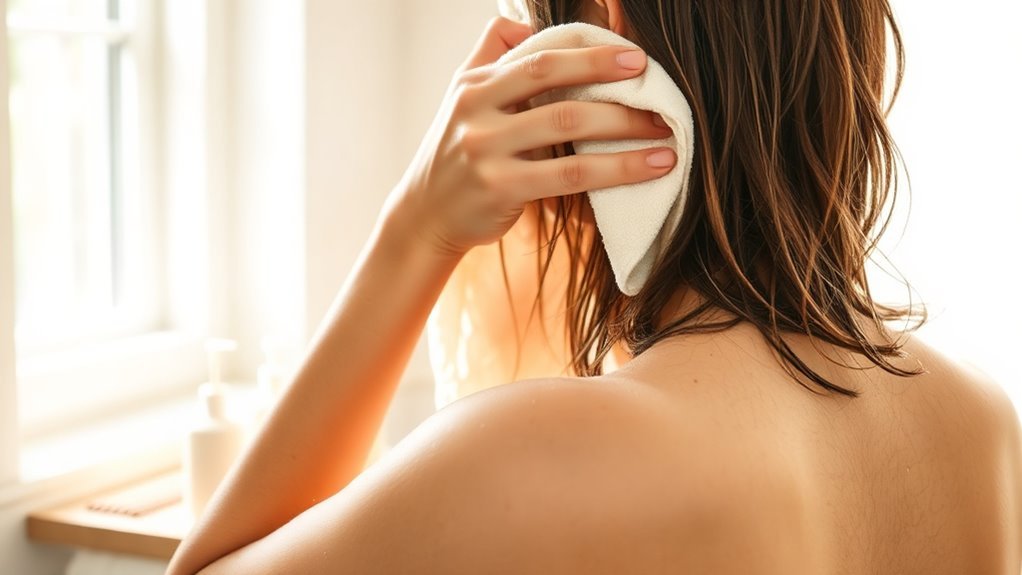
To dry hair fast without a hair dryer, start by gently squeezing out excess water with a microfiber towel or soft cotton T-shirt. Avoid rubbing to cut frizz and keep your hair smooth.
Next, apply a lightweight leave-in spray to wick moisture away without weighing your hair down.
Then, comb gently with a wide-tooth comb to boost airflow.
Style your hair in braids or twists to speed up drying time.
Finish by sitting near a fan or open window while resisting the urge to touch your hair.
Keep going for more helpful tips to dry hair efficiently and say goodbye to damp locks in no time!
Key Takeaways
- Gently squeeze excess water using a microfiber towel or soft cotton T-shirt without rubbing. This helps reduce drying time and prevents frizz.
- Apply a lightweight leave-in spray or serum to wick moisture away and speed up air drying. It won’t weigh your hair down, so that’s a bonus.
- Comb your hair gently with a wide-tooth comb, starting from the ends and moving to the roots. This increases airflow and separates strands for faster evaporation.
- Style your hair in braids or twists. This tricks moisture out and exposes more surface area, so your hair dries quicker.
- Use a fan or open a window to get some air circulating around your hair. This speeds up evaporation without needing any heat.
Remove Excess Water Quickly
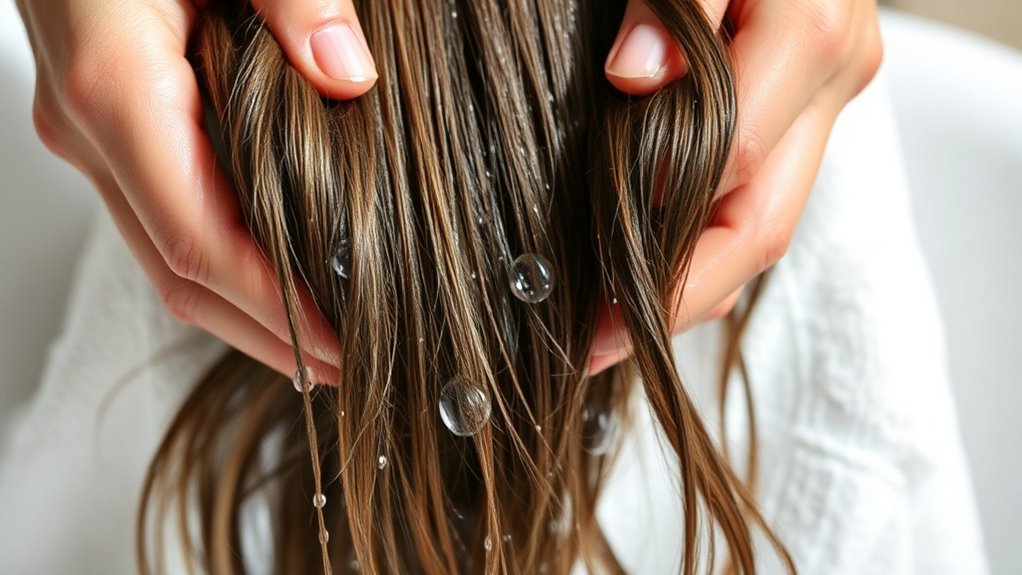
To remove excess water quickly, start by gently squeezing your hair with a microfiber towel or a soft cotton T-shirt. Avoid rubbing or twisting, as that can cause frizz and breakage.
Instead, press the fabric against your scalp and hair strands to soak up moisture without rough agitation. Work in sections, moving from roots to ends, to make certain you’re removing as much water as possible.
If your hair is thick or long, you might want to repeat this step a few times. This method helps reduce drying time markedly.
Once you’ve blotted out the excess water, your hair will feel lighter and less dripping wet. That makes it easier to air dry or style without relying on a hair dryer.
Use a Microfiber Towel to Dry Hair Faster
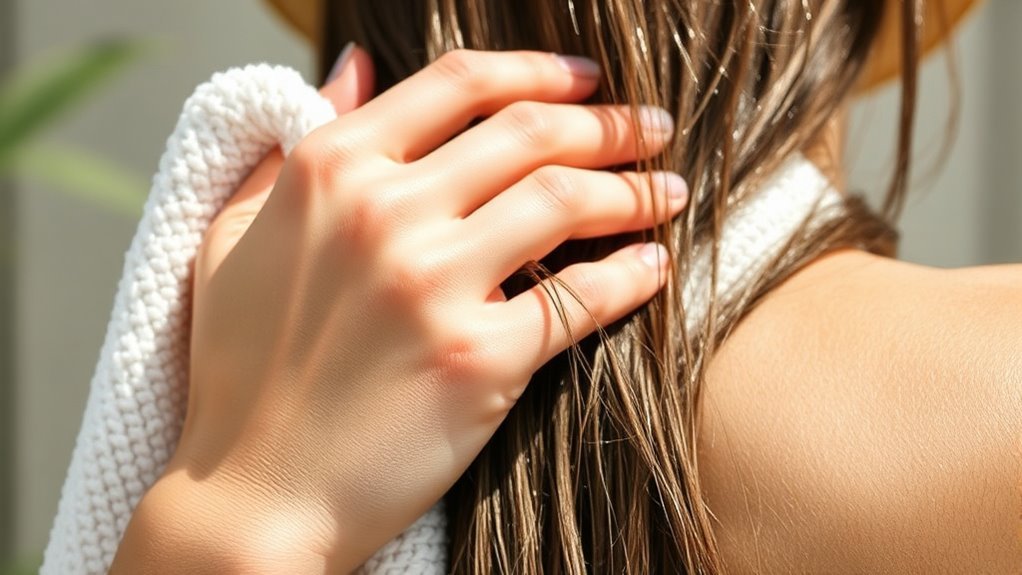
Using a microfiber towel speeds up drying by absorbing moisture more efficiently than regular towels. When you wrap your hair in one, it draws out water quickly without roughing up your strands, reducing frizz and damage.
After rinsing, gently squeeze your hair with the microfiber towel instead of rubbing. This helps prevent breakage and cuticle disruption.
You can also twist the towel around your hair to soak up excess water while you get dressed or do other tasks. Microfiber towels are lightweight and compact, making them easy to use daily or on the go.
Apply Leave-In Products to Dry Hair Faster
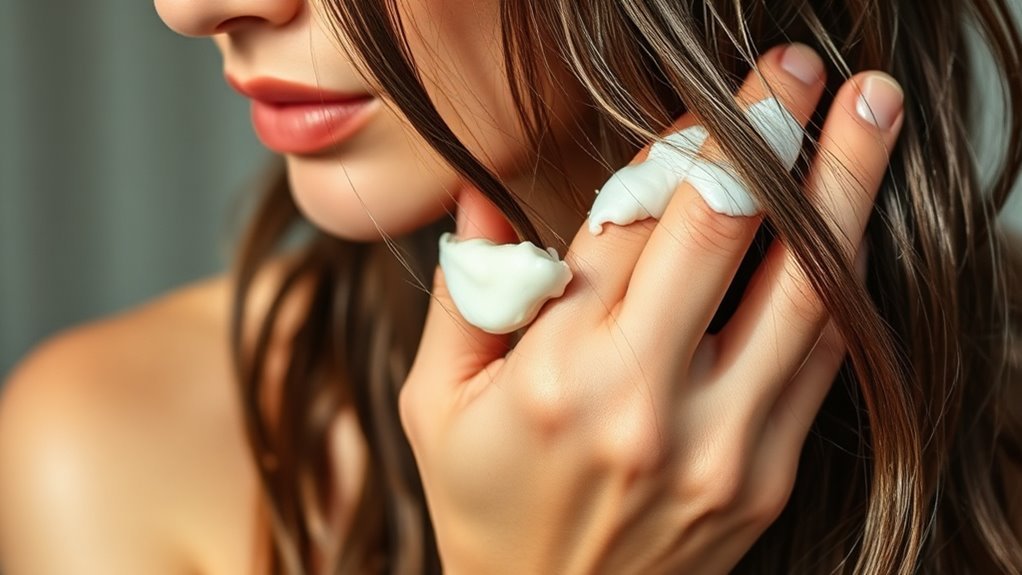
After you’ve gently blotted your hair with a microfiber towel, applying leave-in products can speed up the drying process even more. Choose lightweight formulas like leave-in sprays or serums that help wick moisture away without weighing your hair down.
Apply the product evenly from roots to ends, focusing on areas that tend to stay damp longer. These products often contain ingredients that promote quicker evaporation, helping your hair dry faster naturally.
Just be sure not to overload your hair, as too much product can trap moisture and slow drying. By incorporating leave-in treatments into your routine, you’ll reduce drying time and keep your hair manageable and frizz-free.
This simple step works great with air-drying, making it easier to skip the hair dryer without sacrificing style or hair health.
Comb Hair Gently to Boost Airflow
Combining your hair gently helps increase airflow between strands, speeding up drying without causing damage. Instead of roughly tugging or brushing wet hair, use a wide-tooth comb or your fingers to detangle carefully.
This prevents breakage and keeps your hair healthy while allowing air to circulate better. Start combing from the ends and work your way up to avoid pulling on knots.
As you comb, separate sections to expose more surface area to the air, which naturally quickens evaporation. Avoid tight combing or harsh strokes, as wet hair is more fragile and prone to snapping.
Style Hair in Braids or Twists to Speed Drying
Twist or braid your hair to create tension that helps wick moisture away from your scalp and strands faster. This method exposes more surface area to the air, speeding up drying naturally.
Plus, it keeps your hair neat and manageable while it dries. You can choose tight braids for maximum tension or loose twists for gentle drying.
| Style Type | Drying Speed | Best For |
|---|---|---|
| Tight Braids | Fast | Thick, long hair |
| Loose Braids | Moderate | Fine or fragile hair |
| Twists | Moderate | Curly or textured hair |
| Half Braids | Slow | Short or layered hair |
Give it a try and see what works best for your hair type and drying needs.
Use a Fan or Open Window for Faster Drying
By placing yourself near a fan or an open window, you can speed up the drying process without heat. The moving air helps evaporate moisture from your hair more quickly while keeping it safe from damage caused by heat styling tools.
Position yourself so the breeze hits your hair directly, allowing air to circulate freely around your strands. If you’re indoors, a standing or desk fan works well; outdoors, a gentle breeze through an open window is perfect.
Just make sure the air isn’t too cold or harsh, as that might dry out your hair excessively. Using this method, you’ll cut down drying time naturally, leaving your hair feeling fresher and healthier without needing a hair dryer.
Avoid Touching Hair to Speed Up Drying
If you want your hair to dry faster, try not to touch it too much. Constantly running your fingers through your hair creates friction, which can cause damage and slow down drying.
Minimize Hair Contact
Often, you might feel tempted to run your fingers through your hair or fluff it while it’s drying, but doing so actually slows the process. Every time you touch your hair, you transfer oils and moisture from your hands, which can prolong drying time.
Plus, constant contact disrupts the natural evaporation of water. Instead, let your hair be. Resist the urge to brush or style it until it’s mostly dry.
If you need to manage your hair, use a wide-tooth comb gently and sparingly. The less you disturb your strands, the faster they’ll dry.
Minimizing contact also helps reduce frizz and preserves your hair’s natural texture. So, keep those hands away and give your hair the space it needs to dry efficiently.
Reduce Friction Damage
When you frequently touch or rub your hair during drying, you increase friction that can damage the strands and slow moisture evaporation. To reduce friction damage, resist the urge to run your fingers through your hair or constantly adjust it while it’s drying.
Instead, gently blot your hair with a microfiber towel or a soft cotton T-shirt to remove excess water. These materials minimize roughness and prevent breakage compared to regular towels.
Let your hair air dry naturally without interference, allowing moisture to evaporate efficiently. By avoiding unnecessary contact, you protect your hair’s cuticle, reduce frizz, and speed up drying time.
Frequently Asked Questions
Can Drying Hair Without Heat Damage Scalp Health?
Yes, drying your hair without heat actually protects your scalp health by preventing dryness and irritation.
You’ll keep natural oils intact, reducing damage and promoting a healthier scalp environment overall.
It’s a simple way to care for your scalp while keeping your hair looking great. Give it a try!
How Often Should I Air Dry My Hair to Avoid Dryness?
Like leaves soaking up morning dew, you should air dry your hair 3-4 times weekly to avoid dryness. This balance lets moisture settle in while preventing over-drying.
It keeps your scalp and strands healthy and hydrated. Just the right amount of air drying goes a long way!
What Are the Best Natural Oils for Dry Hair Care?
You’ll want to use coconut, argan, jojoba, or olive oil for dry hair care. They deeply moisturize, reduce frizz, and add shine.
Just apply a small amount to damp or dry hair for best results. It’s pretty simple, but it makes a big difference!
Does Air Drying Affect Hair Color Longevity?
Yes, air drying can help preserve your hair color longer since it avoids heat damage from dryers.
You’ll keep your color vibrant and prevent fading by letting your hair dry naturally without harsh heat exposure.
Can Diet Impact How Quickly My Hair Dries Naturally?
Yes, your diet can impact how quickly your hair dries naturally. Staying hydrated and eating nutrient-rich foods like vitamins A, C, and E strengthens hair.
This improves its texture and moisture balance, which helps it dry faster. So, what you eat really does make a difference!
Conclusion
You might think drying hair without a dryer would take forever, but with these simple steps, it’s surprisingly quick. While a hair dryer blasts hot air, you’re using gentle techniques that protect your strands and save energy.
By removing excess water, using microfiber towels, and letting natural airflow do the work, you’ll have dry, healthy hair fast—without the noise and heat. Sometimes, slowing down actually speeds things up.
These methods help dry hair fast without a hair dryer, keeping your hair healthy and vibrant. Plus, you avoid the damage caused by heat styling, making this a great option for anyone wanting soft, nourished hair. So give these tips a try—you’ll be amazed at how quickly your hair can dry naturally and safely!