10 Steps to Dry Your Hair Without a Hair Dryer
To dry your hair without a hair dryer, start by gently squeezing out excess water using your hands and a soft microfiber towel or cotton t-shirt. This helps reduce dripping and speeds up drying time without roughing up your strands. Detangle carefully with your fingers or a wide-tooth comb to avoid breakage and keep your hair healthy.
Next, apply a leave-in conditioner or serum for smoothness and frizz control. This step adds moisture and protects your hair as it air-dries. You can also try plopping with a breathable fabric to enhance curls and speed drying.
It’s a simple trick that works wonders, especially if you want defined curls without heat damage.
Once you’ve done that, keep your hands off while air-drying to maintain your hair’s natural texture and protect it from humidity. Resist the urge to constantly touch or brush your hair.
For more tips on protecting and styling dry hair, keep exploring these strategies—you’ll find plenty of easy ways to care for your hair without a dryer!
Key Takeaways
- Gently squeeze excess water from your hair using your hands or a microfiber towel. This helps avoid breakage and reduces frizz.
- Wrap your hair in a soft fabric like a cotton t-shirt or a microfiber towel. This technique, called plopping, enhances natural curls and speeds up drying.
- Section your hair into manageable parts and air-dry each one separately. This ensures even drying and helps reduce damp spots.
- Try to avoid touching your hair while it’s drying. This protects the cuticle layer, minimizes frizz, and keeps your natural texture intact.
- Apply a leave-in conditioner or serum on damp hair. It tames frizz and locks in moisture for a smooth, polished finish.
How to Gently Squeeze Out Excess Water
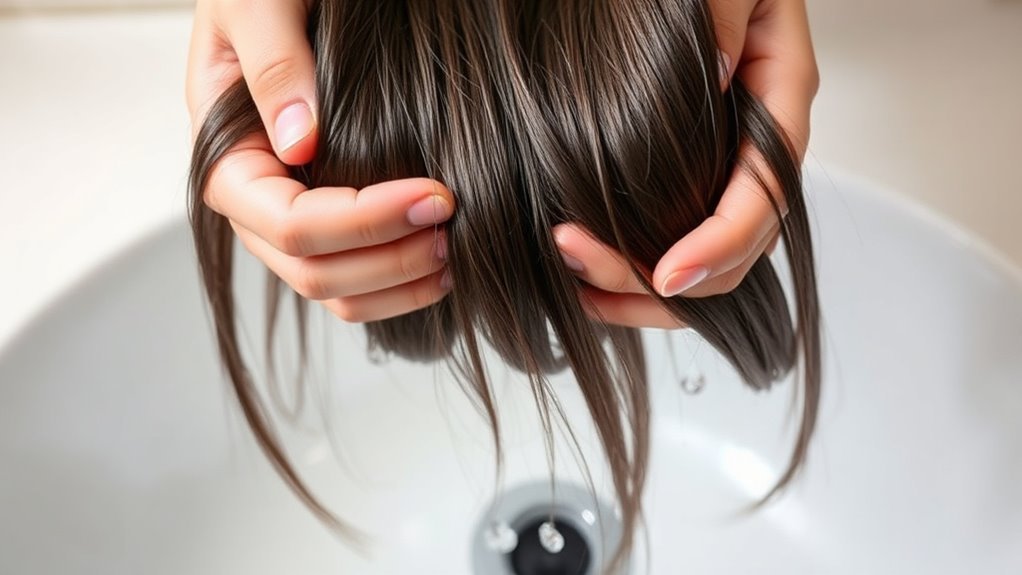
Begin by cupping your hands around your hair and gently squeezing to remove excess water. Avoid twisting or wringing, as this can stress your strands and cause breakage.
Instead, focus on applying light pressure to encourage water to release naturally. Work from the roots to the ends, making sure you don’t miss any soaked areas.
If your hair feels too wet to handle, wait a few minutes after showering to let some water drip off naturally before squeezing. Keep your movements slow and deliberate; rushing can lead to damage.
This gentle method helps reduce frizz and maintains your hair’s natural texture. By controlling how you remove water, you set the foundation for healthier, less damaged hair as it air dries.
Choose the Right Towel to Absorb Moisture
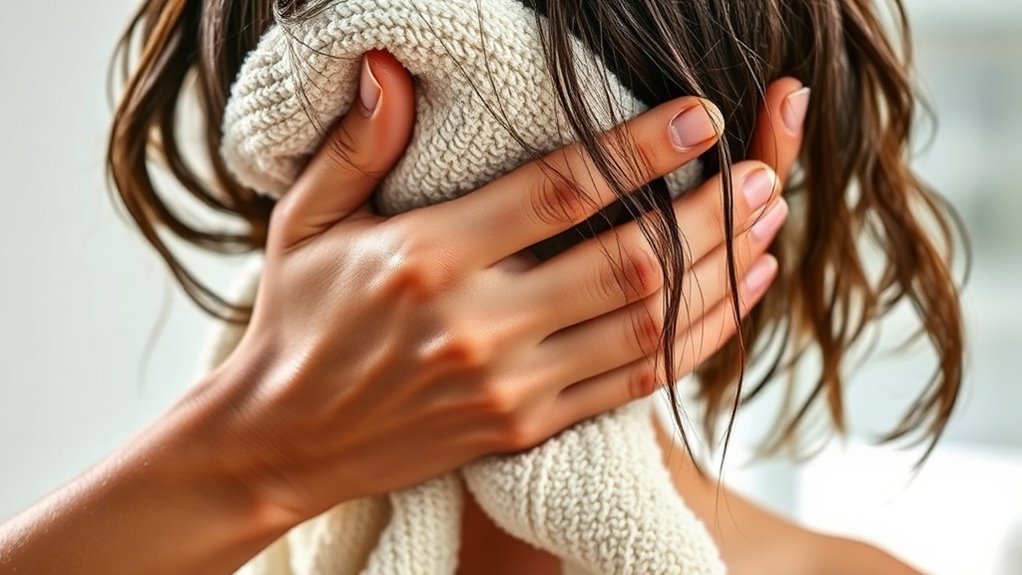
You’ll want to pick a towel made from soft, absorbent material like microfiber or cotton to soak up moisture effectively. Make sure it’s large enough to wrap around your hair comfortably without roughening the strands.
Avoid rough fabrics that can cause friction and lead to frizz or damage. You don’t want to make your hair’s job any harder, right? So, go for something gentle and cozy!
Material Matters Most
Choosing the right towel can make a huge difference in how quickly your hair dries without a hair dryer. Not all towels are created equal when it comes to absorbing moisture from your hair.
Here’s what you should consider:
- Microfiber Towels – They’re super absorbent and gentle, which helps reduce friction and frizz.
- Cotton Towels – Go for soft, high-quality cotton for decent absorption. Just avoid rough textures because they can cause damage.
- Bamboo Towels – These are naturally antibacterial and moisture-wicking. Plus, they’re a great eco-friendly option.
- Avoid Terry Cloth Towels – Their rough texture can lead to hair breakage and frizz, so it’s best to steer clear.
Picking the right material really helps your hair dry efficiently while keeping it healthy and smooth. It’s a small change that makes a big difference!
Size And Absorbency
While the towel’s material plays a crucial role, its size and absorbency directly impact how well it soaks up moisture from your hair. You want a towel large enough to wrap your entire head comfortably without squeezing or causing tension.
A bigger towel lets you gently press and blot your hair, absorbing water more effectively. Look for towels made from highly absorbent fabrics like microfiber or cotton with a dense weave—they pull moisture away quickly.
Avoid small towels that force you to scrunch or rub, which can damage hair. Choosing the right size and absorbency means less drying time and less friction on your strands.
Avoid Rough Fabrics
Steer clear of rough fabrics that can snag or frizz your hair as you dry it. Choosing the right towel is pivotal for gentle moisture absorption without causing damage.
Here’s what you should consider:
- Opt for microfiber towels—they’re soft and highly absorbent, reducing drying time.
- Avoid terry cloth towels with rough loops that can roughen your hair cuticles.
- Pick towels labeled “gentle” or “hair-friendly” to guarantee minimal friction.
- Use a soft cotton T-shirt as an alternative; it absorbs well and prevents breakage.
Gentle Finger Detangling to Prevent Breakage
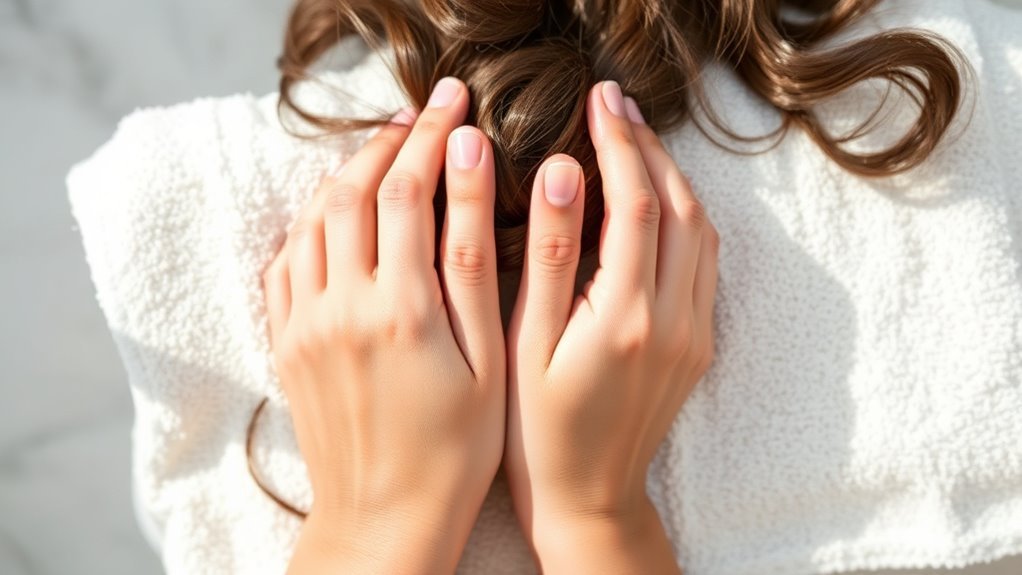
You can protect your strands by gently detangling with your fingers instead of harsh brushes. Start at the ends and slowly work your way up to avoid unnecessary breakage.
With the right technique, finger detangling keeps your hair healthy and strong. It’s a simple step that makes a big difference!
Benefits of Finger Detangling
Taking the time to finger detangle your hair can markedly reduce breakage compared to using combs or brushes. When you use your fingers, you gain better control and can gently separate knots without tugging harshly.
This method preserves your hair’s natural texture and moisture, leaving it healthier over time. Here are four key benefits you’ll notice:
- Less Breakage – Fingers glide through tangles more smoothly, minimizing snapping.
- Better Scalp Stimulation – You promote blood flow, encouraging hair growth.
- Increased Awareness – You can feel problem areas early and treat them gently.
- Moisture Retention – Finger detangling helps keep your strands hydrated by avoiding rough friction.
Embracing finger detangling makes your hair care routine gentler and more effective. It’s a simple change that can make a big difference!
Techniques for Gentle Detangling
Getting through tangles gently can make all the difference in preventing breakage. To start, make sure your hair is damp or coated with a conditioner to add slip, making detangling easier.
Use your fingers to slowly work through knots, beginning at the ends and gradually moving toward the roots. Avoid rushing; patience helps minimize pulling.
Separate your hair into manageable sections to keep control and focus on one area at a time. If you encounter a stubborn tangle, gently loosen it by massaging with your fingertips instead of yanking.
This method allows you to feel the tension and prevents unnecessary damage. By practicing gentle finger detangling, you protect your strands and maintain healthier hair while drying without a hair dryer.
Preventing Hair Breakage Tips
Although it might seem simple, finger detangling plays a crucial role in preventing hair breakage. When you use your fingers instead of a brush or comb, you reduce stress on your strands and avoid pulling too hard.
Here’s how to do it right:
- Start with damp hair, not soaking wet, to minimize damage.
- Apply a leave-in conditioner or detangling spray for smooth fingers.
- Gently separate knots using your fingertips, working from the ends upward.
- Take your time—rushing causes unnecessary breakage.
Smooth Your Hair With Leave-In Conditioner or Serum
Apply a leave-in conditioner or serum to damp hair to instantly tame frizz and add shine. These products create a smooth barrier, locking in moisture while preventing flyaways.
Just a small amount can transform your hair’s texture, making it easier to manage and style naturally. Spread the product evenly, focusing on the mid-lengths and ends, where dryness usually shows up first.
This step not only enhances your hair’s appearance but also protects it throughout the day.
| Feeling | Result | Why It Matters |
|---|---|---|
| Confidence | Sleek, shiny hair | Looks healthy, feels great |
| Comfort | Frizz-free touch | No more rough strands |
| Joy | Easy styling | Saves time and effort |
| Calm | Moisturized hair | Prevents damage |
| Pride | Smooth finish | Shows you care for yourself |
Try Plopping to Boost Your Curls or Waves
If you want to enhance your curls or waves without heat, try plopping. It’s a simple technique where you wrap your hair in a soft fabric to help define and dry your natural texture.
Choose breathable materials like cotton or microfiber towels to get the best results. Trust me, it really makes a difference!
Benefits of Plopping
Boosting your curls or waves becomes easier with plopping, a simple technique that enhances natural texture while reducing frizz. When you plop, you let your hair dry in a way that preserves its shape and volume without heat damage.
This method is gentle on your strands, preventing breakage and promoting healthier hair over time. Plus, it saves you time since your hair dries faster than air-drying flat.
Here are four key benefits of plopping:
- Enhances curl definition by avoiding disruption during drying.
- Minimizes frizz by controlling moisture and reducing friction.
- Protects hair from heat damage since no blow dryer is used.
- Speeds up drying time compared to traditional air-drying.
Try plopping to enjoy these advantages and embrace your natural waves or curls. You’ll love how easy it is!
How to Plop
Start by gently squeezing excess water from your hair with a microfiber towel or a soft cotton t-shirt to prevent frizz.
Next, lay the towel or t-shirt flat on a surface, flip your head forward, and position your curls or waves onto the fabric’s center. Carefully wrap the fabric around your head, tucking the ends at the nape of your neck or securing them on top.
This creates a snug “plop” that lifts and defines your curls while absorbing moisture. Leave your hair wrapped for 20 to 30 minutes or longer if you prefer.
When you’re ready, unwrap gently to avoid disturbing your curl pattern. Plopping enhances your natural texture, reduces drying time, and minimizes frizz—making it an easy, heat-free step for gorgeous curls or waves.
Best Fabrics for Plopping
Choosing the right fabric can make all the difference when plopping your hair. The fabric you pick affects how well your curls or waves dry and how much frizz appears.
Here are four of the best fabrics for plopping:
- Microfiber towels – They absorb water quickly without roughing up your hair cuticles, reducing frizz.
- Cotton T-shirts – Soft and gentle, they prevent friction that causes breakage and frizz.
- Bamboo fabric – Naturally moisture-wicking and smooth, it helps maintain curl definition.
- Silk or satin scarves – These fabrics don’t absorb moisture, so they keep your hair hydrated while reducing friction.
Try these fabrics to find what works best for your hair type. Enjoy boosted, frizz-free curls or waves every time you plop!
Air-Dry Hair in Sections for Speedier Results
Although air-drying your hair can take time, working in sections helps speed up the process. Start by dividing your hair into manageable parts—typically four to six sections depending on thickness.
Clip each section separately to keep them apart. Focus on one section at a time, gently squeezing out excess water with your hands before letting it air dry.
This method exposes more surface area to the air, allowing moisture to evaporate faster than drying your hair all at once. It also helps prevent uneven drying, reducing damp spots that take longer to dry.
Use a Soft Brush or Wide-Tooth Comb to Avoid Frizz
Reach for a soft brush or wide-tooth comb when detangling damp hair to minimize frizz and breakage. These tools gently glide through your strands, preventing snagging and split ends.
Follow these steps for best results:
- Start detangling at the ends, working upward to the roots.
- Use slow, gentle strokes to avoid pulling or tearing your hair.
- Choose a wide-tooth comb for curly or thick hair to preserve natural texture.
- Opt for a soft brush on straight or fine hair to smooth without causing static.
Keep Your Hands Off to Prevent Frizz While Air-Drying
After gently detangling your hair with a soft brush or wide-tooth comb, resist the urge to touch it while it dries. Constantly running your fingers through your hair can disrupt the natural drying process, leading to unwanted frizz and flyaways.
Each time you touch your hair, you’re disturbing the cuticle layer, making strands rough and prone to static. Instead, let your hair dry undisturbed to maintain smoothness and definition. If you need to style, wait until your hair is completely dry before making adjustments.
Protect Air-Dried Hair From Humidity
Humidity often challenges your efforts to keep air-dried hair looking sleek and smooth. To protect your hair, you need a solid plan that locks out moisture and maintains your style.
First, choose anti-humidity hair products like serums or sprays designed to shield your strands. These can make a big difference.
Also, try to avoid touching your hair throughout the day. Oils from your hands can attract moisture, which doesn’t help with frizz.
When you’re outside, wearing a loose scarf or hat can physically block humidity. It’s a simple trick that works well.
Lastly, keep your hair well-moisturized but not overloaded. Balanced hydration helps resist frizz caused by damp air.
Use Cool Mist or Natural Oils to Add Shine
Keeping your hair protected from moisture helps maintain its smoothness, but adding shine can take your look to the next level. You can spritz your hair with cool mist from a spray bottle to instantly invigorate and add subtle gloss.
Or, try applying natural oils like argan, jojoba, or coconut oil. These nourish your strands, seal cuticles, and boost shine without weighing hair down.
Here’s a quick guide to choosing the right option:
| Method | Benefits | Best For |
|---|---|---|
| Cool Mist | Lightweight, invigorating | Fine or thin hair |
| Argan Oil | Deep nourishment, shine | Dry or frizzy hair |
| Coconut Oil | Moisturizing, smoothness | Thick or coarse hair |
Use these tips to enhance your air-dried hair’s shine naturally and effortlessly.
Frequently Asked Questions
Can Air-Drying Cause Scalp Odor or Buildup?
Yes, air-drying can cause scalp odor or buildup if your hair stays damp too long. This can encourage bacteria or fungus growth.
How Long Does It Typically Take to Air-Dry Thick Hair?
It usually takes you about two to four hours to air-dry thick hair, which coincides perfectly with your favorite show’s length.
You’ll want to be patient, but the results feel worth the wait!
Is Air-Drying Suitable for All Hair Types?
Air-drying can work for most hair types, but you’ll want to adjust your routine.
Curly or thick hair might need extra time or products to prevent frizz, while fine hair dries quickly but can look flat.
Can Air-Drying Reduce Heat Damage Compared to Blow Drying?
Yes, you can reduce heat damage by air-drying since it avoids the high temperatures of blow dryers.
However, it takes longer, so you might need extra care to prevent frizz and maintain your hair’s health.
Just be patient with the process, and maybe try some leave-in conditioners or anti-frizz products to keep things smooth.
What Are the Best Hairstyles for Air-Dried Hair?
Like a vintage film star, you’ll love loose waves, messy buns, or sleek ponytails for air-dried hair. These styles embrace your natural texture, letting you rock effortless, timeless looks without heat damage or fuss.
Seriously, they’re super easy to pull off and perfect for any occasion. So why not give your hair a break and try these cool, low-maintenance styles? You might just find your new favorite!
Conclusion
By following these steps, you’ll dry your hair without a dryer like a pro—no need for a thunderstorm of frizz! Gently squeezing out water, choosing the perfect towel, and using leave-in products will keep your strands smooth and shiny.
Remember, patience is your secret weapon to avoid breakage and humidity chaos. Embrace your natural texture and enjoy healthier, happier hair that shines brighter than a thousand suns!
Drying your hair without a hair dryer isn’t just about saving time; it’s about protecting your hair’s health. Air drying reduces heat damage, helping your hair stay strong and vibrant. With these tips, you’ll avoid frizz, maintain moisture, and boost shine naturally. So, take it slow, be gentle, and let your hair breathe. Trust the process, and you’ll have silky, beautiful hair without ever reaching for that dryer again!