How Hot Does a Hair Dryer Get?
A typical hair dryer heats air between 140°F and 180°F, which helps you dry your hair quickly while preventing immediate damage. This temperature range is ideal because it balances effective drying with hair safety. Lower heat settings suit finer or damaged hair, while higher settings work better for thick or coarse hair.
But be careful—too much heat can cause dryness and breakage. Many dryers use technologies like ceramic or ionic elements to distribute heat more evenly and reduce harm. These features help protect your hair by preventing hot spots and minimizing frizz.
If you want to protect your hair and learn the best heat practices, keep going. Understanding how hot your hair dryer gets can make a big difference in maintaining healthy, shiny hair over time.
Key Takeaways
- Hair dryers typically operate between 140–180°F (60–82°C) for effective and safe drying. Higher-wattage models heat air faster and reach the upper temperature range more quickly.
- Heating elements like nichrome wire can produce intense heat, while ceramic elements provide gentler, even warmth.
- Professional-grade dryers (1900–2000+ watts) produce the hottest air and dry hair fastest.
- Technologies like ceramic, tourmaline, and ionic reduce heat damage by smoothing heat flow and enabling lower drying temperatures.
How Hot Does a Typical Hair Dryer Get?
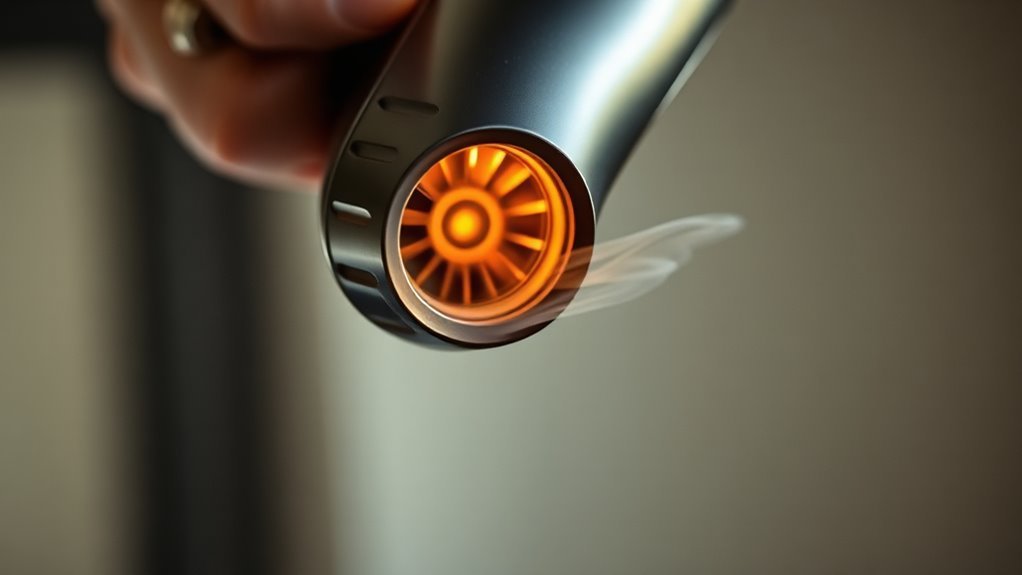
When you turn on a typical hair dryer, it heats up to around 140 to 180 degrees Fahrenheit (60 to 82 degrees Celsius). This temperature range allows the dryer to effectively dry your hair while preventing immediate damage.
Typical hair dryers heat between 140 to 180°F, drying hair efficiently while minimizing damage.
The heating element inside converts electrical energy into heat, which the fan then blows onto your hair. Most hair dryers come with multiple heat settings, but the standard operating temperature stays within this range.
The heat output depends on the power rating, usually between 1000 to 1875 watts. You’ll notice that higher wattage models can reach the upper end of the temperature scale faster.
This balance guarantees your hair dries efficiently without exposing it to extreme heat that could cause burning or excessive dryness.
How Hair Dryer Heat Levels Impact Your Hair Health

Heat levels on your hair dryer markedly affect your hair’s health. Using high heat frequently can strip your hair of natural moisture, leading to dryness and breakage.
If you choose the hottest setting every time, you risk damaging your hair cuticles, making strands brittle and prone to split ends. On the other hand, lower heat settings help preserve your hair’s natural oils and reduce the chance of heat damage.
You can still achieve a good dry without blasting your hair with intense heat. By adjusting the temperature to suit your hair type—for example, lower heat for fine or damaged hair—you protect your strands while styling.
Being mindful of heat levels means you’ll keep your hair healthier and look better over time. It’s all about finding that balance!
Which Hair Dryers Keep Heat Safer for Your Hair?
Choosing the right hair dryer can make a big difference in how safely you style your hair. Look for models with adjustable heat settings so you can control the temperature based on your hair type.
Hair dryers with ceramic or tourmaline technology distribute heat more evenly, reducing hot spots that can damage your strands. Ionic hair dryers help by breaking down water molecules for quicker drying at lower temperatures, minimizing heat exposure.
Also, consider dryers with cool shot buttons to set your style without extra heat. Avoid cheap models that only offer one high heat setting, as they can cause unnecessary damage.
What Factors Determine Hair Dryer Temperature Settings?
You’ll notice that the type of heating element inside your hair dryer plays a big role in how hot it gets. The power and wattage also directly affect the temperature settings you can choose from.
Understanding these factors helps you pick the right heat for your hair type. It’s all about finding that balance to avoid damage while getting the style you want.
Heating Element Types
Although hair dryers may seem straightforward, the type of heating element inside plays an essential role in determining how hot they get and how evenly they distribute heat.
Most hair dryers use either a nichrome wire or ceramic heating element. Nichrome wires heat up quickly and reach high temperatures, offering intense heat but sometimes causing uneven heat distribution.
Ceramic elements, on the other hand, provide consistent, gentle heat by distributing warmth more evenly, which helps protect your hair from damage.
Some dryers combine ceramic with tourmaline or infrared technology to further smooth heat flow and reduce drying time.
When you choose a hair dryer, understanding the heating element helps you pick one that balances heat intensity and safety.
That way, you can style efficiently without risking excessive heat exposure.
Power and Wattage
Understanding the power and wattage of a hair dryer helps you gauge how hot it can get and how quickly it dries your hair. Higher wattage means more energy, which usually translates to higher temperature settings and faster drying times.
But wattage alone doesn’t determine heat—you’ll also want to take into account the dryer’s design and airflow. Most hair dryers range between 800 and 2000 watts, with higher wattage models offering more heat options.
| Wattage (Watts) | Typical Heat Output |
|---|---|
| 800-1000 | Low heat, slower drying |
| 1100-1400 | Medium heat, balanced speed |
| 1500-1800 | High heat, faster drying |
| 1900-2000 | Very high heat, quick dry |
| Above 2000 | Professional-grade heat |
Knowing this helps you pick the right dryer for your hair type and styling needs. It’s all about finding what works best for you!
How to Use a Hair Dryer Safely
When using a hair dryer, taking safety precautions guarantees you protect both your hair and yourself from harm. Always keep the dryer at least six inches away from your hair to prevent overheating and damage.
Avoid using it near water to reduce the risk of electric shock. Make sure your hands are dry before plugging it in or adjusting settings.
Regularly clean the air intake to prevent lint buildup, which can cause the dryer to overheat. Don’t block the airflow with your hand or other objects.
Use short bursts of heat rather than continuous exposure to avoid drying out your scalp. Finally, turn off and unplug the dryer immediately after use to keep it safe and extend its lifespan.
Choosing the Right Heat Setting for Your Hair Type
To protect your hair while drying, selecting the right heat setting is just as important as following safety tips. If you have fine or damaged hair, use the low heat setting to prevent further breakage.
Medium heat works well for normal hair types, balancing effective drying with hair health. For thick or coarse hair, a higher heat can speed up drying, but avoid using the hottest setting too long to prevent dryness.
Always start with a lower heat and increase only if needed, paying attention to how your hair responds. Using the right heat setting helps maintain your hair’s moisture and shine, reducing the risk of heat damage.
Tailoring your approach guarantees your hair stays healthy and looks its best every day. It’s really all about finding what works for you!
Frequently Asked Questions
Can Hair Dryers Be Used to Dry Clothes or Other Fabrics?
You can use a hair dryer to dry clothes or fabrics, but it’s not very efficient for large items. It’s best for small spots or delicate fabrics you don’t want to damage with heat.
Basically, if you’re in a hurry and just need to dry a tiny area, a hair dryer can do the trick. Just keep it moving so you don’t overheat the fabric.
How Long Do Hair Dryers Typically Last Before Needing Replacement?
You might think hair dryers last forever, but they typically last about 3 to 5 years before needing replacement.
If yours feels weaker or overheats often, it’s probably time to get a new one.
It’s pretty common for performance to drop after a few years, so don’t ignore those signs!
Are There Energy-Efficient Hair Dryers Available on the Market?
Yes, you can find energy-efficient hair dryers designed to use less electricity while still drying your hair quickly.
Look for models with eco-modes or lower wattage to save energy without sacrificing performance. It’s a smart way to keep your hair care routine green and effective.
What Are the Best Accessories to Use With a Hair Dryer?
You’ll want a diffuser for curls, a concentrator nozzle for precise styling, and a heat protectant spray to shield your hair.
Using these accessories helps you dry efficiently while keeping your hair healthy and styled perfectly.
Trust me, they make a big difference in how your hair turns out!
Can Hair Dryers Cause Electrical Hazards if Used Near Water?
Yes, hair dryers can cause electrical hazards near water. You shouldn’t use them around sinks or bathtubs because water conducts electricity, increasing shock risk.
It’s really important to always keep your dryer dry and away from wet areas to stay safe. Just a little water can make a big difference when it comes to electrical safety!
Conclusion
If you think a hair dryer could double as a mini oven, think again! While it gets hot enough to style your hair, it’s not scorching lava—unless you forget to adjust the settings.
By choosing the right heat level for your hair type and using it wisely, you’ll avoid turning your locks into a crispy mess. So, treat your hair dryer like a gentle sunbeam, not a fiery dragon breathing flames!
Remember, hair dryers can reach temperatures that style your hair effectively but can cause damage if used improperly. Using the correct heat setting helps protect your hair from excessive heat exposure. So, always be mindful of how hot your hair dryer gets and adjust accordingly to keep your hair healthy and looking great.