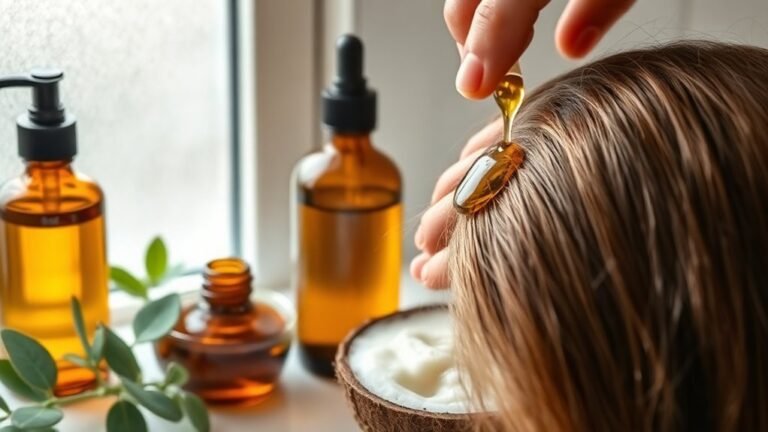
Best Oils for Dandruff and Itchy Scalps: 7 Effective Solutions
You can soothe your dandruff and itchy scalp with natural oils like tea tree oil, which fights the fungus causing dandruff while calming irritation.
Coconut oil hydrates dry skin and reduces flakes, making your scalp feel healthier and more comfortable.
Jojoba oil balances oil levels for a healthier scalp, helping to prevent excess dryness or oiliness.
Argan oil eases inflammation and strengthens hair, giving your scalp some much-needed relief and your hair a boost.
Rosemary oil boosts circulation, which can promote a healthier scalp environment.
Olive oil deeply conditions and softens, leaving your scalp nourished and your hair silky.
And don’t forget peppermint oil—it delivers a revitalizing, itch-relieving boost that feels amazing.
Explore these oils to transform your scalp care routine and truly feel the difference.
Key Takeaways
– Tea tree oil’s antifungal properties effectively target dandruff-causing yeast and soothe itchy, inflamed scalps when diluted properly.
It’s a natural way to calm your scalp and reduce flakes.
– Peppermint oil provides a cooling sensation, reduces inflammation, and improves scalp circulation to relieve itching and support hair growth.
You’ll feel refreshed while helping your scalp stay healthy.
– Carrier oils like coconut and jojoba hydrate, balance oil production, and fight fungal infections to reduce flakiness and scalp dryness.
They’re great for keeping your scalp nourished and comfortable.
– Argan and rosemary oils enhance scalp health by calming inflammation, boosting circulation, and promoting healthier hair growth.
These oils give your scalp some extra love and encourage stronger hair.
– Always dilute essential oils with carrier oils and perform a patch test to safely treat dandruff and scalp irritation.
Safety first—it helps avoid any unwanted reactions.
Tea Tree Oil for Antifungal and Soothing Benefits
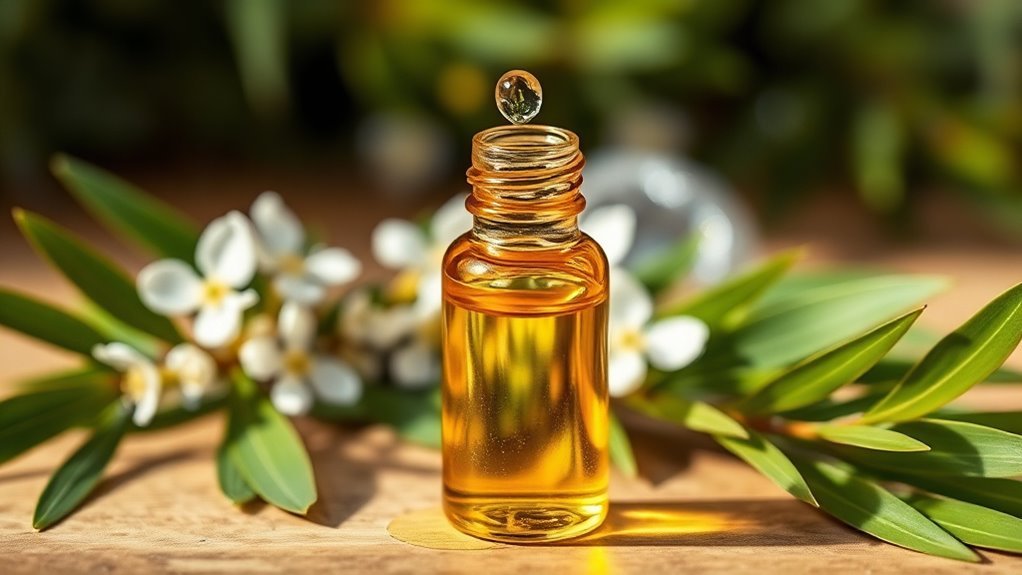
Although dandruff can be stubborn, using tea tree oil can help you tackle it effectively. You’ll find that its powerful antifungal properties target the root cause of dandruff—Malassezia yeast—reducing scalp irritation and flakiness.
When you apply tea tree oil diluted with a carrier oil, it works to soothe itchiness and calm inflammation, giving your scalp much-needed relief. You can add a few drops to your regular shampoo or create a scalp treatment by mixing it with coconut or jojoba oil.
Just make sure to do a patch test first, as tea tree oil can be potent and may cause irritation if used undiluted. With consistent use, you’ll notice a cleaner, healthier scalp and a reduction in dandruff symptoms.
Coconut Oil to Moisturize and Reduce Flakiness

You can use coconut oil to hydrate your scalp and ease dryness that leads to flakiness. Its moisturizing properties help reduce the appearance of dandruff by soothing irritation.
Applying it regularly keeps your scalp balanced and less prone to flakes. It’s a simple, natural way to keep your scalp feeling good and looking healthy.
Hydrating Scalp Benefits
When your scalp feels dry and itchy, applying coconut oil can provide instant moisture and soothe irritation. This natural oil penetrates deeply, hydrating your scalp and restoring its balance.
By locking in moisture, coconut oil helps prevent the dryness that often leads to flakiness and discomfort. Regular use keeps your scalp supple, reducing tightness and promoting overall scalp health.
You can massage a small amount into your scalp before washing your hair to boost hydration. Its lightweight texture guarantees it won’t clog pores or weigh your hair down.
Using coconut oil consistently creates a healthy environment that supports your scalp’s natural moisture barrier. This helps you avoid dryness and irritation without harsh chemicals or synthetic ingredients.
Anti-Flake Properties
Coconut oil tackles flakiness by moisturizing your scalp and reducing the dry skin that causes dandruff flakes. When you massage it into your scalp, the oil deeply penetrates, soothing irritation and preventing itching.
Its natural antifungal properties also help combat Malassezia yeast, a common dandruff culprit. Regular use leaves your scalp balanced and less prone to flaking.
| Benefit | Effect on Scalp |
|---|---|
| Deep Moisturization | Hydrates dry, flaky skin |
| Antifungal Action | Reduces yeast causing dandruff |
| Soothing Sensation | Eases itchiness and irritation |
| Scalp Balance | Maintains healthy skin barrier |
Jojoba Oil for Balancing Scalp Oils and Hydration

Although jojoba oil might seem like just another natural product, it stands out for its unique ability to balance your scalp’s oil production while deeply hydrating the skin. Because its molecular structure closely resembles your scalp’s natural sebum, it helps regulate oil levels without clogging pores or causing buildup.
If your scalp is both oily and dry in patches, jojoba oil can restore harmony, reducing flakiness linked to imbalance. Applying it regularly soothes irritation and prevents dryness that often worsens dandruff. Plus, it absorbs quickly, leaving no greasy residue.
To use, massage a few drops into your scalp, let it sit for 20 minutes, then rinse. This simple step can make a noticeable difference in scalp health and comfort. Give it a try—you might just love how your scalp feels afterward!
Argan Oil to Calm Inflammation and Strengthen Hair
Because argan oil is packed with antioxidants and essential fatty acids, it effectively calms inflammation on your scalp while strengthening your hair from root to tip. When you apply argan oil, it soothes irritation and reduces redness caused by dandruff.
Its nourishing properties help restore your scalp’s natural balance, preventing dryness that often triggers flaking. Plus, argan oil’s vitamin E content promotes healthier hair growth by protecting hair follicles from damage.
You can massage a few drops directly into your scalp or mix it with your shampoo for added benefits. Regular use will leave your scalp feeling less itchy and your hair shinier and more resilient.
Argan oil offers a gentle yet powerful way to manage dandruff while improving overall scalp health. Give it a try, and you might just notice the difference!
Rosemary Oil for Stimulating Scalp Circulation
Alongside argan oil’s soothing effects, rosemary oil can boost your scalp’s health by improving circulation. When you massage rosemary oil into your scalp, it stimulates blood flow, delivering more oxygen and nutrients to hair follicles.
This enhanced circulation supports hair growth and helps reduce dandruff caused by dry, flaky skin. You’ll find rosemary oil’s natural antiseptic and anti-inflammatory properties soothe irritation and prevent scalp infections.
To use it, mix a few drops with a carrier oil, like coconut or jojoba, and gently massage your scalp for a few minutes. Regular use can leave your scalp feeling refreshed and less itchy.
Mix rosemary oil with a carrier oil and massage your scalp regularly for a refreshed, itch-free feeling.
Just remember to do a patch test first to avoid any allergic reactions. Incorporating rosemary oil into your routine can revitalize your scalp and improve overall hair health.
Olive Oil as a Deep Conditioning and Softening Agent
You can use olive oil to deeply moisturize your dry scalp and reduce flakiness. It helps soften your hair, making it feel smoother and more manageable.
Plus, olive oil boosts scalp health by nourishing and protecting your skin. It’s a simple way to give your hair some extra love and care.
Moisturizing Dry Scalp
When your scalp feels dry and flaky, olive oil can provide deeply nourishing relief. You can gently warm a few tablespoons of olive oil and massage it into your scalp, allowing it to penetrate and moisturize the dry skin.
Leave it on for at least 30 minutes, or even overnight with a shower cap, to maximize hydration. Olive oil’s rich fatty acids help restore your scalp’s natural moisture barrier, reducing dryness and flakiness.
After treatment, wash your hair with a mild shampoo to remove excess oil without stripping moisture. Regular use can soothe irritation and keep your scalp balanced, preventing dandruff caused by dryness.
Incorporating olive oil into your routine gives your scalp the hydration it needs for comfort and health. It’s a simple step that goes a long way in keeping your scalp happy!
Enhancing Hair Softness
Although olive oil is well-known for soothing dry scalp, it also works wonders as a deep conditioner that softens hair. When you apply olive oil, it penetrates the hair shaft, nourishing and smoothing rough strands from within.
This helps reduce frizz and leaves your hair feeling silky and manageable. To get the best results, warm a small amount of olive oil and massage it gently into your hair, focusing on the ends where dryness is common.
Leave it on for at least 30 minutes or overnight for an intensive treatment, then shampoo thoroughly. Using olive oil regularly will restore moisture balance, improve elasticity, and enhance overall softness.
It makes your hair look healthier and more vibrant without weighing it down. So, why not give it a try? Your hair will thank you!
Boosting Scalp Health
Since a healthy scalp forms the foundation for strong, vibrant hair, incorporating olive oil into your routine can greatly boost scalp health. Olive oil deeply conditions and softens the scalp, reducing dryness and flakiness that worsen dandruff.
It also improves blood circulation, promoting hair growth and soothing irritation. Pretty neat, right?
Here’s how olive oil benefits your scalp:
| Benefit | Effect on Scalp |
|---|---|
| Deep Conditioning | Restores moisture, prevents dryness |
| Softening Agent | Soothes rough, itchy skin |
| Anti-inflammatory | Reduces irritation and redness |
| Circulation Boost | Enhances nutrient delivery |
| Antioxidant Rich | Protects scalp from damage |
Using olive oil regularly helps create a balanced, nourished scalp environment. This way, you can manage dandruff more effectively and keep your scalp happy.
Peppermint Oil to Relieve Itching and Refresh the Scalp
If your scalp feels irritated and itchy, peppermint oil can provide quick relief while leaving a revitalizing sensation. You’ll appreciate its cooling effect, which helps reduce inflammation and soothes discomfort caused by dandruff.
To use it, dilute a few drops in a carrier oil like coconut or jojoba before massaging it gently into your scalp. This not only calms itching but also promotes better blood circulation, supporting healthier hair growth.
Plus, peppermint oil has antimicrobial properties that help combat the yeast responsible for dandruff. Just be sure to do a patch test first to avoid any allergic reactions.
Incorporating peppermint oil into your routine can refresh your scalp and keep dandruff under control without harsh chemicals. It’s a simple, natural way to feel better and maintain a healthy scalp.
Frequently Asked Questions
Can These Oils Be Used Together for Better Dandruff Relief?
Yes, you can mix oils like tea tree and coconut for better dandruff relief. Just make sure to start with small amounts to avoid irritation.
Always do a patch test first to see how your scalp reacts. It’s a good idea before using them regularly.
How Often Should I Apply These Oils to My Scalp?
You should apply these oils to your scalp 2-3 times a week for ideal results. Avoid daily use to prevent buildup.
And always massage gently to boost circulation and enhance absorption without irritating your skin. This way, your scalp gets the benefits without any discomfort.
Are These Oils Safe for Color-Treated Hair?
Like using a quill in the digital age, some oils can be surprisingly safe for color-treated hair if you choose gentle ones like argan or jojoba.
Just test a small patch first to avoid unexpected color fading.
It’s a simple step that can save you from any surprises later on!
Can These Oils Cause Allergic Reactions or Irritation?
Yes, these oils can cause allergic reactions or irritation if you have sensitive skin or allergies.
Always do a patch test before applying them fully to avoid any adverse effects on your scalp or skin.
It’s better to be safe than sorry when trying out new products!
How Long Before Seeing Results From Using These Oils?
You’ll usually see improvements within 2 to 4 weeks. But about 60% of people notice significant relief after consistent use.
Stick with it, and don’t be discouraged if results take some time to show. It’s totally normal for it to take a little patience.
Conclusion
You might think oils just make your scalp greasy, but they can actually soothe and heal itchy, flaky skin. While dandruff feels itchy and frustrating, using the right oils like tea tree or peppermint can bring relief and refreshment.
Instead of hiding flakes under hats, you can nourish your scalp deeply with coconut or jojoba oil. These natural oils help balance your scalp’s moisture and reduce irritation.
Embrace these natural solutions and turn your scalp from irritated to healthy, calm, and flake-free. Using the best oils for dandruff and itchy scalps not only soothes discomfort but also promotes a healthier scalp environment. With regular care and the right oils, you can say goodbye to flakes and hello to a refreshed, nourished scalp that feels great every day.