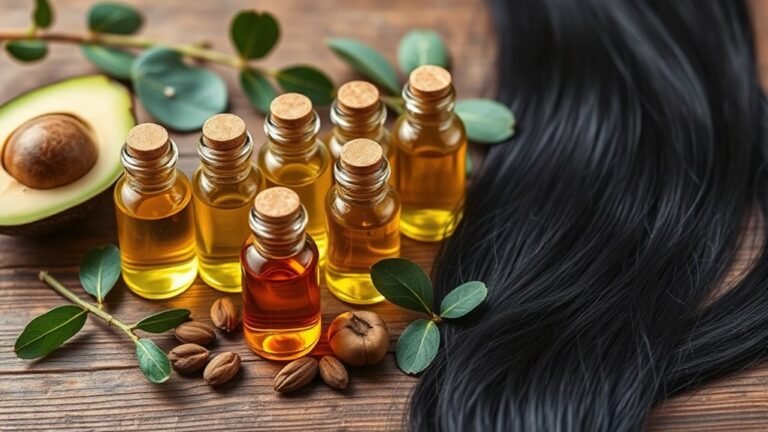
Best Oils for Healthy Natural African American Hair
To keep your natural African American hair healthy and thriving, it’s important to use the best oils that lock in moisture and protect against breakage. Oils like jojoba and grapeseed are lightweight, so they hydrate your hair without weighing it down.
On the other hand, richer oils such as castor and avocado deeply condition your strands and help promote growth.
Matching the right oil to your hair type is key. Light oils work best for fine or low porosity hair, while heavier oils are ideal for thicker, high porosity strands.
Curious about which oils will work best for you? Keep reading to discover how to choose and apply oils for your best hair care results.
Key Takeaways
- Jojoba oil balances moisture and mimics natural scalp oils, ideal for daily lightweight hydration. It’s great if you want your hair to feel nourished without being greasy.
- Castor oil promotes hair growth and thickens strands, perfect for deep conditioning and repair. If your hair needs some extra love and strength, this one’s a winner.
- Coconut oil prevents protein loss and softens hair, enhancing resilience and shine. It’s like a protective hug for your strands, keeping them healthy and vibrant.
- Grapeseed and sweet almond oils seal in hydration and manage frizz without weighing hair down. These oils are awesome for keeping your hair smooth and manageable.
- Choose oils based on hair porosity and scalp needs for optimal moisture, shine, and repair benefits. Tailoring your oil choice really makes a difference!
Benefits of Using Natural Oils for African American Hair

Although you might already have a hair care routine, incorporating natural oils can transform the health of your African American hair. These oils deeply nourish and lock in moisture, helping to prevent dryness and breakage common with curly, textured hair.
They also create a protective barrier against environmental damage like harsh weather and pollution. By regularly applying natural oils, you’ll notice improved scalp health, reducing itchiness and flakiness.
Oils stimulate hair growth by boosting circulation to hair follicles, encouraging stronger, thicker strands. Plus, they enhance shine and softness, giving your hair a vibrant, healthy appearance.
Using natural oils means you’re feeding your hair with essential nutrients without harsh chemicals, supporting its natural beauty and resilience every day. It’s a simple step that makes a big difference!
Top Lightweight Oils for Daily Moisture
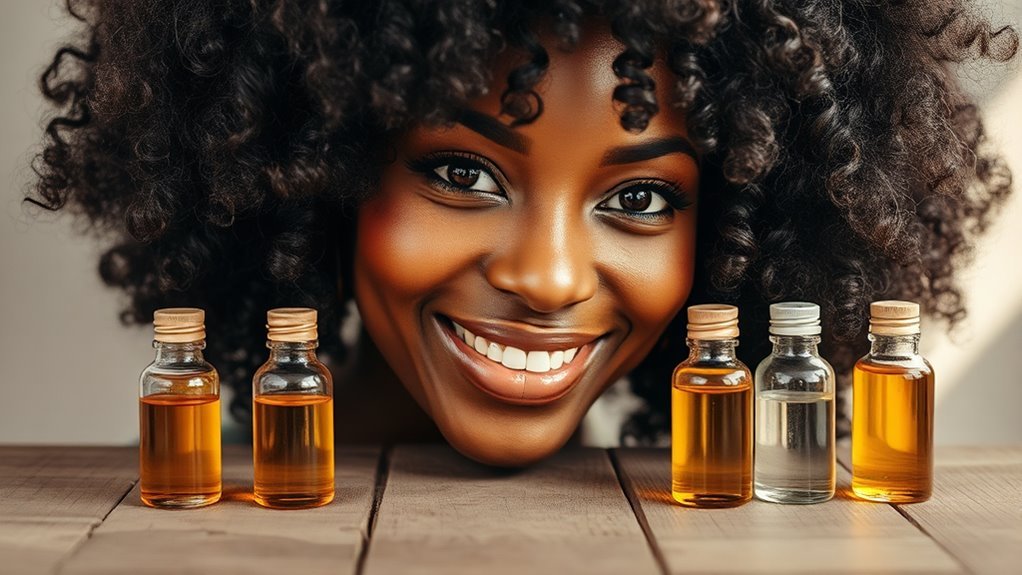
To keep your African American hair feeling soft and hydrated every day, choosing the right lightweight oils is key. Oils like jojoba, grapeseed, and sweet almond are excellent for daily moisture because they absorb quickly without weighing your hair down.
Jojoba oil mimics your scalp’s natural oils, balancing moisture and reducing dryness. Grapeseed oil is rich in antioxidants and helps seal in hydration, giving your hair a natural shine.
Sweet almond oil nourishes and smooths your strands, making it easier to manage frizz. These oils provide just enough slip to detangle and protect your hair while maintaining its natural bounce.
Applying them regularly keeps your hair hydrated, healthy, and manageable without the heaviness that can lead to buildup or limp strands. So, adding these lightweight oils to your routine? Totally worth it!
Rich Oils for Deep Conditioning and Repair

When your hair needs extra nourishment and repair, rich oils like castor, avocado, and coconut can make a big difference. These oils penetrate deeply, restoring moisture and strengthening fragile strands.
You’ll find they smooth the cuticle, reduce breakage, and enhance shine. Incorporate them into your deep conditioning routine for ideal results.
| Oil | Key Benefits |
|---|---|
| Castor | Promotes growth, thickens hair |
| Avocado | High in vitamins, boosts moisture |
| Coconut | Prevents protein loss, softens |
| Olive | Repairs damage, adds shine |
| Jojoba | Balances scalp oils, hydrates |
Using these oils regularly helps you maintain healthy, resilient hair that looks and feels great. Give them a try—you might be surprised how much they can improve your hair’s health!
How to Choose the Right Oil for Your Hair Type
Since every hair type has unique needs, choosing the right oil can make a big difference in your hair’s health and appearance. To find the perfect match, consider your hair’s porosity, thickness, and moisture needs.
Choosing the right oil tailored to your hair’s porosity and thickness boosts health and shine.
Lighter oils work best for fine or low-porosity hair, while heavier oils suit thick or high-porosity hair. Also, think about your scalp type—oily, dry, or sensitive.
Here’s what to keep in mind:
- Hair Porosity: Low porosity benefits from light oils like jojoba, while high porosity prefers heavier oils like castor.
- Hair Thickness: Fine hair can get weighed down by heavy oils, so choose lighter ones.
- Scalp Condition: Dry scalps may need nourishing oils, oily scalps lighter, non-comedogenic oils.
- Desired Effect: Pick oils for moisture, shine, or repair based on your hair goals.
Tips for Applying Oils to Maximize Hair Health
Although applying oils might seem simple, using the right techniques can greatly boost your hair’s health. Start with clean, damp hair—this helps the oil seal in moisture.
Use just a few drops to avoid weighing your hair down. Warm the oil slightly between your palms to improve absorption.
Focus on your ends first, as they tend to be the driest. Then gently massage the oil into your scalp to stimulate circulation and promote growth.
Avoid heavy applications that can lead to buildup. For best results, apply oils regularly but not excessively—once or twice a week is ideal.
Finally, use a wide-tooth comb or your fingers to distribute the oil evenly. This helps prevent tangles and breakage.
These tips will help your natural hair stay nourished and strong. Give them a try and see the difference!
Combining Oils With Other Hair Care Products
Integrating oils with your other hair care products can enhance their effectiveness and keep your hair balanced. When you combine oils with conditioners, leave-ins, or styling creams, you boost moisture retention and protect your strands from damage.
Just make sure you use the right amount to avoid weighing your hair down. A little goes a long way!
Here’s how to combine oils effectively:
- Mix a few drops of oil into your conditioner for extra hydration.
- Apply oil after leave-in treatments to seal in moisture.
- Use oils with styling products to add shine and reduce frizz.
- Avoid applying oils directly on the scalp if you use heavy creams to prevent buildup.
It’s all about finding the right balance that works for your hair type. Give it a try and see the difference!
Frequently Asked Questions
Can Natural Oils Prevent Hair Loss in African American Hair?
Yes, natural oils can help prevent hair loss by nourishing your scalp and strengthening hair strands.
You’ll want to use oils like castor, jojoba, or coconut regularly to promote healthier, stronger hair growth over time.
These oils work by moisturizing your scalp and reducing breakage, which is key for African American hair.
Just remember, consistency is key—make it part of your routine, and you should start seeing results!
How Often Should I Wash My Hair When Using Oils Regularly?
You should wash your hair every 1-2 weeks when using oils regularly to avoid buildup.
But really, it depends on your scalp’s needs. If it feels oily or itchy, go ahead and wash sooner.
On the other hand, if your scalp is dry, you can wait longer between washes. Just listen to what your hair is telling you!
Are There Oils That Help Protect Hair From Heat Damage?
Think of oils like a raincoat shielding you from a storm—yes, oils like argan and jojoba protect your hair from heat damage by creating a barrier.
Use them before styling to keep your strands safe and moisturized. It’s like giving your hair a little extra armor against the heat!
Can Natural Oils Be Used on Chemically Treated or Relaxed Hair?
Yes, you can use natural oils on chemically treated or relaxed hair. They help moisturize, reduce breakage, and improve shine.
Just apply sparingly to avoid buildup. Choose oils like argan, jojoba, or coconut for the best results.
Do Natural Oils Attract or Repel Lice in African American Hair?
You wouldn’t expect a rotary phone to repel lice, and similarly, natural oils don’t attract or repel lice in African American hair.
However, oils can soothe scalp irritation but won’t prevent lice infestations on their own.
Conclusion
You want your hair to feel soft yet strong, light yet deeply nourished. Using the right oils brings balance—daily moisture without heaviness, intense repair without greasiness.
When you choose wisely and apply thoughtfully, your natural hair thrives with shine and resilience. Think of oils not just as products, but as powerful allies that work with your unique texture.
Embrace this harmony, and watch your hair transform from fragile to fabulously healthy. The best oils for healthy natural African American hair provide essential nutrients that strengthen strands, lock in moisture, and enhance shine. With consistent care and the right oils, your natural hair can flourish, becoming more manageable and vibrant every day. So, make these oils a part of your routine and celebrate the beauty of your natural texture.