Best Oils for Black Men’s Hair: Nourish and Revitalize
To nourish and revitalize your hair, especially for Black men, natural oils like jojoba and castor are fantastic choices.
These oils help lock in moisture and promote healthy hair growth, making your hair look fuller and more vibrant.
Warm a few drops of oil, then massage it gently into your scalp.
Spread the oil evenly from roots to tips for the best results.
This simple routine can make a big difference in how your hair feels and looks.
Avoid heavy or mineral oils since they can weigh your hair down or irritate your scalp.
Instead, pair your oils with water-based conditioners to maximize hydration and keep your hair soft.
Keep your hair healthy and vibrant by following these tips.
You’ll discover even more ways to maintain your hair’s strength and shine over time.
Key Takeaways
- Jojoba and coconut oils hydrate Black men’s hair, improving softness and reducing breakage. These oils work wonders to keep your hair feeling smooth and manageable.
- Castor and rosemary oils stimulate scalp circulation, promoting thicker, healthier hair growth. They’re great if you’re looking to boost your hair’s overall health.
- Warm oils before application and massage into the scalp for enhanced absorption and nourishment. This little step makes a big difference in how well the oils work.
- Avoid mineral oil and petroleum-based products that clog pores and damage hair health. Trust me, your scalp will thank you for steering clear of those.
- Combine natural oils with water-based leave-in conditioners for optimal moisture and manageability. This combo keeps your hair feeling fresh and easy to style all day long.
Benefits of Using Natural Oils on Black Men’s Hair

Using natural oils on Black men’s hair offers several key benefits that can improve both its health and appearance. You’ll notice your hair becomes softer and more manageable, reducing the frustration of tangles and breakage.
These oils help lock in moisture, which is essential for preventing dryness and brittleness common in Black hair. By nourishing your scalp, natural oils can soothe irritation and promote a healthier environment for hair growth.
You’ll also benefit from enhanced shine and a natural glow, making your hair look vibrant and well-cared-for. Plus, natural oils can help protect your hair from environmental damage, such as harsh weather and pollution.
Incorporating them into your routine supports overall hair resilience and energy. It’s a simple step that really makes a difference!
Top Oils to Promote Moisture and Growth

You want oils that lock in moisture while encouraging healthy growth for your hair. Hydrating oils like jojoba and coconut keep your strands soft and manageable.
Meanwhile, growth-boosting oils such as castor and rosemary stimulate your scalp to support thicker, stronger hair. They work wonders if you’re aiming for a fuller look!
Hydrating Oils Benefits
Although black men’s hair requires unique care, hydrating oils play an essential role in maintaining moisture and encouraging growth. When you use these oils consistently, you’ll notice your hair feels softer, looks shinier, and breaks less often.
Hydrating oils penetrate the hair shaft and scalp, locking in moisture and preventing dryness, which is common with curly or coiled hair types. It’s pretty amazing how much a good oil can change your hair game.
Here’s how hydrating oils benefit your hair:
- Seal in moisture to prevent brittleness
- Nourish the scalp, reducing flakes and irritation
- Soften and smooth hair cuticles for better manageability
- Protect hair from environmental damage like sun and pollution
Using these oils regularly can really make a difference. Your hair will thank you for the extra care!
Growth-Boosting Natural Oils
When your hair lacks the nutrients it needs, growth can slow down or stall entirely. Using growth-boosting natural oils like castor oil and peppermint oil can help you stimulate your scalp and encourage stronger, faster hair growth.
Castor oil is rich in ricinoleic acid, which improves blood circulation to hair follicles. Meanwhile, peppermint oil provides a cooling effect that opens pores and promotes healthy hair growth.
You’ll also benefit from jojoba oil, which mimics your scalp’s natural oils. It keeps hair moisturized without clogging follicles.
Applying these oils regularly nourishes your scalp and strengthens hair strands, reducing breakage. Incorporate them into your routine consistently, and you’ll notice improved moisture, thicker texture, and healthy growth that revitalizes your hair.
How to Apply Oils for Maximum Effectiveness
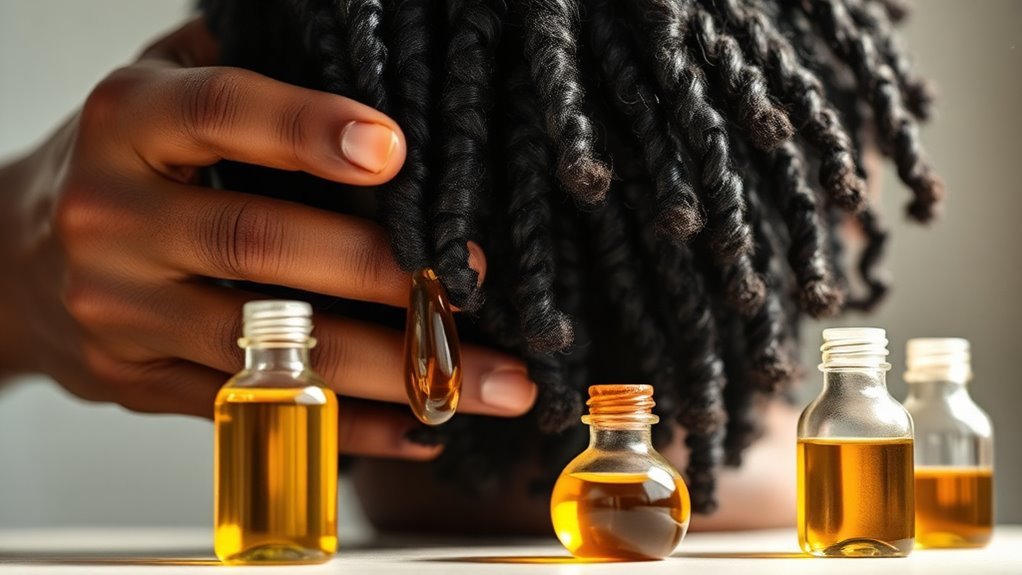
Anyone looking to get the most out of hair oils should focus on proper application techniques. Start by warming a few drops of oil between your palms to activate its properties.
To maximize hair oils’ benefits, warm a few drops between your palms before applying.
Then, gently massage the oil into your scalp using your fingertips to stimulate circulation and promote absorption. Make certain to spread the oil evenly through your hair, from roots to tips, to lock in moisture and prevent dryness.
For best results, apply oil on damp hair or after a shower to seal in hydration. Remember these tips:
- Use a small amount to avoid buildup
- Focus on the scalp for nourishment
- Comb through hair to distribute oil evenly
- Apply consistently, but avoid daily overuse
Following these steps guarantees your hair stays healthy, hydrated, and strong. Easy, right? Just a little care can make a big difference!
Oils to Avoid for Black Men’s Hair Health
Applying oils correctly sets a strong foundation, but choosing the right oils matters just as much. You should avoid mineral oil and petroleum-based products—they can clog pores and suffocate your scalp. This can lead to dryness and breakage, which nobody wants.
Also, steer clear of heavy oils like coconut oil if your hair tends to be dry or brittle. It might cause buildup and weigh your hair down, making your hair look limp instead of healthy.
Avoid synthetic fragrances and oils with added chemicals, as they can irritate your scalp and mess with your natural moisture balance. Your scalp deserves gentle care, so be mindful of what you put on it.
Finally, stay away from oils not specifically formulated for hair, like cooking oils. These often lack beneficial nutrients and might cause scalp issues. By avoiding these oils, you’ll protect your hair’s health and promote stronger, more resilient strands.
Combining Oils With Other Hair Care Products
You can boost your hair’s health by layering oils with other products the right way.
Mixing oils into your conditioner or applying them after can lock in moisture and add shine.
Let’s explore how to combine oils effectively for the best results.
Layering Oils Effectively
When layering oils with other hair care products, understanding the right order can make all the difference in maximizing moisture and shine. Start by applying lighter products like leave-in conditioners to hydrate your hair.
Follow with oils to seal in moisture and add nourishment. Here’s how to layer effectively:
- Apply water-based leave-in conditioner first for hydration.
- Use lightweight oils (like jojoba) next to lock in moisture.
- Follow with heavier oils (like castor) to create a protective barrier.
- Finish with styling products to hold your look without weighing hair down.
This sequence helps your hair absorb and retain moisture while keeping it soft and shiny. Give it a try and see how your hair responds.
Feel free to experiment with different oils and products to find what works best for your hair’s unique texture and needs. You might be surprised at what little tweaks can do!
Mixing Oils With Conditioners
Building on the idea of layering oils, mixing them directly with conditioners can boost your hair’s hydration and manageability. When you add a few drops of oils like jojoba, castor, or argan into your conditioner, you create a richer formula that penetrates deeper into your hair strands.
This combination locks in moisture while softening your hair, making detangling easier and reducing breakage. Just mix a small amount of oil with your regular conditioner before applying it evenly throughout your hair.
Tips for Maintaining Healthy Hair Between Oil Treatments
Although oil treatments nourish your hair deeply, maintaining healthy strands between sessions requires consistent care. You’ll want to adopt habits that protect your hair’s moisture and strength daily.
Simple routines can make a big difference in how your hair looks and feels over time.
- Use a satin or silk pillowcase to reduce friction and prevent breakage while you sleep.
- Limit heat styling and always apply a heat protectant when you do.
- Keep your scalp clean but avoid overwashing; aim for 1-2 times per week with a gentle shampoo.
- Moisturize regularly with a leave-in conditioner or light oil to seal in hydration.
Stick to these tips, and your hair will stay healthy and resilient between oil treatments.
Frequently Asked Questions
Can Oils Help Prevent Hair Loss in Black Men?
Yes, oils can help prevent hair loss by nourishing your scalp, strengthening hair follicles, and reducing breakage.
Using oils like castor, jojoba, or coconut regularly can keep your hair healthy and promote growth effectively. It’s all about giving your hair the care it needs to stay strong and vibrant.
Are There Oils That Protect Against Heat Styling Damage?
You don’t need oils to protect against heat styling damage—said no healthy hair ever. Using oils like argan, jojoba, or coconut creates a protective barrier that shields your hair, keeping it strong and shiny despite heat exposure.
Seriously, these oils work wonders by locking in moisture and reducing the risk of breakage. So, if you’re styling with heat, don’t skip the oil—it’s like a little shield for your strands.
How Often Should Black Men Wash Their Hair When Using Oils?
You should wash your hair once a week or every 7-10 days when using oils.
This routine keeps your scalp clean without stripping natural oils, helping your hair stay moisturized, healthy, and well-nourished.
Keeping a balance is key, so you don’t wash too often or too little. That way, your hair gets the benefits of the oils without feeling greasy or weighed down.
Can Scalp Massages With Oils Improve Hair Density?
You probably think scalp massages with oils won’t help hair density, but they actually can!
Do Natural Oils Affect Hair Color or Dye Longevity?
Natural oils don’t usually change your hair color, but they can help protect dyed hair by sealing moisture and reducing fading.
Using oils regularly can actually extend dye longevity, keeping your color vibrant longer. It’s a simple way to give your hair some extra love and keep that fresh color look going strong.
Conclusion
By blending the best oils, you’ll boost black men’s hair health brilliantly. Nourishing natural oils nurture and nourish, promoting moisture and magnificent growth.
Avoiding adverse oils, applying accurately, and combining carefully with other care products creates consistent care. Remember, routine and right remedies revitalize your roots, keeping your curls and coils fascinatingly clean and conditioned.
Embrace these easy oil essentials to effortlessly elevate your everyday hair health. Using the best oils for black men’s hair not only improves moisture retention but also strengthens strands, reduces breakage, and enhances shine. With regular use, your hair will feel softer, more manageable, and look healthier overall. Make these nourishing oils a staple in your hair care routine to enjoy enduring, enviable excellence and keep your natural curls and coils thriving every day.