Best Essential Oils for Nourishing Curly Hair
You’ll love using lavender oil to soothe your scalp and encourage growth while tea tree oil keeps your scalp clean and itch-free.
Rosemary oil strengthens curls and boosts shine, and peppermint oil tames frizz and controls oiliness.
Jojoba oil deeply nourishes and seals in moisture for soft, bouncy curls.
These oils work together to keep your hair healthy and vibrant.
Keep exploring to discover even more ways to enhance your curly hair care routine.
Key Takeaways
– Lavender oil soothes the scalp, promotes relaxation, and encourages healthy hair growth for nourished curls.
It’s great for calming your mind and your scalp at the same time.
– Tea tree oil cleanses the scalp, reduces inflammation, and prevents dandruff for a healthy hair environment.
Think of it as a refreshing detox for your scalp, keeping everything balanced.
– Rosemary oil strengthens curls, stimulates circulation, and improves follicle health to reduce breakage.
Stronger curls mean less breakage, and rosemary really helps with that.
– Peppermint oil tames frizz, hydrates hair, and controls oil production for defined, moisturized curls.
It’s perfect if you want your curls to stay sleek and hydrated without feeling greasy.
– Jojoba oil moisturizes deeply, balances scalp oils, and seals in moisture to keep curls soft and manageable.
This one’s like a natural conditioner that locks in moisture and keeps your curls feeling soft all day.
Benefits of Lavender Essential Oil for Curly Hair
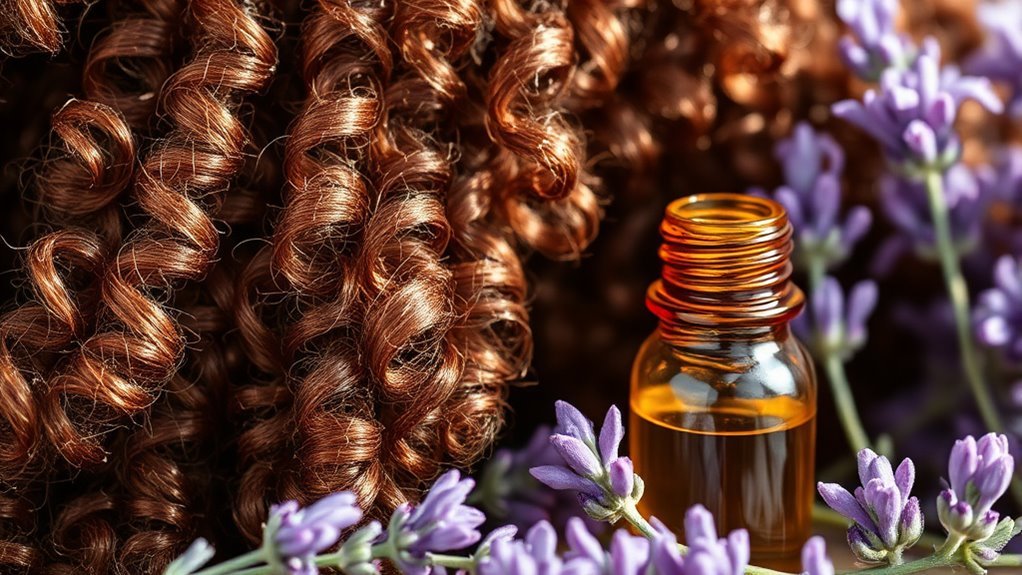
Although you might already know lavender essential oil for its calming scent, it also offers significant benefits for curly hair. When you apply it, lavender helps to soothe your scalp, reducing irritation and dryness that can affect curl definition.
It promotes healthy hair growth by improving blood circulation to your hair follicles, encouraging stronger, thicker curls. Lavender oil also balances oil production, preventing your scalp from becoming too oily or too dry, which is vital for maintaining moisture in curly hair.
Plus, it has natural antimicrobial properties that help keep your scalp clean and free from dandruff. You can mix a few drops with a carrier oil or your favorite conditioner to nourish your curls, enhancing their shine and softness without weighing them down.
How Tea Tree Oil Supports Scalp Health

When you apply tea tree oil, it works quickly to cleanse your scalp and reduce inflammation. This creates an ideal environment for healthy hair growth.
Tea tree oil rapidly cleanses and soothes your scalp, fostering the perfect conditions for healthy hair growth.
Its natural antifungal and antibacterial properties help keep dandruff and scalp irritation at bay. That’s essential for maintaining curls that look vibrant and feel comfortable.
Here’s how tea tree oil supports your scalp health:
- Clears clogged hair follicles, promoting better hair growth.
- Balances scalp oils, preventing dryness or excess grease.
- Soothes itchiness and reduces redness.
- Fights off fungal infections that can cause flakiness.
Incorporating tea tree oil into your routine helps guarantee your scalp stays healthy. And that sets the foundation for strong, beautiful curls.
Using Rosemary Oil to Strengthen Curls
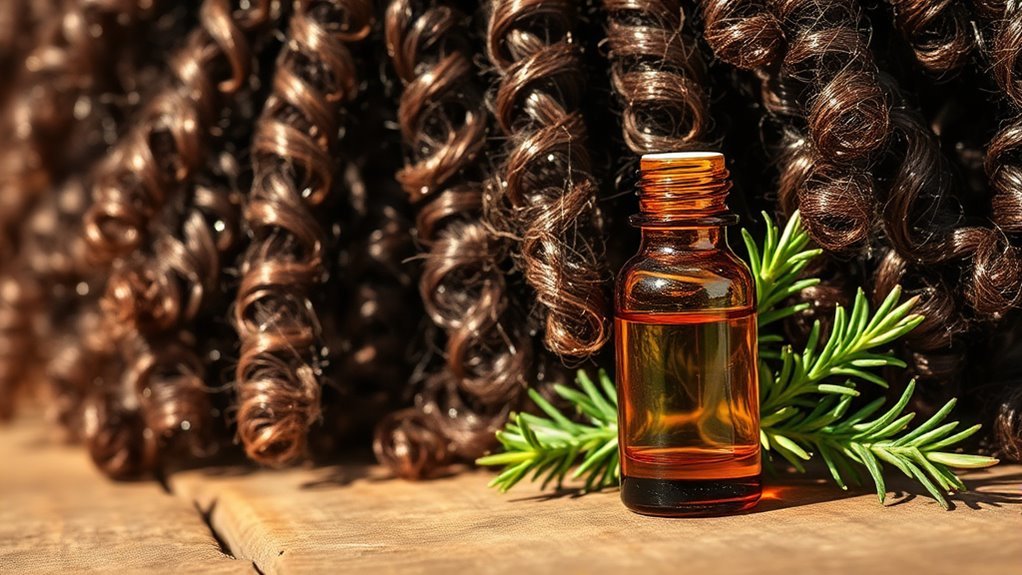
Because rosemary oil stimulates blood circulation in your scalp, it helps deliver essential nutrients to your hair follicles, making your curls stronger and less prone to breakage. When you add rosemary oil to your hair care routine, you support healthy growth and improve follicle strength.
You can mix a few drops with a carrier oil like jojoba or coconut and massage it into your scalp for about five minutes. This not only strengthens your curls but also promotes shine and reduces dryness.
Using rosemary oil regularly can help maintain your curls’ natural elasticity and prevent damage from styling or environmental stress. Just be consistent, and you’ll notice your curls becoming more resilient and vibrant over time.
The Role of Peppermint Oil in Reducing Frizz
If you want to tame frizz and keep your curls defined, peppermint oil can be a powerful addition to your hair care routine. Its natural cooling effect soothes your scalp, reducing irritation that often causes frizz.
Plus, peppermint oil boosts blood circulation, promoting healthier hair growth and stronger strands that resist frizz.
Here’s how peppermint oil helps reduce frizz:
- Controls excess oil production, preventing greasy roots that weigh curls down.
- Hydrates and seals the hair cuticle, locking in moisture.
- Provides a revitalizing scent that invigorates your senses.
- Enhances hair elasticity, making curls less prone to breakage and frizz.
Add a few drops of peppermint oil to your shampoo or conditioner for best results. Give it a try and see how your curls respond!
Nourishing Properties of Jojoba Oil for Curly Hair
Peppermint oil works wonders in managing frizz, but pairing it with jojoba oil can take your curly hair care to the next level. Jojoba oil closely resembles your scalp’s natural sebum, making it an excellent moisturizer that won’t weigh your curls down.
When you apply jojoba oil, it penetrates deeply, nourishing each strand and helping to restore elasticity. This oil also helps balance scalp oil production, preventing dryness and flakiness that can disrupt healthy hair growth.
By sealing in moisture, jojoba oil keeps your curls soft, defined, and more manageable. Regular use can reduce breakage and split ends, so your curls stay vibrant and bouncy.
Incorporate jojoba oil into your routine to maintain strong, hydrated curls that look their best every day. It’s a simple step that makes a big difference!
Applying Chamomile Oil to Enhance Curl Shine
When you want to add a natural glow to your curls, chamomile oil can be a powerful ally. Its lightweight formula enhances shine without weighing your hair down, making your curls look vibrant and healthy.
Here’s how to apply chamomile oil effectively:
- Start with clean, damp hair to help the oil absorb better.
- Dispense a few drops of chamomile oil into your palms and rub them together.
- Gently scrunch the oil into your curls, focusing on the mid-lengths and ends.
- Allow your hair to air dry or use a diffuser on low heat to lock in the shine.
If you use it regularly, your curls will become luminous and soft. It really helps boost their natural beauty, you know?
Frequently Asked Questions
Can Essential Oils Cause Allergic Reactions on Curly Hair?
Yes, essential oils can cause allergic reactions on your curly hair, especially if you have sensitive skin.
It’s super important to always do a patch test before using them. This way, you can avoid irritation, redness, or itching on your scalp or skin.
How Often Should I Apply Essential Oils to My Curly Hair?
Just like knights polished their armor weekly, you should apply essential oils to your curls about 1-2 times a week.
This keeps your hair nourished without overwhelming your scalp or causing buildup. Don’t overdo it!
Are Essential Oils Safe to Use on Color-Treated Curly Hair?
Yes, you can safely use essential oils on color-treated curly hair, but you should dilute them and do a patch test first. Avoid harsh oils that might strip color, and choose nourishing ones like argan or jojoba oil.
It’s all about picking the right oils that help maintain your color and keep your curls healthy. Just remember to test a small area before applying fully, so you know how your hair reacts.
Can Essential Oils Be Mixed With Other Hair Products?
Of course, you can mix essential oils with other hair products—because who wouldn’t want a potion cocktail?
Just remember to dilute properly; your scalp isn’t a chemistry lab, and overdoing it can backfire spectacularly.
What Is the Best Carrier Oil for Diluting Essential Oils for Curls?
You’ll find jojoba oil’s perfect for diluting essential oils for curls because it mimics your scalp’s natural oils. It absorbs well without leaving residue, which is a big plus.
Plus, it nourishes hair without weighing it down. It’s a great choice!
Conclusion
By now, you know that essential oils like lavender, tea tree, rosemary, peppermint, jojoba, and chamomile can truly transform your curly hair. They nourish, strengthen, and add shine while keeping frizz at bay—like a trusty quill pen bringing your curls’ story to life in a world full of modern noise.
So, don’t hesitate to embrace these natural wonders. Let your curls flourish with every drop you apply.
Using the best essential oils for nourishing curly hair not only enhances texture but also promotes scalp health and prevents dryness. Incorporating these oils into your hair care routine can make a noticeable difference in curl definition and overall hair vitality. Embrace the power of essential oils and enjoy vibrant, healthy curls every day!